
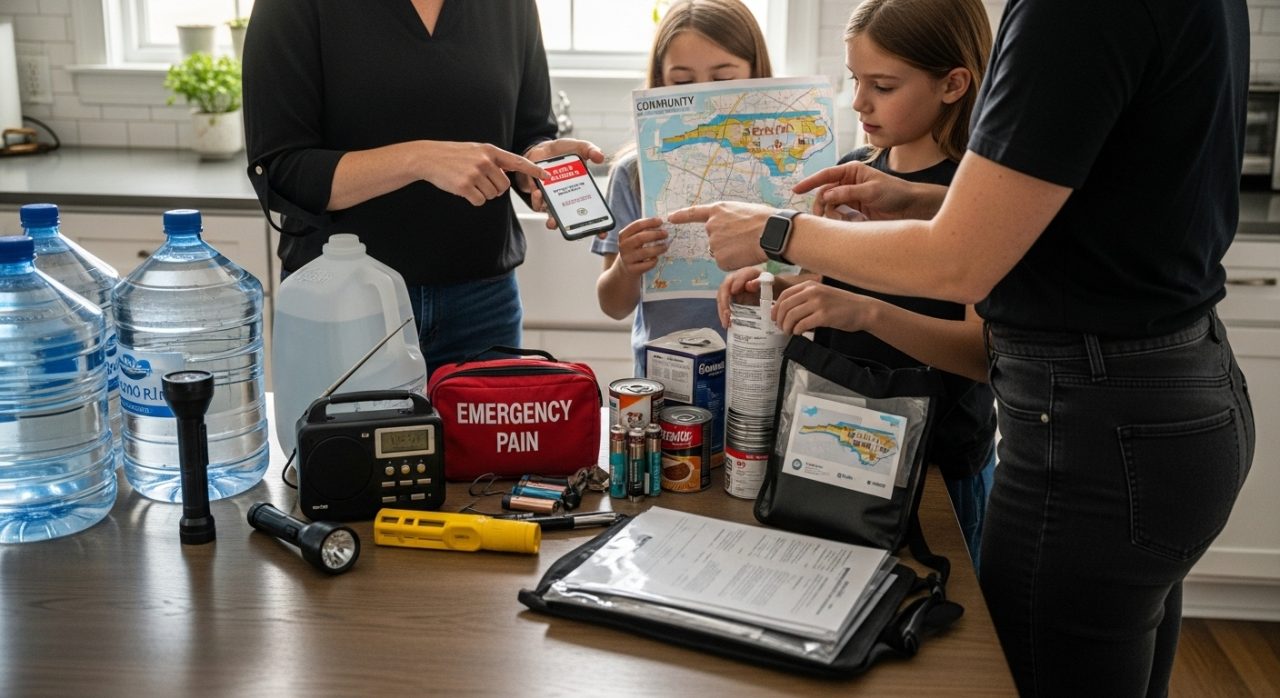
Disaster can strike without warning, and your next steps could decide everything. Nearly 60 percent of Americans have no tested emergency plan in place, despite the growing risks from storms, wildfires, and other unpredictable events. You might expect that staying calm is enough, but real safety starts long before disaster ever hits. The difference between chaos and control often comes down to what you do right now to prepare.
Table of Contents
- Create An Emergency Plan
- Assemble A Disaster Supply Kit
- Stay Informed About Local Alerts
- Practice Safety Drills Regularly
- Know Your Community Resources
- Review And Update Your Plan Frequently
Quick Summary
| Takeaway | Explanation |
|---|---|
| Create a detailed emergency plan | Develop a comprehensive plan that includes communication, evacuation routes, and special needs considerations for all family members. |
| Assemble a disaster supply kit | Prepare a portable kit with essentials like food, water, medical supplies, and personal hygiene items for at least 72 hours. |
| Stay informed about local alerts | Utilize multiple channels like Wireless Emergency Alerts and local news to receive timely emergency information and updates. |
| Practice safety drills regularly | Conduct biannual drills to ensure all family members know their roles and can respond calmly in emergencies. |
| Review your plan frequently | Update your emergency plan at least annually, taking into account changes in family structure or local emergency protocols. |
1: Create an Emergency Plan
Disaster preparedness starts with a well-designed emergency plan. Without a strategic approach, families can find themselves vulnerable and disoriented during critical moments. A comprehensive emergency plan serves as your roadmap for survival, communication, and coordinated action when unexpected events disrupt normal life.
Creating an effective emergency plan requires thoughtful preparation and consideration of multiple scenarios. Explore our guide on emergency preparedness to understand the critical components that can make a significant difference in your family’s safety.
According to Ready.gov, a robust emergency plan should include several key elements:
-
Designated Communication Strategy: Establish clear methods for how family members will contact each other and reconnect if separated
-
Evacuation Routes: Identify multiple exit paths from your home, neighborhood, and potential meeting locations
-
Emergency Contact List: Compile phone numbers and addresses for family, friends, healthcare providers, and local emergency services
-
Special Needs Consideration: Account for medications, mobility assistance, and unique requirements for children, elderly, or individuals with disabilities
Preparing your emergency plan requires active participation from all household members. Schedule a family meeting to discuss potential scenarios, assign responsibilities, and practice your plan periodically. This collaborative approach ensures everyone understands their role and can act confidently during high-stress situations.
Remember that an emergency plan is not a static document. Review and update your plan at least annually, considering changes in family dynamics, living situations, or local emergency protocols. Keep digital and physical copies accessible to all family members, and store important documents in a waterproof, portable container.
By investing time in creating a comprehensive emergency plan, you transform uncertainty into structured preparedness. Your proactive approach becomes a critical shield protecting your loved ones when unpredictable events threaten your safety and stability.
2: Assemble a Disaster Supply Kit
A well-prepared disaster supply kit can mean the difference between comfort and chaos during emergency situations. This crucial collection of essential items provides critical resources when standard infrastructure and services become unavailable. Learn how to pack the most effective emergency kit to ensure your family’s immediate safety and survival.
According to Ready.gov, a comprehensive disaster supply kit should cover multiple critical needs and include items that support survival for at least 72 hours. The goal is to create a portable, easily accessible collection that addresses fundamental human requirements during unexpected emergencies.
Your disaster supply kit should encompass several essential categories:
-
Water and Hydration: One gallon of water per person per day for drinking and sanitation
-
Non-Perishable Food: Minimum three-day supply of shelf-stable meals that require no refrigeration or cooking
-
First Aid and Medical Supplies: Comprehensive first aid kit, prescription medications, and essential medical equipment
-
Communication and Power: Battery-powered or hand-crank radio, extra batteries, portable chargers, and emergency communication devices
Beyond these fundamental items, consider including personal hygiene products, warm clothing, blankets, matches in waterproof containers, and important documents stored in waterproof packaging. Remember to periodically check and rotate supplies to maintain their effectiveness and prevent expiration.
Special considerations are crucial for households with unique needs. Families with infants, elderly members, or individuals with specific medical requirements should customize their kits accordingly. This might include additional medications, specialized medical equipment, infant formula, or mobility assistance devices.
Store your disaster supply kit in a designated, easily accessible location known to all family members. Consider creating multiple kits tailored for different scenarios: one for home, another for vehicle, and potentially a lightweight version for potential evacuation situations.
Regularly updating and practicing with your disaster supply kit transforms it from a static collection of items into a dynamic emergency preparedness tool. Conduct annual reviews, involve all family members in kit maintenance, and treat emergency preparedness as an ongoing commitment to your family’s safety.
3: Stay Informed About Local Alerts
In the fast-moving landscape of potential disasters, timely information becomes your most critical survival tool. Staying informed about local alerts can mean the difference between proactive safety and reactive danger. Check out our comprehensive disaster preparedness checklist to understand how to optimize your communication strategies.
According to Ready.gov, multiple communication channels exist to help individuals receive critical emergency notifications quickly and effectively. Understanding and leveraging these resources can significantly enhance your public safety preparedness.
Key communication methods for emergency alerts include:
-
Wireless Emergency Alerts (WEA): Automatic text-like messages sent to mobile devices during significant emergencies
-
NOAA Weather Radio: Continuous broadcast of critical weather and emergency information
-
Local News and Media Channels: Television, radio, and online platforms providing real-time emergency updates
Smartphone technology has revolutionized emergency communication. Most modern devices can receive government-issued emergency notifications directly, providing instant alerts about severe weather, evacuation orders, or potential threats. Enable these notifications in your device settings to ensure you never miss critical information.
Additionally, consider registering for local emergency notification systems. Many counties and municipalities offer free alert services that can send text messages, emails, or automated phone calls during emergencies. These localized systems provide hyper-specific information relevant to your immediate geographic area.
Beyond digital alerts, maintain a battery-powered or hand-crank radio as a backup communication device. During power outages or cellular network disruptions, traditional radio can remain a reliable source of emergency information. Keep extra batteries or a manual charging method to ensure continuous access.
Familiarize yourself with local emergency management websites and social media channels. Government agencies and emergency services increasingly use digital platforms to disseminate real-time information during crisis situations. Follow these official accounts and bookmark their websites for quick access during emergencies.
Staying informed is not a passive activity but an active commitment to your family’s safety. Regularly test your alert systems, understand how to interpret different types of warnings, and develop a communication plan that ensures everyone in your household knows how to receive and respond to emergency notifications.
4: Practice Safety Drills Regularly
Theoretical emergency plans mean little without practical execution. Safety drills transform written strategies into muscle memory, enabling swift, coordinated responses during actual crisis situations. Review our comprehensive disaster safety checklist to understand the importance of regular practice.
According to the U.S. Department of Labor, practicing emergency plans helps participants recognize potential challenges and unveil potential weaknesses in existing strategies. This process is critical for identifying gaps in preparedness that might not be apparent on paper.
Effective safety drill practices should encompass multiple scenarios:
-
Evacuation Simulations: Practice rapid, organized building or area evacuations
-
Communication Protocols: Test emergency communication methods and backup systems
-
First Aid and Medical Response: Conduct basic medical emergency training
Frequency matters in drill effectiveness. Conduct family or organizational drills at least twice annually, with variations in scenarios to prevent predictability. Children, elderly family members, and individuals with special needs should be included to ensure comprehensive preparedness.
Documenting drill performance helps identify improvement areas. After each practice session, gather feedback, discuss challenges, and update your emergency plan accordingly. Treat safety drills as learning opportunities, not just compliance exercises.
Utilize technology to enhance drill realism. Video recordings, timing mechanisms, and structured debriefing sessions can provide objective insights into response effectiveness. Some families and organizations even engage professional emergency preparedness consultants to evaluate and improve their drill techniques.
Remember that psychological preparedness is as crucial as physical readiness. Safety drills help reduce panic and anxiety during actual emergencies by creating familiar response patterns. When stress levels are high, trained muscle memory can guide individuals through complex emergency scenarios more effectively than improvisation.
By regularly practicing safety drills, you transform theoretical knowledge into practical skill, ensuring your family or organization can respond confidently and efficiently when unexpected challenges arise.
5: Know Your Community Resources
Understanding and connecting with local community resources can be a lifeline during disaster scenarios. Preparedness extends far beyond individual planning and requires a comprehensive understanding of available support systems. Learn how to access vital support networks to strengthen your community resilience.
According to Virginia Emergency Management, community resources play a critical role in disaster preparedness and response. Local networks provide essential support that can bridge gaps during emergency situations when standard infrastructure might be compromised.
Key community resources to familiarize yourself with include:
-
Emergency Response Teams: Local CERT (Community Emergency Response Team) volunteers trained in disaster response
-
Municipal Services: Fire departments, police stations, medical facilities, and local government emergency management offices
-
Nonprofit Organizations: Red Cross, Salvation Army, and local humanitarian groups providing immediate relief
Proactive engagement is crucial in understanding community resources. Attend local emergency preparedness workshops, participate in community drills, and build relationships with local emergency management professionals. These connections can provide invaluable insights and support during critical moments.
Maintain a comprehensive directory of local emergency contacts. This should include phone numbers for:
-
Local emergency services
-
Nearest hospitals and medical centers
-
Utility companies
-
Local government emergency management offices
Technology can enhance community resource accessibility. Many municipalities now offer mobile applications and online platforms that provide real-time emergency information, resource locations, and communication channels. Download and familiarize yourself with these digital tools before an emergency occurs.
Consider joining or supporting local community preparedness programs. These initiatives not only enhance your personal knowledge but contribute to the overall resilience of your neighborhood. Volunteer opportunities with emergency response teams can provide hands-on training and create stronger, more interconnected community support networks.
Remember that community resources are most effective when residents are informed, prepared, and willing to support one another. By investing time in understanding and connecting with local emergency support systems, you create a robust safety network that can make a significant difference during challenging times.
6: Review and Update Your Plan Frequently
Disaster preparedness is not a one-time event but an ongoing process of adaptation and vigilance. Static emergency plans become obsolete quickly as family dynamics, technologies, and potential risks evolve. Explore our comprehensive disaster preparedness strategies to understand the critical nature of regular plan reviews.
Emergency management experts consistently emphasize the importance of periodic plan evaluations. Circumstances change rapidly, and an outdated emergency plan can be more dangerous than having no plan at all. Treat your disaster preparedness strategy as a living document that requires consistent maintenance.
Key elements to reassess during plan reviews include:
-
Family Composition: Changes in family members, ages, and individual needs
-
Medical Requirements: Updated health conditions, medications, and special assistance needs
-
Contact Information: Current phone numbers, addresses, and emergency contacts
Recommended review frequency should be at minimum once annually, with more frequent assessments during periods of significant life changes. Consider scheduling your emergency plan review during a consistent annual event like a birthday or holiday to make it a reliable tradition.
Technological advancements and emerging disaster response strategies also necessitate regular updates. Stay informed about:
-
New communication technologies
-
Updated local emergency protocols
-
Advances in emergency preparedness equipment
Documentation is crucial during these review processes. Maintain both digital and physical copies of your updated plan, ensuring all family members have access. Create a clear version tracking system to monitor changes and improvements over time.
Encourage active participation from all family members during plan reviews. Different perspectives can reveal potential weaknesses or introduce innovative strategies for emergency response. Children and elderly family members often provide unique insights that might be overlooked.
Remember that comprehensive plan updates extend beyond paperwork. Regularly replace expired emergency kit supplies, test communication devices, and conduct family safety drills. Treat emergency preparedness as an ongoing commitment to your family’s safety, not a one-time checklist to be completed and forgotten.
Below is a comprehensive summary table capturing the six essential public safety tips for disaster preparedness featured in the article, outlining the core actions and their benefits for effective disaster readiness.
| Step | Key Actions | Benefits |
|---|---|---|
| Create an Emergency Plan | Develop a detailed plan, including communication strategy, evacuation routes, emergency contacts, and special needs considerations. | Ensures everyone knows what to do and reduces confusion during emergencies. |
| Assemble a Disaster Supply Kit | Pack a portable kit containing water, non-perishable food, first aid, medications, hygiene products, batteries, and key documents for at least 72 hours. | Provides critical resources and supports survival if systems fail or evacuation is required. |
| Stay Informed About Local Alerts | Use WEA, NOAA Weather Radio, local media, and emergency notification systems to receive real-time emergency information. | Enables timely, informed decisions and improves safety during fast-changing situations. |
| Practice Safety Drills Regularly | Conduct evacuation, communication, and medical response drills at least twice a year with all household members. | Builds muscle memory, reduces panic, and uncovers gaps for improvement in emergency response. |
| Know Your Community Resources | Identify and connect with local emergency teams, services, nonprofits, and government programs; maintain a local contacts directory. | Expands support network, improves access to aid, and strengthens community resilience. |
| Review & Update Your Plan Frequently | Reassess and revise plans, contact info, kits, and roles at least annually or with major life changes; involve all family members. | Keeps preparedness current, adapts to new risks, and ensures everyone remains informed. |
Take the Next Step Toward True Disaster Readiness
You have just learned the six essential steps for disaster preparedness. Yet, even with the best planning, real crises can leave families feeling overwhelmed, isolated, and uncertain about where to turn next. A clear emergency plan and a well-stocked kit provide a solid start, but navigating emergency housing, temporary logistics, and recovery support is a different challenge altogether—especially when every minute matters.
If you want proven solutions and genuine support when it counts, explore how Disaster Victim Services elevates basic preparedness into real-world recovery. Our team brings compassionate expertise and immediate action, coordinating everything from insurance help to temporary housing. For more resources on navigating disaster recovery and expert project management, visit our Project design category. Ready for peace of mind and a trusted partner in any emergency? Connect with us today and take control of your family’s safety and recovery before the next disaster strikes.
Frequently Asked Questions
What should be included in an emergency plan for disaster preparedness?
An emergency plan should include a communication strategy, evacuation routes, an emergency contact list, and considerations for special needs family members.
How often should I update my disaster supply kit?
It is recommended to review and update your disaster supply kit at least annually, checking for expiration dates and ensuring that the kit meets your family’s current needs.
What are some effective ways to stay informed about local emergency alerts?
You can stay informed through Wireless Emergency Alerts (WEA), NOAA Weather Radio, local news channels, and by registering for local emergency notification systems.
How frequently should we practice safety drills for emergency preparedness?
Safety drills should be practiced at least twice a year, with variations in scenarios to keep participants engaged and prepared for different types of emergencies.
Recommended
- Disaster Preparedness Checklist 2025: Essential Guide for All Responders – Disaster Victim Services | Helping You Recover After Disaster
- Disaster Safety Checklist 2025: Essential Steps for Every Family and Organization – Disaster Victim Services | Helping You Recover After Disaster
- Essential Emergency Preparedness Tips for 2025: A Guide for All – Disaster Victim Services | Helping You Recover After Disaster
- Essential Emergency Supply Checklist for 2025: Stay Safe and Prepared – Disaster Victim Services | Helping You Recover After Disaster