


Disaster safety prep is not just a checklist anymore. Only 43 percent of Americans say they have an emergency kit ready, despite extreme weather events hitting record numbers in recent years. Now here’s the curveball. The smartest survivors are not just stocking up on more supplies, they are switching to tech-savvy plans and community-driven strategies that could mean the difference between chaos and calm.
Table of Contents
- Key Supplies For Disaster Safety In 2025
- Evacuation Planning And Communication Tips
- Insurance, Documentation, And Recovery Steps
- Community Resources And Coordination Strategies
Quick Summary
| Takeaway | Explanation |
|---|---|
| Comprehensive Emergency Kits Are Essential | A well-stocked disaster safety kit should include a minimum three-day supply of water, non-perishable food, first aid supplies, and essential communication tools to meet basic human needs during emergencies. |
| Tailor Preparedness to Individual Needs | Customize emergency kits for specific individuals, including adaptive equipment for disabilities, specialized supplies for pets, and additional considerations for children and the elderly. |
| Implement Robust Evacuation Plans | Develop clear evacuation strategies with defined roles, multiple exit routes, and established meeting points, paired with effective communication technologies to ensure rapid coordination during emergencies. |
| Maintain Detailed Documentation for Recovery | Create a comprehensive home inventory and digital backups of important documents to streamline insurance claims and recovery processes after a disaster. |
| Leverage Community Resources | Foster collaboration among community organizations, train volunteers through programs like CERT, and establish resource inventories to ensure a coordinated response during disaster scenarios. |
Key Supplies for Disaster Safety in 2025
Preparing for potential disasters requires strategic planning and comprehensive supply gathering. The landscape of emergency preparedness continues to evolve, making it crucial to update disaster safety kits with modern, multifunctional tools and essential resources that address diverse emergency scenarios.
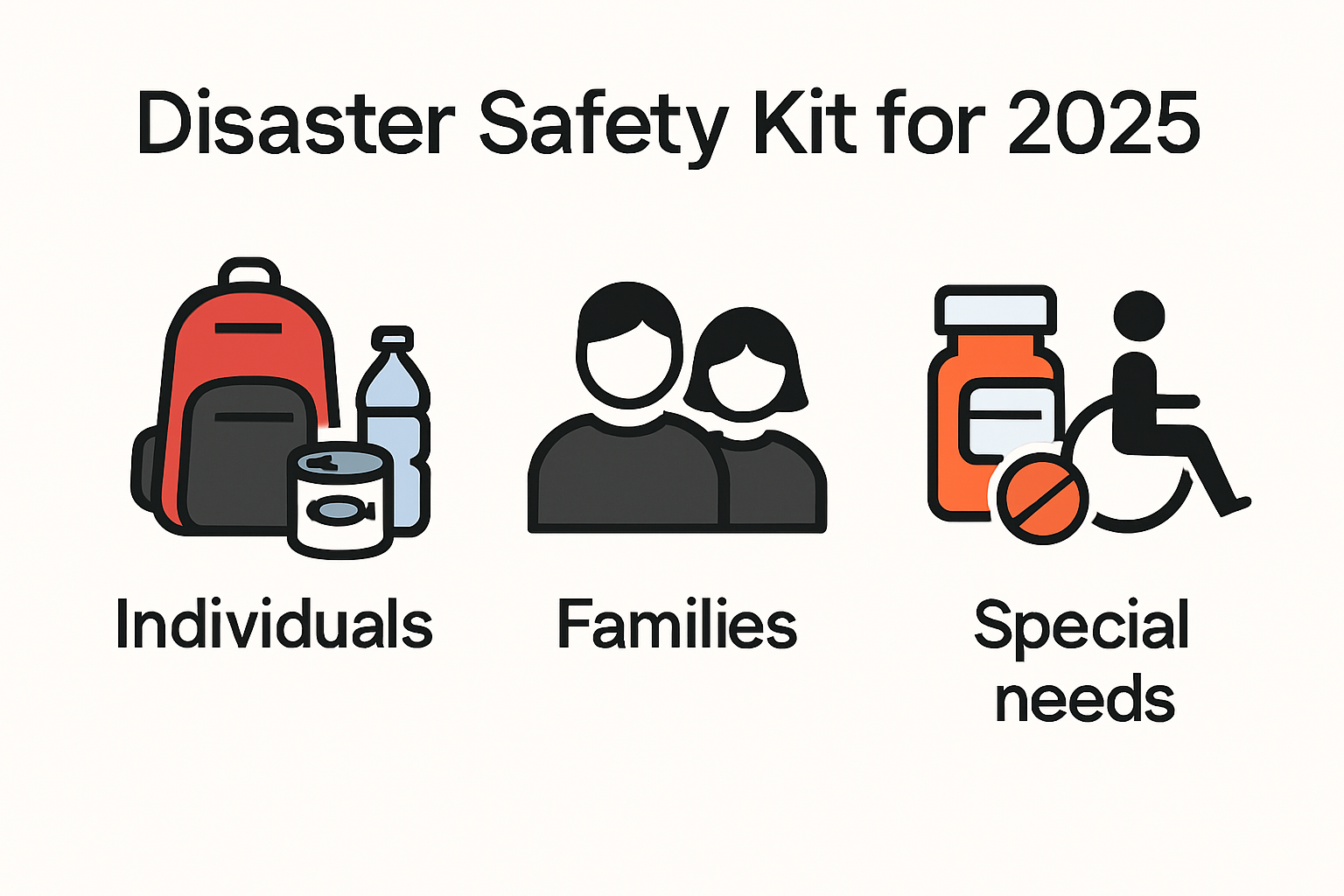
Essential Personal Emergency Kit Components
Building a robust emergency kit starts with understanding critical survival needs. Learn more about comprehensive emergency preparedness to ensure you have the right supplies. According to the Federal Emergency Management Agency (FEMA), a well-stocked disaster safety kit should include fundamental items that support basic human needs during emergencies.
Water remains the most critical resource. Experts recommend storing at least one gallon of water per person per day, with a minimum three-day supply. Non-perishable food items should complement water reserves, focusing on high-energy, nutritionally dense options that require minimal preparation. Additional critical components include a battery-powered or hand-crank radio, multiple flashlights, extra batteries, a first aid kit, and basic medical supplies.
Here is a table summarizing the essential and specialized emergency kit components for different needs:
| Category | Essential Supplies | Examples/Notes |
|---|---|---|
| Basic Survival | Water (1 gal/person/day, 3-day supply), non-perishable food | High-energy snacks, ready-to-eat meals |
| Medical | First aid kit, basic medical supplies, prescription medications | Include 1-week supply if possible |
| Power & Light | Battery-powered/hand-crank radio, flashlights, extra batteries | Include solar chargers if available |
| Communication | Emergency contact list, backup power bank, weather alert device | Portable/mobile chargers, local maps, waterproof document bags |
| Disabilities/Special | Adaptive equipment, extra mobility devices, medical documentation | Portable chargers for equipment |
| Children/Elderly | Age-appropriate meds, comfort items, nutritional supplements | Sensory toys, easy-to-prepare foods |
| Pets | Pet food, water containers, pet meds, ID tags, records | Leash, carrier, vaccination records |
Specialized Supplies for Unique Needs
Emergency preparedness is not one-size-fits-all. The Centers for Disease Control and Prevention (CDC) emphasizes the importance of customizing emergency kits for specific individual requirements. For individuals with disabilities, this means including adaptive equipment batteries, portable chargers, a week’s supply of prescription medications, critical medical documentation, and extra mobility devices.
Pet owners must also consider their animal companions’ needs. Emergency kits should include specialized pet supplies such as portable food and water containers, medication, medical records, and identification tags. Families with young children or elderly members require additional considerations like age-appropriate medications, comfort items, and specific nutritional needs.
Technology and Communication Preparedness

Modern disaster safety extends beyond traditional emergency supplies. Communication and information access have become paramount during crisis situations. Your emergency kit should now include portable power banks, solar chargers, waterproof document bags, battery-powered smartphone chargers, and local area maps. A backup communication plan with designated emergency contacts becomes equally important.
Consider including a compact, multi-function emergency communication device that can receive weather alerts, support GPS tracking, and provide basic communication capabilities. Weatherproof storage containers that protect electronic devices and important documents from water and environmental damage are also recommended.
Remember, a disaster safety checklist for 2025 is not just about collecting items but strategically preparing for potential scenarios. Regular kit maintenance, periodic inventory checks, and staying informed about emerging emergency preparedness technologies will significantly enhance your readiness and resilience.
Evacuation Planning and Communication Tips
Effective evacuation planning represents a critical component of comprehensive disaster safety strategy. Organizations and families must develop robust communication frameworks and precise evacuation protocols to ensure swift and coordinated responses during emergency situations.
Developing a Comprehensive Evacuation Strategy
Learn about comprehensive evacuation preparedness to protect your loved ones and colleagues. According to the Federal Highway Administration, clearly defining staff roles and responsibilities is paramount in emergency evacuation planning. Each team member should understand their specific duties, communication protocols, and potential evacuation routes.
Key elements of an effective evacuation strategy include identifying multiple exit routes, establishing predetermined meeting points, and creating a communication cascade that ensures rapid information dissemination. Organizations should conduct regular drills to familiarize personnel with evacuation procedures, reducing panic and increasing response efficiency during actual emergencies.
Below is a table outlining essential elements and steps in a comprehensive evacuation strategy for families and organizations:
| Evacuation Element | Description/Action | Purpose/Benefit |
|---|---|---|
| Define Roles & Responsibilities | Assign duties for each team/family member | Ensures accountability & clear actions |
| Multiple Exit Routes | Identify and map primary and backup evacuation paths | Increases flexibility & safety |
| Predefined Meeting Points | Agree on locations to regroup after evacuation | Prevents confusion & ensures reunification |
| Communication Cascade | Establish chain for relaying updates (texts, calls, apps) | Rapid info sharing, speeds coordination |
| Regular Drills | Schedule and conduct evacuation practice sessions | Reduces panic, improves readiness |
| Backup Communication Methods | Prepare text, app, radio, satellite phone channels | Maintains contact if networks fail |
Communication Technologies and Coordination
Modern evacuation planning leverages advanced communication technologies to enhance coordination and real-time information sharing. Smartphone applications, emergency alert systems, and integrated communication platforms enable rapid notification and tracking during crisis scenarios. The Wisconsin Department of Health Services recommends developing communication strategies that include multiple backup channels such as text messaging, mobile apps, satellite phones, and battery-powered radios.
Families and organizations should establish multiple communication pathways, including out-of-area emergency contacts who can serve as central coordination points. This approach ensures connectivity even when local communication infrastructure becomes compromised. Creating a shared digital emergency plan that can be accessed remotely provides an additional layer of preparedness.
Special Considerations for Vulnerable Populations
Evacuation planning requires nuanced approaches for individuals with specific needs. Elderly members, people with disabilities, children, and those with medical conditions demand specialized evacuation strategies. Preparation involves creating personalized evacuation kits, identifying support networks, and developing individualized communication protocols.
Healthcare facilities, schools, and community organizations must develop inclusive evacuation plans that address mobility challenges, medical equipment requirements, and psychological support needs. This might include specialized transportation arrangements, medical supply contingencies, and coordination with local emergency services to ensure comprehensive support.
Successful evacuation planning in 2025 demands a holistic approach that combines technological innovation, clear communication protocols, and compassionate consideration of individual needs. Regular training, adaptive strategies, and proactive preparation will be key to navigating potential disaster scenarios with confidence and resilience.
Insurance, Documentation, and Recovery Steps
Navigating the aftermath of a disaster requires strategic planning, comprehensive documentation, and a clear understanding of insurance recovery processes. The complex landscape of post-disaster recovery demands proactive approaches to protect financial and personal assets.
Comprehensive Documentation Strategies
Learn about critical documentation preparation to streamline your recovery journey. According to Delaware Insurance Department, creating a meticulous home inventory is fundamental. This inventory should include detailed photographic or video documentation of each room, itemized lists of valuables, serial numbers, purchase dates, and estimated replacement costs.
Digital preservation becomes equally critical. Store critical documents like identification, insurance policies, medical records, and property deeds in multiple secure formats. The National Institutes of Health recommends maintaining waterproof, fireproof physical copies and secure cloud-based digital backups. Consider using encrypted digital storage solutions and keeping backup drives in geographically separate locations.
Insurance Claim Navigation
Successful insurance claim management requires understanding policy details and acting swiftly. Pennsylvania State Government Recovery Guidelines emphasize the importance of immediate communication with insurance providers. Contact your insurance company promptly after a disaster, documenting all damages with comprehensive evidence.
Understand your policy’s specific coverage parameters. Most policies include provisions for additional living expenses, temporary housing, and property restoration. Request a detailed explanation of benefits and coverage limits. Some policies offer emergency fund advances or immediate support for essential needs. Maintain meticulous records of all communications, claim numbers, and adjuster interactions.
Recovery and Reconstruction Planning
Recovery extends beyond financial compensation. Develop a structured reconstruction plan that addresses immediate safety concerns and long-term resilience. Work closely with certified contractors, restoration specialists, and local emergency management agencies to develop comprehensive recovery strategies.
Consider potential future risk mitigation during reconstruction. This might involve upgrading building materials, improving structural integrity, or implementing disaster-resistant design elements. Engage with local building authorities to understand updated construction guidelines and potential disaster preparedness incentives.
The recovery process is multifaceted, requiring patience, systematic documentation, and proactive communication. By maintaining organized records, understanding insurance mechanisms, and developing strategic reconstruction plans, individuals and organizations can navigate post-disaster challenges with greater confidence and efficiency. Remember that recovery is not just about restoration but about building more resilient systems for future protection.
Community Resources and Coordination Strategies
Effective disaster management transcends individual preparedness, requiring robust community-wide collaboration and strategic coordination. The complex landscape of emergency response demands integrated approaches that leverage collective skills, resources, and organizational capabilities.
Community Preparedness and Training
Discover advanced response coordination techniques to strengthen community resilience. According to Pennsylvania State University Extension, successful disaster management relies on mobilizing diverse professional groups with specialized skills. Engineers, healthcare practitioners, mental health counselors, and trade professionals can provide critical support during emergency scenarios.
The Community Emergency Response Team (CERT) program represents a pivotal strategy for grassroots emergency preparedness. These locally trained volunteers receive comprehensive training in basic disaster response skills, enabling them to supplement professional first responders during critical moments. CERT members learn essential techniques such as fire safety, light search and rescue, team organization, and disaster medical operations.
Organizational Coordination and Resource Mapping
Successful disaster response requires intricate networking and resource mapping. The National Voluntary Organizations Active in Disaster (NVOAD) exemplifies effective inter organizational collaboration. This coalition coordinates disaster-related work across preparedness, response, recovery, and mitigation phases, creating a comprehensive support ecosystem.
Communities should develop detailed resource inventories that catalog available skills, equipment, and support capabilities. This involves creating comprehensive databases that track professional expertise, transportation resources, medical capabilities, communication infrastructure, and potential temporary shelter locations. Digital platforms can facilitate real-time resource tracking and rapid deployment during emergencies.
Communication and Adaptive Response Frameworks
Modern disaster coordination demands flexible, technology-enabled communication strategies. Develop multi-channel communication protocols that include traditional methods like radio and telephone alongside digital platforms such as mobile applications, social media, and dedicated emergency communication networks.
Establish clear communication hierarchies that define roles, responsibilities, and decision-making processes. This includes creating redundant communication pathways to ensure information flow remains uninterrupted during infrastructure disruptions. Regular training exercises and simulation scenarios can help refine these communication strategies, identifying potential weaknesses and improving overall community readiness.
Community disaster preparedness is a dynamic, collaborative process that requires continuous learning, adaptation, and mutual support. By fostering strong inter-organizational relationships, investing in volunteer training, and developing sophisticated communication frameworks, communities can build robust resilience against potential emergency scenarios. The future of disaster management lies not in individual efforts, but in our collective capacity to respond, support, and recover together.
Frequently Asked Questions
What should be included in a disaster safety kit for 2025?
A disaster safety kit for 2025 should include at least a three-day supply of water (one gallon per person per day), non-perishable food, a battery-powered radio, flashlights, a first aid kit, and communication tools. It’s essential to tailor the kit to meet individual needs, such as including medications, adaptive equipment, and pet supplies.
How can I develop an effective evacuation plan for my family or organization?
To develop an effective evacuation plan, clearly define roles and responsibilities among family members or team members, identify multiple exit routes, establish meeting points, and create a communication plan. Conduct regular drills to practice the evacuation and ensure everyone is familiar with procedures.
What documentation should I prepare for post-disaster recovery?
Prepare a comprehensive home inventory, including photographs, itemized lists of valuables, serial numbers, and estimated replacement costs. Store critical documents like insurance policies and medical records both physically and digitally to facilitate quicker recovery processes after a disaster.
How can communities enhance their disaster preparedness?
Communities can enhance disaster preparedness through collaboration among local organizations, training volunteers, and developing comprehensive resource inventories. Establishing communication frameworks that facilitate real-time information sharing and conducting joint training exercises can significantly improve response efforts during emergencies.
Ready to Turn Your Disaster Plan Into Real Action?
You have invested time in understanding the latest recommendations for disaster safety, from creating robust emergency kits to building evacuation strategies and managing documentation. But when a crisis actually displaces your family or organization, checklists alone are not enough. The emotional stress of suddenly losing your home or workplace, the confusion of dealing with insurance, and the sheer urgency to find safe shelter can be overwhelming.
At Disaster Victim Services, we help bridge the gap between careful preparation and immediate action. As soon as disaster strikes, our team steps in to provide emergency housing, guide you through insurance processes, and coordinate with agencies and first responders. Explore our commitment to helping families and organizations through every phase of recovery by visiting our Uncategorized – Disaster Victim Services | Helping You Recover After Disaster page for practical resources, or go straight to our main site to request assistance now. Do not wait until an emergency becomes overwhelming. Get expert help with every step toward recovery, so you can focus on moving forward.
Recommended
- Essential Emergency Preparedness Tips for 2025: A Guide for All – Disaster Victim Services | Helping You Recover After Disaster
- Disaster Preparedness Checklist 2025: Essential Guide for All Responders – Disaster Victim Services | Helping You Recover After Disaster
- Evacuation Checklist 2025: Essential Steps for Safety – Disaster Victim Services | Helping You Recover After Disaster
- Storm Preparedness Checklist 2025: Essential Guide for Disaster Relief – Disaster Victim Services | Helping You Recover After Disaster
- Flood Safety Checklist 2025: Essential Steps for Families and Responders – Disaster Victim Services | Helping You Recover After Disaster
- How to Pack Emergency Kit: Essential 2025 Guide for Disaster Relief – Disaster Victim Services | Helping You Recover After Disaster