


Storms strike without warning and can turn daily life upside down in seconds. Most people know they should have basic supplies ready, but here is something many overlook. According to emergency guidelines, you need at least one gallon of water per person per day and a minimum three-day supply, which means a family of four should have a whopping 12 gallons set aside. That number surprises a lot of households who think a couple of water bottles will cut it. Running out of water is only the beginning if your kit stops there. Here’s why building a complete emergency checklist right now makes all the difference when storms hit.
Table of Contents
- Must-Have Items For Your Storm Preparedness Kit
- Action Steps Before, During, And After A Storm
- Tailored Checklist For Families, Professionals, And Responders
- Helpful Resources For Insurance, Relief, And Recovery
Quick Summary
| Takeaway | Explanation |
|---|---|
| Essential Supplies | Prepare a storm kit with at least one gallon of water per person per day, non-perishable food, a battery-powered radio, flashlight, first aid kit, and additional supplies like masks and local maps. |
| Action Steps | Prior to a storm, develop an evacuation plan, secure important documents, and prepare your emergency kit. During the storm, stay informed and safe by avoiding windows and following emergency instructions. After the storm, assess damage carefully before entering your home, document it, and contact insurance providers. |
| Tailored Strategies | Families should have a detailed communication strategy and evacuation routes; professionals and organizations need coordinated plans, while first responders require advanced training and equipment. |
| Resource Navigation | Familiarize yourself with insurance claim processes by documenting property conditions pre-storm. Understand available government aid and community support for recovery, including temporary housing and mental health resources. |
Must-Have Items for Your Storm Preparedness Kit
Preparing for a storm requires strategic planning and a well-stocked emergency kit. The difference between survival and struggle often comes down to having the right supplies when disaster strikes. According to Ready.gov, your emergency kit should contain enough supplies to sustain you and your family for several days during a potential crisis.
Water and Food: Your Primary Survival Resources
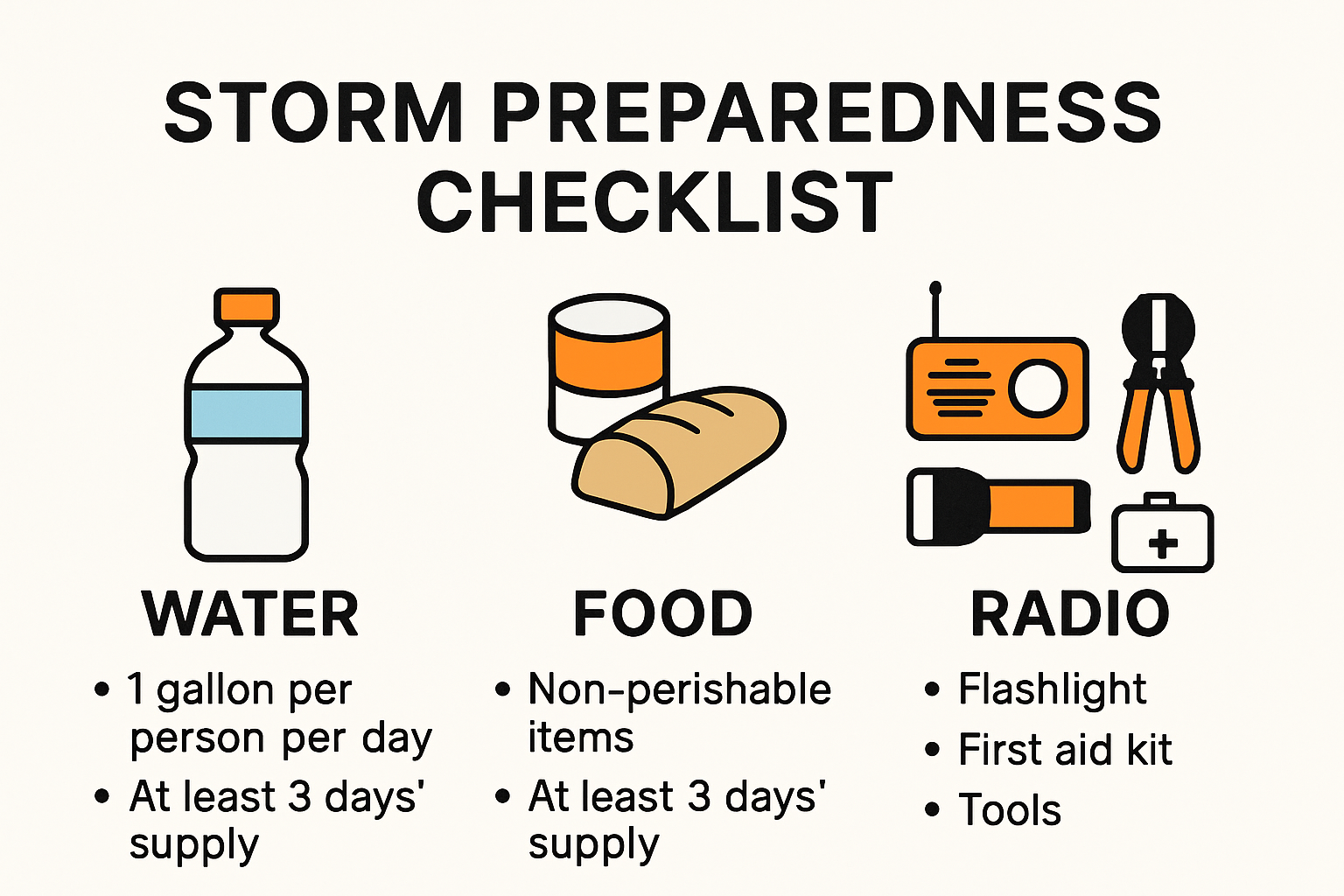
Water is the most critical resource in any emergency situation. The American Red Cross recommends storing at least one gallon of water per person per day, with a minimum three-day supply. For a family of four, this means having 12 gallons of clean water stored and ready. Non-perishable food items are equally crucial. Stock your kit with canned goods, protein bars, dried foods, and other items that do not require refrigeration or extensive preparation.
Communication and Survival Tools

In a storm emergency, communication and basic survival tools can mean the difference between safety and vulnerability. Your preparedness kit should include:
- Battery-Powered Radio: A hand-crank or battery-powered radio with NOAA Weather Radio capabilities to receive critical emergency updates
- Flashlight and Extra Batteries: Multiple light sources to navigate during power outages
- First Aid Kit: Comprehensive medical supplies including bandages, antiseptic wipes, pain relievers, and prescription medications
- Multi-Purpose Tool: A versatile tool for utility shutoff, minor repairs, and emergency situations
- Fully Charged Power Banks: Multiple backup battery sources for mobile phones and essential electronic devices
Additional Essential Supplies
Beyond the primary survival tools, consider including these additional items to enhance your storm preparedness:
- Dust masks
- Plastic sheeting
- Moist towelettes
- Local maps
- Emergency contact information
- Cash in small denominations
- Copies of important documents
For more comprehensive guidance on home safety during emergencies, our experts recommend reviewing detailed emergency preparedness resources. Remember, a well-prepared storm kit is not just about surviving the immediate crisis but creating a foundation for quick recovery and resilience.
Action Steps Before, During, and After a Storm
Storm preparation requires a comprehensive strategy that protects your life, property, and family. Understanding the critical action steps before, during, and after a storm can significantly improve your chances of survival and recovery.
Preparing Before the Storm
Before a storm approaches, proactive planning is your first line of defense. The American Red Cross emphasizes developing a detailed evacuation plan that includes knowing exactly where you’ll go, how you’ll get there, and where you’ll stay. Create a written emergency communication plan with your family, designating a specific out-of-area contact who can help coordinate if local communication lines are disrupted. Review your insurance policies and document your property’s current condition through photographs and videos, which will be crucial for potential future claims.
Key preparation steps include:
- Securing important documents in waterproof containers
- Clearing yard debris that could become projectiles
- Charging all electronic devices
- Filling vehicles with fuel
- Preparing your emergency kit with necessary supplies
Survival Strategies During the Storm
During an active storm, your primary objective is personal safety. Stay informed through battery-powered or hand-crank radios, monitoring official emergency broadcasts. If local authorities recommend evacuation, do so immediately. When sheltering in place, move to the lowest interior room without windows, ideally a basement or storm cellar. Stay away from glass doors and windows, and use mattresses or heavy blankets for additional protection if possible.
Critical actions during the storm include:
- Staying inside and away from windows
- Listening to official emergency instructions
- Keeping your emergency kit within reach
- Monitoring battery-powered communication devices
- Avoiding flooded areas and downed electrical lines
Recovery and Aftermath Management
After the storm passes, careful and methodical recovery is essential. Orion Emergency Management advises taking specific precautions when returning home. Check for structural damage before entering your property. Avoid downed power lines, potential gas leaks, and compromised infrastructure. Document all property damage thoroughly for insurance purposes, taking clear photographs and maintaining detailed records.
Recovery steps include:
- Checking for structural integrity before entering buildings
- Documenting storm damage with photographs
- Contacting insurance providers immediately
- Seeking professional assistance for aid and support
- Connecting with local emergency services
Remember, successful storm recovery is about preparation, quick action, and strategic decision-making. By understanding and implementing these comprehensive steps, you can protect yourself and your loved ones during even the most challenging natural disasters.
Tailored Checklist for Families, Professionals, and Responders
Storm preparedness is not a one-size-fits-all approach. Different groups require specialized strategies to ensure their safety and resilience during natural disasters. Each category of storm survivors needs a unique set of tools, knowledge, and preparation techniques.
Family Preparedness Strategy
Team Rubicon recommends families develop a comprehensive emergency plan that goes beyond basic supply gathering. Critical family preparation includes creating a detailed communication strategy, identifying multiple evacuation routes, and ensuring every family member understands their role during an emergency.
Key family preparedness components include:
- Establishing a family meeting point
- Preparing emergency contact cards for each family member
- Developing a communication plan with out-of-area emergency contacts
- Creating waterproof document storage with critical identification papers
- Preparing age-appropriate emergency instruction sets for children
Professional and Organizational Readiness
Professionals and organizations require a more complex preparedness framework. The American Red Cross emphasizes the importance of rapid mobilization and inter-agency coordination. Emergency response teams must have comprehensive communication protocols, backup communication systems, and pre-established response frameworks.
Critical professional preparedness steps include:
- Developing multi-agency communication protocols
- Creating redundant communication systems
- Establishing clear chain of command during emergencies
- Preparing detailed resource allocation plans
- Understanding advanced coordination techniques for complex disaster scenarios
First Responders and Emergency Teams
Emergency responders require the most sophisticated and dynamic preparedness approach. Their checklist must encompass personal safety, team coordination, and community support simultaneously. Comprehensive first aid knowledge becomes paramount in these high-stress environments.
Specialized first responder preparedness requirements include:
- Advanced medical and trauma response training
- Personal protective equipment inventory
- Detailed geographical response mapping
- Psychological resilience and stress management protocols
- Rapid deployment and resource mobilization strategies
Regardless of your role during a storm emergency, thorough preparation can mean the difference between vulnerability and resilience. By understanding and implementing these tailored strategies, individuals and organizations can significantly improve their capacity to respond effectively and protect lives during natural disasters.
Helpful Resources for Insurance, Relief, and Recovery
Storm recovery involves navigating complex systems of insurance claims, government aid, and community support. Understanding the available resources can significantly reduce stress and accelerate your path to rebuilding after a disaster.
Insurance and Claims Navigation
United Policyholders emphasizes the critical importance of creating a comprehensive home inventory before disaster strikes. This documentation becomes invaluable when filing insurance claims. The National Association of Insurance Commissioners (NAIC) recommends maintaining digital and physical copies of important documents, including photographs of property conditions before and after the storm.
Key insurance preparation steps include:
- Photographing all personal property before potential damage
- Keeping detailed records of valuable possessions
- Understanding your specific insurance policy coverage
- Maintaining an updated digital and physical document backup
- Consulting with insurance professionals about potential claim processes
Government and Federal Assistance
FEMA provides comprehensive disaster relief resources for individuals and communities impacted by severe storms. Their assistance programs cover various aspects of recovery, from temporary housing to financial support for repairs and essential needs. Understanding how to access aid becomes crucial in the immediate aftermath of a disaster.
Important federal assistance resources include:
- Disaster assistance grants
- Low-interest disaster loans
- Temporary housing support
- Crisis counseling programs
- Unemployment assistance for displaced workers
- Disaster unemployment benefits
Community Recovery and Support Networks
Recovery extends beyond financial assistance. Home safety resources play a critical role in helping families rebuild and protect themselves during the recovery process. Local community organizations, religious institutions, and nonprofit groups often provide additional support services that government and insurance resources might not cover.
Community recovery support elements include:
- Local disaster relief organizations
- Volunteer reconstruction groups
- Mental health support services
- Community rebuilding workshops
- Donation and resource coordination centers
- Emotional support groups for disaster survivors
Successful storm recovery requires a multifaceted approach that combines insurance claims, government assistance, and community support. By understanding and leveraging these resources, individuals and families can navigate the challenging path from disaster to restoration with greater confidence and resilience.
Frequently Asked Questions
What essentials should be included in a storm preparedness kit?
Your storm preparedness kit should contain at least one gallon of water per person per day for a minimum of three days, non-perishable food items, a battery-powered radio, flashlight, first aid kit, and additional items such as masks and local maps.
How can families effectively prepare for a storm?
Families should create a comprehensive emergency plan that includes communication strategies, evacuation routes, and designated meeting points. It’s important for every family member to understand their roles during an emergency.
What should I do to prepare my home before a storm hits?
Before a storm, secure important documents in waterproof containers, clear your yard of debris, charge all electronic devices, fill your vehicle’s fuel tank, and prepare your emergency kit with necessary supplies.
What steps should I take after a storm has passed?
After a storm, check for structural damage to your home before entering, document any damage for insurance claims, contact your insurance provider, and connect with local emergency services for assistance.
Take Control of Storm Recovery With Trusted Experts by Your Side
You have just learned how important it is to prepare with a comprehensive storm readiness checklist. But in reality, even the best plans can be overwhelmed when disaster actually strikes. The article shows how families often fall short on essentials like water storage, securing vital documents, and knowing the right action steps before, during, and after a storm. Suddenly finding yourself without safe shelter or support when your home is uninhabitable can be terrifying. That is where Disaster Victim Services steps in.
Rebuilding starts with fast, compassionate help. Our team specializes in New Disaster Recovery Solutions, providing emergency housing, coordinating with insurance and aid agencies, and walking families through every stage from immediate relief to long-term restoration. Do not wait for a disaster to disrupt your life. When storms threaten, partner with us now to secure expert support and take the first confident step toward recovery. Visit DisasterVictimServices.com and get the trusted backup plan your family deserves.