

Temporary relocation throws life into chaos for thousands of Americans every year and over 40 percent of people displaced by disasters struggle to secure safe housing within a month. Most people expect that finding a place to stay is the hard part. Actually, the bigger challenge is knowing exactly what steps to take before you even start looking. That first move makes the difference between weeks of confusion and a smooth transition.
Table of Contents
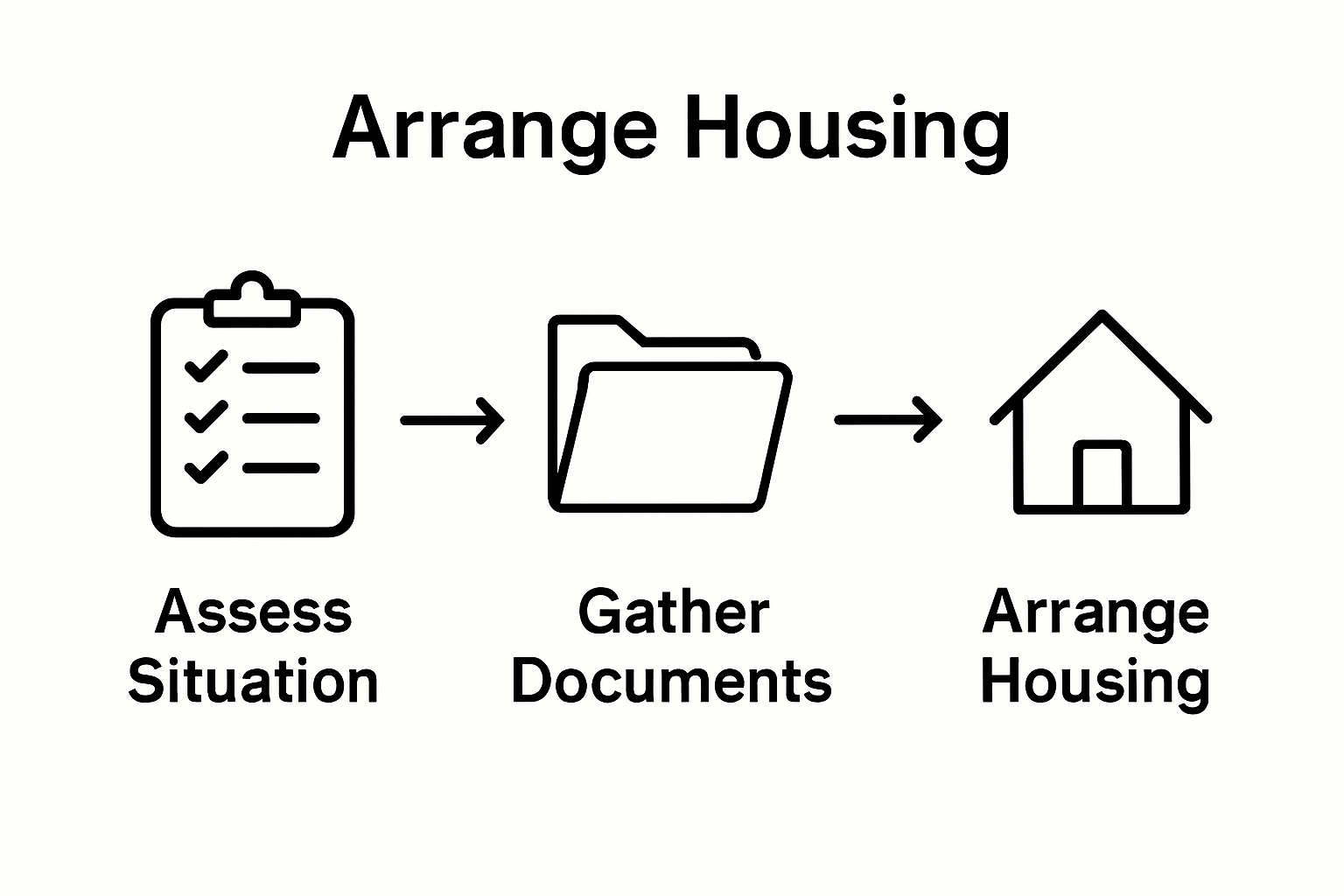
- Step 1: Assess Your Current Situation
- Step 2: Gather Important Documentation
- Step 3: Create A Relocation Plan
- Step 4: Arrange Temporary Accommodations
- Step 5: Prepare For Transportation
- Step 6: Verify Relocation Readiness
Quick Summary
| Key Point | Explanation |
|---|---|
| 1. Assess Your Current Situation | Carefully evaluate your living conditions and support networks to create a targeted relocation plan. |
| 2. Gather Important Documentation | Collect and organize critical documents to streamline your relocation and recovery processes. |
| 3. Create a Relocation Plan | Develop a structured timeline with goals and contingency plans to guide your relocation strategy. |
| 4. Arrange Temporary Accommodations | Research and secure safe, affordable, and suitable housing options for your immediate needs. |
| 5. Verify Relocation Readiness | Conduct a thorough review of your plans, ensuring all aspects are addressed before your move. |
Step 1: Assess Your Current Situation
When disaster strikes or unexpected circumstances force temporary relocation, your first critical action is comprehensively assessing your current situation. This initial step serves as the foundation for developing an effective temporary relocation strategy that minimizes stress and maximizes efficiency.
Understanding your specific circumstances requires a methodical approach that evaluates multiple dimensions of your displacement. Begin by documenting the immediate challenges you face. Are you dealing with property damage from a natural disaster, experiencing sudden job relocation, or managing an unexpected personal emergency? Each scenario demands a unique assessment framework.
Key Evaluation Factors
Carefully examine your current living conditions, financial resources, and support networks. Consider the following critical elements: personal safety, immediate housing needs, financial stability, insurance coverage, and available support systems. Gathering comprehensive information about your situation helps create a targeted relocation plan.
Documentation becomes crucial during this assessment phase. Collect and organize all relevant paperwork, including insurance policies, identification documents, medical records, and financial statements. According to Ready.gov, having these documents readily accessible can significantly streamline your relocation process and provide essential information for potential assistance programs.
Financial preparedness plays a pivotal role in temporary relocation planning. Conduct a thorough review of your current financial resources, including emergency savings, potential insurance reimbursements, and available credit lines. Calculate your estimated relocation expenses and create a realistic budget that accounts for temporary housing, transportation, food, and other essential living costs.
Establish communication channels with key support networks, including family members, employers, insurance providers, and local emergency management agencies. These connections can provide critical resources, guidance, and potential assistance during your temporary relocation journey. By proactively reaching out and sharing your situation, you create a supportive framework that can help navigate challenging circumstances.
Verification Checklist
- Comprehensive documentation of current situation
- Financial resource assessment completed
- Support network communication established
- Immediate safety and housing needs identified
Successful completion of this assessment step means you have a clear, documented understanding of your current circumstances and the initial groundwork for developing a strategic temporary relocation plan.
Step 2: Gather Important Documentation
Documentation serves as your lifeline during temporary relocation, acting as a critical bridge between your current circumstances and future recovery. This step involves systematically collecting, protecting, and organizing essential paperwork that will support your transition and help you navigate complex administrative processes.
Start by creating a comprehensive digital and physical document collection. Your primary goal is to compile a portable, secure record of your most important personal and legal documents. Prioritize gathering identification papers, financial records, medical information, and legal documents that prove your identity, residency, and personal history.
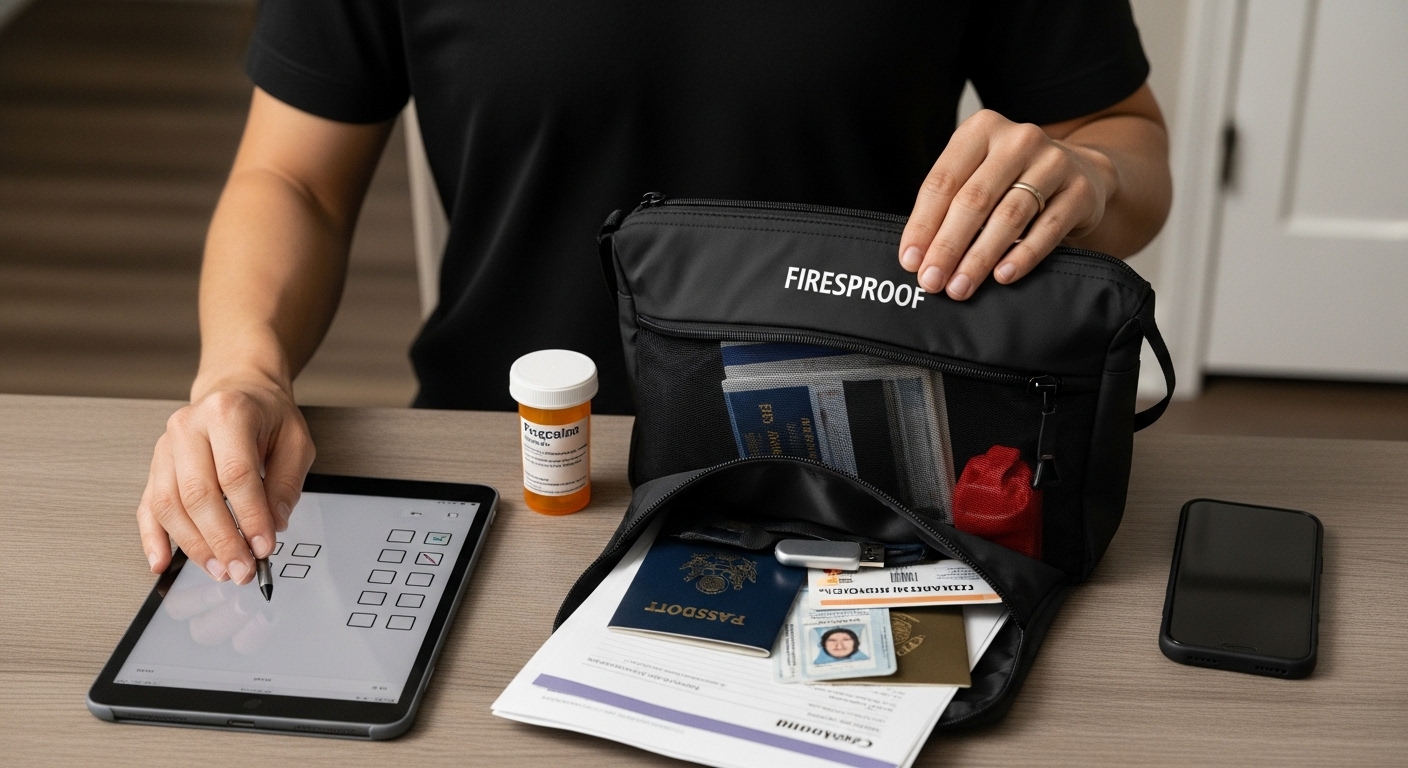
Prepare a waterproof, fireproof portable document container or digital storage solution to safeguard these critical records. Consider using a combination of secure cloud storage and physical backup. Scan all physical documents and store digital copies in encrypted cloud services, ensuring you have multiple backup methods. Important documents should include government identification, social security cards, birth certificates, marriage licenses, passports, insurance policies, medical records, prescription information, and recent financial statements.
According to Ready.gov, having these documents readily accessible can significantly streamline emergency response and recovery efforts. You might read more about replacing documents after a disaster to understand backup strategies and replacement procedures.
Contact relevant institutions to obtain certified copies of critical documents if originals are missing or damaged. This might involve reaching out to local government offices, healthcare providers, insurance companies, and educational institutions. Create a detailed log tracking which documents you have secured and which remain pending.
Verification Checklist
- Digital and physical copies of all critical documents secured
- Documents stored in waterproof, fireproof container
- Cloud backup completed with encrypted storage
- Institutional contacts logged for potential document replacement
Successful completion means you have a comprehensive, protected set of documents that will support your temporary relocation process and help rebuild your life with minimal administrative complications.
Below is a checklist table summarizing the main verification steps to complete for Step 2: Gather Important Documentation.
| Task | Description | Completion Status |
|---|---|---|
| Gather digital and physical copies | Ensure all critical documents are digitized and originals are collected | In Progress / Done |
| Use waterproof, fireproof storage | Store documents in a secure, disaster-resistant container | In Progress / Done |
| Complete cloud backup | Upload and encrypt digital copies in secure cloud storage | In Progress / Done |
| Log institutional contacts | List contacts for replacing documents if needed | In Progress / Done |
Step 3: Create a Relocation Plan
A strategic relocation plan transforms uncertainty into a structured pathway forward, providing clarity and direction during challenging displacement circumstances. This critical step involves developing a comprehensive roadmap that addresses your immediate needs, potential challenges, and long-term recovery objectives.
Begin by establishing clear, realistic goals for your temporary relocation. Assess your current situation holistically, considering factors such as housing requirements, financial constraints, employment considerations, family needs, and potential support networks. Prioritize your most urgent needs while maintaining flexibility for unexpected developments.
Create a detailed timeline that outlines specific milestones and actionable steps. Break down your relocation process into manageable phases, including immediate emergency accommodation, short-term housing solutions, and potential long-term resettlement strategies. Develop contingency plans that account for various scenarios, ensuring you have backup options if your primary strategies encounter obstacles.
According to Ready.gov, comprehensive emergency planning requires considering multiple potential scenarios and developing adaptable strategies. You might explore our guide on rehousing process steps for additional insights into creating robust relocation strategies.
Financial planning becomes paramount during this phase. Calculate your available resources, potential insurance reimbursements, and emergency funds. Develop a detailed budget that accounts for temporary housing costs, transportation expenses, food, medical needs, and unexpected expenditures. Consider exploring temporary financial assistance programs, emergency grants, or displacement support services that might provide additional resources.
Establish clear communication channels with key stakeholders, including family members, employers, insurance providers, and local support agencies. Create a comprehensive contact list with emergency numbers, support service providers, and critical resource contacts. Maintain open lines of communication to ensure you can quickly adapt your plan as circumstances evolve.
Verification Checklist
- Comprehensive relocation timeline developed
- Financial resources and budget mapped out
- Communication network established
- Contingency plans created for multiple scenarios
Successful completion means you have a dynamic, adaptable relocation plan that provides structure, hope, and a clear path forward during challenging displacement circumstances.
Step 4: Arrange Temporary Accommodations
Arranging temporary accommodations transforms your relocation strategy from theoretical planning to practical implementation. This critical step requires careful consideration of multiple factors to ensure your temporary housing meets your immediate needs while providing stability during a challenging transition.
Immediate Housing Priorities demand a strategic approach that balances comfort, affordability, and accessibility. Begin by evaluating multiple housing options, including short-term rental properties, extended-stay hotels, temporary corporate housing, emergency shelters, and potential arrangements with family or friends. Each option presents unique advantages and challenges, so assess them comprehensively against your specific requirements.
Financial considerations play a pivotal role in temporary accommodation selection. Calculate your available budget, potential insurance reimbursements, and emergency housing assistance. Explore various funding sources, including disaster relief programs, insurance claims, employer relocation support, and government emergency housing grants. You might check out our safe housing placement steps for additional guidance on navigating these complex considerations.
According to Ready.gov, emergency housing selection requires careful evaluation of safety, accessibility, and long-term sustainability. Prioritize locations that provide proximity to essential services, including healthcare facilities, grocery stores, public transportation, and potential workplace locations. Consider the duration of your anticipated stay and select accommodations that offer flexibility in lease terms or booking arrangements.
Technology can significantly streamline your temporary housing search. Utilize online platforms, relocation services, and emergency housing databases to expand your options. Many websites and apps specialize in short-term rentals and emergency housing solutions, providing comprehensive filters to match your specific requirements. Create detailed profiles on these platforms, highlighting your specific needs and circumstances.
Verification Checklist
- Multiple temporary housing options researched
- Financial resources for accommodation mapped
- Safety and accessibility of location confirmed
- Flexible booking or lease terms secured
- Emergency contact information established
Successful completion means securing a safe, affordable, and suitable temporary accommodation that provides a stable foundation for your ongoing relocation journey.
The following table compares common temporary accommodation options mentioned and their key considerations to guide your selection process.
| Accommodation Type | Affordability | Flexibility | Key Benefits | Challenges |
|---|---|---|---|---|
| Short-term rental | Moderate | High | Privacy, kitchen access | May require deposit |
| Extended-stay hotel | Moderate-High | High | All-inclusive, utilities included | Higher nightly cost |
| Corporate housing | High | Medium | Comfortable, furnished | Limited to some areas |
| Emergency shelter | Low/Free | Low | Immediate, often free | Limited privacy |
| Friends/Family | Low/Free | Variable | Social support | May strain relationships |
Step 5: Prepare for Transportation
Transportation planning emerges as a critical component of your temporary relocation strategy, bridging the gap between your current location and new temporary accommodations. This step involves developing a comprehensive approach to moving your belongings, managing personal transportation, and ensuring a smooth transition between locations.
Logistics and Moving Strategies require careful consideration of multiple factors. Begin by evaluating your transportation needs comprehensively. Will you be driving your own vehicle, renting a moving truck, or utilizing professional moving services? Each option presents unique challenges and advantages. Professional moving services offer convenience but come with higher costs, while self-moving provides more control but demands significant personal effort.
According to the Federal Motor Carrier Safety Administration, obtaining estimates from multiple transportation providers is crucial. Request detailed quotes that outline services, potential additional fees, insurance coverage, and transportation timelines. Compare these estimates carefully, looking beyond simple price comparisons to understand the full scope of services provided.
Protect your personal and valuable items during transportation by developing a strategic packing and inventory system. Create a detailed inventory of items you will transport personally versus those being moved by professional services.
Prioritize critical documents, medications, and irreplaceable personal items to keep with you during the move. Consider specialized transportation for fragile or high-value items that require extra care.
Financial planning plays a significant role in transportation preparation. Budget for potential unexpected expenses, including fuel costs, vehicle maintenance, potential overnight stays, meals during transit, and emergency vehicle repairs. Explore insurance options that provide comprehensive coverage for your belongings during transportation, including potential damage or loss protection.
Verification Checklist
- Transportation method selected and confirmed
- Multiple moving service estimates obtained
- Detailed inventory of transported items created
- Emergency and personal item transportation plan established
- Financial resources allocated for transportation expenses
Successful completion means developing a robust, flexible transportation strategy that minimizes stress and potential complications during your temporary relocation journey.
Step 6: Verify Relocation Readiness
Verifying relocation readiness represents the critical final checkpoint in your temporary displacement strategy, transforming careful planning into actionable preparation. This comprehensive evaluation ensures you have addressed potential challenges and established a robust framework for successfully navigating your transition.
Systematic Readiness Assessment requires a methodical approach to confirming every aspect of your relocation plan. Begin by conducting a comprehensive review of all previously developed strategies, carefully cross-referencing your documentation, financial resources, transportation arrangements, and temporary accommodation details. Identify and resolve any potential gaps or overlooked considerations that might compromise your relocation effectiveness.
According to U.S. Department of Transportation guidelines, thorough readiness verification involves multiple interconnected components. You might explore our guide on handling relocations for additional insights into comprehensive preparation strategies.
Financial preparedness stands as a cornerstone of relocation readiness. Conduct a final audit of your available resources, emergency funds, and potential reimbursement channels. Confirm you have sufficient liquid assets to manage unexpected expenses, maintain temporary housing, and support daily living requirements. Create a contingency financial buffer that provides flexibility during potentially unpredictable circumstances.
Establish robust communication protocols with key support networks, including family members, employers, insurance providers, and emergency contacts. Ensure all parties understand your relocation timeline, have updated contact information, and comprehend their potential roles in supporting your transition. Create a centralized communication plan that allows rapid information sharing and emergency coordination.
Verification Checklist
- Comprehensive documentation review completed
- Financial resources thoroughly assessed
- Communication networks established
- Potential relocation challenges identified and mitigated
- Emergency support systems confirmed
Successful completion means developing a holistic, dynamic readiness strategy that provides confidence, stability, and preparedness for your temporary relocation journey.
Move Forward with Confidence: Let Disaster Victim Services Support Your Relocation
Uncertainty and stress can take over when you are suddenly displaced due to disaster or emergency. The checklist you just read spotlights the complexity of temporary relocation. Whether you are struggling to find safe accommodations, protect your personal documents, or manage transportation and financial planning, these are realities that disrupt lives and cause intense anxiety. At Disaster Victim Services, we understand what it means to be overwhelmed by immediate housing needs and uncertain next steps. Our expertise aligns directly with the assessment, documentation, and logistical support priorities highlighted throughout your checklist.
Are you ready to transform uncertainty into action? Visit Disaster Victim Services to connect with compassionate experts available 24/7. If you are facing damage to your living space or need to coordinate repairs as part of your recovery, learn how we can assist further by exploring our Renovation solutions. Do not wait while stress grows. Let us help you find emergency housing, streamline communication with insurance or government partners, and guide you through every relocation detail. Act now and start your recovery journey with a trusted team that puts your safety and future first.
Frequently Asked Questions
What should I assess first when planning a temporary relocation?
Begin by assessing your current situation, including personal safety, immediate housing needs, financial stability, insurance coverage, and support networks. This foundational evaluation helps create a targeted relocation plan.
What types of documentation are essential for a temporary relocation?
You should gather identification papers, financial records, medical information, legal documents, and any relevant insurance policies. These documents will support your transition and help navigate administrative processes.
How can I create an effective temporary relocation plan?
Start by setting clear goals, developing a detailed timeline with actionable steps, and assessing your financial resources. Ensure you have contingency plans for various scenarios that may arise during your relocation.
What considerations should I keep in mind when arranging temporary accommodations?
Evaluate options like short-term rentals, extended-stay hotels, or arrangements with family and friends. Prioritize safety, accessibility, and proximity to essential services while considering your budget and flexibility in lease terms.
Recommended
- Evacuation Checklist 2025: Essential Steps for Safety – Disaster Victim Services | Helping You Recover After Disaster
- Essential Steps After Sudden Displacement: 2025 Guide – Disaster Victim Services | Helping You Recover After Disaster
- Disaster Safety Checklist 2025: Essential Steps for Every Family and Organization – Disaster Victim Services | Helping You Recover After Disaster
- How to handle relocations – Disaster Victim Services | Helping You Recover After Disaster