


Losing everything in a disaster is devastating but few people realize just how quickly your recovery can stall without paperwork. Most federal assistance programs require you to submit vital documents within just 60 days after a disaster declaration. That sounds stressful enough. The real surprise is how many agencies actually waive replacement fees or fast-track your paperwork if you know what to ask for. That little detail can mean the difference between weeks of delay and getting your life back on track fast.
Table of Contents
- Essential Documents: What You Need To Replace
- Step-By-Step Process For Document Replacement
- Special Considerations For Disaster Victims
- Tips For Coordinating With Agencies And Relief Teams
Quick Summary
| Takeaway | Explanation |
|---|---|
| Prioritize Critical Documents | Focus on replacing essential documents such as Social Security card, driver’s license, and birth certificate to regain access to services and support. |
| Create a Document Inventory | Immediately list lost documents and gather any remaining identification to streamline the recovery process. |
| Utilize Agency Resources | Contact local agencies and financial institutions for expedited replacement protocols, and inquire about fee waivers for disaster victims. |
| Engage with Relief Teams | Be transparent about your needs, ask for clarification and assistance, and maintain documentation of all interactions with agencies to facilitate recovery. |
| Maintain Digital Backups | Store digital copies of important documents in secure cloud storage or external drives to prevent future loss and support quicker recovery efforts. |
Essential Documents: What You Need to Replace
Disasters strike without warning, leaving victims scrambling to rebuild their lives. Understanding which documents are critical to replace becomes your first step toward recovery. Whether you have experienced a hurricane, wildfire, flood, or other catastrophic event, knowing exactly what documents to prioritize can save you significant time and stress.
Identifying Your Most Critical Personal Documents
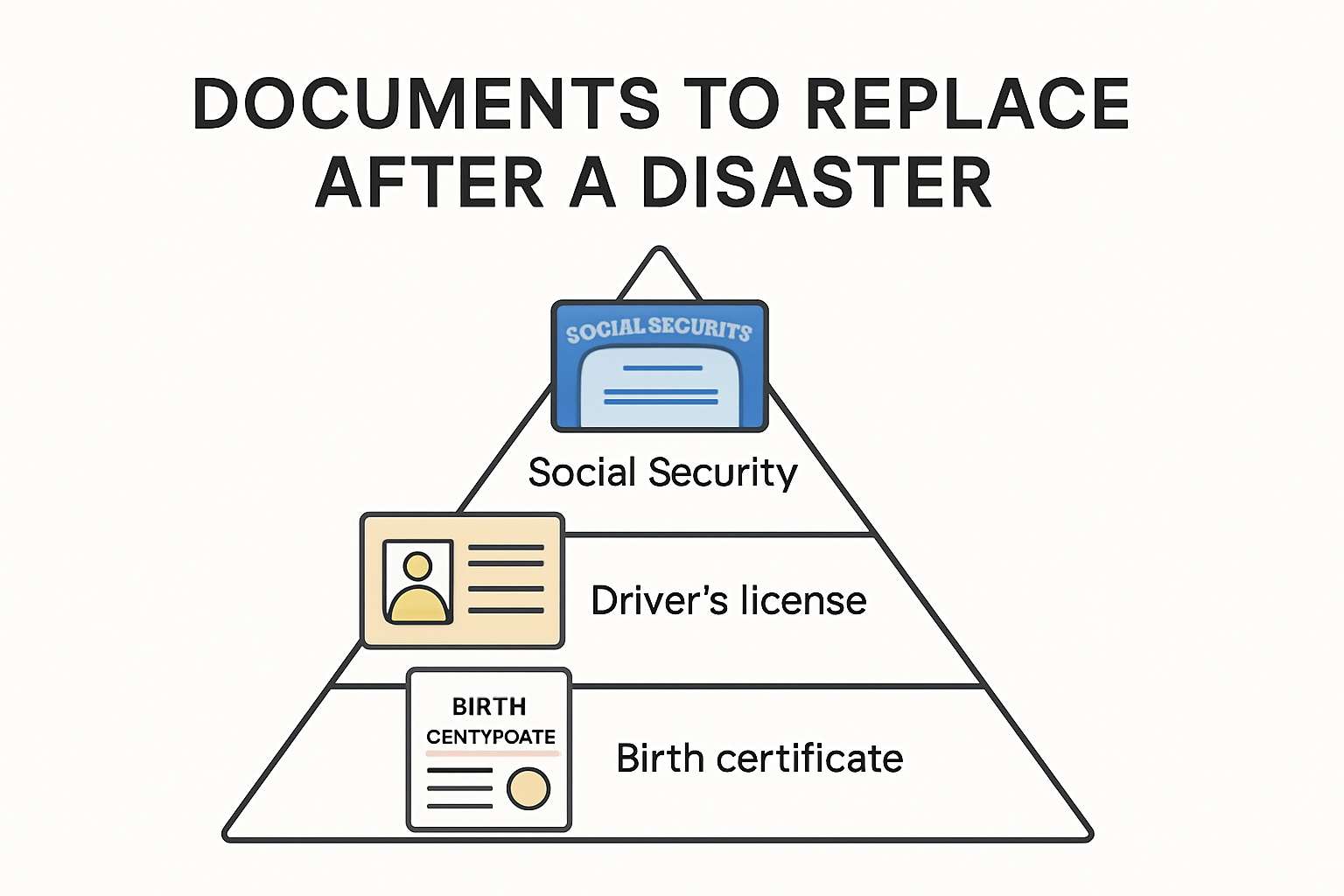
When disaster disrupts your life, certain documents become essential for restoring your identity, accessing services, and proving your legal status. The most urgent documents to replace include:
-
Social Security Card: Your primary identification document for employment, government services, and financial transactions. Without this, accessing critical recovery resources becomes challenging.
-
Driver’s License or State ID: Crucial for proving identity, driving legally, and accessing emergency services. Contact your state’s Department of Motor Vehicles for replacement procedures.
-
Birth Certificate: A foundational document required for obtaining other forms of identification and proving citizenship.
Government and Legal Documentation Replacement
According to FEMA, disaster victims have specific pathways for document replacement. The process varies depending on the type of document and the agency responsible. For instance:
-
U.S. Passport: If lost during a disaster, you can obtain expedited replacement through the U.S. State Department. Some agencies may offer reduced or waived fees for disaster victims.
-
Military Records: Veterans can replace important service documents through the National Personnel Records Center, which provides specific disaster recovery protocols.
-
Permanent Resident Cards (Green Cards): Immigrants can work with U.S. Citizenship and Immigration Services to obtain replacements, often with documentation explaining disaster circumstances.
Financial and Insurance Document Recovery
The IRS emphasizes the importance of reconstructing financial records after a disaster. Critical financial documents to replace include:
- Tax returns
- Bank statements
- Insurance policies
- Property ownership documents
- Investment and retirement account records
Pro tip: Contact your financial institutions and insurance providers immediately. Many have specialized disaster recovery protocols that can expedite document replacement.
Remember, time is of the essence. Most federal assistance programs, including FEMA aid, require supporting documents and must be submitted within 60 days of a federal disaster declaration. Delays in document replacement could potentially impact your ability to receive critical support and begin the recovery process.
While the process might seem overwhelming, systematic approach and persistence are key. Keep copies of replacement documents in a secure, digital format, and consider storing them in cloud storage or a fireproof, waterproof home safe for future protection.
By understanding what documents to replace and acting quickly, you can navigate the challenging aftermath of a disaster with greater confidence and efficiency.
Step-by-Step Process for Document Replacement
After a disaster, navigating document replacement can feel like an overwhelming maze. Your ability to methodically recover critical documents determines how quickly you can access emergency services, financial support, and begin rebuilding your life. A strategic approach transforms this complex process into manageable steps.
Immediate Documentation Recovery Actions
Your first priority is establishing a systematic plan for document replacement. Start by creating a digital inventory of lost documents and gathering any surviving paperwork or identification fragments. According to FEMA, you can begin your assistance application even without complete documentation.
Key immediate actions include:
-
Create a Document Inventory: List every lost document with specific details like issue date and last known location.
-
Secure Personal Identification: Prioritize documents proving your identity such as driver’s license, Social Security card, and birth certificate.
-
Contact Local Agencies: Reach out to county and state offices that can help expedite replacement processes.
Navigating Official Replacement Procedures
Each government agency has specific protocols for document replacement. Washington Law Help recommends collecting the following critical information before initiating replacement requests:
- Proof of identity (any remaining identification documents)
- Proof of disaster impact (FEMA declaration, insurance claim, local emergency management documentation)
- Contact information for relevant agencies
- Any surviving document fragments or digital copies
Typical replacement steps for key documents:
- Social Security Card: Apply online or visit local Social Security office
- Birth Certificate: Contact state vital records office
- Driver’s License: Visit Department of Motor Vehicles
- Passport: Submit replacement request through U.S. State Department
Financial Assistance and Fee Waiver Strategies
Document replacement can become expensive, but multiple resources exist to minimize your financial burden. The Legal Assistance Disaster Recovery Center highlights that many organizations offer fee waivers specifically for disaster victims.
Strategies to reduce replacement costs:
- Request fee waivers directly from issuing agencies
- Check with local disaster relief organizations
- Explore federal assistance programs that might cover replacement expenses
- Maintain comprehensive documentation of your replacement efforts
Pro Tip: Maintain digital backups of replacement documents. Use secure cloud storage or encrypted digital drives to prevent future loss. Take photographs of original documents and store copies in multiple secure locations.
Remember that timing matters. Most federal assistance programs require supporting documentation within 60 days of a disaster declaration. Prompt, organized action ensures you maintain access to critical support services and begin your recovery journey efficiently.
By understanding these systematic steps, you transform a potentially chaotic document replacement process into a clear, actionable path forward. Stay organized, persistent, and proactive—your comprehensive approach will help you recover faster and more effectively.
Special Considerations for Disaster Victims
Disaster recovery is rarely straightforward. Victims face unique challenges that extend far beyond document replacement, requiring compassionate and strategic approaches to rebuilding their lives. Understanding these special considerations can significantly ease the recovery process and help you navigate complex bureaucratic systems more effectively.
Vulnerable Populations and Additional Support
Some disaster victims require extra assistance and have specialized document replacement protocols. Texas State Library and Archives Commission highlights specific accommodations for different population groups:
- Elderly Individuals: May need additional support in gathering documentation and navigating replacement processes
- Individuals with Disabilities: Require accessible services and potential home-based document recovery assistance
- Non-English Speaking Victims: Need language translation services during document replacement
Pro tip: Contact local social service agencies that specialize in disaster recovery support for personalized guidance. Our guide on accessing aid provides comprehensive resources for connecting with these critical support networks.
Managing Complex Documentation Challenges
Disaster victims often encounter intricate documentation challenges that go beyond standard replacement procedures. According to FEMA, special considerations include:
- Providing alternative proof of identity when original documents are completely destroyed
- Navigating replacement processes for minors or dependents
- Addressing documentation for individuals without stable housing
Key strategies for managing these challenges:
- Maintain digital backups of important documents in secure cloud storage
- Establish multiple forms of identification
- Work closely with local emergency management offices
Financial and Legal Protections
The Legal Assistance Disaster Recovery Center emphasizes that disaster victims have unique legal protections when replacing documents:
- Many agencies offer fee waivers for document replacement
- Extended deadlines for documentation submission
- Protection against identity verification complications
Important recommendations:
- Document all communication with government agencies
- Request written confirmation of document replacement requests
- Keep copies of disaster declaration documents
Special communication considerations are crucial. When contacting agencies, provide:
- A reliable contact phone number
- A safe mailing address (which might differ from your damaged residence)
- Comprehensive details about your disaster experience
Remember that patience and persistence are your greatest allies. While the document replacement process can feel overwhelming, systematic approach and understanding of your rights will help you successfully navigate these challenges.
By recognizing and preparing for these special considerations, you transform a potentially stressful experience into a manageable recovery journey. Stay organized, seek support, and move forward with confidence.
Tips for Coordinating With Agencies and Relief Teams
Coordinating with multiple agencies and relief teams after a disaster can feel like navigating a complex maze. Successful communication and strategic interaction are crucial to accessing critical resources and expediting your recovery process. Understanding how to effectively engage with these organizations can significantly reduce stress and accelerate your document replacement journey.
Effective Communication Strategies
Clear and organized communication is your most powerful tool when working with government agencies and relief organizations. FEMA recommends developing a systematic approach to agency interactions:
- Maintain a detailed log of all communications
- Keep copies of every submitted document
- Use official communication channels
- Be prepared with all necessary identification and proof of disaster impact
Pro tip: Create a dedicated email address and phone number for disaster recovery communications to help you track interactions more efficiently. Learn more about coordinating disaster response to streamline your recovery process.
Navigating Multiple Agency Requirements
Each agency has unique protocols for document replacement. The National Archives highlights the importance of understanding specific agency requirements:
- Military Records: Contact the National Personnel Records Center
- Social Security Documents: Use SSA.gov online portal
- Medicare Cards: Utilize Medicare.gov replacement services
- Passport Replacement: Work directly with the U.S. State Department
Key strategies for multi-agency coordination:
- Create a comprehensive document tracking spreadsheet
- Set follow-up reminders for each agency
- Understand each agency’s specific documentation requirements
- Prepare multiple copies of supporting evidence
Maximizing Relief Team Support
Relief teams are critical partners in your recovery journey. The Legal Assistance Disaster Recovery Center provides insights into working effectively with these support networks:
- Be transparent about your specific needs
- Request written documentation of all assistance
- Understand the full range of support services available
- Provide accurate and consistent information across all interactions
Important communication considerations:
- Bring a support person to complex meetings
- Ask for clarification if instructions are unclear
- Request assistance in your preferred language
- Understand your rights during the recovery process
When coordinating with agencies, always:
- Remain patient and persistent
- Document every interaction
- Follow up consistently
- Seek help from local disaster recovery support groups
Remember that relief teams and agencies want to help you. Their primary goal is supporting disaster victims through challenging times. By approaching interactions with organization, clarity, and persistence, you can effectively navigate the complex landscape of document replacement and recovery.
Your systematic approach transforms a potentially overwhelming process into a manageable journey. Stay focused, remain proactive, and don’t hesitate to seek additional support when needed.
Frequently Asked Questions
What should I prioritize replacing after a disaster?
Focus on essential documents such as your Social Security card, driver’s license, and birth certificate, as these are crucial for accessing services and support.
How can I expedite the replacement of lost documents?
Contact local agencies, such as the Department of Motor Vehicles or the Social Security Administration, to inquire about their expedited replacement protocols and potential fee waivers for disaster victims.
What documents do I need to provide to replace my ID or passport?
Typically, you will need to present proof of identity, proof of disaster impact (such as a FEMA declaration), and any remaining identification documents to the appropriate agencies during the application process.
Are there any financial assistance options available for document replacement?
Yes, many agencies and organizations offer fee waivers for disaster victims, and you can check with local disaster relief organizations and federal assistance programs for resources to cover replacement costs.
Ready to Rebuild Faster? Let Us Help You Replace More Than Paperwork
The path to recovery after a disaster extends far beyond finding lost documents. Painful delays can keep you from accessing emergency housing, essential services, and urgent support while you scramble to piece together everything the storm or fire took away. If you are feeling lost in paperwork, overwhelmed by agency requirements, or stressed by looming deadlines for FEMA aid, you are not alone. Our expert team understands the significance of swift, compassionate help when time matters most.
DisasterVictimServices.com is dedicated to guiding you every step of the way. Whether you need to secure immediate temporary housing, coordinate with insurance, or navigate agency protocols, we make your transition from crisis to stability smoother and less stressful. You do not have to face this maze alone. Visit our home page to connect with specialists who can advocate for you, streamline logistics, and ensure no critical detail is overlooked. Choose confidence and support during a tough time. Get in touch now and take the next step toward reclaiming your security and peace of mind.
Recommended Articles
- Home Safety Tips 2025: Essential Guide for Disaster Recovery – Disaster Victim Services | Helping You Recover After Disaster
- How to Access Aid in 2025: A Guide for Disaster Victims and Responders – Disaster Victim Services | Helping You Recover After Disaster
- how to coordinate response – Disaster Victim Services | Helping You Recover After Disaster