


Responder fatigue is becoming a silent threat for emergency professionals everywhere. Shockingly, about 40 percent of EMS workers now report working more than 16 shifts a month, pushing them to the limits of physical and mental exhaustion. Most assume it’s just about feeling tired, but the real danger lies in missed warning signs that can put both responders and the public at risk.
Table of Contents
- What Are Responder Fatigue Warning Signs?
- Who Is At Risk For Responder Fatigue?
- Common Symptoms To Watch For In 2025
- How To Support Responders And Families
Quick Summary
| Takeaway | Explanation |
|---|---|
| Recognize Warning Signs | Understanding physical, emotional, and cognitive symptoms of responder fatigue is crucial for maintaining performance in high-stress environments. Watch for persistent yawning, irritability, and difficulty concentrating. |
| Identify High-Risk Groups | Emergency professionals such as EMS workers, firefighters, and medical staff face significant fatigue risks due to demanding schedules and work conditions. Targeted interventions for these groups are essential. |
| Implement Support Strategies | Organizations should develop robust support systems, including mandatory rest periods, peer support networks, and access to mental health resources to help mitigate fatigue effects. |
| Prioritize Family Support | Families of emergency responders need educational resources and psychological support to manage the emotional strain linked to their loved ones’ work experiences. |
| Adopt Holistic Wellness Approaches | Leveraging technology for health monitoring and integrated wellness programs can enhance the overall recovery and resilience of responders, ensuring their well-being and effectiveness. |
What Are Responder Fatigue Warning Signs?

Responder fatigue represents a critical yet often overlooked challenge in emergency response environments. Understanding the warning signs becomes paramount for professionals who consistently operate under high-stress conditions. These signs manifest across physical, emotional, and cognitive domains, potentially compromising individual and team performance during critical missions.
Physical Manifestations of Responder Exhaustion
Physical warning signs are often the most immediate and observable indicators of responder fatigue. Research from the Centers for Disease Control and Prevention highlights several key physical symptoms that emergency personnel should monitor. These include persistent yawning, drooping eyelids, involuntary eye rubbing, and unexpected microsleeps lasting several seconds. Reduced physical coordination becomes evident through slower reaction times and diminished motor skills.
Emergency professionals might experience muscle weakness, tremors, and decreased grip strength. Headaches, dizziness, and blurred vision can also signal advanced fatigue states. These physical symptoms not only impact individual performance but can create significant risks in high-stakes emergency scenarios where precision and alertness are critical.
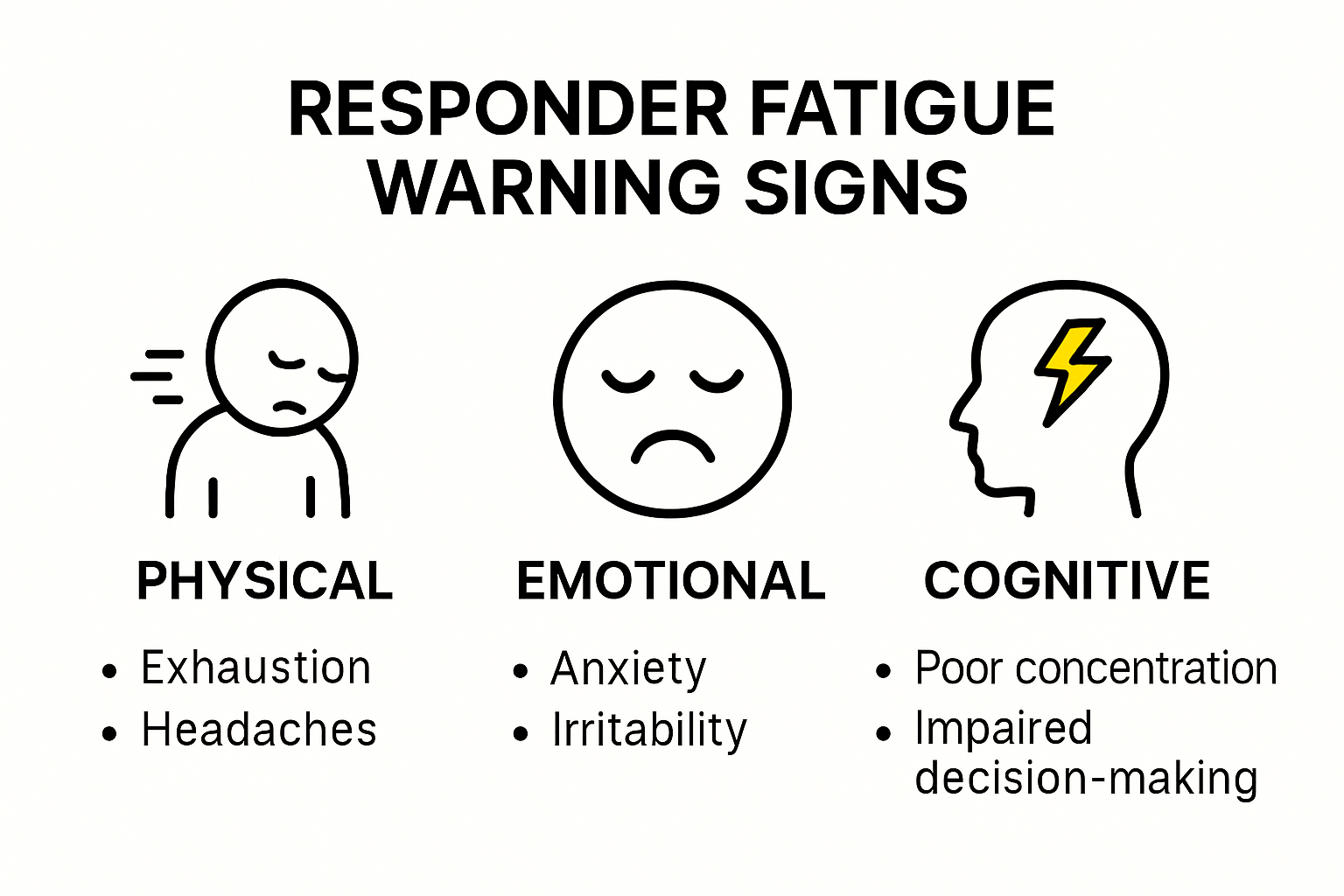
Here is a table summarizing the most common physical, emotional, and cognitive warning signs of responder fatigue discussed in this section:
| Symptom Type | Example Warning Signs |
|---|---|
| Physical | Persistent yawning, drooping eyelids, involuntary eye rubbing, microsleeps, muscle weakness, tremors, decreased grip strength, headaches, dizziness, blurred vision |
| Emotional | Increased irritability, mood instability, heightened anxiety, emotional detachment, reduced empathy |
| Cognitive | Difficulty concentrating, memory lapses, compromised decision-making, fragmented attention, deteriorated problem-solving |
Emotional and Cognitive Warning Indicators
Beyond physical symptoms, responder fatigue profoundly affects emotional and cognitive functioning. Occupational health research indicates that exhausted professionals often display increased irritability, mood instability, and heightened anxiety. Emotional detachment and reduced empathy can emerge as defense mechanisms against overwhelming stress.
Cognitive impairments represent another crucial dimension of responder fatigue. Professionals may experience difficulty concentrating, memory lapses, and compromised decision-making abilities. Attention becomes fragmented, and complex problem-solving skills deteriorate. These cognitive challenges can be particularly dangerous in emergency response environments where split-second decisions can determine life and death outcomes.
Recognizing and Addressing Warning Signs
Early recognition of responder fatigue warning signs requires a proactive, systematic approach. Emergency organizations must implement comprehensive monitoring protocols that encourage self-assessment and peer observation. Training programs should educate professionals about recognizing these symptoms in themselves and their colleagues.
Preventative strategies include mandated rest periods, rotation schedules, and psychological support services. Learn more about first responder coordination strategies that can help mitigate fatigue risks. Technological solutions like wearable monitoring devices and advanced scheduling algorithms can also play a crucial role in tracking and managing responder energy levels.
Ultimately, addressing responder fatigue is not just an individual responsibility but a collective commitment to maintaining the highest standards of emergency response effectiveness and personal well-being.
Who Is at Risk for Responder Fatigue?
Responder fatigue does not discriminate, affecting professionals across multiple emergency response sectors. Understanding the specific groups most vulnerable helps organizations develop targeted prevention and support strategies. While no single demographic is immune, certain professional categories and work conditions significantly elevate fatigue risk.
High-Risk Emergency Response Professionals
Research from the National Center for Biotechnology Information reveals that emergency medical services (EMS) personnel are particularly susceptible to fatigue. Approximately 40% of EMS workers report working more than 16 shifts per month, dramatically increasing their risk of exhaustion and potential performance degradation. Firefighters, police officers, disaster relief workers, and military personnel similarly face extreme work conditions that challenge human endurance.
Emergency room medical staff represent another high-risk group. Prolonged hospital shifts, often spanning 12 to 24 hours, create significant physiological and psychological strain. Nurses and doctors frequently work consecutive shifts with minimal recovery time, leading to cumulative fatigue that compromises patient care and personal well-being. The constant exposure to high-stress environments further compounds their vulnerability.
The following table outlines groups at highest risk of responder fatigue and the contributing factors for each, as described in this section:
| Professional Group | Key Contributing Factors |
|---|---|
| EMS Workers | 16+ shifts/month, long hours, high stress |
| Firefighters, Disaster Relief, Military | Extreme work conditions, endurance demands |
| Emergency Room Staff | 12-24 hour shifts, consecutive shifts, high psychological strain |
| Nurses, Doctors | Minimal recovery time, cumulative fatigue |
Systemic Work Conditions Increasing Fatigue Risk
Certain systemic work conditions dramatically elevate responder fatigue risks. Guidance from disaster operations research highlights several critical factors. Night shifts consistently disrupt natural circadian rhythms, causing significant sleep pattern disturbances. Professionals working rotating or extended shifts face increased challenges in maintaining regular sleep cycles.
Additionally, workers in disaster response and humanitarian aid frequently encounter unpredictable environments that demand constant alertness. Prolonged exposure to extreme temperatures, uncertain work schedules, and limited rest opportunities create perfect conditions for accelerated fatigue. Remote location assignments, where standard infrastructure and support systems are minimal, further intensify these challenges.
Psychological and Demographic Factors
Psychological resilience and individual characteristics also influence fatigue susceptibility. Younger professionals might initially demonstrate higher physical endurance but can experience more rapid cognitive fatigue. Conversely, experienced responders might develop better coping mechanisms but face increased cumulative stress from years of high-intensity work.
Check out our guide on first responder coordination strategies to understand how organizations can mitigate these risks. Factors such as pre-existing health conditions, personal stress levels, and individual sleep habits further modulate an individual’s fatigue vulnerability.
Recognizing these risk factors is not about creating alarm but empowering emergency response organizations to develop comprehensive support systems. By understanding who is most at risk, we can implement targeted interventions that protect our most critical human resources: the dedicated professionals who respond when others are in need.
Common Symptoms to Watch For In 2025
As emergency response landscapes evolve, understanding the nuanced symptoms of responder fatigue becomes increasingly critical. The year 2025 brings heightened awareness about the complex manifestations of professional exhaustion, demanding sophisticated recognition and intervention strategies across emergency service sectors.
Physical and Cognitive Warning Indicators
Research from the Centers for Disease Control and Prevention highlights a comprehensive range of symptoms that signal potential responder fatigue. Physical manifestations extend beyond simple tiredness, encompassing involuntary micro-sleeps, reduced motor coordination, and diminished sensory perception. First responders might experience tremors, unexplained muscle weakness, and significant decreases in grip strength and reaction times.
Cognitive symptoms represent another crucial dimension of fatigue. Professionals may encounter complex mental challenges including persistent “brain fog,” reduced information processing speed, and unexpected memory lapses. Decision-making capabilities become compromised, with increased likelihood of misinterpreting critical situational information. These cognitive disruptions can transform routine emergency scenarios into potentially dangerous encounters.
Emotional and Psychological Manifestations
Occupational health research reveals that emotional symptoms often precede more severe fatigue states. Emergency personnel might display heightened irritability, emotional detachment, and unexpected mood swings. Withdrawal from professional and personal interactions becomes a significant warning sign, indicating deeper psychological strain.
Psychological resilience diminishes as fatigue progresses, potentially leading to increased risk-taking behaviors and reduced empathy. Professionals might struggle with maintaining professional boundaries, exhibiting uncharacteristic communication patterns or making inappropriate remarks. These emotional indicators can significantly impact team dynamics and individual performance.
Emerging Diagnostic Considerations
The medical community increasingly recognizes fatigue as a complex syndrome with multifaceted implications. Clinical research suggests that chronic fatigue syndrome represents a significant concern for high-stress professionals. Symptoms extending beyond six months, including unrefreshing sleep and post-exertional malaise, demand comprehensive medical evaluation.
Explore our latest guide on emergency response coordination to understand comprehensive intervention strategies. Technological advancements in 2025 now enable more sophisticated fatigue monitoring, including wearable devices that track physiological markers and early warning signs.
Recognizing these symptoms represents more than individual health management. It is a critical component of maintaining emergency response system integrity, ensuring professionals remain capable, compassionate, and effective when communities need them most. Organizations must cultivate environments that prioritize early detection, supportive interventions, and holistic professional well-being.
How to Support Responders and Families
Supporting emergency responders and their families requires a comprehensive, multifaceted approach that addresses physical, psychological, and systemic challenges. The complex nature of emergency response work demands targeted interventions that recognize the unique stressors these professionals and their loved ones encounter.
Organizational Support Strategies
Research from the Centers for Disease Control and Prevention highlights the critical sources of stress for emergency professionals, including witnessing human suffering, personal risk exposure, intense workloads, and life-or-death decision making. Organizations must develop robust support systems that go beyond traditional workplace wellness programs.
Comprehensive support involves implementing mandatory rest periods, creating flexible scheduling options, and providing access to specialized mental health resources. Peer support networks play a crucial role, allowing professionals to share experiences and develop collective resilience. Regular psychological assessments, confidential counseling services, and stress management workshops become essential components of a holistic support framework.
Family Support and Communication
National Institute for Occupational Safety and Health research underscores the importance of family support in managing responder stress. Families often bear the emotional burden of their loved ones work, experiencing secondary traumatic stress and uncertainty. Communication programs that educate families about potential emotional and psychological challenges become critical.
Organizations should develop family support initiatives that include:
- Regular family information sessions
- Psychological support resources for family members
- Communication training for responders and their families
- Financial counseling and stress management workshops
Holistic Wellness and Recovery Approaches
Learn about comprehensive disaster recovery support to understand the broader context of responder wellness. Advanced wellness programs in 2025 integrate cutting-edge technologies and personalized approaches. Wearable health monitoring devices, artificial intelligence-driven mental health assessments, and telehealth counseling services provide unprecedented support mechanisms.
Holistic recovery strategies should address multiple dimensions of wellness:
- Physical health monitoring and intervention
- Mental health counseling and trauma support
- Financial planning and stress reduction resources
- Career development and professional resilience training
Recognizing that responder wellness extends beyond individual professionals, these comprehensive approaches create supportive ecosystems. By prioritizing the health and well-being of emergency responders and their families, we not only protect our critical first-line professionals but also ensure more effective, compassionate emergency response capabilities for our communities.
Frequently Asked Questions
What are the warning signs of responder fatigue?
Responder fatigue warning signs include physical symptoms like persistent yawning, muscle weakness, and slow reaction times. Emotional indicators involve increased irritability and mood swings, while cognitive signs may include difficulty concentrating and memory lapses.
Who is most at risk for responder fatigue?
EMS workers, firefighters, police officers, disaster relief personnel, and emergency room staff are at the highest risk for responder fatigue due to demanding schedules, high-stress environments, and limited recovery time.
How can organizations support responders to prevent fatigue?
Organizations can support responders by implementing mandatory rest periods, creating flexible work schedules, providing access to mental health resources, and developing peer support networks to enhance resilience.
What holistic approaches can help emergency responders recover from fatigue?
Holistic recovery approaches can include wearable health monitoring, telehealth counseling, and personalized wellness programs that address physical, mental, and emotional health needs, helping responders maintain their well-being.
Take Action Against Responder Fatigue and Strengthen Recovery Support
Responder fatigue is a growing threat in the emergency response field. As shared in this article, fatigue not only endangers responders but also impacts the quality of care communities receive in times of crisis. Recognizing physical, emotional, and cognitive warning signs such as persistent exhaustion, difficulty concentrating, and emotional withdrawal is just the first step. Yet addressing these challenges requires more than awareness. It demands strong, supportive systems that prioritize responder well-being and ensure no one faces these challenges alone.
At Disaster Victim Services, we are committed to helping first responders, families, and disaster victims not only recover but thrive. Our resource hub in Uncategorized is designed for those seeking expert guidance about responder support, housing coordination, and comprehensive disaster recovery. If recent events have highlighted your need to act quickly for yourself or your team, don’t wait. Visit Disaster Victim Services now to access proven solutions and take the next step toward effective recovery and responder wellness.
Recommended
- First Responder Coordination Tips 2025: Effective Support for All – Disaster Victim Services | Helping You Recover After Disaster
- Disaster Preparedness Checklist 2025: Essential Guide for All Responders – Disaster Victim Services | Helping You Recover After Disaster
- Essential Emergency Preparedness Tips for 2025: A Guide for All – Disaster Victim Services | Helping You Recover After Disaster
- Home Safety Improvements 2025: Essential Updates for Secure Living – Disaster Victim Services | Helping You Recover After Disaster
- Emergency Response Trends 2025: What Stakeholders Need to Know – Disaster Victim Services | Helping You Recover After Disaster
- How to Improve Response After Disasters: Essential Strategies for 2025 – Disaster Victim Services | Helping You Recover After Disaster