


Emergency response is changing faster than ever before. Ninety percent of US law enforcement agencies now use artificial intelligence for real-time decisions and resource management. That kind of adoption would have sounded futuristic just a few years ago. Yet what might surprise you is that the real disruption goes far beyond algorithms and gadgets. Old barriers between agencies and relief partners are crumbling as unified communication and shared training become the new standard, making 2025 a turning point not just in technology, but in human connection when it matters most.
Table of Contents
- Innovative Technology Shaping Disaster Response
- Collaboration Between Agencies And Relief Partners
- Support Strategies For Victims And Displaced Families
- Insurance And Mitigation Trends Impacting Recovery
Quick Summary
| Takeaway | Explanation |
|---|---|
| AI Enhances Decision Making | 90% of U.S. law enforcement agencies are leveraging AI for real-time decision-making and resource management, improving crisis scenario predictions and response precision. |
| Unified Communication is Key | Agencies are integrating communication tools to share real-time data, improving decision-making and coordination during emergencies. |
| Comprehensive Support for Victims | Support strategies must address both emotional and practical needs of victims, combining mental health services with assistance in navigating recovery processes. |
| Insurance is Evolving | Homeowners may face a 21% increase in premiums due to climate risks, prompting insurers to mandate resiliency action plans and invest in proactive risk prevention technologies. |
| Collaboration Drives Success | Effective disaster response relies on building flexible, integrated collaborative networks among agencies, enhanced through joint training and resource sharing. |
Innovative Technology Shaping Disaster Response
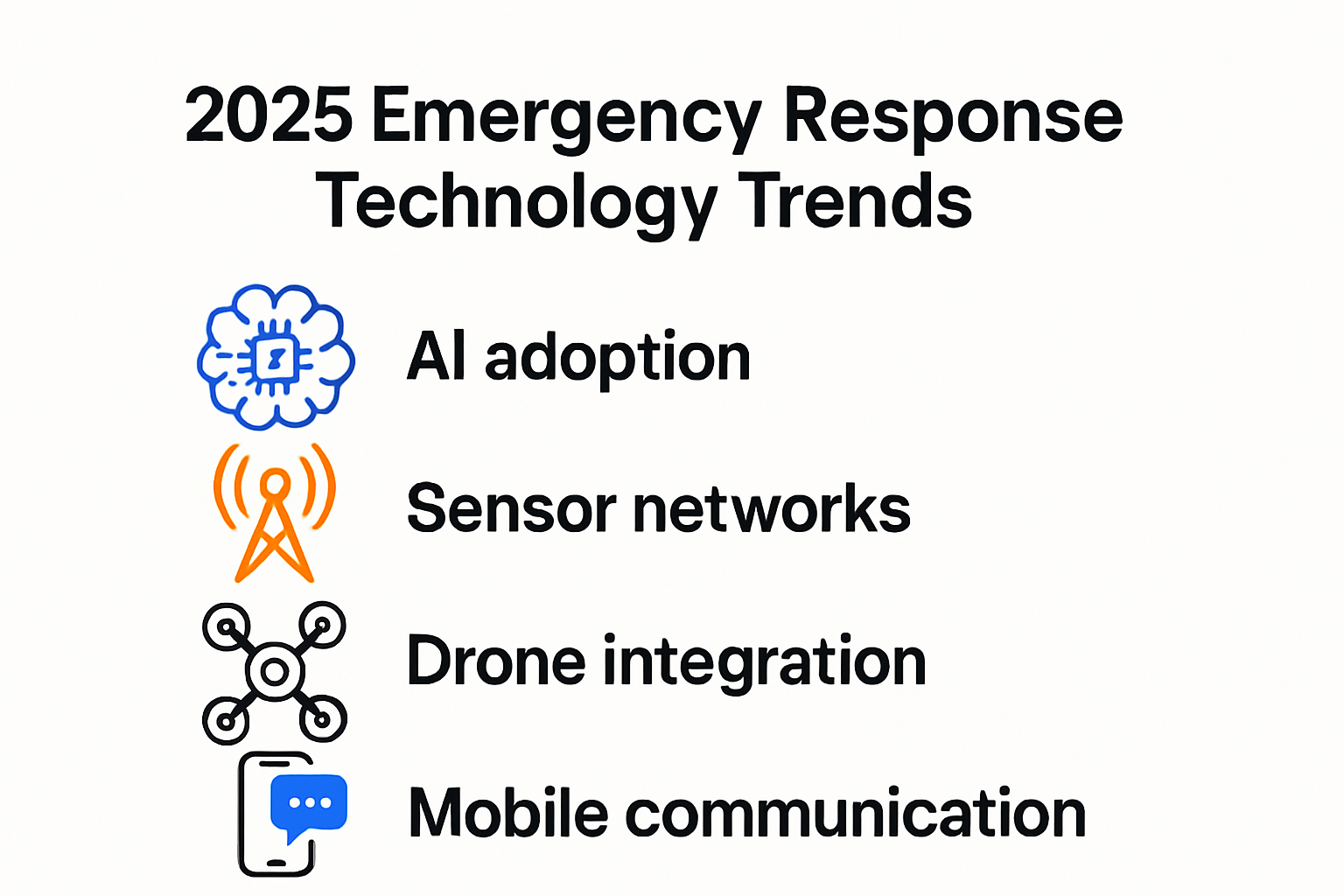
The emergency response landscape is undergoing a technological revolution that promises unprecedented speed, accuracy, and coordination in disaster management. Artificial intelligence and advanced sensor networks are transforming how first responders detect, assess, and respond to critical situations.
AI and Real Time Decision Making
Artificial intelligence is reshaping emergency response capabilities at an extraordinary pace. Explore our guide on disaster coordination to understand these transformative shifts. According to Avera Road Advisors, 90% of U.S. law enforcement agencies are now utilizing AI for real-time decision-making and resource management. This technological integration allows agencies to predict potential crisis scenarios, allocate resources more efficiently, and respond with unprecedented precision.
The integration of AI into emergency systems enables faster threat detection and more strategic response protocols. Mobile devices have become critical communication tools, with 89% of first responders relying on these platforms for instantaneous updates and cross-agency collaboration.
Advanced Sensor and Drone Technologies
Emergency response technologies are no longer confined to traditional methods. SenseNet represents a breakthrough in sensor network technology, providing real-time wildfire detection alerts often before 911 calls are initiated. These advanced sensor networks can automatically trigger notifications across multiple jurisdictions through integrated platforms like WebEOC Nexus.
Drone deployment has also revolutionized emergency response strategies. The emerging Drone as First Responder (DFR) programs allow rapid aerial deployment for comprehensive data collection and real-time situational awareness. These technological advancements mean emergency teams can now gather critical information faster and more safely than ever before.
Integrated Communication and Data Systems
The future of emergency response hinges on seamless technological integration. Advanced communication platforms now enable multiple agencies to share real-time data, coordinate resources, and make informed decisions within seconds. This interconnected approach reduces response times and increases the effectiveness of emergency interventions.
While technology offers remarkable capabilities, human expertise remains paramount. These technological tools are designed to augment human skills, not replace the critical thinking and compassionate response that define emergency services. The goal is to provide first responders with the most advanced tools possible, enabling them to save lives more efficiently and effectively.

As we move through 2025, the convergence of artificial intelligence, advanced sensor networks, and integrated communication systems will continue to redefine emergency response capabilities. Stakeholders across disaster management sectors must stay informed and adaptable to leverage these transformative technologies.
Collaboration Between Agencies and Relief Partners
The complex nature of modern emergencies demands unprecedented levels of collaboration and communication among diverse agencies and relief partners. In 2025, the landscape of emergency response is defined by integrated systems that break down traditional operational silos and create more responsive, efficient networks.
Unified Communication Platforms
Emergency management has evolved beyond fragmented communication strategies. Learn about coordinating disaster response to understand these critical shifts. According to Trauma Soft, EMS agencies are now actively integrating communication tools with local government, law enforcement, and healthcare providers. This unified approach creates a seamless information flow that accelerates decision-making and strengthens coordinated emergency response efforts.
Cloud-based systems have become the backbone of these collaborative networks. Mark43 reports that leading public safety agencies are embracing cloud-native technologies and artificial intelligence to enhance efficiency, strengthen cybersecurity, and optimize resource allocation.
Cross Agency Resource Sharing
Modern emergency response requires a holistic approach where agencies view collaboration as a strategic necessity rather than an optional practice. Public safety platforms now integrate cloud-based systems, mobile tools, and Internet of Things (IoT) devices, enabling real-time data sharing across multiple organizations.
This technological integration allows for dynamic resource allocation. When one agency encounters resource constraints, they can instantly communicate with partner organizations to redistribute personnel, equipment, and support services. Such flexibility ensures that communities receive comprehensive support during critical moments.
Training and Interoperability
Successful collaboration extends beyond technological solutions. Agencies are investing heavily in joint training programs that develop shared protocols, communication standards, and mutual understanding of operational procedures. These programs ensure that when emergencies occur, teams from different organizations can work together seamlessly.
Interoperability has become a critical benchmark for emergency response effectiveness. Agencies now prioritize technologies and training that allow smooth information exchange, coordinated decision-making, and synchronized action across multiple jurisdictions and organizational boundaries.
As emergency challenges become more complex and unpredictable, the ability to collaborate effectively will determine the success of disaster response efforts. The future belongs to agencies and relief partners who can create flexible, integrated, and technologically advanced collaborative networks.
Support Strategies for Victims and Displaced Families
The aftermath of a disaster extends far beyond immediate physical damage. Victims and displaced families face profound emotional, psychological, and practical challenges that require comprehensive, compassionate support strategies. Understanding and implementing robust assistance protocols has become crucial in 2025.
Comprehensive Crisis Intervention
Learn about navigating disaster claims with expert guidance through complex recovery processes. According to the Office for Victims of Crime, communities must develop holistic victim assistance plans that address both immediate and long-term support needs. These plans go beyond temporary relief, focusing on sustainable recovery pathways for individuals and families traumatized by disasters.
The FBI’s Victim Services Division provides critical interventions that include crisis counseling, emergency housing coordination, and targeted referrals to local support resources. This multifaceted approach ensures victims receive comprehensive care during their most vulnerable moments.
Mental Health and Psychological Support
Disaster recovery is not just about rebuilding physical infrastructure but healing psychological wounds. Mental health professionals now integrate trauma-informed care approaches that recognize the complex emotional landscape survivors navigate. Support strategies include immediate psychological first aid, ongoing counseling services, and community-based recovery groups.
Trauma-responsive support acknowledges that recovery is non-linear. Some individuals might experience delayed stress responses months after the initial incident. Therefore, support systems must remain flexible, accessible, and responsive to evolving psychological needs.
Practical Assistance and Resource Navigation
Beyond emotional support, victims require practical assistance in navigating complex bureaucratic processes. This includes help with insurance claims, accessing government aid, finding temporary housing, and reconnecting with essential services. Support teams now provide personalized guidance, helping families understand their rights and available resources.
Technology plays a crucial role in streamlining these support mechanisms. Digital platforms enable faster, more efficient resource matching, allowing victims to access critical services quickly. Mobile applications and centralized information systems help displaced families track their recovery progress and connect with relevant support networks.
As disasters become more frequent and complex, support strategies must continue evolving. The most effective approaches combine technological innovation, professional expertise, and genuine human compassion. By creating adaptive, comprehensive support systems, communities can help victims not just survive disasters but rebuild their lives with dignity and hope.
Insurance and Mitigation Trends Impacting Recovery
The insurance landscape in 2025 is experiencing profound transformations, driven by increasing climate risks, technological innovations, and evolving regulatory frameworks. These shifts are fundamentally reshaping how homeowners, businesses, and communities approach risk management and disaster recovery.
Evolving Insurance Premium Structures
Learn about working with mitigation experts to understand proactive risk reduction strategies. According to USI Insurance, homeowners can anticipate an average premium increase of 21% in 2025. This surge is attributed to rising inflation, escalating reconstruction costs, and the increasing frequency of severe weather events.
Insurers are no longer passive risk bearers. They are now actively requiring comprehensive resiliency action plans from policyholders in high-risk areas. Some insurance providers are even strategically withdrawing coverage from regions with persistent severe weather challenges, compelling property owners to invest in robust mitigation strategies.
Proactive Risk Prevention Technologies
The traditional insurance model of “repair and replace” is rapidly evolving into a “connect and protect” approach. Wint AI reports that insurers are now encouraging or mandating the use of sensor-based and data-driven technologies to predict and prevent potential losses. These advanced systems focus particularly on water-related and climate-driven perils, enabling more proactive risk management.
Sensor technologies can now detect early warning signs of potential damage, such as water leaks, structural weaknesses, or environmental changes. By providing real-time monitoring and predictive analytics, these technologies help policyholders mitigate risks before they escalate into significant damages.
Regulatory Landscape and Consumer Protection
Regulatory bodies are responding to the complex insurance challenges by implementing consumer protection measures. Risk Strategies highlights emerging regulations in catastrophe-prone states, including moratoriums on policy cancellations following major disasters and increased emphasis on mitigation education.
These regulatory shifts aim to address critical challenges of insurance availability and affordability. By mandating more transparent practices and encouraging proactive risk reduction, regulators are helping create a more resilient insurance ecosystem. Policyholders are now incentivized to invest in prevention, with many insurers offering reduced premiums for implementing advanced mitigation technologies.
As climate risks continue to evolve, the insurance industry is transforming from a reactive model to a proactive, technology-driven approach. Successful recovery increasingly depends on understanding and leveraging these emerging trends, requiring collaboration between insurers, policyholders, technology providers, and regulatory bodies.
The future of insurance is not just about financial protection but about creating comprehensive, intelligent risk management strategies that protect communities and individual assets in an increasingly unpredictable world.
Frequently Asked Questions
What are the key technologies shaping emergency response in 2025?
Innovative technologies such as artificial intelligence, advanced sensor networks, and integrated communication systems are central to enhancing disaster response capabilities.
How is artificial intelligence improving emergency decision-making?
Artificial intelligence enhances decision-making by enabling 90% of U.S. law enforcement agencies to make real-time resource allocations and predict crisis scenarios more accurately.
Why is collaboration between agencies essential for disaster response?
Collaboration is crucial as it allows for unified communication, resource sharing, and joint training, leading to more effective and timely responses in emergencies.
What support strategies are being developed for disaster victims in 2025?
Comprehensive support strategies now include mental health services, practical assistance for navigating recovery processes, and crisis intervention designed to meet both emotional and logistical needs.
Ready for the Next Era of Emergency Response? Act Now
The shift to AI-powered decision making and unified agency collaboration highlighted in “Emergency Response Trends 2025: What Stakeholders Need to Know” demands fast, compassionate solutions for victims who need help the most. If you are facing the reality of disaster displacement, you know how overwhelming it can be to secure emergency housing, sort out insurance claims, and navigate support systems across agencies. The challenge is real—every second counts when it comes to reconnecting families, finding safe shelter, and regaining control after a crisis.
Let us help lighten your load. Our New Disaster Victim Services category offers swift access to essential recovery resources and immediate emergency housing, backed by strong partnerships across agencies described in the article. Visit DisasterVictimServices.com to connect with experts who guide you every step of the way. Do not wait—start your recovery journey now for safety and support when it matters most.
Recommended Articles
- How to Coordinate Response in Disasters: A Guide for 2025 – Disaster Victim Services | Helping You Recover After Disaster
- Home Safety Tips 2025: Essential Guide for Disaster Recovery – Disaster Victim Services | Helping You Recover After Disaster
- First Aid Basics 2025: Essential Guide for Disaster Recovery Teams – Disaster Victim Services | Helping You Recover After Disaster