
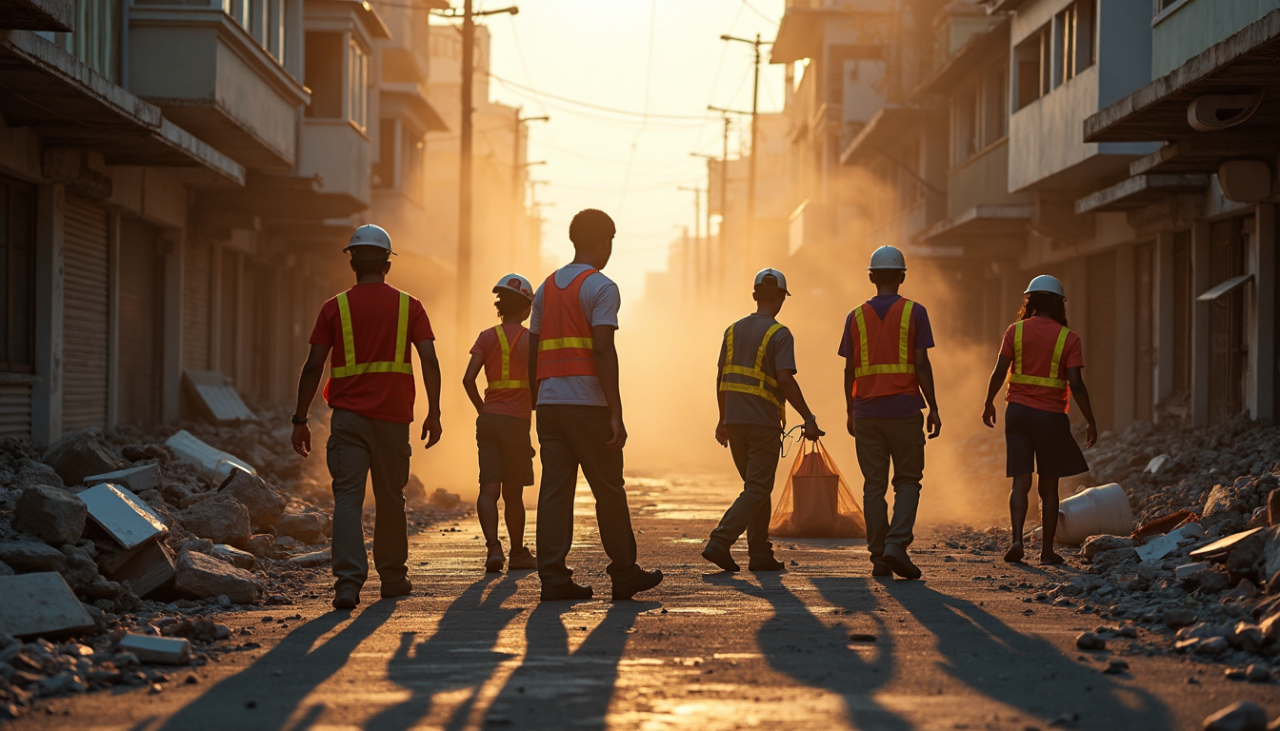
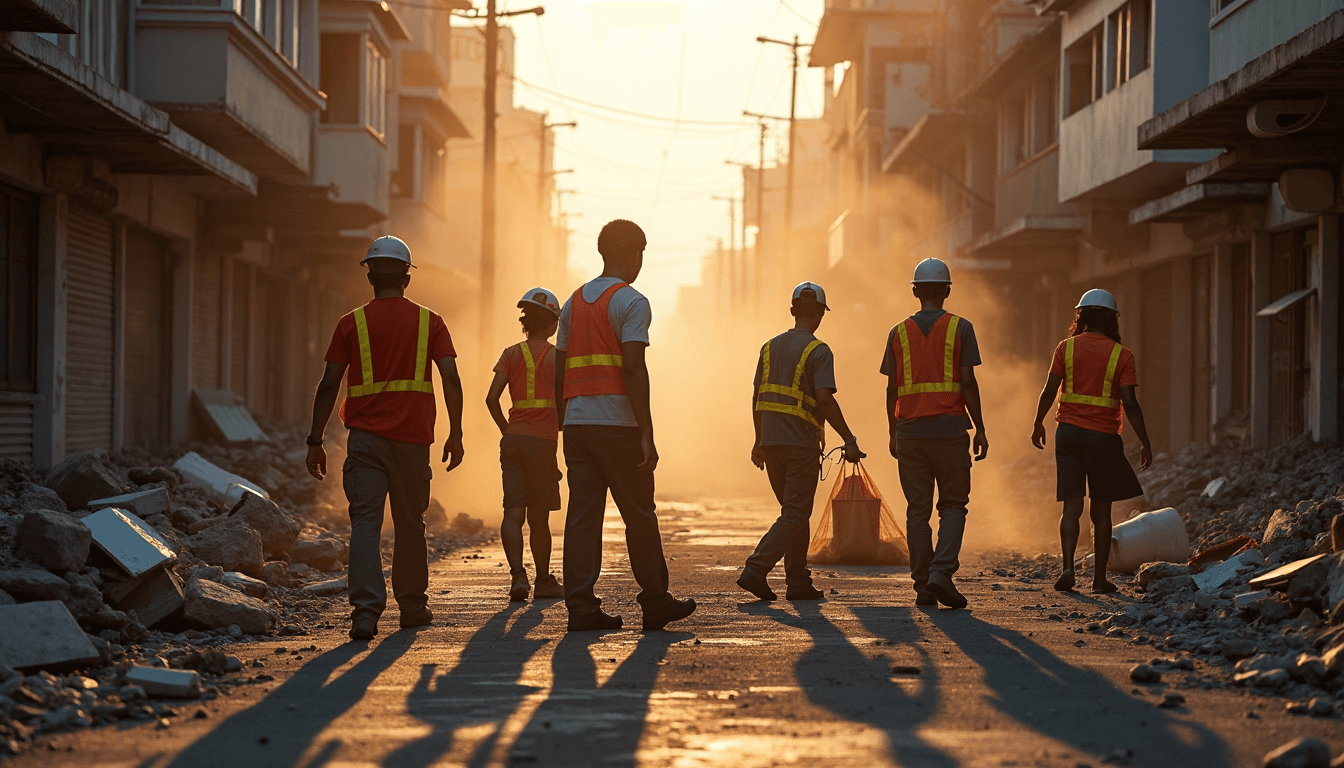
Disasters are hitting harder and more frequently than ever, with over 400 natural disasters worldwide recorded in just one year. Most people focus on dramatic rescue headlines or viral storm videos. Yet, the real difference comes from what is often overlooked—a meticulously coordinated disaster response chain that decides how many lives are saved and how quickly communities recover. Here’s where the true story of resilience and rapid response begins.
Table of Contents
- Key Stages Of The Disaster Response Chain
- Roles And Responsibilities In Disaster Response
- Improving Disaster Response Chain Efficiency
- Best Practices For Supporting Victims And Families
Quick Summary
| Takeaway | Explanation |
|---|---|
| Four Phases of Disaster Management | Effective disaster management includes four stages: Mitigation, Preparedness, Response, and Recovery, each crucial for improving community resilience and post-disaster recovery. |
| Critical Response Phase Objectives | During the response phase, key activities such as search and rescue, emergency medical care, and resource distribution are essential for meeting the immediate needs of affected populations. |
| Role of Coordination | Successful disaster response relies on the coordinated efforts of federal, state, and local agencies, emphasizing clear roles and robust communication to support effective emergency management. |
| Technology and Operational Efficiency | Emerging technologies like AI and GIS, combined with strategic operational management techniques, enhance resource allocation and response efficiency during disasters. |
| Comprehensive Victim Support | Establishing Family Assistance Centers and integrated support systems are vital for addressing the immediate and long-term psychological needs of disaster victims and their families. |
Key Stages of the Disaster Response Chain
The disaster response chain represents a critical framework for managing complex emergency situations, providing a systematic approach to addressing community challenges during catastrophic events. Understanding these key stages is essential for effective emergency management and rapid recovery.
The Four Fundamental Phases of Disaster Management
Disaster management experts have identified four interconnected stages that form the comprehensive disaster response chain. Our comprehensive guide on emergency response basics provides deeper insights into each stage.
According to the National Academies of Sciences, these stages are strategically designed to create a comprehensive approach to disaster management:
- Mitigation: Proactive strategies to reduce potential disaster risks and minimize potential damage
- Preparedness: Advanced planning and resource allocation to ensure rapid response capabilities
- Response: Immediate actions taken during and immediately after a disaster
- Recovery: Long term restoration of community infrastructure and individual well being
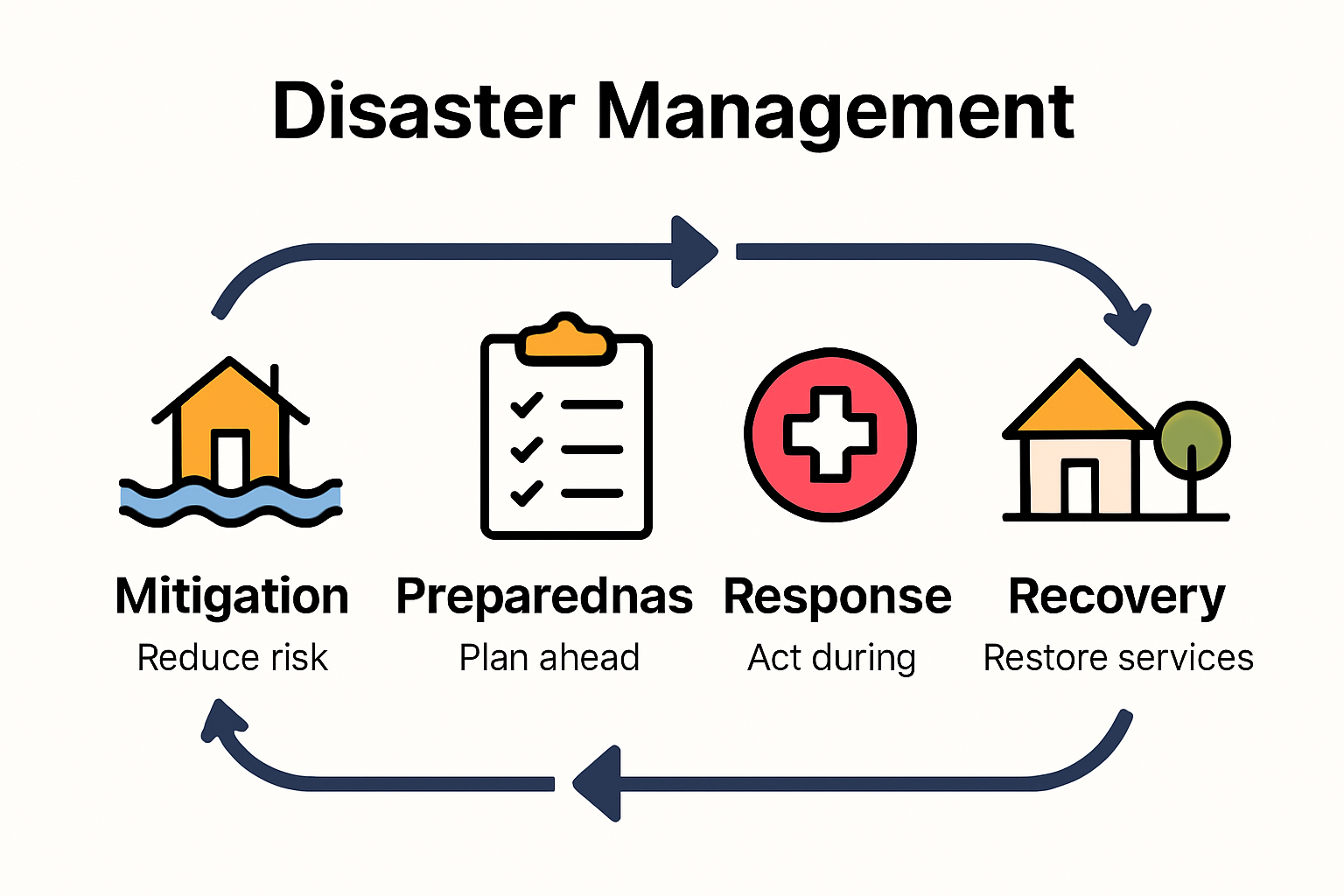
Here is a table summarizing the four fundamental phases of disaster management and their primary focus:
| Phase | Main Objective | Key Activities |
|---|---|---|
| Mitigation | Reduce future disaster risks and damage | Risk assessment, infrastructure upgrades |
| Preparedness | Ensure rapid, effective disaster response | Planning, training, resource stockpiling |
| Response | Provide immediate aid during/after disaster | Search & rescue, medical care, shelter |
| Recovery | Restore infrastructure & well-being | Reconstruction, psychological support |
Critical Response Phase Dynamics
The response phase represents the most time sensitive and operationally complex stage of the disaster management cycle. Research from the World Health Organization highlights that this phase typically involves immediate life saving interventions, emergency medical care, and critical resource distribution.
Key objectives during the response phase include:
- Conducting search and rescue operations
- Providing immediate medical assistance
- Establishing emergency shelters
- Coordinating multi agency communication networks
- Ensuring basic survival needs are met for affected populations

Strategic Coordination and Implementation
Successful disaster response requires seamless coordination between multiple agencies, emergency responders, and community support systems. Public health experts from Tulane University emphasize that effective implementation depends on pre established protocols, robust communication channels, and adaptable response mechanisms.
The disaster response chain is not a linear process but a dynamic, interconnected system that requires continuous assessment and flexible strategic adjustments. Emergency management professionals must remain agile, ready to modify approaches based on real time information and evolving community needs.
By understanding and implementing these key stages, communities can significantly improve their resilience, reduce potential damages, and accelerate recovery processes during challenging emergency scenarios.
Roles and Responsibilities in Disaster Response
In the complex ecosystem of disaster response, effective coordination and clear role definition are paramount to successful emergency management. Multiple agencies, organizations, and professionals must work in synchronization to provide rapid and comprehensive support during critical situations.
Federal and State Level Coordination
Our comprehensive guide on coordinating disaster response highlights the intricate dynamics of emergency management. According to FEMA’s National Response Framework, different levels of government have specific responsibilities during disaster scenarios.
Federal agencies play crucial roles in disaster response:
- Federal Emergency Management Agency (FEMA): Leads national disaster recovery efforts
- Department of Homeland Security: Coordinates overall emergency management strategy
- National Guard: Provides immediate military support and logistical assistance
Research from the Associated Press indicates a significant shift in 2025, with federal agencies increasingly expecting states to take more proactive roles in disaster preparedness and initial response mechanisms.
To clarify the roles of various government agencies, the following table offers a quick overview:
| Agency | Primary Responsibility |
|---|---|
| FEMA | Leads national disaster recovery efforts |
| Department of Homeland Security | Coordinates emergency management strategy |
| National Guard | Provides military/logistics emergency support |
Healthcare and Medical Support Systems
The National Disaster Medical System represents a critical component of disaster response, involving multiple federal departments working together to supplement local healthcare capabilities. This collaborative system includes:
- Health and Human Services
- Department of Homeland Security
- Department of Defense
- Department of Veterans Affairs
Their primary objective is to provide comprehensive medical support during emergencies, ensuring that affected populations receive timely and effective healthcare interventions.
Non Governmental and Community Level Responsibilities
Beyond government agencies, numerous organizations play pivotal roles in disaster response. Emergency management experts emphasize the importance of diverse stakeholders in creating resilient response systems.
Key non governmental entities include:
- Local emergency response teams
- Volunteer organizations
- Community based support groups
- Religious and humanitarian organizations
- Private sector emergency response companies
These groups often provide critical support in areas where government resources might be limited, offering localized assistance, immediate relief, and community specific interventions.
Successful disaster response requires more than just defined roles. It demands flexible communication, rapid decision making, and a collaborative approach that prioritizes human life and community resilience. As disaster scenarios become increasingly complex, the ability to adapt and coordinate across multiple organizational boundaries will be crucial in mitigating potential damages and supporting affected populations.
Improving Disaster Response Chain Efficiency
Efficiency in disaster response represents a critical factor that can dramatically reduce human suffering and accelerate community recovery. As emergencies become increasingly complex, organizations must continuously innovate and optimize their approaches to ensure rapid, effective interventions.
Technology Driven Resource Optimization
Our strategic guide on deploying aid effectively highlights emerging technologies transforming disaster response. Researchers from Arizona State University demonstrate that advanced decision support systems can significantly enhance resource allocation through probabilistic forecasting and logistics optimization.
Key technological innovations improving disaster response efficiency include:
- Artificial Intelligence Predictive Modeling: Analyzing potential disaster scenarios and resource requirements
- Real Time Geographic Information Systems (GIS): Mapping critical infrastructure and tracking emergency resources
- Automated Communication Platforms: Facilitating rapid multi agency coordination
- Machine Learning Algorithms: Predicting potential impact zones and resource needs
Strategic Operational Management
Project management techniques developed by emergency management experts reveal critical strategies for improving response chain efficiency. The Critical Path Method (CPM) and Resource Leveling techniques have proven particularly effective in streamlining emergency operations.
Effective operational management requires:
- Precise resource tracking
- Dynamic allocation strategies
- Flexible communication protocols
- Continuous performance assessment
- Rapid decision making frameworks
Human Centered Design and Training
Beyond technological solutions, human factors play a crucial role in disaster response efficiency. Emergency management professionals emphasize the importance of comprehensive training programs and adaptive organizational cultures.
Key human centered improvements include:
- Comprehensive cross agency training simulations
- Psychological resilience development for first responders
- Cultural competency in emergency communication
- Adaptive leadership skill development
- Stress management and mental health support
Improving disaster response chain efficiency requires a holistic approach that integrates technological innovation, strategic operational management, and human centered design. As global challenges become more complex, organizations must remain adaptable, continuously learning and evolving their approaches to emergency management.
The future of disaster response lies not just in advanced technologies but in creating agile, responsive systems that can quickly adapt to unpredictable and rapidly changing emergency scenarios. By focusing on efficiency, organizations can significantly reduce response times, minimize potential damages, and ultimately save more lives during critical situations.
Best Practices for Supporting Victims and Families
Supporting disaster victims and their families requires a comprehensive, compassionate approach that addresses immediate survival needs and long term psychological recovery. The complexity of human trauma demands sophisticated, multifaceted support strategies that recognize the unique challenges faced by individuals during and after catastrophic events.
Comprehensive Victim Support Infrastructure
Our emergency response trends guide highlights the critical importance of holistic victim support. Experts from the Administration for Children and Families emphasize the crucial role of Psychological First Aid (PFA) in helping individuals cope with disaster related trauma.
Key components of effective victim support include:
- Immediate Needs Assessment: Rapid identification of physical and emotional requirements
- Comprehensive Case Management: Personalized support tracking
- Multi Agency Coordination: Seamless service delivery
- Trauma Informed Care: Sensitive approach to individual experiences
Establishing Family Assistance Centers
Research from international crisis management protocols reveals the critical importance of Family Assistance Centers (FACs) in disaster response. These dedicated facilities provide centralized support for victims and their families, offering:
- Mental health counseling services
- Legal guidance and support
- Vital document replacement assistance
- Financial recovery resources
- Emotional support networks
FACs serve as critical touchpoints, ensuring that individuals receive comprehensive, coordinated support during their most vulnerable moments.
Volunteer Management and Community Engagement
Effective disaster response extends beyond professional interventions. Community engagement experts highlight the transformative potential of well managed volunteer networks.
Best practices for volunteer management include:
- Structured volunteer recruitment and training
- Clear credentialing processes
- Defined role boundaries
- Cultural competency training
- Psychological support for volunteers
The goal is creating a supportive ecosystem that not only addresses immediate survival needs but also fosters long term community resilience. Successful victim support requires a delicate balance of professional expertise, technological innovation, and human compassion.
As disaster scenarios become increasingly complex, organizations must continually adapt their support strategies. This means developing flexible, empathetic approaches that recognize the profound human impact of catastrophic events and provide meaningful pathways to recovery and healing.
Frequently Asked Questions
What are the four fundamental phases of disaster management?
The four fundamental phases of disaster management are Mitigation, Preparedness, Response, and Recovery. These stages work together to enhance community resilience and improve recovery outcomes during disasters.
How does the response phase in disaster management work?
The response phase is the most critical and time-sensitive stage, focusing on immediate actions such as search and rescue, medical care, and resource distribution to meet the urgent needs of affected populations.
What role do federal and state agencies play in disaster response?
Federal and state agencies coordinate efforts to manage disaster response. FEMA leads recovery efforts, the Department of Homeland Security oversees emergency strategies, and the National Guard provides military support during crises.
How can technology improve disaster response efficiency?
Technology enhances disaster response efficiency through tools such as AI predictive modeling, real-time GIS for resource mapping, and automated communication platforms, enabling better resource allocation and coordination during emergencies.
When Every Minute Matters: Seamless Disaster Response Starts Here
If reading about the disaster response chain left you wondering how families can access immediate relief amid chaos, you are not alone. The article highlighted real pain points: delays in emergency housing, lack of streamlined support, and confusion about who coordinates help during the critical response phase. When disaster strikes, the need for rapid, compassionate, and personalized intervention is more urgent than ever. We understand how overwhelming it feels to navigate recovery, especially when time and communication are critical to protecting your loved ones.
At Disaster Victim Services, our expertise in project design ensures that victims get the coordinated emergency housing and logistical support they need without unnecessary delays. Our team bridges the gaps between agencies, adjusters, and families so you spend less time worrying about what comes next. Take control of your recovery today and let us help you move from crisis to comfort. Reach out now to see how our hands-on approach can restore stability for you and your community.
Recommended
- How to Improve Response After Disasters: Essential Strategies for 2025 – Disaster Victim Services | Helping You Recover After Disaster
- How to Coordinate Response in Disasters: A Guide for 2025 – Disaster Victim Services | Helping You Recover After Disaster
- How to Deploy Aid: Effective Strategies for Disaster Response 2025 – Disaster Victim Services | Helping You Recover After Disaster
- Emergency Response Basics for 2025: A Practical Guide – Disaster Victim Services | Helping You Recover After Disaster
- Disaster Preparedness Checklist 2025: Essential Guide for All Responders – Disaster Victim Services | Helping You Recover After Disaster
- Disaster Recovery Statistics 2025: Key Trends for Agencies and Families – Disaster Victim Services | Helping You Recover After Disaster