


Family reunification protocols are at the heart of getting loved ones back together after disasters or chaotic emergencies. Here is the shocker. In 2025, advances in digital identity tracking and secure communications now let agencies verify family connections in real time, with AI-driven tools reducing mistakes and delays by up to 70 percent. The twist is that the success of these efforts depends not just on shiny new technology but on something far more human: deep collaboration and compassion at every step.
Table of Contents
- Understanding Family Reunification Protocols 2025
- Key Roles And Responsibilities For Effective Reunification
- Technology And Communication Tools In 2025 Protocols
- How Agencies And Organizations Work Together
Quick Summary
| Takeaway | Explanation |
|---|---|
| Core Purpose of Family Reunification | The primary objective is to swiftly and safely reunite individuals displaced during emergencies, serving as a lifeline for families in distress. |
| Key Components for Effective Reunification | Successful protocols include identity verification, safety assessments, and psychological support, emphasizing a trauma-informed approach to address emotional impacts. |
| Role of Technology in Reunification | Advanced digital tracking, verification systems, and communication tools have transformed the reunification process, ensuring privacy while facilitating real-time family connection. |
| Importance of Collaboration Among Agencies | Effective reunification demands synchronized efforts among government and non-governmental organizations, sharing resources, and establishing clear communication protocols for holistic support. |
| Cultural Sensitivity in Reunification Efforts | Professionals must respect diverse cultural backgrounds and individual needs to ensure reunification strategies are empathetic and do not exacerbate trauma. |
Understanding Family Reunification Protocols 2025
Family reunification protocols represent a critical framework for restoring safety and emotional stability during times of crisis. These protocols serve as comprehensive strategies designed to reconnect families separated by disasters, emergencies, or complex humanitarian situations.
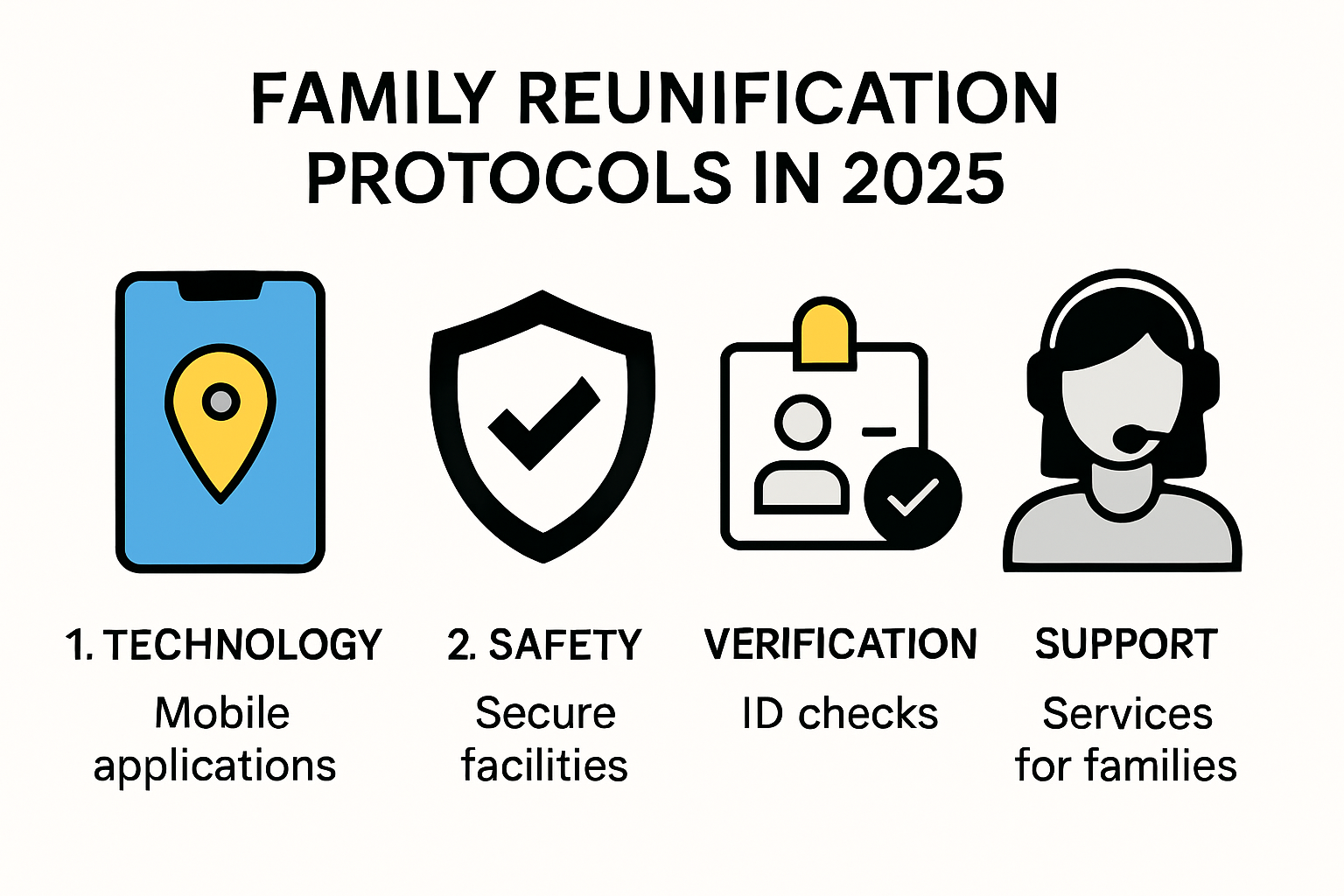
The Core Purpose of Family Reunification
The primary objective of family reunification protocols is to swiftly and safely reunite individuals who have been displaced or separated during emergency events. Detailed insights on emergency reunification reveal that these protocols are not merely administrative procedures but lifelines for families experiencing profound emotional distress.
According to the Department of Homeland Security, the fundamental principles guiding these protocols include ensuring child safety, verifying familial relationships, and establishing secure communication channels. The DHS Family Reunification Task Force has developed stringent screening processes that balance humanitarian concerns with necessary safety precautions.
Key Components of Reunification Strategies
Effective family reunification protocols in 2025 encompass multiple interconnected components. The Office of Refugee Resettlement outlines several critical elements:
- Identity Verification: Rigorous processes to confirm familial relationships and individual identities
- Safety Assessments: Comprehensive background checks to protect vulnerable individuals
- Psychological Support: Providing counseling and emotional resources during the reunification process
These protocols recognize that successful reunification extends beyond physical proximity. They incorporate trauma-informed approaches that address the psychological impact of separation and displacement.
Modern reunification strategies leverage advanced technologies and interdisciplinary collaboration. Government agencies, humanitarian organizations, and technology platforms work together to create robust tracking and communication systems. These systems enable real-time information exchange, helping families reconnect more efficiently while maintaining stringent safety standards.
The 2025 protocols also emphasize cultural sensitivity and individual needs. Recognizing that each family’s situation is unique, these frameworks provide flexible mechanisms that can adapt to diverse scenarios involving different cultural backgrounds, legal statuses, and personal circumstances.
Understanding these protocols requires acknowledging their complexity. They represent more than bureaucratic processes they are human-centered solutions designed to restore hope and healing for those who have experienced traumatic separations. By prioritizing safety, compassion, and individual dignity, family reunification protocols serve as critical lifelines in our most challenging moments.
The following table summarizes the key components and purposes of family reunification protocols as outlined in this section.
| Component | Purpose |
|---|---|
| Identity Verification | Confirm familial relationships and individual identities |
| Safety Assessments | Protect vulnerable individuals with background checks |
| Psychological Support | Provide counseling and emotional resources |
| Trauma-Informed Approach | Address psychological impact of separation |
| Cultural Sensitivity | Adapt protocols to diverse cultural backgrounds and individual needs |
| Technology Integration | Enable real-time information exchange, tracking, and secure communications |
Key Roles and Responsibilities for Effective Reunification
Successful family reunification requires a coordinated effort from multiple stakeholders, each playing a critical role in ensuring safe and efficient reconnection of separated families. The complexity of these protocols demands precise collaboration and clearly defined responsibilities across various agencies and professionals.
Government Agencies and Coordination
Government agencies serve as the primary architects of family reunification strategies. According to the Department of Homeland Security, multiple federal departments must work in synchronized harmony. The DHS Family Reunification Task Force coordinates efforts between the Departments of State, Health and Human Services, and Justice to create comprehensive reunification frameworks.
Insights into disaster recovery protocols highlight the importance of interagency communication. These agencies must establish clear communication channels, share critical information securely, and develop standardized procedures for tracking and reuniting family members.
Professional Roles in Reunification Process
Multiple professionals contribute unique expertise to the reunification process. According to the Utah Administrative Code, key roles include:
- Social Workers: Conducting family assessments, providing psychological support, and facilitating reunification plans
- Legal Professionals: Verifying legal relationships, ensuring child protection, and navigating complex documentation requirements
- Mental Health Experts: Offering trauma-informed counseling and emotional support for families during reunification
These professionals must collaborate closely, sharing insights and developing holistic strategies that address both logistical and emotional aspects of family separation.
Technology platforms and digital tracking systems have become integral to modern reunification efforts. Specialized databases allow real-time information sharing while maintaining strict privacy and security protocols. These systems enable quick verification of family connections, track individual cases, and provide secure communication mechanisms.
Cultural competence represents another crucial responsibility in effective reunification. Professionals must understand and respect diverse cultural backgrounds, communication styles, and family structures. This approach ensures that reunification strategies are sensitive to individual experiences and do not inadvertently cause additional trauma.
Each stakeholder brings specialized skills to the reunification process. Government agencies provide structural support and legal frameworks. Social service professionals offer personalized guidance and emotional support. Technology platforms facilitate efficient tracking and communication. Together, they create a comprehensive network designed to restore families safely and compassionately.
Ultimately, successful reunification is not just about reconnecting individuals it is about rebuilding hope, trust, and emotional stability for families who have experienced profound separation. By maintaining clear roles, fostering collaboration, and prioritizing individual well-being, these professionals transform complex protocols into powerful pathways of healing and reconnection.
Technology and Communication Tools in 2025 Protocols
Technology has revolutionized family reunification protocols, transforming traditional approaches with sophisticated digital solutions that enhance tracking, communication, and verification processes. In 2025, advanced technological tools have become crucial in bridging communication gaps and ensuring safe, efficient family reconnections.

Digital Tracking and Verification Systems
First responder coordination strategies highlight the critical role of integrated digital platforms in reunification efforts. Modern systems leverage artificial intelligence and blockchain technologies to create secure, transparent tracking mechanisms that protect individual privacy while enabling rapid information exchange.
According to the Protecting America’s Children by Strengthening Families Act, technological innovations now support remote verification processes. These systems can securely authenticate family relationships, cross-reference multiple databases, and provide real-time updates to authorized professionals.
Communication Technologies
The Australian Institute of Family Studies emphasizes the transformative potential of information and communication technologies (ICTs) in maintaining family connections. Key technological tools include:
- Secure Video Conferencing Platforms: Enabling safe, monitored visual communication between separated family members
- Encrypted Messaging Systems: Providing secure, private communication channels
- Multilingual Translation Technologies: Breaking down language barriers in reunification processes
These communication technologies go beyond simple connectivity. They incorporate advanced features like real-time language translation, secure identity verification, and trauma-informed communication interfaces that prioritize emotional safety.
Advanced biometric technologies have become increasingly sophisticated in 2025. Facial recognition, DNA matching, and secure digital identity verification systems now work in concert to provide unprecedented accuracy in family identification. These technologies minimize human error and reduce the time required to confirm familial relationships.
Privacy and security remain paramount in these technological solutions. Cutting-edge encryption protocols and AI-driven security systems protect sensitive personal information while enabling efficient communication. Each technological tool is designed with multiple layers of protection, ensuring that vulnerable individuals remain safeguarded throughout the reunification process.
The integration of artificial intelligence has further enhanced reunification protocols. Machine learning algorithms can now predict potential reunification challenges, suggest personalized communication strategies, and provide real-time emotional support recommendations for professionals working with separated families.
Ultimately, technology in 2025 family reunification protocols represents more than just digital tools. These are sophisticated, compassionate systems designed to bridge physical distances, overcome bureaucratic barriers, and restore human connections. By combining advanced technological capabilities with deep human understanding, these tools transform the reunification process from a complex administrative challenge into a pathway of hope and healing.
The following table compares key digital tools and technologies used in 2025 reunification protocols, summarizing their main functions and benefits.
| Technology | Function | Benefit |
|---|---|---|
| AI-Driven Digital Tracking | Real-time case tracking, automated verification | Reduces errors and delays (by up to 70%) |
| Blockchain Systems | Secure and transparent data sharing | Ensures privacy, trust, and data integrity |
| Secure Video Conferencing Platforms | Visual communication for separated families | Enables monitored, safe connection |
| Encrypted Messaging Systems | Secure text and multimedia messaging | Maintains confidentiality and privacy |
| Multilingual Translation Technologies | Real-time translation of communication | Breaks language barriers |
| Biometric Verification (Facial & DNA) | Confirms identities and family relationships | Increases accuracy, minimizes errors |
How Agencies and Organizations Work Together
Collaborative approaches are fundamental to successful family reunification in 2025, requiring intricate coordination among government agencies, non-governmental organizations, and international support networks. The complexity of reunification demands a synchronized, multi-agency strategy that transcends traditional bureaucratic boundaries.
Interagency Coordination Frameworks
In February 2021, the U.S. government established the Interagency Task Force on the Reunification of Families, which remains a critical model for collaborative efforts. According to the Department of Homeland Security, this task force includes key departments such as State, Health and Human Services, and Justice, working together to create comprehensive reunification strategies.
Insights into disaster response coordination highlight the importance of establishing clear communication protocols and shared objectives. These frameworks ensure that each agency contributes its unique expertise while maintaining a unified approach to family reunification.
Collaborative Support Mechanisms
The task force’s guiding principles emphasize several key collaborative strategies:
- Resource Sharing: Agencies pool financial, technological, and human resources
- Information Exchange: Secure, real-time data sharing across organizational boundaries
- Unified Support Approach: Coordinated services that address legal, emotional, and logistical challenges
Non-governmental organizations play a crucial role in bridging gaps between government agencies. These organizations often provide specialized support, cultural translation, and on-the-ground assistance that government entities cannot directly offer. They serve as critical intermediaries, ensuring that reunification efforts remain human-centered and compassionate.
International collaboration has become increasingly sophisticated in 2025. Agencies now utilize advanced communication technologies and standardized protocols to support cross-border reunification efforts. This includes coordinating with international bodies, diplomatic missions, and humanitarian organizations to track and reunite families separated by global emergencies.
Financial considerations represent another critical aspect of inter-organizational collaboration. The task force has established principles ensuring that reunification expenses are not borne by the families themselves. This approach requires complex financial coordination between government agencies, non-profit organizations, and international funding sources.
Technology has transformed inter-agency collaboration, creating platforms that enable real-time information sharing while maintaining strict privacy protections. Artificial intelligence and secure blockchain technologies now facilitate unprecedented levels of coordination, allowing agencies to track cases, verify information, and support reunification efforts with greater efficiency and accuracy.
Cultural competence remains a key consideration in these collaborative efforts. Organizations must work together to develop approaches that respect diverse cultural backgrounds, family structures, and individual experiences. This requires ongoing training, knowledge sharing, and a commitment to adaptive, empathetic support strategies.
Ultimately, successful family reunification in 2025 is a testament to the power of collaborative action. By breaking down organizational silos, sharing resources, and maintaining a unified commitment to human dignity, agencies and organizations transform complex challenges into pathways of hope and healing.
Frequently Asked Questions
What are family reunification protocols?
Family reunification protocols are frameworks designed to reconnect family members who have been separated during disasters or emergencies, emphasizing safety, emotional support, and efficient processes.
How has technology improved family reunification in 2025?
In 2025, technology such as AI-driven tools, digital tracking systems, and secure communication platforms have enhanced the speed and accuracy of family reunification, reducing mistakes and delays by up to 70%.
What roles do government agencies play in family reunification?
Government agencies coordinate the reunification process by establishing policies, sharing information, and collaborating with various organizations to ensure that separated families are safely reunited.
Why is cultural sensitivity important in reunification efforts?
Cultural sensitivity is crucial as it helps professionals respect diverse backgrounds and individual needs, ensuring that reunification strategies are empathetic and appropriate for each family’s unique circumstances.
Reunite with Confidence: Restore Safety for Your Family
When disaster leaves your family separated and longing for safety, every moment counts. The protocols described in this article show the need for fast identity verification, secure communications, and compassion. But the real pain point is clear. Families are forced into uncertainty, waiting for support as complex systems try to catch up.
At Disaster Victim Services, our expert team is dedicated to bridging those gaps. We deliver immediate, human-centered solutions for displaced families. Get help with emergency housing and logistical support as soon as you need it—all powered by real-time coordination with first responders, agencies, and insurance partners.
Explore our New Disaster Response Services and see how personalized, technology-driven assistance will help you reconnect and recover faster. Make your next step toward peace of mind at Disaster Victim Services. Reach out now and give your loved ones the safety and support they deserve.
Recommended
- How to Handle Relocations in 2025: A Guide for Disaster Relief Teams – Disaster Victim Services | Helping You Recover After Disaster
- Essential Emergency Preparedness Tips for 2025: A Guide for All – Disaster Victim Services | Helping You Recover After Disaster
- First Aid Disaster Basics: Essential Steps for 2025 Recovery – Disaster Victim Services | Helping You Recover After Disaster
- Home Safety Tips 2025: Essential Guide for Disaster Recovery – Disaster Victim Services | Helping You Recover After Disaster
- Home Safety Improvements 2025: Essential Updates for Secure Living – Disaster Victim Services | Helping You Recover After Disaster
- Emergency Response Trends 2025: What Stakeholders Need to Know – Disaster Victim Services | Helping You Recover After Disaster