
Every year, thousands of Americans are forced to evacuate their homes, leaving behind the familiar for the unknown. You might assume the hardest part is what you pack in your go bag. But here is what most people miss. Nearly 60 percent of evacuees forget to take essential documents or overlook special needs for family members, which can delay recovery and even put lives at risk. Knowing what to prepare, before disaster strikes, flips the odds in your favor.
Table of Contents
- Key Items For Your 2025 Evacuation Kit
- Evacuation Procedures For Families And Responders
- Role Of Insurance And Documentation In Evacuations
- Special Considerations For Vulnerable Groups
Quick Summary
| Takeaway | Explanation |
|---|---|
| Prepare Your Evacuation Kit | Include critical items such as one gallon of water per person per day, non-perishable high-energy food, communication tools, a medical kit, and personal hygiene supplies to ensure safety during emergencies. |
| Develop a Family Evacuation Plan | Create a comprehensive evacuation strategy that outlines exit routes, meeting locations, communication protocols, and assigned responsibilities to enhance overall preparedness. |
| Understand Insurance Policies | Review your insurance coverage to ensure clarity on evacuation-related expenses and consult with professionals to adjust policies as needed for better financial protection during emergencies. |
| Support Vulnerable Populations | Tailor evacuation plans to address the needs of individuals with disabilities, language barriers, and specific medical requirements to create more inclusive and effective disaster response strategies. |
| Maintain Organized Documentation | Document personal property, maintain detailed incident reports, and track emergency expenses to expedite insurance claims and aid recovery efforts after an evacuation. |
Key Items for Your 2025 Evacuation Kit
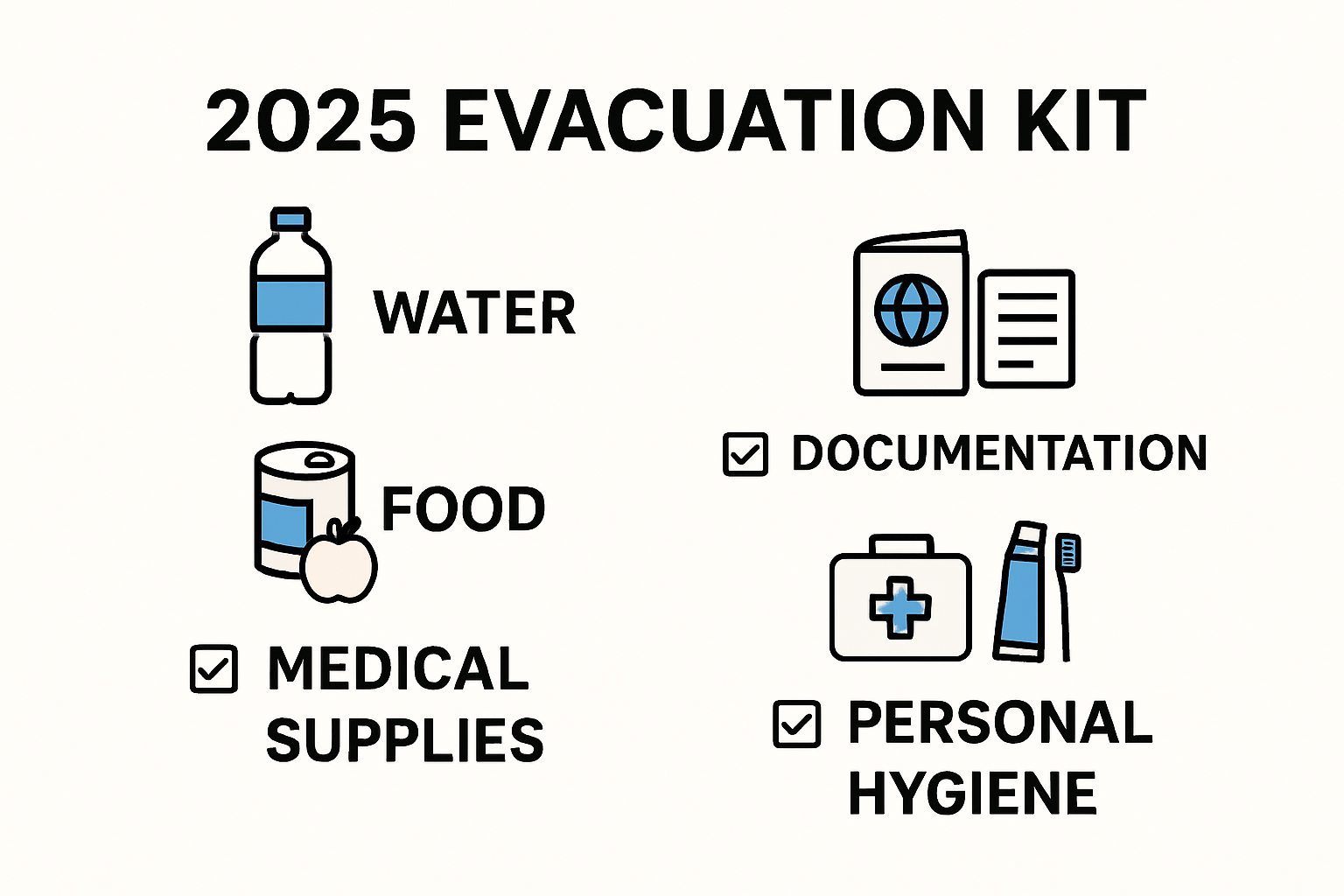
Preparedness is the cornerstone of survival during emergencies. An expertly curated evacuation kit can mean the difference between vulnerability and resilience when disaster strikes. The 2025 evacuation checklist demands strategic thinking and comprehensive planning to ensure you have essential resources ready at a moment’s notice.
Water and Nutrition Essentials
Water remains the most critical survival resource during any emergency. Research from the Federal Emergency Management Agency (FEMA) recommends storing one gallon of water per person per day for a minimum of three days. This provision accounts for drinking, sanitation, and basic hygiene needs. When selecting food items, prioritize non-perishable, high-energy options that require minimal preparation. Recommended items include:
- Protein Bars: Compact and nutrient-dense
- Canned Goods: Beans, tuna, and vegetables with long shelf life
- Dried Fruits: Lightweight and energy-providing
- Electrolyte Packets: Critical for maintaining hydration
Rotate your emergency food supply annually to maintain freshness and nutritional value. Consider dietary restrictions and pack accordingly.
Critical Communication and Documentation Tools
In an evacuation scenario, communication and documentation become lifelines. According to the American Red Cross, your emergency kit should include:
- Portable battery-powered or hand-crank radio
- Fully charged mobile phone with backup battery
- Waterproof document holder containing:
- Government-issued identification
- Insurance documents
- Medical records
- Emergency contact information
Digital backups stored securely in cloud storage provide an additional layer of protection for critical documents. Learn more about emergency document preservation.
Medical and Personal Safety Supplies
A comprehensive medical kit transcends basic first aid. Modern evacuation preparedness requires a nuanced approach to personal health and safety. Essential medical supplies should include:
- Prescription medications (minimum one-week supply)
- Over-the-counter pain relievers
- Antiseptic wipes
- Bandages and gauze
- Personal protective equipment
- Any specialized medical devices
Additionally, pack personal hygiene items like hand sanitizer, masks, and compact towelettes. These items help maintain cleanliness and reduce infection risks during challenging evacuation conditions.
Remember, an evacuation kit is not a static collection but a dynamic resource requiring regular review and updates. Annually assess your kit, replacing expired items and adapting to changing personal and family needs. Your preparedness today could be your lifeline tomorrow.
To help you quickly review and assemble your evacuation kit, the table below organizes essential categories and sample items to consider packing:
| Category | Example Items |
|---|---|
| Water & Hydration | 1 gallon water per person/day, electrolyte packets |
| Nutrition | Protein bars, canned goods, dried fruits |
| Communication | Battery-powered radio, charged mobile phone, backup battery |
| Documentation | ID, insurance documents, medical records, emergency contacts |
| Medical Supplies | Rx medications, pain relievers, antiseptic wipes, bandages |
| Personal Hygiene | Hand sanitizer, masks, compact towelettes |
| Special Needs (if applicable) | Dietary/medical-specific items, specialized medical devices |
Evacuation Procedures for Families and Responders
Effective emergency evacuations require synchronized planning and clear communication between families and emergency responders. The complexity of modern disaster scenarios demands a proactive and strategic approach to ensure the safety of all individuals during critical moments.
Family Evacuation Planning
Research from Virginia Cooperative Extension emphasizes the critical importance of comprehensive family evacuation planning. Successful evacuation strategies begin with thorough preparation and communication. Families should develop a detailed plan that includes:
- Identifying multiple exit routes from home and neighborhood
- Establishing a designated family meeting location
- Creating a communication protocol for emergency scenarios
- Assigning specific roles and responsibilities to each family member
Children and elderly family members require special consideration during evacuation procedures. Practice evacuation drills regularly to ensure everyone understands their responsibilities and can remain calm under pressure. Learn more about emergency family preparedness.
Coordination with Emergency Responders
According to the United States Fire Administration, successful evacuations depend on seamless coordination between community residents and emergency personnel. Responders must develop clear communication channels and establish accessible evacuation routes. Key coordination strategies include:
- Implementing community-wide alert systems
- Creating detailed neighborhood evacuation maps
- Establishing safe zones and temporary shelters
- Developing multi-agency communication protocols

Emergency responders should conduct regular community training sessions to familiarize residents with evacuation procedures. These sessions help build trust and ensure smoother implementation during actual emergencies.
Technology and Communication Tools
Modern evacuation procedures leverage advanced technology to enhance safety and communication. Digital platforms and mobile applications now play a crucial role in emergency management. Critical technological tools include:
- Real-time emergency notification systems
- GPS-enabled tracking for vulnerable populations
- Integrated communication platforms for first responders
- Cloud-based emergency documentation storage
Families and responders must remain adaptable and continuously update their technological resources. Regular training and system updates ensure that evacuation procedures remain effective and responsive to emerging challenges.
Ultimately, successful evacuation procedures rely on preparation, communication, and a collaborative approach between families and emergency responders. By developing comprehensive plans and maintaining open communication channels, communities can significantly improve their resilience during potential disaster scenarios.
Role of Insurance and Documentation in Evacuations
In the complex landscape of emergency evacuations, insurance and documentation serve as critical lifelines for disaster victims. These elements not only provide financial protection but also create a structured pathway for recovery and resilience during challenging times.
Pre-Disaster Documentation Strategies
Research from ICF International highlights the paramount importance of comprehensive pre-disaster documentation. Effective documentation involves creating a detailed record of personal property, assets, and home conditions before potential emergencies. Key strategies include:
- Photographing and videoing all personal property
- Maintaining digital and physical copies of critical documents
- Documenting home maintenance and improvement records
- Creating a comprehensive home inventory with estimated values
Digital storage solutions offer an additional layer of protection. Cloud-based platforms enable secure, remote access to critical documentation, ensuring your records remain safe even if physical documents are lost. Learn more about comprehensive documentation preparation.
Insurance Coverage and Evacuation Expenses
According to Massachusetts Emergency Management Guidelines, understanding insurance policy details is crucial during evacuations. Not all insurance policies cover the same evacuation-related expenses. Homeowners and renters should carefully review their policies to understand:
- Temporary housing coverage
- Transportation expense reimbursement
- Emergency living expense provisions
- Coverage limits and potential exclusions
Consult with insurance professionals to clarify policy specifics and potentially adjust coverage to better protect against evacuation-related financial risks. Proactive communication with insurers can streamline claims processes during high-stress emergency situations.
Post-Evacuation Documentation and Claims
The Northeast Document Conservation Center emphasizes the significance of systematic documentation during and after evacuations. Effective post-evacuation documentation involves:
- Detailed incident reports
- Photographic evidence of property damage
- Receipts for emergency expenses
- Medical records and related healthcare documentation
- Communication logs with insurance providers
Maintaining organized, chronological records expedites insurance claims and supports potential future legal or financial recovery processes. Digital tools and mobile applications can help disaster victims systematically track and store critical documentation.
Successful navigation of insurance and documentation during evacuations requires preparation, attention to detail, and proactive communication. By understanding policy nuances and maintaining comprehensive records, individuals can transform potential financial vulnerability into a structured path toward recovery and resilience.
To summarize the key phases of insurance and documentation management before, during, and after an evacuation, refer to the table below:
| Phase | Key Actions | Tools/Strategies Used |
|---|---|---|
| Pre-Disaster | Document property/assets, back up critical docs | Photos, videos, home inventory, cloud |
| Evacuation | Secure documents, track emergency expenses | Waterproof holders, keep receipts |
| Post-Evacuation | File claims, document damage, communicate with insurer | Incident reports, photos, communication logs |
Special Considerations for Vulnerable Groups
During emergency evacuations, vulnerable populations require specialized attention and tailored support strategies. Recognizing the unique challenges faced by different groups ensures more inclusive and effective disaster response mechanisms.
Accessibility and Mobility Challenges
Research from the Federal Highway Administration emphasizes the critical importance of developing comprehensive evacuation plans for individuals with disabilities. These plans must address diverse needs across mobility, sensory, cognitive, and medical spectrums. Key considerations include:
- Specialized transportation resources for individuals with mobility impairments
- Communication systems accommodating hearing and vision-impaired individuals
- Medical support for those requiring continuous care
- Accessible evacuation routes and sheltering facilities
Emergency planners must collaborate directly with disability advocacy organizations to develop nuanced, person-centered evacuation strategies. Explore our comprehensive guide on inclusive emergency planning.
Language and Communication Barriers
According to the Department of Health and Human Services, effective emergency communication requires multilingual and adaptive approaches. Individuals with limited English proficiency face significant challenges during evacuations. Recommended strategies include:
- Providing emergency messaging in multiple languages
- Utilizing qualified interpreter services
- Developing visual communication tools
- Creating culturally sensitive information resources
- Training emergency responders in cross-cultural communication
These approaches ensure that critical safety information reaches all community members, regardless of linguistic background.
Medical and Health Vulnerability Management
Guidance from the Centers for Disease Control highlights the importance of specialized medical management during evacuations. Vulnerable populations with chronic conditions, compromised immune systems, or specific medical requirements demand targeted support:
- Implementing infection control screening at evacuation centers
- Creating separate areas for individuals with potential infectious conditions
- Ensuring continuous medication and medical equipment access
- Developing personalized medical evacuation plans
- Coordinating with healthcare providers for seamless support
Special medical registration programs can help emergency services preemptively identify and support individuals with critical health needs.
Successful evacuation strategies recognize that vulnerability is multifaceted. By developing holistic, empathetic approaches that address physical, communication, and medical challenges, communities can create more resilient emergency response systems that protect their most vulnerable members.
Frequently Asked Questions
What should be included in my evacuation kit for 2025?
Your evacuation kit should include essentials such as one gallon of water per person per day, non-perishable high-energy food, a communication device like a battery-powered radio, a medical kit, and personal hygiene supplies.
How can I create a family evacuation plan?
To create a family evacuation plan, identify multiple exit routes from your home, establish a designated family meeting location, create a communication protocol for emergencies, and assign specific roles to each family member.
What types of insurance coverage should I check before an evacuation?
Review your insurance policy to understand coverage for temporary housing, transportation expenses, emergency living expenses, and any exclusions related to evacuation-related claims to ensure proper financial protection.
How can I support vulnerable populations during an evacuation?
Support vulnerable populations by developing inclusive evacuation strategies that account for accessibility needs, language barriers, and specific medical requirements to ensure that everyone receives the necessary support during an emergency.
Ready for the Unexpected? Take Action with Disaster Victim Services
You have just learned how an effective evacuation checklist can save valuable time and protect your loved ones when disaster strikes. Even with careful planning, the article highlights how many families still face delays, confusion, and hardship when forced to leave home without proper support or resources. Challenges like missing key documents, managing unique family needs, or securing safe temporary housing can turn a stressful evacuation into a far more overwhelming experience.
At Disaster Victim Services, we understand the urgent needs that arise in the critical moments after a disaster. Our team works tirelessly to connect victims with emergency housing solutions, coordinate vital logistics, and help navigate insurance claims effortlessly. Curious how you can turn your readiness plan into real security? Discover practical support and expert guidance tailored to your situation by visiting our New Projects and Innovations page. Make the choice now to safeguard your family’s well-being before the next emergency. If you are preparing for evacuation or want to learn how to streamline your recovery, start by exploring all our resources at Disaster Victim Services.
Recommended
- Essential Emergency Preparedness Tips for 2025: A Guide for All – Disaster Victim Services | Helping You Recover After Disaster
- Disaster Preparedness Checklist 2025: Essential Guide for All Responders – Disaster Victim Services | Helping You Recover After Disaster
- How to Pack Emergency Kit: Essential 2025 Guide for Disaster Relief – Disaster Victim Services | Helping You Recover After Disaster
- Storm Preparedness Checklist 2025: Essential Guide for Disaster Relief – Disaster Victim Services | Helping You Recover After Disaster
- Emergency Response Basics for 2025: A Practical Guide – Disaster Victim Services | Helping You Recover After Disaster
- Flood Safety Checklist 2025: Essential Steps for Families and Responders – Disaster Victim Services | Helping You Recover After Disaster