
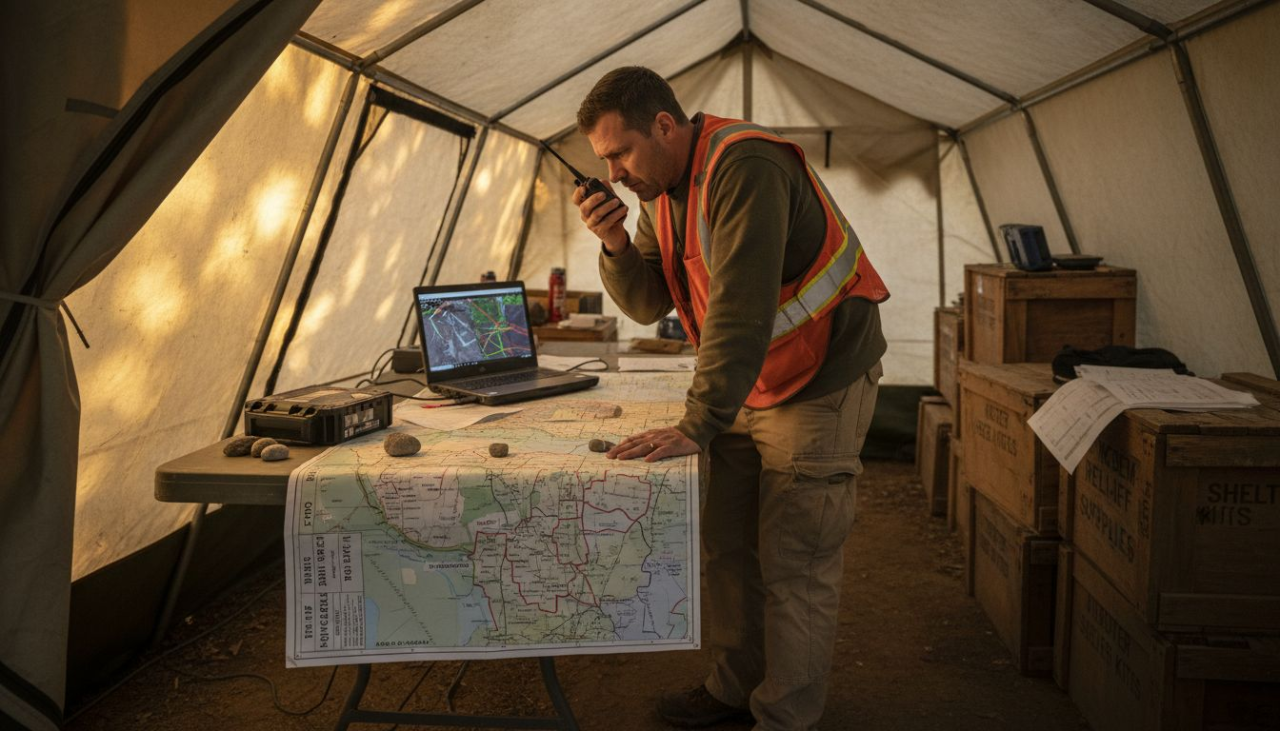
Nearly 40 percent of American families displaced by disasters face housing delays that last weeks or longer. For disaster recovery coordinators, every hour counts when lives and livelihoods are at stake. Effective logistics strategies can close these critical gaps, helping American organizations deliver timely emergency housing and improve communication with insurance adjusters. This guide uncovers practical solutions that empower you to protect families and simplify the complex web of post-disaster coordination.
Table of Contents
- Coordinating Rapid Shelter Deployments After Disasters
- Managing Multi-Agency Temporary Housing Operations
- Utilizing Technology For Real-Time Victim Tracking
- Streamlining Insurance Claims With Logistics Support
- Facilitating Local Partnerships For Housing Solutions
- Optimizing Transportation Of Essential Relief Supplies
- Implementing Continuous Communication Between Agencies
Quick Summary
| Takeaway | Explanation |
|---|---|
| 1. Effective Shelter Coordination is Essential | Swift and strategic shelter placement protects vulnerable populations and restores community dignity in disaster scenarios. |
| 2. Local Partnerships Enhance Housing Solutions | Collaboration between local governments and organizations ensures community-driven recovery that focuses on sustainable housing solutions. |
| 3. Technology Boosts Victim Tracking Capabilities | Advanced tracking systems enable precise location identification, improving emergency response and victim support efficiency. |
| 4. Streamline Insurance Claim Processes | Integrating logistics with insurance claims accelerates financial recovery for disaster victims while reducing administrative burdens. |
| 5. Optimize Communication Between Agencies | Establishing shared platforms and protocols enhances coordination, enabling a more effective response during emergencies. |
1. Coordinating Rapid Shelter Deployments After Disasters
Disaster shelter coordination represents the critical first line of humanitarian response when communities face sudden displacement. Emergency management professionals must develop sophisticated strategies that enable swift, strategic shelter placement to protect vulnerable populations.
The International Federation of Red Cross and Red Crescent Societies emphasizes that shelter coordination is far more than simply providing a roof. It involves complex, multi-agency collaboration to restore community dignity and resilience through systematic emergency response protocols.
Effective shelter deployment requires comprehensive pre-disaster planning that includes mapping potential shelter locations, establishing communication networks, and preparing logistical resources. This approach allows response teams to move rapidly when emergencies occur, reducing the time between disaster impact and initial shelter provision.
Successful shelter coordination involves several critical components. First, agencies must develop detailed contingency plans that outline exact roles and responsibilities. Second, teams need robust communication infrastructure to quickly assess needs and allocate resources. Third, inter-agency collaboration becomes paramount for seamless deployment.
Government emergency management offices, humanitarian organizations, and local community leaders must work together to create flexible response frameworks. These frameworks should account for different disaster scenarios such as hurricanes, wildfires, floods, and earthquakes, each presenting unique shelter challenges.
Pro Tip: Develop a real-time digital mapping system that allows instant tracking of shelter resources, personnel movements, and available space to optimize emergency housing deployment.
2. Managing Multi-Agency Temporary Housing Operations
Temporary housing operations represent a complex challenge requiring seamless collaboration across multiple government and humanitarian agencies. Effective management demands strategic coordination and comprehensive communication frameworks to support displaced populations rapidly and efficiently.
The National Mass Care Strategy emphasizes the critical importance of locally led multi-agency approaches when addressing temporary housing needs after disasters. This approach ensures that different agencies work together systematically to provide immediate shelter and plan long term housing solutions.
Successful multi-agency operations rely on several key strategic components. First, agencies must establish clear communication protocols that enable real time information sharing. Second, they need comprehensive stakeholder mapping to identify all potential resources and support networks. Third, collaborative planning must prioritize flexibility and adaptability to address rapidly changing emergency conditions.
Key stakeholders typically include local government emergency management offices, humanitarian organizations, social service providers, and community leadership groups. Each organization brings unique capabilities that contribute to a more robust and comprehensive housing response. By developing shared goals and integrated workflow systems, these agencies can dramatically improve housing placement efficiency and support for displaced individuals.
Data sharing becomes paramount in these collaborative efforts. Agencies must develop secure, interoperable information systems that allow rapid assessment of housing needs, available resources, and individual family requirements. These systems help prevent duplication of efforts and ensure that limited resources are allocated most effectively.
Pro Tip: Create a centralized digital dashboard that enables real time tracking of housing resources, agency contributions, and displaced population needs to streamline multi agency temporary housing coordination efforts.
3. Utilizing Technology for Real-Time Victim Tracking
Disaster response has undergone a revolutionary transformation through advanced technological tracking systems that enable emergency professionals to locate and support victims with unprecedented speed and accuracy. These cutting edge technologies represent a quantum leap in humanitarian rescue capabilities.
The Internet of Things (IoT) now provides emergency responders with powerful real-time tracking capabilities that dramatically improve life saving potential during crisis situations. By integrating sensor networks, mobile connectivity, and sophisticated data processing algorithms, these systems can pinpoint victim locations within minutes of a disaster event.
Key technological approaches include mobile tracking platforms, wearable emergency sensors, drone surveillance systems, and artificial intelligence powered mapping technologies. Each of these tools contributes unique capabilities that enhance victim identification and support during critical response windows.
Mobile robotics and AI technologies have emerged as game changing tools for victim detection. Advanced systems can now navigate complex disaster environments such as collapsed buildings or areas with significant structural damage. These robots utilize sophisticated sensor arrays and machine learning algorithms to detect heat signatures, movement patterns, and other critical indicators of human presence.
Emergency response teams can leverage these technologies by developing integrated communication protocols, training personnel on advanced tracking systems, and investing in interoperable technological infrastructure. Successful implementation requires cross agency collaboration and ongoing technological training for first responders.
Pro Tip: Develop a comprehensive digital tracking protocol that integrates multiple technological systems and establishes clear communication channels between rescue teams to maximize real time victim identification capabilities.
4. Streamlining Insurance Claims with Logistics Support
The complex world of disaster recovery demands seamless integration between insurance processes and logistical support to help victims rebuild their lives efficiently. Insurance claims represent a critical pathway for financial recovery that requires sophisticated coordination and strategic management.
RAND researchers highlight the importance of integrating logistics with claims processing to enhance overall disaster response effectiveness. This approach transforms traditional claims management by creating interconnected workflows that reduce administrative burdens and accelerate financial support for affected individuals.
Successful insurance claim logistics involve several strategic components. First, emergency management teams must develop standardized documentation protocols that enable rapid information collection. Second, digital platforms should facilitate real time data sharing between insurance adjusters, victims, and support agencies. Third, comprehensive training programs must be implemented to ensure all stakeholders understand the integrated claims process.
Technology plays a pivotal role in modernizing claims support. Advanced data management systems can automatically track claim progression, identify potential bottlenecks, and provide transparent communication channels for disaster victims. These systems reduce processing times and minimize administrative complexity during already stressful recovery periods.
Key stakeholders including insurance carriers, government agencies, and disaster response organizations must collaborate to create flexible claim support frameworks. By developing shared digital platforms and establishing clear communication protocols, these groups can dramatically improve the speed and reliability of financial recovery support.
Pro Tip: Implement a centralized digital dashboard that provides real time claim tracking and integrates documentation from multiple agencies to streamline insurance claim processing and reduce administrative delays.
5. Facilitating Local Partnerships for Housing Solutions
Disaster recovery requires more than emergency resources it demands strategic collaboration between local governments, community organizations, and residents to rebuild sustainable housing solutions. Effective partnerships create resilient communities capable of recovering quickly and comprehensively.
The United Nations Disaster Risk Reduction organization emphasizes local resilience through collaborative approaches that empower municipal authorities to develop tailored housing recovery strategies. These partnerships transform traditional top down relief models into dynamic community driven recovery efforts.
Successful local partnerships rely on several foundational principles. First, they must include diverse stakeholders representing government agencies, nonprofit organizations, community leaders, and affected residents. Second, these collaborations require transparent communication channels and shared decision making processes. Third, partnerships must prioritize local knowledge and context when designing housing solutions.
Technical expertise plays a crucial role in these collaborative efforts. Professional organizations can provide critical support by offering training programs, technical assistance, and resource coordination. By sharing specialized skills and knowledge, these groups help communities develop more effective and sustainable housing recovery strategies.
Local governments serve as critical conveners in this process. They can create formal platforms that bring together different organizations, facilitate resource sharing, and develop integrated housing recovery plans. These platforms help break down institutional barriers and create more holistic approaches to community rebuilding.
Pro Tip: Create a collaborative digital platform that allows real time information sharing and joint planning among local stakeholders to streamline housing recovery partnerships and maximize community resources.
6. Optimizing Transportation of Essential Relief Supplies
Disaster relief logistics represent a complex orchestration of resources transportation technologies and strategic planning designed to deliver critical supplies swiftly and efficiently to affected populations. Emergency management professionals understand that successful supply transportation can mean the difference between survival and suffering.
Global humanitarian organizations have developed sophisticated approaches to optimize cargo delivery during complex emergencies. These strategies involve creating robust public private partnerships that leverage advanced transportation technologies and coordinated logistics networks.
Effective supply transportation requires multiple strategic components. First emergency response teams must develop comprehensive pre disaster logistics mapping that identifies potential transportation routes and potential obstacles. Second they need flexible transportation infrastructure that can adapt to changing environmental conditions. Third teams must incorporate multiple transportation modes including ground vehicles aircraft and maritime resources.
Technology plays a transformative role in modern relief supply transportation. Geographic information systems satellite tracking advanced route optimization algorithms and real time communication platforms enable emergency responders to make rapid dynamic decisions. These technological tools help teams navigate challenging terrain identify the most efficient routes and adjust transportation strategies instantaneously.
Key stakeholders including government agencies nonprofit organizations and private sector logistics companies must collaborate to create integrated transportation frameworks. By developing shared communication protocols standardized equipment and interoperable technological systems these groups can dramatically improve the speed and reliability of essential supply delivery.
Pro Tip: Develop a centralized digital logistics platform that provides real time tracking of relief supplies transportation routes and resource allocation to maximize efficiency and responsiveness during emergency operations.
7. Implementing Continuous Communication Between Agencies
Emergency response effectiveness hinges on seamless communication between multiple agencies operating in complex disaster environments. Coordinated information sharing becomes the critical lifeline that transforms individual organizational efforts into comprehensive community recovery strategies.
The Federal Emergency Management Agency emphasizes systematic communication protocols that enable rapid resource allocation and situational awareness during disaster response. These frameworks ensure that federal state tribal and local agencies can communicate efficiently and respond dynamically to emerging challenges.
Successful inter agency communication requires several strategic components. First agencies must develop shared digital platforms that enable real time information exchange. Second they need standardized communication protocols that work across different organizational structures. Third teams must invest in cross training programs that help personnel understand each others operational approaches.
Technology plays a pivotal role in modern communication strategies. Digital platforms mobile applications secure messaging systems and cloud based collaboration tools allow emergency responders to share critical information instantly. These technologies break down traditional communication barriers and create more responsive interconnected support networks.
Key stakeholders including government emergency management offices humanitarian organizations first responder teams and community leadership groups must prioritize communication infrastructure. By establishing clear protocols developing shared technological platforms and creating mutual understanding they can dramatically improve disaster response efficiency.
Pro Tip: Create a centralized digital communication hub that provides secure real time information sharing across multiple agency platforms to enhance coordination and response capabilities during emergency operations.
Below is a comprehensive table summarizing the main strategies and insights presented in the article regarding effective disaster response practices.
| Topic | Key Strategies and Considerations | Expected Benefits |
|---|---|---|
| Rapid Shelter Deployment | Pre-disaster planning, inter-agency collaboration, and real-time resource tracking. | Reduces response times and increases shelter access for affected populations. |
| Temporary Housing Operations | Implement collaborative frameworks and secure data sharing systems. | Enhances efficiency in housing provisions with streamlined operations. |
| Technology for Victim Tracking | Use IoT technologies, AI tools, and drones for locating victims. | Allows precise and rapid victim support in disaster areas. |
| Logistics Support for Insurance Claims | Integrated workflows and digital management platforms. | Simplifies claims processes and expedites financial recovery for victims. |
| Local Partnerships for Housing | Foster stakeholder engagement using transparent communication. | Builds sustainable and community-driven housing solutions. |
| Relief Supply Transportation | Develop logistics maps and utilize advanced routing algorithms. | Optimizes supply delivery and disaster response effectiveness. |
| Agency Communication | Establish shared digital platforms and standardized protocols. | Facilitates organized and efficient resource coordination. |
Streamline Your Disaster Housing Solutions with Trusted Support
Disaster logistics involve complex challenges such as coordinating rapid shelter deployments, managing multi-agency operations, and facilitating strong local partnerships. When disaster strikes, the urgency to provide effective housing solutions while ensuring seamless communication and logistics coordination can feel overwhelming. This article highlights key steps like integrating technology for real-time tracking and optimizing insurance claim processes that are vital for restoring security and dignity to displaced families.
At Disaster Victim Services, we understand these critical pain points. Our dedicated team works hand in hand with insurance carriers, government agencies, and first responders to deliver immediate emergency housing and comprehensive disaster recovery support. Explore how our expertise in Project design can guide your response strategies and provide compassionate aid. Don’t wait — visit Uncategorized – Disaster Victim Services | Helping You Recover After Disaster to learn more about solutions tailored to your needs and connect with us today at DisasterVictimServices.com for swift, reliable assistance when every moment counts.
Frequently Asked Questions
What are effective disaster logistics examples for housing solutions?
Effective disaster logistics examples include coordinating rapid shelter deployments, managing multi-agency temporary housing operations, utilizing technology for real-time victim tracking, and streamlining insurance claims with logistical support. To improve your own housing solutions, identify key components from these examples and implement them in your logistics planning.
How can I improve communication between multiple agencies during disaster recovery?
You can enhance communication by establishing shared digital platforms that enable real-time information exchange. Ensure that standardized protocols are in place so that all agencies can work together seamlessly and efficiently share critical data during a disaster.
What role does technology play in optimizing disaster logistics for housing?
Technology is vital for optimizing disaster logistics as it enables advancements like real-time tracking, digital mapping, and communication platforms. Invest in these technologies to improve coordination, reduce response times, and enhance overall service delivery to affected populations.
How can we facilitate local partnerships for effective housing solutions after a disaster?
Facilitating local partnerships can be achieved by bringing together diverse stakeholders, including government agencies, nonprofit organizations, and community leaders. Create formal platforms for joint planning and resource sharing, and prioritize local input to ensure tailored recovery strategies.
What steps should we take to streamline insurance claims processing during disasters?
To streamline insurance claims processing, develop standardized documentation protocols and utilize digital platforms for real-time data sharing among stakeholders. Implementing these measures can reduce administrative delays and accelerate financial support, improving the recovery experience for affected individuals.
Recommended
- Safe Housing Placement Steps for Disaster Response 2025 – Disaster Victim Services | Helping You Recover After Disaster
- Housing Accessibility Trends 2025: Key Insights for Disaster Recovery – Disaster Victim Services | Helping You Recover After Disaster
- 7 Types of Emergency Shelter You Need to Know – Disaster Victim Services | Helping You Recover After Disaster
- Emergency Housing Workflow Guide 2025: Steps and Solutions – Disaster Victim Services | Helping You Recover After Disaster