
Emergency housing is a lifeline for people uprooted by disaster, and the speed and accuracy of these workflows can decide futures. Shockingly, administrative delays and fragmented resource allocation still leave thousands waiting for safe shelter in 2025. Here is something you might not expect. The greatest breakthroughs now come from digital tools and predictive analytics that unite agencies in real time, not just from building more shelters.
Table of Contents
- Key Phases In Emergency Housing Workflow
- Roles And Responsibilities Of Stakeholders
- Technology And Best Practices For 2025
- Overcoming Common Housing Workflow Challenges
Quick Summary
| Takeaway | Explanation |
|---|---|
| Initial Assessment is Crucial | The intake process must include immediate evaluations to determine housing needs and vulnerabilities, facilitating swift access to essential services. |
| Collaboration is Key for Temporary Housing | Effective temporary housing requires multi-agency cooperation to ensure safe and dignified accommodations for displaced individuals. |
| Focus on Long-Term Recovery | Transitioning individuals to sustainable housing solutions necessitates personalized recovery plans that address housing, employment, and health needs. |
| Technology Enhances Efficiency | Utilizing digital platforms and collaborative systems can streamline processes, improve user experience, and optimize resource allocation within emergency housing workflows. |
| Addressing Psychological Needs is Essential | Incorporating trauma-informed practices and support systems is vital for helping individuals reintegrate and cope with the psychological impacts of displacement. |
Key Phases in Emergency Housing Workflow
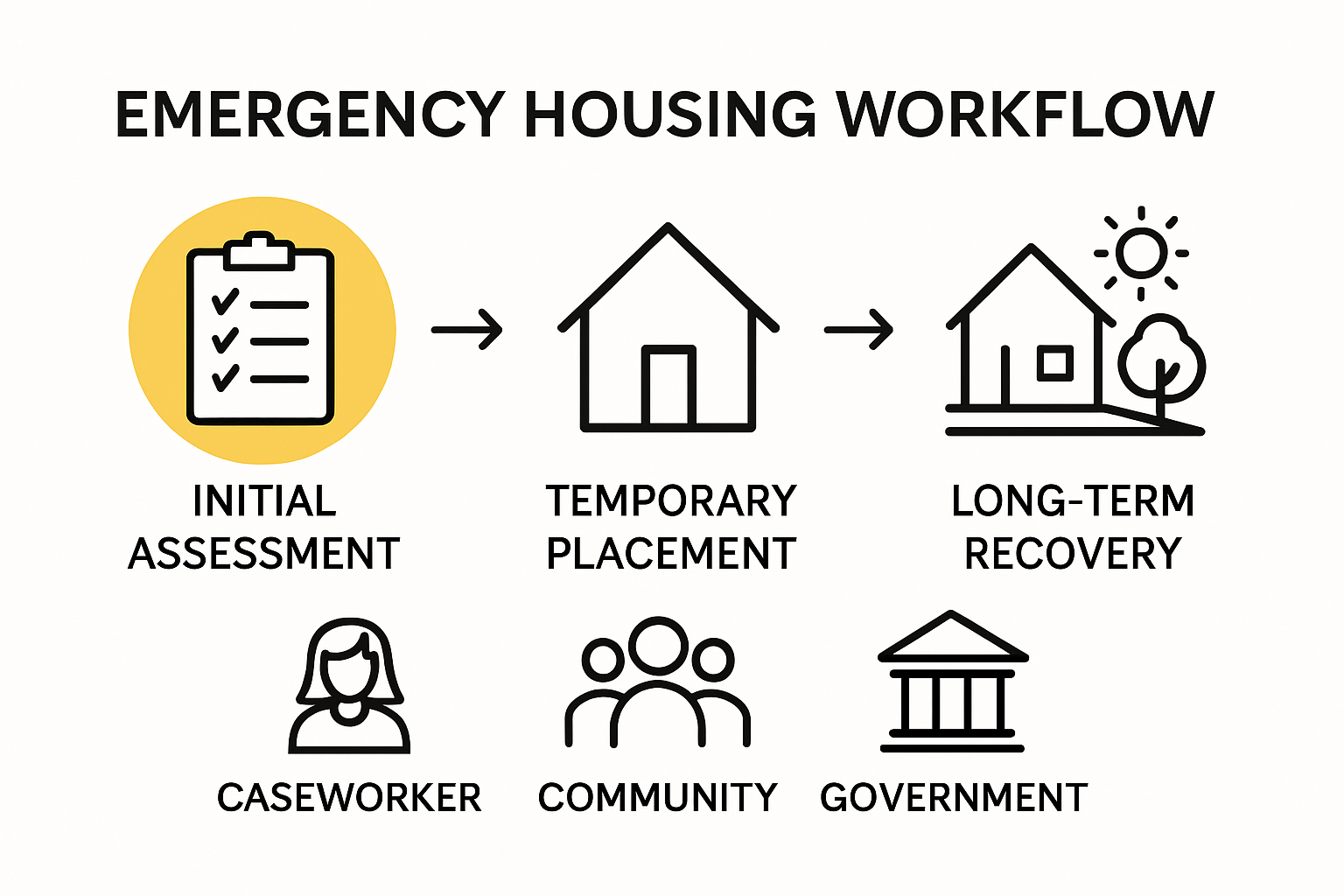
The emergency housing workflow represents a critical lifeline for individuals and families suddenly displaced by disasters. Understanding the systematic approach to emergency housing requires careful navigation through complex operational phases that ensure rapid, effective support.
Initial Assessment and Intake Process
The first critical phase in emergency housing workflow begins with comprehensive initial assessment and intake. According to the National Alliance to End Homelessness, this stage involves immediate outreach and connection to essential services. Emergency responders and social workers conduct rapid evaluations to determine immediate housing needs, vulnerability levels, and potential support resources.
Key elements during this phase include:
- Immediate Situation Evaluation: Quickly assessing the individual or family’s current living conditions and urgent requirements.
- Documentation Compilation: Gathering critical personal identification, insurance information, and displacement documentation.
- Preliminary Support Mapping: Identifying potential temporary housing options and available emergency assistance programs.
The Federal Emergency Management Agency (FEMA) recommends a structured approach that prioritizes human safety and immediate shelter needs. Professionals use standardized assessment protocols to categorize displaced individuals and expedite appropriate housing solutions.
To help visualize the main steps within each emergency housing workflow phase, the following table provides a clear process breakdown.
| Workflow Phase | Key Steps |
|---|---|
| Initial Assessment & Intake | Situation evaluation, documentation gathering, support/resource mapping |
| Temporary Housing Placement & Coordination | Agency coordination, placement based on needs, ensure access to services |
| Transition & Long-Term Recovery Planning | Needs assessment, financial program connection, insurance support, permanent housing guidance |
Temporary Housing Placement and Coordination
Once initial assessment concludes, the workflow transitions into temporary housing placement. This phase involves complex coordination between multiple agencies and service providers. Read more about our comprehensive referral process.
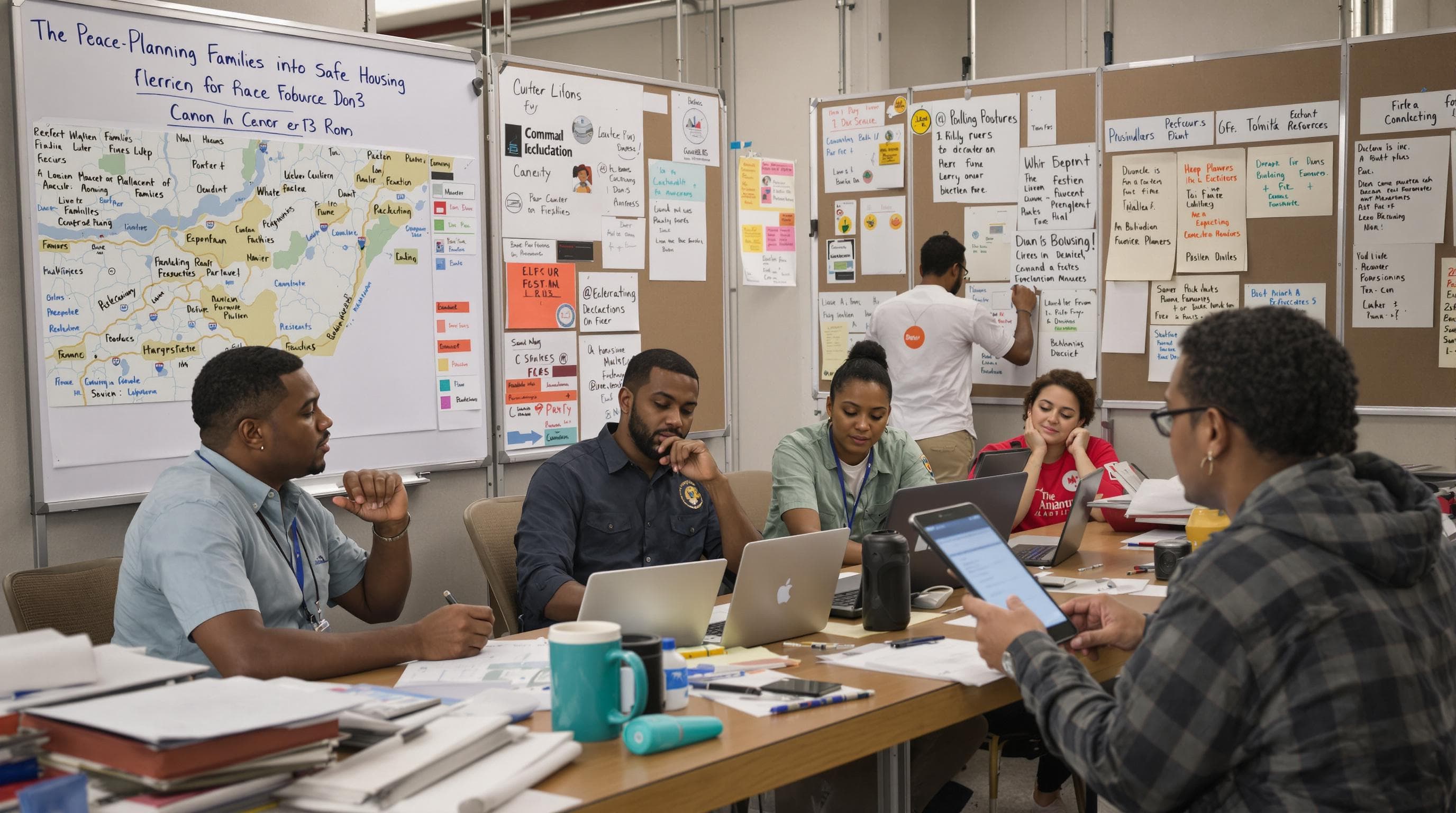
Effective temporary housing placement requires multi-agency collaboration, including coordination with local governments, nonprofit organizations, and housing authorities. The goal is to provide safe, dignified accommodations that meet immediate survival needs while establishing a foundation for longer-term recovery.
Strategic placement considerations include:
- Proximity to the individual’s original community
- Accessibility of essential services
- Medical and support infrastructure
- Cost-effectiveness of housing solutions
Transition and Long-Term Recovery Planning
The final phase of emergency housing workflow focuses on transitioning displaced individuals towards sustainable, long-term housing solutions. According to the U.S. Department of Housing and Urban Development, this stage involves developing personalized recovery plans that address housing, employment, health, and social support needs.
Key transition activities include:
- Comprehensive needs assessment
- Connection to financial assistance programs
- Support for insurance claim navigation
- Guidance on rebuilding or finding permanent housing
Successful emergency housing workflow demands a compassionate, systematic approach that recognizes each disaster victim’s unique circumstances. By implementing structured phases with clear objectives, relief organizations can transform moments of crisis into opportunities for resilient recovery.
Professionals managing these workflows must remain adaptable, empathetic, and committed to providing holistic support that extends far beyond immediate shelter needs.
Roles and Responsibilities of Stakeholders
Emergency housing requires a complex network of stakeholders working in synchronized precision to deliver effective disaster relief. Each organization and professional plays a critical strategic role in ensuring displaced individuals receive comprehensive support during their most vulnerable moments.
Government Agencies and Emergency Management
Government agencies serve as primary coordinators in emergency housing workflows. According to the U.S. Government Accountability Office, federal entities like FEMA and HUD must establish clear protocols for disaster sheltering and housing assistance. These agencies are responsible for:
- Policy Development: Creating standardized emergency housing guidelines
- Resource Allocation: Distributing federal funds and emergency housing resources
- Interagency Coordination: Facilitating communication between local, state, and federal response teams
Learn more about our comprehensive emergency referral strategies, which align with government best practices for disaster response.
Nonprofit Organizations and Support Services
Nonprofit organizations play a crucial humanitarian role in emergency housing workflows. The National Academies of Sciences emphasizes their critical function in creating resilient community support systems. Their key responsibilities include:
- Conducting immediate needs assessments
- Providing emotional and psychological support
- Connecting victims with housing resources
- Managing volunteer coordination and support networks
These organizations bridge critical gaps between government agencies and individual disaster victims, offering personalized assistance that goes beyond bureaucratic frameworks.
Insurance Providers and Claims Management
Insurance professionals are essential stakeholders in the emergency housing ecosystem. They manage complex financial recovery processes, helping victims navigate challenging insurance claims and potential housing replacements. Their primary responsibilities include:
- Rapid damage assessment
- Expedited claims processing
- Coordinating temporary housing solutions
- Financial guidance for long-term recovery
Successful emergency housing workflows depend on seamless collaboration between these stakeholders. Each entity must operate with precision, empathy, and a commitment to supporting individuals during their most challenging life moments. By understanding and executing their specific roles, these professionals transform potential chaos into structured, compassionate disaster response.
The following table summarizes the main roles of different stakeholders, highlighting their specific responsibilities in emergency housing workflows.
| Stakeholder Type | Main Responsibilities |
|---|---|
| Government Agencies | Policy development, resource allocation, interagency coordination |
| Nonprofit Organizations | Immediate needs assessment, emotional support, housing connection, volunteer management |
| Insurance Providers | Damage assessment, claims processing, temporary housing, financial recovery guidance |
Technology and Best Practices for 2025
Technology continues to revolutionize emergency housing workflows, offering unprecedented opportunities for rapid, efficient, and compassionate disaster response. As we move into 2025, innovative technological solutions are transforming how organizations approach emergency housing challenges.
Digital Platforms and Application Technologies
Digital platforms are becoming crucial in streamlining emergency housing processes. According to the U.S. Department of the Treasury, modern application technologies must focus on reducing barriers and improving user experience.
Key technological innovations include:
- Simplified Online Applications: User-friendly interfaces that guide applicants through complex documentation processes
- Real-Time Status Tracking: Digital dashboards allowing individuals to monitor their housing assistance progress
- Automated Eligibility Verification: AI-powered systems that expedite documentation review
Explore our technological response innovations that are reshaping disaster recovery approaches.
Collaborative Network Management Systems
The Urban Institute highlights the critical importance of integrated network management technologies. These systems enable seamless communication and coordination between multiple stakeholders, including government agencies, nonprofits, and housing providers.
Advanced collaborative technologies feature:
- Centralized data sharing platforms
- Secure communication channels
- Real-time resource allocation tracking
- Integrated case management tools
These technologies eliminate traditional communication barriers, allowing for more responsive and efficient emergency housing support.
Predictive Analytics and Resource Optimization
Predictive analytics are transforming emergency housing workflow strategies. By leveraging big data and machine learning algorithms, organizations can now anticipate housing needs, identify vulnerable populations, and develop proactive response strategies.
Advanced predictive technologies enable:
- Early disaster impact assessment
- Precise resource allocation modeling
- Risk mitigation strategies
- Personalized support recommendation systems
As technology continues to evolve, emergency housing workflows will become increasingly sophisticated. The future of disaster response lies in embracing these innovative tools that prioritize human dignity, efficiency, and comprehensive support.
Professionals in emergency housing must remain adaptable, continuously learning and integrating new technologies that can transform crisis management from reactive to proactive approaches.
Overcoming Common Housing Workflow Challenges
Emergency housing workflows encounter numerous complex challenges that demand innovative, strategic solutions. Understanding and addressing these obstacles is crucial for delivering effective disaster relief and support to vulnerable populations.
Administrative and Systemic Barriers
Administrative complexity represents a significant challenge in emergency housing workflows. According to the Government Accountability Office, fragmented coordination between housing and health agencies creates substantial implementation barriers. These systemic challenges manifest through:
- Inconsistent Eligibility Criteria: Multiple agencies with different qualification standards
- Complex Documentation Requirements: Overwhelming paperwork that discourages applicants
- Limited Inter-Agency Communication: Siloed information systems preventing efficient resource allocation
Learn more about our comprehensive housing placement strategies that address these administrative challenges.
Resource Allocation and Coordination Challenges
Resource distribution remains a critical bottleneck in emergency housing workflows. The Shelter Force Research Institute highlights the complex landscape of housing assistance systems, characterized by fragmented support mechanisms.
Key challenges in resource allocation include:
- Uneven geographic distribution of emergency housing resources
- Limited funding for comprehensive support services
- Difficulties in quickly mobilizing temporary housing solutions
- Inadequate tracking of available accommodations
Successful strategies involve developing flexible, technology-driven coordination platforms that can rapidly assess and respond to emerging housing needs.
Psychological and Social Integration Barriers
Beyond logistical challenges, emergency housing workflows must address the profound psychological impact of displacement. Trauma-informed approaches are essential in supporting individuals navigating sudden housing disruptions.
Critical psychological support considerations include:
- Providing culturally sensitive counseling services
- Creating supportive community integration programs
- Developing personalized recovery support plans
- Offering mental health resources alongside housing assistance
Addressing these multifaceted challenges requires a holistic, compassionate approach that recognizes the complex human experience of displacement. Emergency housing workflows must evolve from mere logistical solutions to comprehensive support systems that restore dignity, hope, and stability.
Professionals in this field must remain adaptable, continuously learning and refining strategies that transform potential crisis moments into opportunities for resilient community rebuilding.
Frequently Asked Questions
What is the emergency housing workflow process?
The emergency housing workflow process involves a systematic approach to providing shelter and support to individuals displaced by disasters. It includes initial assessment and intake, temporary housing placement, and long-term recovery planning.
How do stakeholders coordinate during an emergency housing crisis?
Stakeholders, including government agencies, nonprofit organizations, and insurance providers, collaborate by establishing clear protocols, sharing resources, and ensuring effective communication to deliver timely support to displaced individuals.
What role does technology play in emergency housing workflows?
Technology enhances emergency housing workflows by streamlining processes through digital platforms, collaborative network management systems, and predictive analytics, allowing for timely and efficient resource allocation and support.
What challenges do emergency housing workflows typically face?
Emergency housing workflows often face challenges such as administrative barriers, resource allocation issues, and the psychological impacts of displacement. Addressing these requires a holistic and compassionate approach to support individuals fully.
Take Action: Secure Immediate Housing Support When Every Moment Counts
In the midst of a crisis, delays and confusion can make the path to emergency housing overwhelming. As highlighted in this guide, many families still face slow response times, complex eligibility checks, and fragmented help when they need safety most. You deserve more than waiting in line when your future is uncertain. At Disaster Victim Services, we turn the workflow steps outlined in this article into real solutions by connecting you with fast, coordinated emergency housing and expert support, day and night.
Why wait to start recovery? Visit our Uncategorized Resources for practical guidance or reach out through Disaster Victim Services now. Our compassionate team is ready to move you quickly from assessment to safe shelter and help you access every available resource. Your recovery starts with a single step—let us help you take it today.
Recommended
- Emergency Housing Referral Workflow: A 2025 Guide for Disaster Relief – Disaster Victim Services | Helping You Recover After Disaster
- Rehousing Process Steps: A Complete Guide for 2025 – Disaster Victim Services | Helping You Recover After Disaster
- Safe Housing Placement Steps for Disaster Response 2025 – Disaster Victim Services | Helping You Recover After Disaster
- Housing Placement Workflow Guide 2025: Steps for Disaster Recovery – Disaster Victim Services | Helping You Recover After Disaster
- House Removal Process Explained: Step-by-Step Guide for 2025 | Schott Removals
- Where to Start When Your Whole House is a Mess: Expert Tips
– BLUSHBEES USA