
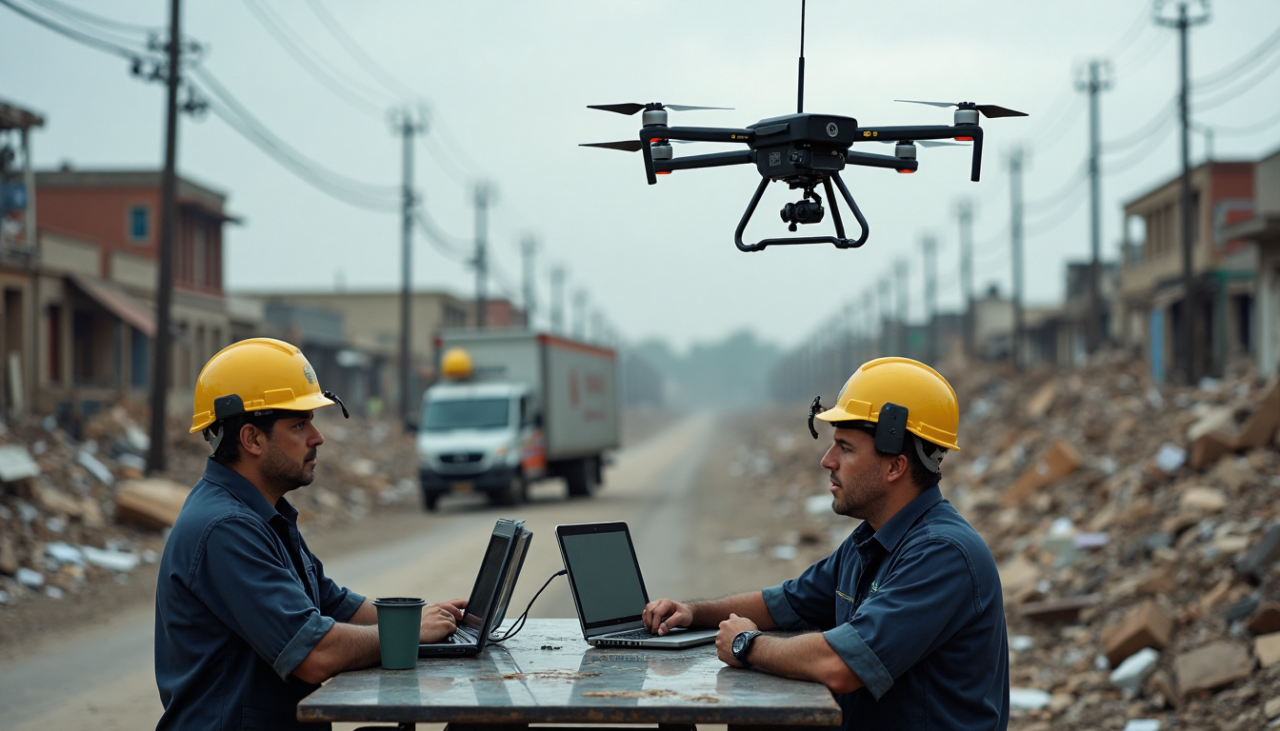
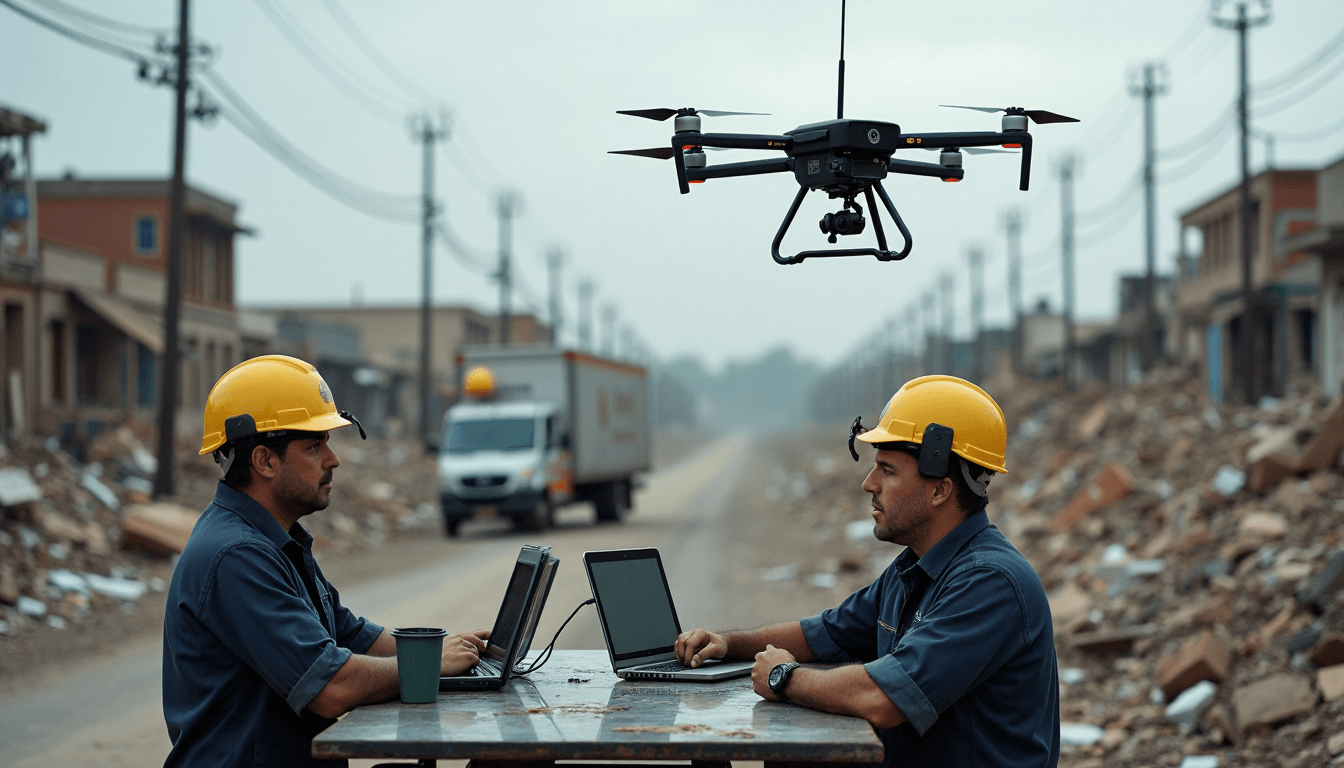
Disaster recovery is racing ahead faster than ever, and technology is writing a whole new playbook. AI powered alert systems can now warn officials of wildfires before 911 calls even come in. Surprised? Most people picture recovery teams and relief supplies as slow-moving and reactive. That thinking is outdated. Today, smart platforms and autonomous machines are making it possible to predict emergencies, direct resources exactly where they are needed, and even let communities control their own recovery in real time. The future of disaster response is unpredictable and a lot more proactive than it looks at first glance.
Table of Contents
- How Technology Transforms Emergency Response Efforts
- Digital Tools Empowering Disaster Victims And Relief Teams
- Data-Driven Decision Making For Faster Recovery
- Collaborative Platforms Connecting Responders And Communities
Quick Summary
| Takeaway | Explanation |
|---|---|
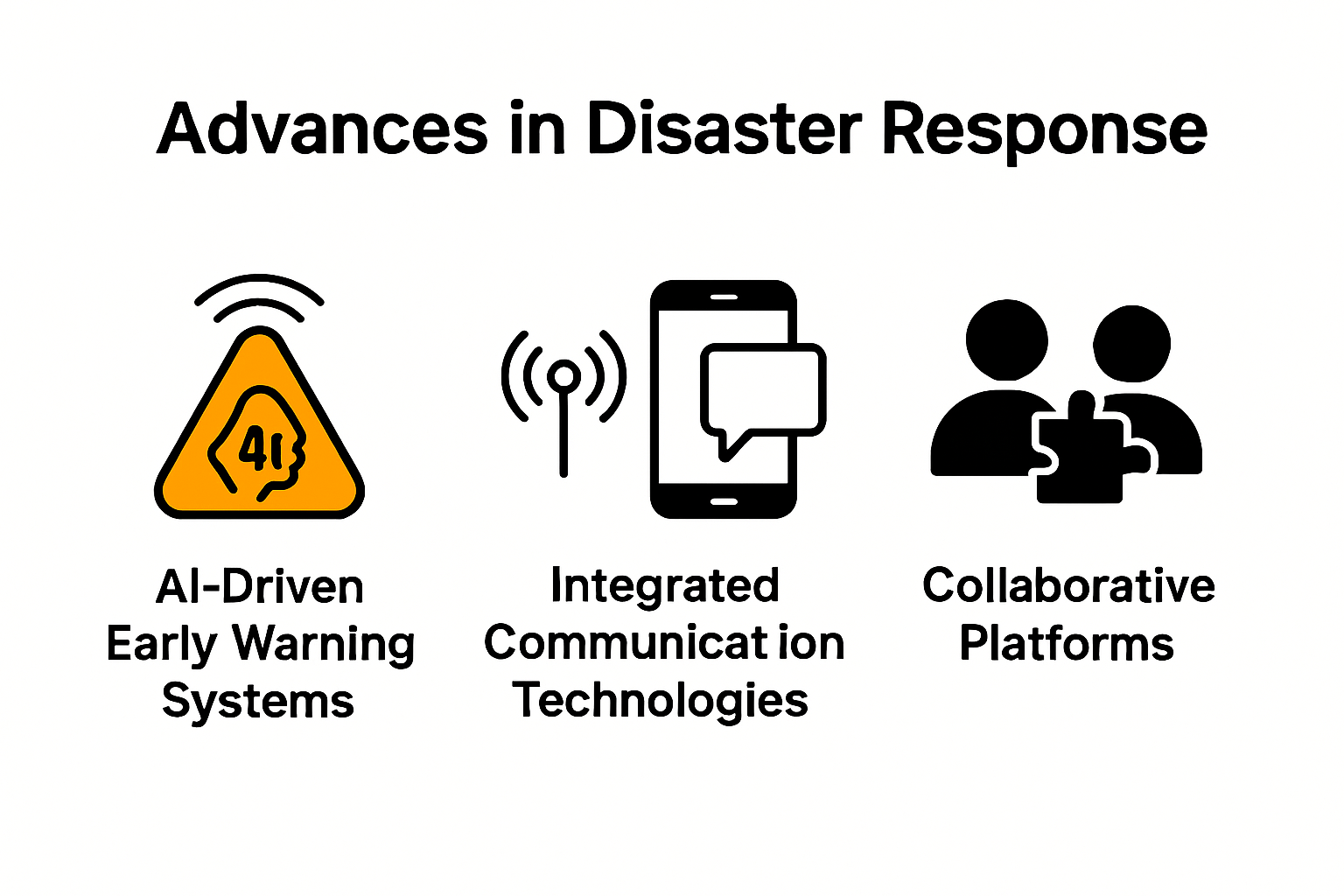
| AI Driven Early Warning Systems Enhance Preparedness | Sophisticated AI systems like sensor networks can predict disasters and send real-time alerts, granting communities critical extra time to prepare and evacuate. |
| Integrated Communication Technologies Improve Coordination | Digital platforms facilitate real-time information sharing among responders, enhancing efficiency and accelerating response times through tools like encrypted networks and drones. |
| Predictive Analytics Optimize Resource Allocation | Machine learning helps forecast recovery challenges and streamlines resource distribution, ensuring aid is directed effectively to those in need. |
| Collaborative Platforms Empower Communities | Advanced technologies enable direct communication between victims and responders, fostering transparency and active community participation in recovery efforts. |
 |
How Technology Transforms Emergency Response Efforts
Emergency response is experiencing a technological revolution that promises to dramatically improve how we protect and support communities during critical moments. The integration of advanced technologies is reshaping disaster management strategies, providing unprecedented capabilities for rapid detection, communication, and intervention.
AI Driven Early Warning Systems
Artificial intelligence is revolutionizing how we predict and respond to potential disasters. Next Generation Disaster Proofing initiatives are developing sophisticated sensor networks that can detect emergencies before traditional reporting methods. For instance, AI enabled sensor networks like SenseNet can now deliver real time wildfire alerts often before 911 calls are placed, allowing agencies to mobilize resources with unprecedented speed.
These advanced systems analyze multiple data streams simultaneously, including satellite imagery, ground sensor networks, weather patterns, and historical disaster data. By processing this information through complex machine learning algorithms, they can predict potential disaster scenarios with remarkable accuracy. This approach transforms emergency response from reactive to proactive, giving communities critical extra minutes or hours to prepare and evacuate.
Integrated Communication Technologies
Communication remains the backbone of effective emergency response. Modern technological advances are breaking down traditional communication barriers between different response agencies. Digital platforms now enable real time information sharing between first responders, government agencies, and relief organizations. Our guide on first responder coordination highlights how these integrated communication systems dramatically improve response efficiency.
Advanced communication tools now include encrypted mobile networks, satellite communication backup systems, and AI powered translation services that can instantly bridge language gaps during international disaster response efforts. Drones equipped with communication relays can establish networks in areas where traditional infrastructure has been destroyed, ensuring that critical information continues to flow even in the most challenging environments.
Robotic and Autonomous Response Technologies
Robotics and autonomous technologies are emerging as game changing tools in disaster response scenarios. Specialized robots can now enter areas too dangerous for human responders, conducting search and rescue operations, assessing structural damage, and even delivering critical medical supplies. These machines are designed to navigate complex terrain, withstand extreme conditions, and provide real time data streams back to emergency coordination centers.

Innovative autonomous vehicles can traverse damaged landscapes, delivering essential supplies to isolated communities. Thermal imaging and advanced sensor technologies allow these robots to detect human heat signatures, potentially saving lives in scenarios where traditional search methods would be ineffective. The Department of Homeland Security continues to invest in these technologies, recognizing their potential to save lives and reduce risks to human emergency personnel.
As technological advances in response continue to evolve, we are witnessing a fundamental transformation in how societies prepare for and respond to emergencies. These innovations represent more than just technological progress—they symbolize a commitment to protecting human lives through intelligent, adaptive, and proactive systems.
Digital Tools Empowering Disaster Victims and Relief Teams
In the evolving landscape of disaster response, digital technologies are becoming powerful allies for victims and relief teams. These innovative tools are transforming how communities prepare, respond, and recover from catastrophic events, offering unprecedented levels of support and coordination.
AI Powered Recovery Planning
Artificial intelligence is revolutionizing disaster recovery strategies. Research from enterprise technology experts reveals that over two thirds of organizations believe AI and machine learning will fundamentally transform disaster recovery planning. These advanced systems can now automatically create recovery templates, analyze existing plans, and suggest real time improvements that streamline response efforts.
The U.S. Census Bureau has developed sophisticated digital tools that enable relief teams to assess community needs with remarkable precision. Our guide on deploying aid effectively highlights how these data resources help organizations track recovery progress and make informed decisions during critical intervention periods.
Collaborative Digital Platforms
Modern digital platforms are breaking down communication barriers between disaster victims, relief organizations, and government agencies. Cloud native systems with robust security protocols now enable seamless information sharing and resource coordination. According to public safety technology reports, leading agencies are adopting these technologies to enhance operational efficiency and strengthen cybersecurity during emergency responses.
These platforms provide real time tracking of relief efforts, allowing victims to access critical information about aid distribution, temporary housing, medical support, and financial assistance. Interactive maps, mobile applications, and centralized communication channels ensure that every stakeholder remains informed and connected during challenging recovery periods.
Personalized Support Through Technology
Digital tools are now offering unprecedented levels of personalized support for disaster victims. Advanced data analytics can help relief teams understand individual needs, matching specific resources to unique circumstances. Machine learning algorithms can predict potential challenges families might face during recovery, enabling proactive support strategies.
Mobile applications now provide comprehensive support ecosystems. These digital platforms offer services ranging from mental health resources and counseling connections to practical assistance like insurance claim guidance, housing support, and employment resources. By leveraging technology, relief organizations can provide holistic, compassionate support that extends far beyond immediate emergency responses.
As digital technologies continue to advance, they promise to transform disaster recovery from a reactive process to a sophisticated, data driven approach that prioritizes human needs and community resilience. The future of disaster response is not just about managing crises—it is about empowering communities to rebuild stronger and more adaptively than ever before.
Data-Driven Decision Making for Faster Recovery
In the complex world of disaster recovery, data has emerged as the most powerful tool for transforming slow, reactive responses into rapid, strategic interventions. Advanced technological systems are now enabling emergency management professionals to make precise, informed decisions that can significantly accelerate community recovery processes.
Real Time Intelligence Platforms
Modern disaster recovery is being revolutionized by sophisticated intelligence platforms that provide continuous, actionable insights. Data innovation experts are developing real time analytics systems that enable organizations to gain operational intelligence and make on demand decisions during critical recovery periods. These platforms aggregate data from multiple sources including satellite imagery, ground sensors, social media streams, and government databases to create comprehensive situational awareness.
The Department of Homeland Security’s Next Generation Disaster Proofing initiative is at the forefront of developing technologies that streamline disaster resilience investments. By implementing advanced data analysis standards, these systems can optimize resource allocation and dramatically improve program effectiveness monitoring across thousands of affected communities.
Predictive Analytics in Resource Allocation
Predictive analytics are transforming how emergency management teams distribute critical resources. Machine learning algorithms can now analyze historical disaster data, current environmental conditions, and community demographic information to forecast potential recovery challenges with remarkable accuracy. These sophisticated models help relief organizations anticipate needs before they become critical emergencies.
Public safety technology reports indicate that leading agencies are increasingly adopting cloud native systems and artificial intelligence to enhance operational efficiency. These technologies enable more dynamic and responsive resource management, ensuring that aid reaches the most vulnerable populations with unprecedented speed and precision.
Collaborative Data Ecosystems
Emergency response is no longer a siloed operation. Advanced data sharing platforms are creating collaborative ecosystems where government agencies, relief organizations, and local authorities can seamlessly exchange critical information. These interconnected systems break down traditional communication barriers, allowing for more coordinated and intelligent disaster recovery strategies.
By integrating data from multiple sources and implementing robust cybersecurity protocols, these platforms ensure that sensitive information remains protected while enabling rapid, informed decision making. Machine learning algorithms can now process complex datasets in real time, identifying patterns and potential recovery challenges that might be invisible to human analysts.
As technological capabilities continue to advance, data driven decision making represents more than just a technological upgrade. It symbolizes a fundamental shift in how we approach disaster recovery—moving from reactive emergency response to proactive, intelligent community resilience. The future of disaster management lies not just in responding to crises, but in using sophisticated data intelligence to prevent and mitigate their most devastating impacts.
Collaborative Platforms Connecting Responders and Communities
In the intricate landscape of disaster recovery, collaborative platforms are revolutionizing how communities and emergency responders work together. These innovative technologies are breaking down traditional communication barriers, creating unified networks that enable faster, more efficient recovery efforts.
Unified Data Sharing Ecosystems
Modern collaborative platforms are transforming emergency response through seamless data integration. Peregrine’s innovative technology enables state and local governments to securely share critical information with nonprofits, private sector partners, and community members. These platforms create a comprehensive operating picture that prevents redundant efforts and ensures all recovery activities are strategically aligned.
First responder coordination strategies highlight the importance of these integrated systems. By providing real time data sharing capabilities, these platforms allow emergency management teams to make more informed decisions, allocate resources more effectively, and respond with unprecedented precision.
Strategic Interagency Partnerships
The National Disaster Recovery Framework provides a flexible structure that enables disaster recovery managers to operate collaboratively across diverse organizations and communities. This approach recognizes that effective disaster response requires a unified, multidisciplinary strategy.
Strategic partnerships are becoming increasingly sophisticated. For instance, collaborative models like those employed by Volunteer Florida and VOAD demonstrate how state agencies, nonprofit organizations, and local emergency management can work together to streamline volunteer deployment, manage donations, and maximize recovery operations. These collaborative platforms create synergies that were previously impossible, ensuring that every resource is utilized with maximum efficiency.
Community Engagement Technologies
Advanced collaborative platforms are no longer just tools for professionals—they are becoming powerful mechanisms for community empowerment. Digital platforms now enable direct communication between disaster victims, relief organizations, and emergency responders. These technologies allow community members to provide real time updates, request specific assistance, and participate actively in their own recovery process.
Interactive mapping technologies, crowd sourced reporting systems, and AI powered communication tools are creating unprecedented levels of transparency and engagement. Victims can now track recovery efforts, understand available resources, and connect with support networks instantly. This approach transforms disaster recovery from a top down process to a truly collaborative endeavor.
As technological capabilities continue to evolve, collaborative platforms represent more than just technological innovation. They symbolize a fundamental shift in how communities approach disaster recovery—moving from isolated, fragmented responses to integrated, community centered strategies that prioritize human connection and collective resilience.
Frequently Asked Questions
What are AI-driven early warning systems in disaster recovery?
AI-driven early warning systems utilize sophisticated sensor networks and machine learning algorithms to predict emergencies before traditional reporting methods. They can provide real-time alerts that give communities extra time to prepare and evacuate in anticipation of disasters.
How do integrated communication technologies enhance emergency response?
Integrated communication technologies improve coordination among responders by facilitating real-time information sharing. Tools like encrypted networks and drones allow various agencies to communicate effectively, ensuring critical information flows even in challenging environments.
What role do robotic and autonomous technologies play in disaster response?
Robotic and autonomous technologies are used in disaster response scenarios to conduct search and rescue operations, assess damage, and deliver medical supplies. These machines can enter dangerous areas where humans may be at risk, providing real-time data to emergency coordination centers.
How is data-driven decision making transforming disaster recovery efforts?
Data-driven decision making enables emergency management professionals to make informed, precise decisions using real-time analytics and predictive modeling. This approach streamlines resource allocation and enhances recovery efforts, allowing organizations to respond swiftly to community needs.
Ready for Real Recovery? Harness the Power of Modern Disaster Response
Emergencies no longer follow the old playbook. As the article shows, new technology—from AI alerts to collaborative data platforms—is changing how communities plan and bounce back after disasters. Yet, facing chaos and uncertainty is still overwhelming when you and your loved ones are displaced. You may need immediate housing. You might struggle to coordinate with multiple agencies. There could be confusion about the next steps. All of these pain points, highlighted in “Technological Advances in Response: Innovations for Disaster Recovery 2025,” are challenges our team solves every day.
If you need fast, reliable support right now, our New Disaster Recovery Solutions are built to connect you with modern, coordinated assistance as soon as crises hit. We use advanced communication and logistics—aligned with the very breakthroughs featured in this article—to make sure you are never alone. Discover how Disaster Victim Services bridges technology with compassion and helps you recover smarter and faster. Take the first step today so your path from crisis to comfort can start immediately.
Recommended Articles
- How to Improve Response After Disasters: Essential Strategies for 2025 – Disaster Victim Services | Helping You Recover After Disaster
- Emergency Response Trends 2025: What Stakeholders Need to Know – Disaster Victim Services | Helping You Recover After Disaster
- First Responder Coordination Tips 2025: Effective Support for All – Disaster Victim Services | Helping You Recover After Disaster