
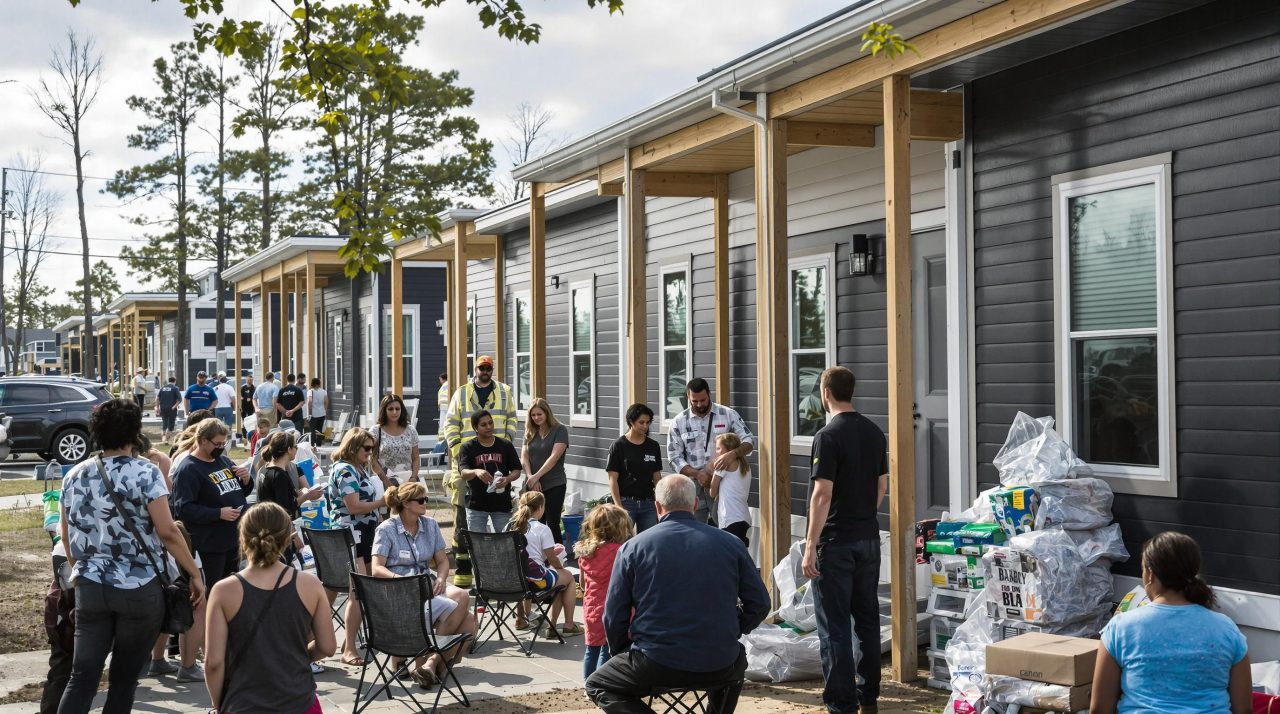
Housing accessibility is racing through a seismic shift in 2025 as natural disasters and emergencies push communities to rethink how shelter gets delivered. Outdated systems are falling behind fast, yet now modular homes can be deployed in less than 24 hours and offer more than just a roof. The real surprise is that policy and technology are teaming up so well that federal agencies are accelerating emergency housing funds and delivering support with less red tape than ever before, setting the stage for a completely new era in disaster recovery.
Table of Contents
- Emerging Housing Accessibility Solutions In 2025
- Government Support And Policy Changes For Accessibility
- Innovations In Temporary And Emergency Housing
- Collaborative Efforts Among Agencies And Organizations
Quick Summary
| Takeaway | Explanation |
|---|---|
| Emphasize technology in housing solutions. | Utilize advanced technologies for rapid deployment and adaptability in emergency housing to meet diverse community needs. |
| Focus on inclusive design principles. | Ensure housing solutions cater to vulnerable populations, facilitating universal accessibility and community integration. |
| Enhance collaborative agency efforts. | Foster partnerships among government, nonprofits, and private sectors for efficient, coordinated disaster housing responses. |
| Streamline federal support mechanisms. | Implement simplified processes for accessing disaster recovery funding to support quicker community rebuilding. |
| Prioritize equity in recovery processes. | Develop policies that address systemic inequalities, ensuring marginalized communities receive the necessary housing support during crises. |
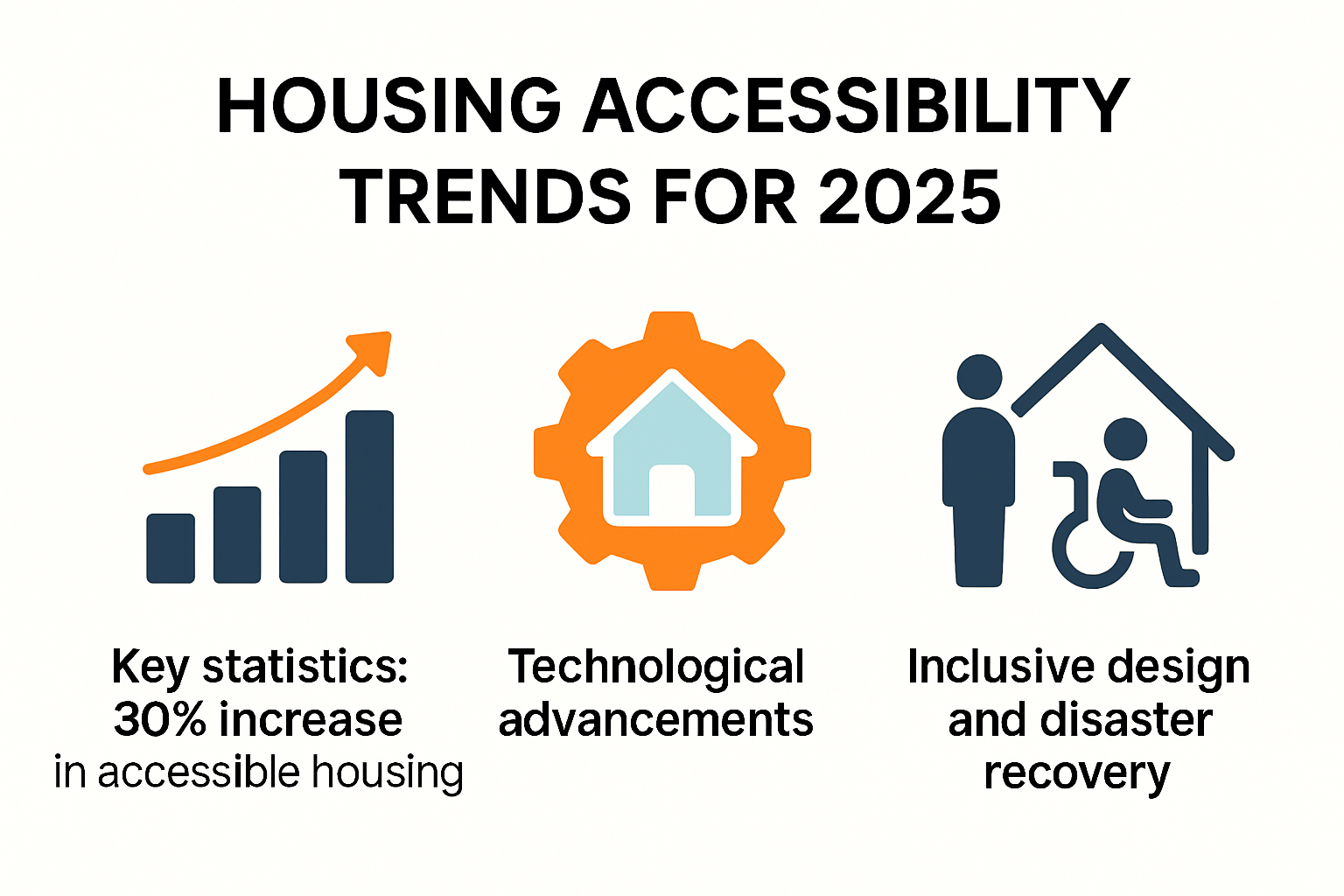
Emerging Housing Accessibility Solutions in 2025
Disaster recovery demands innovative housing solutions that address complex challenges faced by displaced populations. The year 2025 represents a critical turning point in housing accessibility, with breakthrough approaches designed to provide rapid, sustainable, and inclusive housing options for communities impacted by natural disasters and emergencies.
Technology Driven Adaptive Housing Strategies
Advanced technological solutions are revolutionizing emergency housing response. The National Low Income Housing Coalition has developed comprehensive strategies highlighting the importance of adaptive housing technologies. These emerging solutions focus on creating flexible living spaces that can be quickly deployed and customized to meet diverse community needs.
Modular housing systems now incorporate smart design principles that allow rapid assembly and disassembly. These structures can be transported efficiently to disaster zones, providing immediate shelter within hours of arrival. Prefabricated units equipped with sustainable energy systems and resilient building materials represent a significant advancement in emergency housing infrastructure.
Key technological innovations include:
- Rapid deployment structures that can be assembled in less than 24 hours
- Smart climate adaptation technologies enabling quick environmental modifications
- Integrated communication systems facilitating seamless community coordination
Inclusive Recovery and Accessibility Design
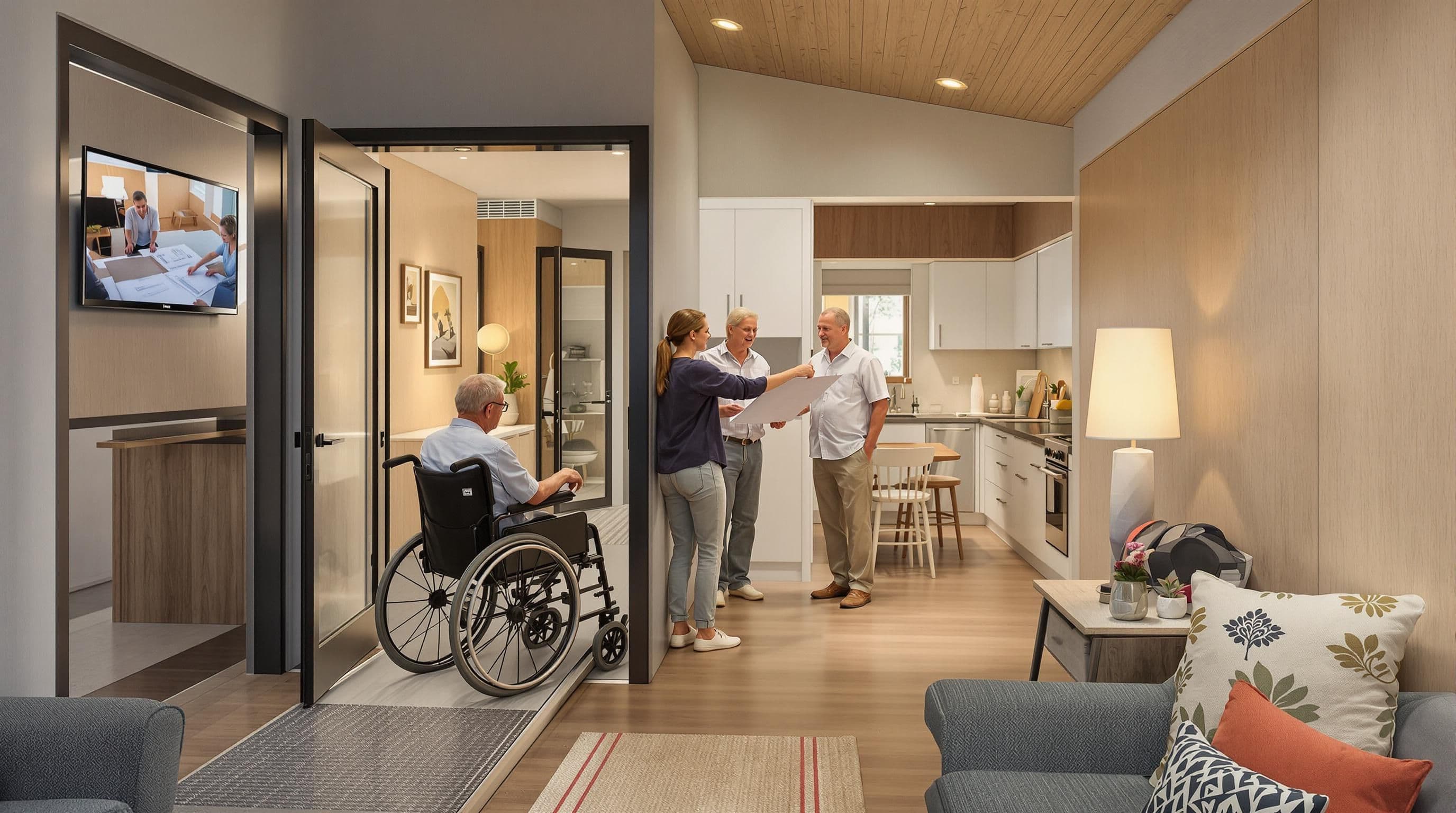
Housing accessibility in 2025 goes beyond physical infrastructure. Disaster recovery experts emphasize the critical importance of designing solutions that address the unique needs of vulnerable populations. This includes creating housing environments that accommodate individuals with disabilities, elderly residents, and families with special requirements.
Inclusive design principles now prioritize:
- Universal accessibility features in emergency housing
- Adaptable living spaces that can be quickly modified
- Community integration support systems
These approaches recognize that effective housing solutions must consider psychological and social dimensions of displacement, not just physical shelter. By developing holistic frameworks, emergency housing providers can create environments that support comprehensive community recovery.
Collaborative Multi Agency Housing Approaches
Successful housing accessibility requires unprecedented levels of collaboration between government agencies, nonprofits, and private sector organizations. Integrated response models are replacing traditional siloed approaches, enabling more dynamic and responsive housing solutions.
Emergency housing strategies now prioritize:
- Coordinated resource allocation
- Real time data sharing
- Flexible funding mechanisms
By breaking down institutional barriers, these collaborative approaches ensure faster, more efficient housing recovery processes that can adapt to rapidly changing disaster scenarios. The future of housing accessibility lies in our ability to create flexible, human centered solutions that prioritize dignity, safety, and community resilience.
Government Support and Policy Changes for Accessibility
Government agencies are increasingly recognizing the critical need for comprehensive policy frameworks that address housing accessibility during disaster recovery. The evolving landscape of emergency housing demands proactive policy interventions that prioritize resilience, equity, and rapid response capabilities.
Streamlined Federal Assistance Mechanisms
The Department of Housing and Urban Development has introduced significant reforms to expedite disaster recovery support. The new Community Development Block Grant Disaster Recovery (CDBG-DR) Universal Notice represents a pivotal shift in how federal resources are allocated during emergency housing scenarios. These policy changes aim to reduce bureaucratic barriers and create more direct pathways for communities to access critical housing support.
Key policy reforms include:
- Simplified application processes for emergency housing grants
- Accelerated funding disbursement mechanisms
- Enhanced accountability for resource allocation
The federal government is moving beyond traditional reactive models, developing proactive strategies that anticipate and address housing accessibility challenges before they become critical emergencies. This approach represents a fundamental transformation in disaster response policy.
Equity Focused Housing Accessibility Regulations
Emergency management experts emphasize the importance of creating policy frameworks that address systemic inequalities in disaster recovery. New regulations are being designed to ensure that vulnerable populations receive prioritized support during housing crises.
Emergency housing policies now explicitly address:
- Protection for marginalized communities
- Specialized support for individuals with disabilities
- Comprehensive demographic considerations in resource allocation
These policy changes recognize that effective disaster recovery goes beyond immediate shelter. They aim to create holistic support systems that preserve community integrity and individual dignity during challenging times.
Technological Integration in Policy Development
Government agencies are increasingly leveraging advanced technologies to enhance policy effectiveness. Data driven approaches are transforming how housing accessibility policies are conceived, implemented, and evaluated. Real time tracking systems and predictive analytics now play a crucial role in understanding and addressing emergency housing needs.
Technological innovations in policy development include:
- Advanced data mapping of vulnerable communities
- Predictive risk assessment tools
- Dynamic resource allocation algorithms
By integrating cutting edge technologies, government agencies can create more responsive and targeted housing accessibility policies. These approaches allow for more nuanced understanding of community needs, enabling faster and more efficient emergency housing interventions.
The future of housing accessibility policy lies in creating flexible, adaptive frameworks that can respond quickly to emerging challenges. Government support is no longer about simply providing temporary shelter but about building comprehensive resilience strategies that empower communities to recover and thrive in the face of disasters.
Innovations in Temporary and Emergency Housing
Emergency housing solutions are undergoing a transformative revolution in 2025, driven by technological advancements and a deeper understanding of human needs during crisis situations. The landscape of temporary housing is rapidly evolving to address complex challenges faced by displaced populations.
Advanced Modular Housing Technologies
Research published in the International Journal of Disaster Risk Reduction highlights breakthrough approaches in temporary housing design. Cutting edge modular housing systems now incorporate unprecedented levels of flexibility and rapid deployment capabilities. These innovative structures can be assembled within hours, providing immediate shelter that goes beyond basic protection.
Key technological innovations in modular housing include:
- Adaptive structural designs that can be quickly reconfigured
- Integrated smart technology enabling environmental control
- Sustainable material technologies that reduce environmental impact
These advanced systems represent more than just shelter. They are comprehensive living environments designed to support psychological and physical recovery for disaster survivors. The integration of smart technologies allows for personalized space adaptation, ensuring residents can maintain a sense of dignity and comfort during challenging times.
Below is a table summarizing key innovations in temporary and emergency housing technologies discussed in this section:
| Innovation Feature | Description | Benefit |
|---|---|---|
| Rapid Deployment Structures | Assembled in under 24 hours | Immediate shelter for displaced communities |
| Adaptive Structural Designs | Reconfigurable to meet changing needs | Flexibility for varied population requirements |
| Integrated Smart Technology | Environmental control and automation | Personalized and safe living environments |
| Sustainable Materials | Reduced environmental impact | Supports long-term sustainability goals |
| Prefabricated Energy Systems | Built-in renewable energy sources | Reduced reliance on temporary infrastructure |
| Privacy Preservation | Customizable personal and community zones | Supports mental health and dignity |
Sustainable and Resilient Housing Solutions
Climate adaptation experts are developing temporary housing solutions that address both immediate shelter needs and long term environmental challenges. These innovative approaches focus on creating structures that can withstand extreme weather conditions while providing energy efficient and adaptable living spaces.
Sustainable housing innovations now prioritize:
- Renewable energy integration
- Adaptive climate resilience
- Minimal environmental footprint
The new generation of emergency housing goes beyond traditional temporary shelter concepts. These are dynamic living environments that can be quickly deployed, easily transported, and rapidly adapted to meet diverse community needs. By incorporating sustainable design principles, these solutions provide both immediate relief and long term recovery potential.
Human Centered Design in Emergency Housing
Emergency housing innovation is increasingly focusing on human experience and psychological well being. Designers are moving beyond traditional functional approaches to create spaces that support mental health, community connection, and individual dignity.
Human centered design principles now include:
- Customizable personal spaces
- Community interaction zones
- Privacy preservation technologies
These approaches recognize that effective emergency housing is about more than physical protection. It is about creating environments that support holistic human recovery. By integrating advanced technologies with compassionate design principles, emergency housing solutions can help individuals and communities rebuild not just their physical spaces, but their sense of security and hope.
The future of temporary and emergency housing lies in our ability to create flexible, responsive, and empathetic solutions that treat displaced individuals with respect and understanding. As technological capabilities continue to advance, we can expect increasingly sophisticated approaches that transform how we support communities during their most challenging moments.
Collaborative Efforts Among Agencies and Organizations
Disaster recovery demands unprecedented levels of coordination and strategic collaboration across multiple agencies and organizations. The complex challenges of housing accessibility require a unified approach that transcends traditional institutional boundaries, creating comprehensive support networks for communities in crisis.
Here is a table summarizing the key collaborative strategies discussed across multiple agencies and organizations:
| Collaboration Focus | Example Approaches | Expected Outcome |
|---|---|---|
| Resource Coordination | Shared funding and physical resource allocation | Faster and more efficient recovery |
| Data Integration | Real-time project tracking, shared mapping tools | Better, evidence-based decision making |
| Communication Protocols | Integrated platforms, cross-organization channels | Minimized duplication and confusion |
| Equity-Focused Planning | Inclusion of marginalized groups, transparency | More equitable access to housing support |
| Accountability Mechanisms | Transparent processes for resource distribution | Greater trust and measurable impact |
Multi Stakeholder Recovery Frameworks
Nonprofit research findings reveal the critical importance of collaborative approaches in disaster housing recovery. Organizations like Habitat for Humanity, community development corporations, and national philanthropic institutions are forming integrated networks that enable more responsive and comprehensive emergency housing solutions.
Key collaborative strategies include:
- Coordinated resource allocation
- Shared data infrastructure
- Cross organizational communication protocols
These collaborative frameworks allow different organizations to leverage their unique strengths, creating a more holistic and efficient approach to disaster housing recovery. By breaking down institutional silos, stakeholders can develop more nuanced and effective support strategies.
Technological Integration in Collaborative Efforts
Infrastructure resilience experts demonstrate how advanced technological platforms are transforming inter agency collaboration. The Sandy Recovery Infrastructure Resilience Coordination (SRIRC) exemplifies how data driven approaches can enhance communication and project coordination across multiple organizations.
Technological collaboration innovations include:
- Real time project tracking systems
- Integrated communication platforms
- Shared geospatial mapping tools
These technological solutions enable agencies to minimize project duplication, streamline decision making processes, and create transparent communication channels. By establishing open information networks, organizations can respond more rapidly and effectively to emerging housing accessibility challenges.
Equity Focused Collaborative Strategies
The National Low Income Housing Coalition emphasizes the critical role of collaborative efforts in addressing systemic inequities during disaster recovery. Their comprehensive toolkit highlights strategies for creating more inclusive and equitable housing recovery processes.
Equity focused collaboration principles include:
- Prioritizing marginalized community voices
- Developing inclusive decision making frameworks
- Creating transparent accountability mechanisms
These collaborative approaches recognize that effective disaster recovery goes beyond immediate shelter provision. They aim to create comprehensive support systems that address the complex social and economic challenges faced by communities during and after disasters.
The future of disaster housing recovery lies in our collective ability to create flexible, responsive, and compassionate collaborative networks. By fostering deeper understanding and more integrated approaches, agencies and organizations can develop more effective strategies that truly support community resilience and recovery.
Frequently Asked Questions
What are the key trends in housing accessibility for 2025?
In 2025, key trends in housing accessibility include technology-driven adaptive housing strategies, inclusive design principles, and collaborative multi-agency housing approaches that address the needs of vulnerable populations.
How are technology advancements influencing disaster recovery housing?
Technology advancements are enabling rapid deployment of modular housing systems that can be assembled in less than 24 hours, incorporating smart design and sustainable energy systems for diverse community needs.
What changes have been made to government policies for housing accessibility?
Government policies have shifted to streamline federal assistance mechanisms, focusing on equity and prioritizing support for marginalized communities during disaster recovery through simplified application processes and accelerated funding.
How is human-centered design being used in emergency housing solutions?
Human-centered design emphasizes creating living environments that prioritize mental well-being, dignity, and community interaction, resulting in customizable spaces and supportive communal areas that enhance recovery for displaced individuals.
Move Forward with Confidence: Immediate Housing Solutions for Disaster Recovery
When disaster disrupts your life, fast and reliable access to emergency housing is critical. As highlighted in this article, the landscape of housing accessibility is rapidly evolving, yet challenges like rapid deployment, inclusive solutions, and seamless multi-agency coordination remain real barriers for individuals and families facing sudden displacement. Delayed responses, lack of communication, and unfamiliar processes only add to the stress and uncertainty you may already feel.
At DisasterVictimServices.com, we put these new trends into action for you. Let our experienced team take care of the complex logistics and fast-track your transition to safe, temporary housing. We work hand in hand with insurers, government programs, and disaster professionals to remove roadblocks and provide round-the-clock support to you and your loved ones. Do not wait for bureaucracy to slow your recovery—contact us today and discover how our compassionate expertise can help you secure the accessible housing you need, right now. Visit DisasterVictimServices.com to get started on your road to recovery.