
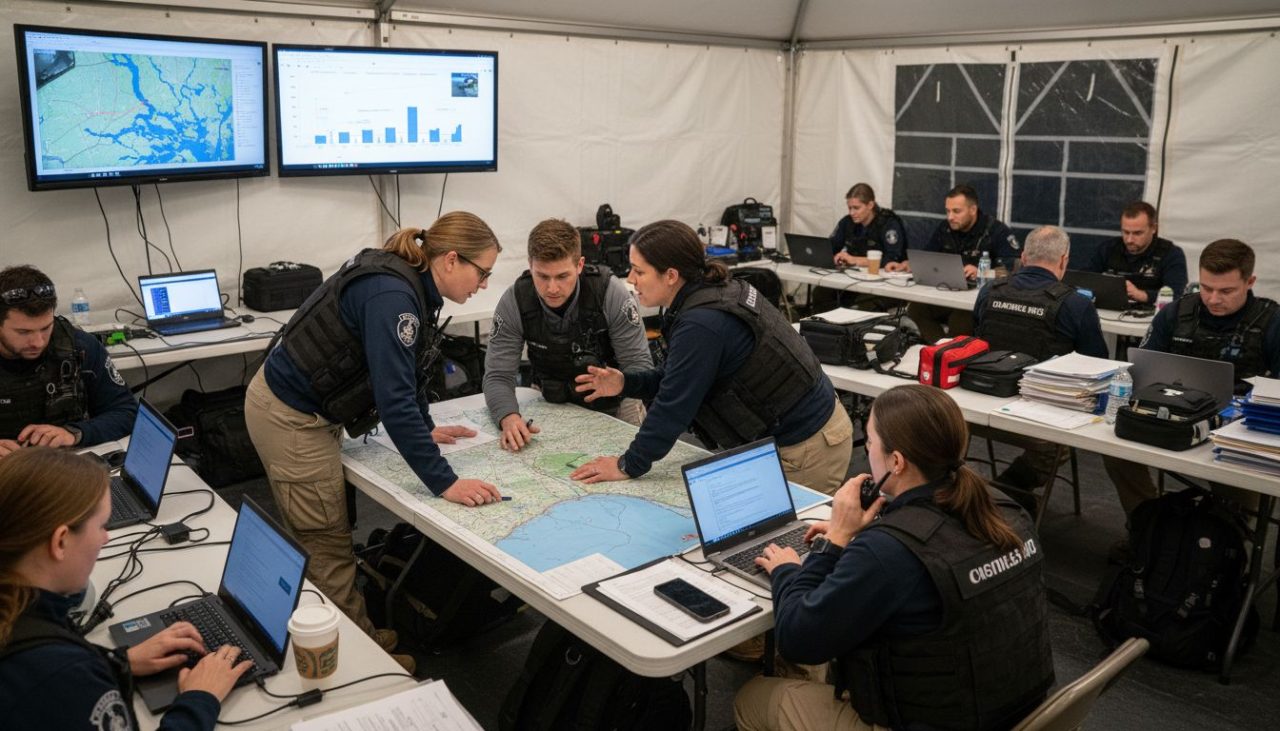
More than 40 percent of disaster survivors report feeling completely lost during the first days of recovery. Whether you are facing property damage, displacement, or the sudden need for assistance, the early steps you take can make a lifesaving difference. Knowing exactly how to assess needs, gather the right documents, and reach out for support helps you regain control. This guide shows the practical steps that simplify recovery and set you on a steady path forward.
Table of Contents
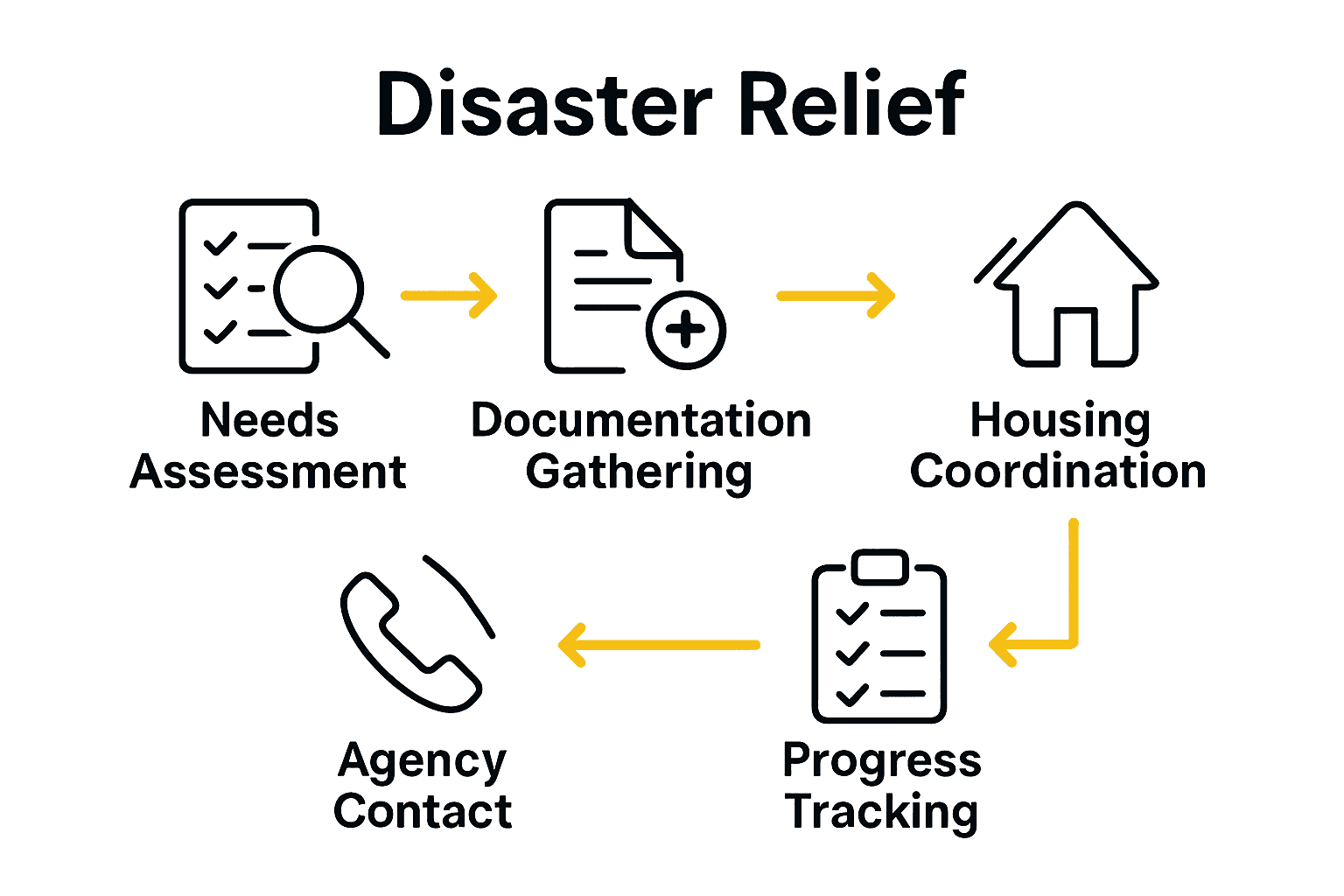
- Step 1: Assess Immediate Needs And Gather Documentation
- Step 2: Contact Relief Agencies And Initiate Claims
- Step 3: Coordinate Housing And Essential Services
- Step 4: Communicate With Professionals And Agencies
- Step 5: Verify Support And Track Recovery Progress
Quick Summary
| Essential Insight | Explanation |
|---|---|
| 1. Assess Immediate Needs Quickly | Evaluate your urgent requirements like food, shelter, and medical support right after a disaster strikes for effective recovery. |
| 2. Gather Critical Documentation | Document all damages with photos and collect vital personal records to support insurance claims and recovery efforts. |
| 3. Contact Relief Agencies Promptly | Reach out to agencies like FEMA ASAP to initiate recovery claims and maximize available support programs. |
| 4. Secure Temporary Housing Options | Find safe and stable shelter by coordinating with local services and your insurance provider to maintain essential living needs. |
| 5. Track Recovery Progress Diligently | Maintain a comprehensive system to record assistance received and interactions with agencies to ensure nothing is overlooked during recovery. |
 |
|
Step 1: Assess Immediate Needs and Gather Documentation
When disaster strikes, your first critical action is rapidly assessing your immediate needs and systematically collecting essential documentation. According to the PIARC Disaster Management, the initial recovery phase demands quickly identifying urgent requirements like food, shelter, sanitation, and medical support.
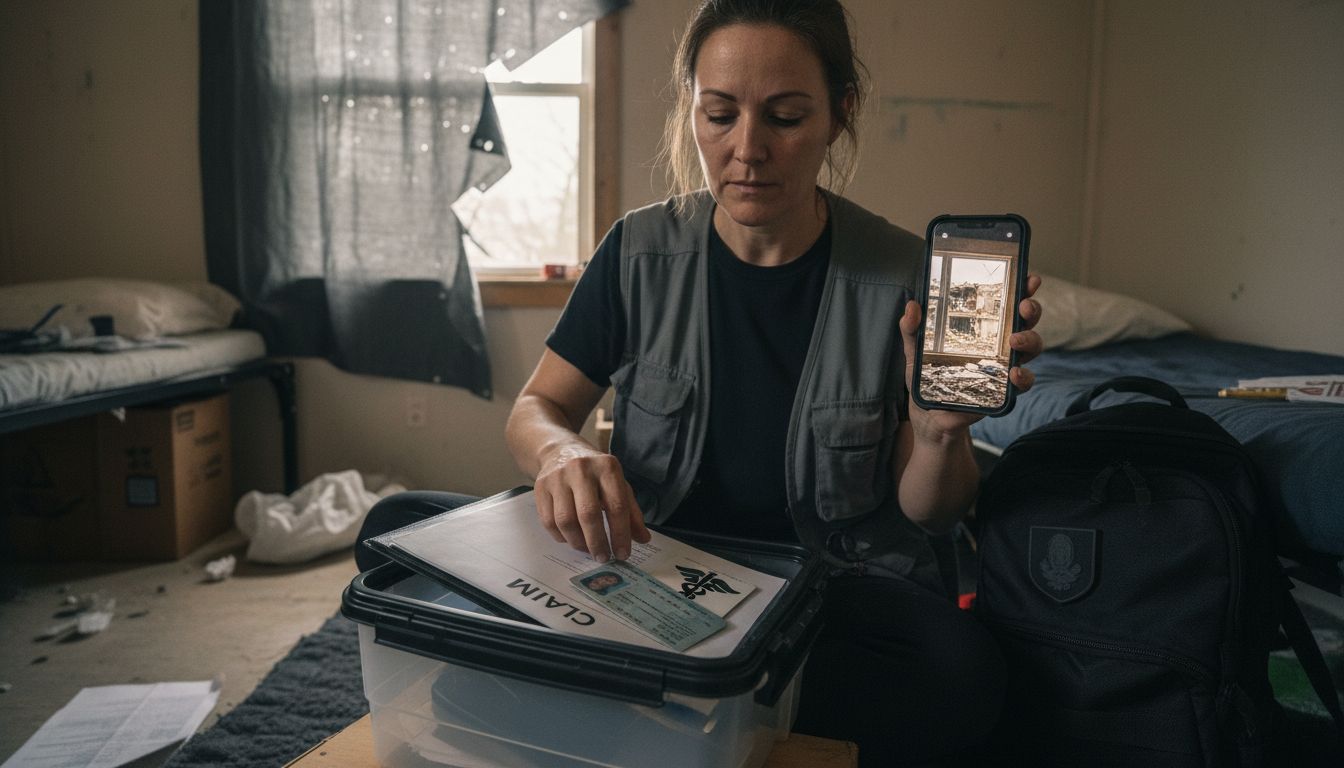
Start by conducting a thorough personal inventory of your current situation. Walk through your living space or temporary shelter and document everything damaged or lost. Photograph and video record every impacted area thoroughly. Collect all critical personal documents including identification cards, insurance policies, property deeds, medical records, and financial statements. Store these in waterproof, portable containers or create digital backups. The FEMA Pre Disaster Recovery Planning Guide emphasizes establishing clear information sharing practices to facilitate efficient data collection during recovery.
Your documentation will serve as the foundation for insurance claims, government assistance, and personal recovery tracking.
 Be meticulous but also compassionate with yourself. This process can feel overwhelming, so take breaks when needed and seek support from family, friends, or local relief organizations. Your next step will involve connecting with insurance adjusters and local emergency services to begin the formal recovery process.
Step 2: Contact Relief Agencies and Initiate Claims
Navigating the complex landscape of disaster relief requires strategic communication with multiple agencies and understanding your available support options. FEMA provides comprehensive services for disaster survivors, including financial aid, legal assistance, crisis counseling, and critical case management support that can help jumpstart your recovery process.
Begin by collecting all documentation gathered in the previous step and create a systematic approach to filing claims. Contact FEMA directly through their disaster assistance helpline or online portal. Simultaneously, reach out to the Department of Labor to explore unemployment insurance and potential job assistance programs if your employment has been disrupted. Keep detailed records of every interaction, including date, time, representative name, and conversation summary. Pro tip: Create a dedicated folder or digital file to track all communication and submitted documents.
Remember that timing is critical in disaster recovery. Most relief programs have specific application windows, so act quickly and persistently. Your goal is to establish communication channels with multiple agencies to maximize potential support. Next, you will focus on coordinating with insurance adjusters to assess property damage and begin the comprehensive claims process.
Step 3: Coordinate Housing and Essential Services
Securing safe and stable temporary housing becomes your most critical priority after a disaster. When your home is damaged or uninhabitable, you need a strategic approach to finding emergency shelter and maintaining your basic living requirements. Emergency Housing Solutions Guide can help you navigate the complex landscape of temporary housing options available during crisis situations.
Start by contacting local emergency management offices, Red Cross shelters, and your insurance provider to explore immediate housing alternatives. Document every conversation and housing option you investigate. Consider multiple housing solutions such as temporary apartment rentals, hotel accommodations, community shelters, or staying with relatives. Prioritize locations close to your original community that allow you to continue work and school responsibilities. Pro tip: Always have an emergency go bag prepared with essential documents, medications, and critical personal items to facilitate quick relocation.
Remember that housing coordination involves more than just finding a roof over your head. You will also need to arrange for essential services like electricity, water, internet, and basic medical support. Your goal is creating a stable living environment that supports your recovery and provides a sense of normalcy during challenging times. The next step will involve working closely with local agencies to establish long term recovery strategies.
Step 4: Communicate with Professionals and Agencies
Effective communication becomes your most powerful tool in navigating the complex disaster recovery landscape. According to FEMA, understanding the roles of various agencies is crucial for accessing the right resources and support during your recovery journey. Multiple professionals will play key roles in helping you rebuild your life after a disaster.
Start by creating a comprehensive communication strategy. Compile a master contact list including insurance adjusters, local government representatives, FEMA coordinators, social workers, and relevant agency representatives. Collaborative Disaster Recovery Guide recommends maintaining clear and consistent communication channels. Document every interaction meticulously record names, dates, conversation summaries, and any promises or commitments made. Pro tip: Use a dedicated notebook or digital spreadsheet to track all communications and create a paper trail that can protect your interests.
Remember that communication is a two way street. Be proactive but also patient. The FDIC emphasizes the importance of clear dialogue with financial institutions to address challenges like accessing funds and managing emergency loans. Your goal is to build collaborative relationships that will support your recovery process. The next step involves developing a comprehensive long term recovery strategy that integrates insights from all these professional interactions.
Step 5: Verify Support and Track Recovery Progress
FEMA strongly advises that documenting every aspect of your recovery journey is crucial for successfully navigating disaster relief. Your systematic approach to tracking support and progress will be your lifeline in ensuring you receive all available assistance and maintain transparency throughout the recovery process.
Create a comprehensive recovery tracking system by establishing a dedicated digital or physical file where you meticulously record all interactions, received support, and outstanding requirements. Disaster Recovery Timeline Guide recommends organizing documents by categories such as financial aid, insurance claims, housing assistance, and medical support. Pro tip: Use color coded folders or digital tags to distinguish between different types of documentation and make information retrieval faster and more efficient.
Remember that verification is an ongoing process. Regularly follow up with agencies, cross reference received support against your initial needs assessment, and dont hesitate to ask questions or request clarification. The goal is to ensure nothing falls through the cracks during your recovery. Your persistence and attention to detail will help you navigate the complex landscape of disaster relief support. The next phase involves strategic planning for long term rebuilding and restoration of your life and community.
Take Control of Your Disaster Recovery Journey Today
Recovering from a disaster can feel overwhelming with so many urgent needs like documenting losses, coordinating with relief agencies, and securing temporary housing. If you are struggling to navigate the complex relief process outlined in this article you are not alone. Key challenges include managing multiple communications with insurance adjusters and government programs while ensuring your essential services and living arrangements are in place. These hurdles can delay your recovery and add unnecessary stress.
At Disaster Victim Services we understand the urgency and emotional strain involved. Our dedicated team specializes in providing immediate emergency housing solutions and coordinating between insurance carriers, government agencies, and first responders. By partnering with experts and leveraging our multi-agency collaboration approach we simplify the recovery steps so you can focus on rebuilding your life. Explore our New resources and discover helpful strategies in the Uncategorized section to accelerate your path forward.
Do not wait to make your recovery smoother and faster. Visit DisasterVictimServices.com now to connect with compassionate support and expert assistance designed specifically for disaster survivors like you.
Frequently Asked Questions
How do I assess my immediate needs after a disaster?
You can assess your immediate needs by conducting a personal inventory of your situation, identifying urgent requirements like food, shelter, sanitation, and medical support. Walk through your living space and document everything that is damaged or lost, taking photos and videos to keep a thorough record.
What important documents should I collect for disaster recovery?
Collect essential documents such as identification cards, insurance policies, property deeds, medical records, and financial statements. Store them in waterproof containers or create digital backups to ensure they are safe and easily accessible.
How can I contact relief agencies for assistance?
Begin by gathering all your documentation and reach out to relief agencies, such as FEMA, through their helplines or online portals. Be prepared to create a systematic approach to filing claims and keep a detailed record of every interaction you have.
What should I consider when coordinating temporary housing?
Prioritize immediate needs when finding temporary housing by considering options close to your original community, like emergency shelters, hotels, or staying with friends. Keep records of all conversations and housing options you investigate to make informed decisions quickly.
How can I effectively communicate with agencies during the recovery process?
Develop a master contact list of all relevant professionals, such as insurers and local representatives, and maintain clear communication logs. Document every conversation, noting names, dates, and summary details to ensure you can refer back to them when needed.
How do I track my recovery progress and verify support?
Create a dedicated file to document all interactions and types of support received during your recovery. Regularly follow up with agencies and cross-reference received support against your initial needs to ensure comprehensive assistance throughout the process.
Recommended
- Disaster Recovery Coordination Steps for Effective Relief – Disaster Victim Services | Helping You Recover After Disaster
- 7 Essential Steps for Your Disaster Recovery Timeline 2025 – Disaster Victim Services | Helping You Recover After Disaster
- Disaster Recovery Process Steps: A Complete Guide 2025 – Disaster Victim Services | Helping You Recover After Disaster
- How to Access Aid in 2025: A Guide for Disaster Victims and Responders – Disaster Victim Services | Helping You Recover After Disaster