
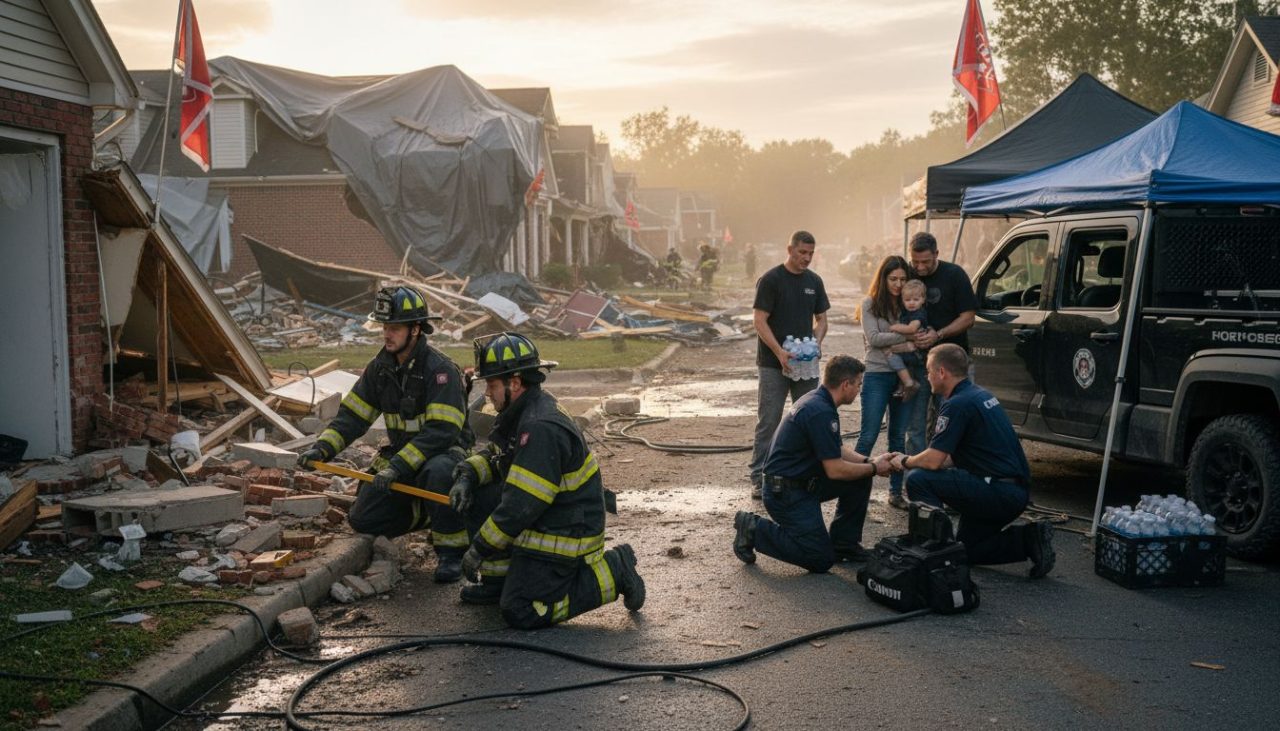
Over sixteen million american families are affected by natural disasters every year, facing unexpected danger and disruption. Knowing what to do in those first chaotic moments protects lives and speeds recovery. From safety checks to emotional support, reliable steps can help you manage immediate needs, coordinate help, and move forward after disaster strikes.
Table of Contents
- Assess Immediate Safety and Hazards
- Activate Emergency Communication Systems
- Coordinate Multi-Agency Response Teams
- Secure Temporary Housing and Basic Needs
- Streamline Insurance and Claims Processing
- Document Losses and Ongoing Needs
- Support Recovery and Emotional Well-Being
Quick Summary
| Key Message | Explanation |
|---|---|
| 1. Assess immediate safety hazards | Prioritize identifying structural damage, gas leaks, and exposure risks to ensure human safety during a disaster. |
| 2. Activate reliable communication systems | Establish multiple communication methods and protocols to maintain connectivity among emergency responders and survivors during crises. |
| 3. Coordinate multi-agency responses | Foster collaboration among different organizations by defining roles, sharing resources, and maintaining clear communication channels. |
| 4. Secure temporary housing and essential resources | Find safe shelters quickly and ensure access to food, water, and medical supplies for displaced individuals and families. |
| 5. Document losses thoroughly for claims | Gather detailed documentation of damages to support insurance claims, ensuring organized records for a smoother recovery process. |
1. Assess Immediate Safety and Hazards
When disaster strikes, your first priority is protecting human life. Rapid safety assessment determines the difference between survival and potential tragedy. Understanding Risk Assessment Guidelines becomes critical in those critical first moments.
According to CDC, identifying risks associated with response activities prevents illness and potential injury during natural disasters. This means scanning your immediate environment for dangerous conditions that could threaten human safety.
Key Safety Assessment Priorities:
- Check for structural damage in buildings
- Identify potential gas leaks or electrical hazards
- Evaluate potential exposure to contaminated water or materials
- Assess risks of falling debris or unstable structures
Practical safety assessment requires a systematic approach. Start by visually scanning the area for obvious threats. Look for broken glass, exposed electrical wires, structural cracks, or signs of potential collapse. Listen for hissing sounds that might indicate gas leaks. Your goal is to create a quick mental map of potential dangers before taking any further action.
Warning: Never enter an area that appears structurally compromised without professional guidance. Trained emergency responders have specialized equipment to assess complex safety scenarios.
As Ready.gov recommends, analyzing possible scenarios helps you make informed decisions. This means thinking several steps ahead protecting yourself and others from potential secondary risks during disaster response.
2. Activate Emergency Communication Systems
In any disaster scenario communication becomes the lifeline connecting survivors emergency responders and support networks. Emergency Response Basics for 2025 underscores the critical importance of establishing reliable communication channels immediately.
Emergency Communication Priorities:
- Establish redundant communication methods
- Identify functional communication technologies
- Create backup power sources for devices
- Designate clear communication protocols
CISA emphasizes deploying mobile telecommunications and power generation tools to maintain communication among emergency response personnel. This means having multiple communication strategies that work when standard networks fail.
Practical implementation requires thinking beyond standard phone lines. Consider satellite phones two way radios cellular network backup systems and portable internet hotspots. Your goal is creating communication pathways that remain operational under challenging conditions.
FEMA recommends establishing Mobile Emergency Response Support detachments that provide operational communications support. This translates to having a comprehensive communication plan that includes alternative technologies and predetermined communication protocols.
Warning: Always have manual backup communication methods. Digital systems can fail when infrastructure is compromised.
3. Coordinate Multi-Agency Response Teams
Disaster response demands seamless collaboration across multiple organizations and professional disciplines. How to Coordinate Response in Disasters highlights the complex nature of emergency management that requires strategic integration of different agencies.
Key Multi-Agency Coordination Elements:
- Establish clear communication protocols
- Define specific roles and responsibilities
- Create unified decision making frameworks
- Implement shared technological platforms
CDC emphasizes the critical role of coordinating environmental health practitioners with public health and healthcare facilities during emergencies. This means breaking down traditional organizational silos and creating flexible collaborative structures.
Effective multi agency coordination requires understanding each organization current capabilities and potential limitations. Emergency management professionals must develop comprehensive communication strategies that allow rapid information sharing and synchronized response efforts.
The Emergency Telecommunications Cluster demonstrates how technological platforms can support inter organizational communication. By providing services like telephony and internet connectivity agencies can maintain real time situational awareness and respond more effectively.
Warning: Lack of coordination can significantly reduce response efficiency and potentially compromise survivor safety.
4. Secure Temporary Housing and Basic Needs
In the aftermath of a disaster survivors require immediate shelter and essential resources to maintain basic human dignity. Step by Step Housing Placement for Displaced Families provides critical guidance for navigating these challenging moments.
Emergency Housing Priorities:
- Identify safe shelters rapidly
- Assess individual family needs
- Coordinate with local support networks
- Secure immediate food and water supplies
FEMA recommends understanding individual and community preparedness strategies for addressing housing and basic survival needs during crisis situations. This means developing a flexible approach that can adapt to different disaster scenarios.
Securing temporary housing involves more than finding a roof. You must evaluate the safety infrastructure sanitation capabilities and proximity to medical facilities. Look for shelters that can accommodate entire families including those with special needs or medical requirements.
The SOCMA Disaster Recovery Guide emphasizes creating comprehensive resource allocation plans that address not just shelter but critical human needs like clean water nutritious food and basic medical supplies.
Warning: Do not assume all emergency shelters are equal. Always conduct a thorough assessment of facilities and available resources before committing to a location.
5. Streamline Insurance and Claims Processing
Navigating insurance claims after a disaster can feel like walking through a bureaucratic maze. Claim Documentation Tips offers crucial strategies to help disaster victims effectively manage their recovery process.
Critical Claims Processing Elements:
- Gather comprehensive documentation
- Photograph all damage systematically
- Maintain organized record keeping
- Understand policy coverage details
FEMA recommends creating detailed documentation of all damages to support insurance claims. This means capturing visual evidence photographing structural damage and creating an itemized inventory of lost or damaged property.
Successful claims processing requires a proactive approach. Start by carefully reviewing your insurance policy to understand specific coverage limits and requirements. Contact your insurance provider immediately after assessing damages to initiate the claims process and prevent potential delays.
The SOCMA Disaster Recovery Guide emphasizes the importance of prompt damage reporting and comprehensive documentation. Organize all relevant paperwork including police reports medical records and repair estimates to support your claim.
Warning: Delays in documentation can significantly reduce your chances of receiving full compensation for disaster related losses.
6. Document Losses and Ongoing Needs
Recovering from a disaster requires meticulous documentation to ensure comprehensive support and accurate resource allocation. Essential Steps for Disaster Documentation in 2025 provides critical guidance for survivors navigating this complex process.
Documentation Priorities:
- Photograph all damaged property
- Create detailed inventory lists
- Track personal and financial losses
- Record ongoing support requirements
CDC recommends systematic documentation to help environmental health practitioners assess comprehensive community needs. This means creating a thorough record that goes beyond immediate physical damage.
Documenting losses requires more than simply listing damaged items. You must capture detailed information including replacement costs current market values and potential long term impacts. Maintain digital and physical copies of all documentation to protect against potential loss or damage.
Ready.gov emphasizes the importance of identifying potential ongoing needs beyond initial property damage. This includes tracking medical requirements temporary housing needs and potential psychological support services.
Warning: Incomplete or inconsistent documentation can significantly delay recovery support and potential compensation.
7. Support Recovery and Emotional Well-being
Recovering from a disaster involves much more than physical restoration. Understanding the 4 R’s Trauma Informed Care Framework reveals the complex journey of emotional healing after traumatic experiences.
Emotional Recovery Priorities:
- Acknowledge emotional pain
- Seek professional counseling
- Build supportive social networks
- Practice self care strategies
CDC emphasizes the critical importance of addressing psychological hazards during disaster recovery. This means recognizing that emotional trauma can be just as significant as physical damage.
Emotional well being requires a proactive and compassionate approach. Create space for processing difficult experiences through professional counseling support groups and individual reflection. Understand that healing is not linear and everyone processes trauma differently.
The SOCMA Disaster Recovery Guide recommends developing comprehensive mental health support strategies that address individual and community trauma. This includes connecting survivors with specialized counseling services and ongoing emotional support resources.
Warning: Ignoring emotional recovery can lead to long term psychological challenges and hinder overall disaster recovery progress.
Below is a comprehensive table summarizing the key steps and priorities discussed for effective disaster response and recovery.
| Step | Key Points & Actions | Benefits/Outcomes |
|---|---|---|
| Assess Immediate Safety | Check for structural damage, gas leaks, and contaminated materials; visually scan for threats. | Ensures human safety and prevents injury. |
| Activate Emergency Communication | Establish multiple communication methods and backup power; use satellite phones and two-way radios. | Maintains connectivity among responders and survivors. |
| Coordinate Multi-Agency Response | Define roles, use shared platforms, and synchronize with public health and medical facilities. | Enhances collaboration and response efficiency. |
| Secure Temporary Housing | Rapidly identify safe shelters, coordinate with local networks, and ensure access to basic needs. | Provides survivors immediate safety and sustenance. |
| Streamline Insurance Claims | Document all damage, photograph evidence, and understand policy coverage. | Speeds up claim processing and compensation. |
| Document Losses & Needs | Create detailed inventories, track losses, and identify ongoing support. | Supports comprehensive recovery planning. |
| Support Emotional Well-being | Acknowledge trauma, seek counseling, and build support networks. | Facilitates emotional recovery and resilience. |
Ensure Your Disaster Response Leads to Real Recovery
Disasters create immediate challenges that demand quick assessment, clear communication, and coordinated support. This article outlined 7 essential steps including safety assessments, multi-agency collaboration, emergency communication, and streamlined insurance claims. These key points highlight the overwhelming complexity and urgent need for reliable solutions when disaster strikes.
At Disaster Victim Services, we understand these challenges deeply. Our dedicated team specializes in connecting disaster victims swiftly with emergency housing and vital recovery resources. We partner closely with insurance carriers, government agencies, and first responders to ease the burden of recovery so you can focus on safety and well-being. Explore how our coordinated approach and expert guidance can help you navigate every step by visiting our Project design page and learn more through our Uncategorized resources.
Do not wait until the next disaster to prepare your response and support system. Visit Disaster Victim Services now to get the compassionate assistance and expert help you deserve during difficult times.
Frequently Asked Questions
What is the first step to take during a disaster?
The first step is to assess immediate safety and hazards. Quickly scan your environment for structural damage, gas leaks, and any other potential threats to human safety before taking further action.
How can I establish a reliable emergency communication system?
To establish communication, designate multiple communication methods and identify technologies that will remain operational during a disaster. Consider using satellite phones or two-way radios to maintain clear channels among emergency responders.
What should I consider when coordinating multi-agency response teams?
When coordinating multi-agency responses, focus on establishing clear roles and responsibilities. Communicate protocols and implement shared technologies to ensure seamless collaboration among different organizations.
How do I secure temporary housing for disaster survivors?
Identify safe and accessible shelters quickly, assessing the specific needs of displaced individuals or families. Work with local support networks to provide immediate shelter, food, and water supplies, ensuring basic human dignity is maintained.
What documents do I need to process insurance claims after a disaster?
Gather comprehensive documentation such as photographs of damages and an itemized list of lost property. Organize all records, including insurance policy details, to expedite the claims process and support your request for compensation.
How can I support emotional recovery after a disaster?
Acknowledge emotional pain by encouraging survivors to seek professional counseling and build supportive social networks. Promote self-care strategies and ensure access to mental health resources to address trauma effectively.
Recommended
- Emergency Response Basics for 2025: A Practical Guide – Disaster Victim Services | Helping You Recover After Disaster
- Disaster Response Chain: How It Works and Why It Matters in 2025 – Disaster Victim Services | Helping You Recover After Disaster
- How to Coordinate Response in Disasters: A Guide for 2025 – Disaster Victim Services | Helping You Recover After Disaster
- 8 Essential Steps for Your Disaster Recovery Checklist 2025 – Disaster Victim Services | Helping You Recover After Disaster