

People talk about trauma like it leaves invisible scars, but the way we support trauma survivors is finally catching up with the science. Most assume therapy means just talking things out, yet the 4 R’s model is changing how professionals help millions rebuild their lives and prevent re-traumatization. Turns out, this approach is not only more compassionate but also far more effective than old methods you might expect.
Table of Contents
- What Are The 4 R’s In Trauma Informed Care?
- The Importance Of Trauma Informed Care
- How The 4 R’s Enhance Support For Trauma Victims
- Real-World Applications Of The 4 R’s In Disaster Response
- Key Principles Behind Trauma Informed Care
Quick Summary
| Takeaway | Explanation |
|---|---|
| Recognize trauma’s widespread impact. | Understanding trauma’s effects is crucial for recovery and support. |
| Personalize interventions based on individual needs. | Tailoring support acknowledges unique trauma manifestations for effective healing. |
| Create environments that prevent re-traumatization. | Ensuring safety minimizes the risk of additional psychological harm to individuals. |
| Integrate psychological insights into practice. | Knowledge of trauma’s effects enhances the development of compassionate, targeted interventions. |
| Empower individuals for personal resilience. | Focusing on individual agency helps survivors regain control and rebuild their lives. |
What Are the 4 R’s in Trauma Informed Care?
Trauma informed care represents a critical approach in helping individuals who have experienced significant psychological distress. The 4 R’s framework provides mental health professionals, social workers, and support providers with a structured methodology to understand and address trauma’s complex impacts.
Understanding the Core Framework
The 4 R’s trauma informed care framework represents a systematic approach designed to recognize, respond, and support individuals who have experienced traumatic events. Developed by experts in psychological rehabilitation, this framework goes beyond traditional treatment models by emphasizing holistic healing and comprehensive support.
The primary components of the 4 R’s include:
The table below outlines the core components of the 4 R’s in Trauma Informed Care, providing clear definitions and their focus areas to enhance understanding of the framework.
| Component | Definition | Focus Area |
|---|---|---|
| Realize | Acknowledging the widespread impact of trauma and understanding recovery pathways | Awareness & Education |
| Recognize | Identifying traumatic experiences and their psychological implications | Assessment & Identification |
| Respond | Developing targeted interventions that address trauma symptoms | Intervention & Support |
| Resist Re-traumatization | Creating environments that prevent additional psychological harm | Safety & Prevention |
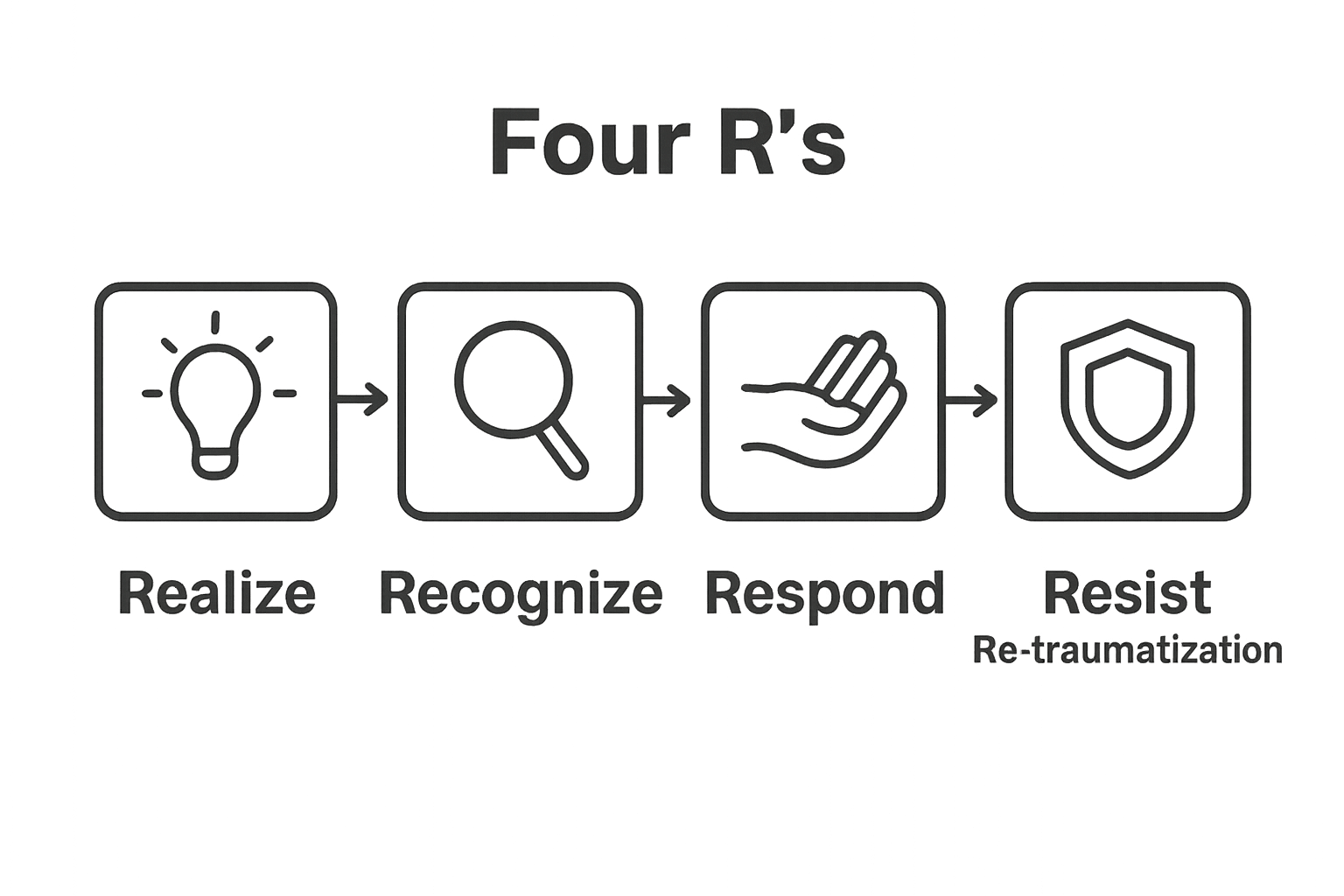
- Realize: Acknowledging the widespread impact of trauma and understanding potential pathways for recovery
- Recognize: Identifying traumatic experiences and their profound psychological implications
- Respond: Developing targeted interventions that directly address individual trauma symptoms
- Resist Re-traumatization: Creating supportive environments that prevent additional psychological harm
Theoretical Foundations
Trauma informed care emerged from extensive psychological research demonstrating that traumatic experiences fundamentally alter an individual’s neurological and emotional processing. The National Center for Biotechnology Information highlights that trauma can create lasting changes in brain chemistry, emotional regulation, and interpersonal relationships.
The 4 R’s framework provides practitioners a comprehensive lens through which they can understand trauma’s multifaceted nature. By recognizing trauma as a systemic issue rather than an isolated incident, mental health professionals can develop more nuanced, compassionate intervention strategies.
Practical Applications
Implementing the 4 R’s requires a holistic approach that integrates psychological understanding with practical support mechanisms. Professionals across various fields healthcare, education, social services can utilize this framework to create more supportive, healing-oriented environments.
The ultimate goal of the 4 R’s trauma informed care approach is not merely symptom management but empowering individuals to rebuild their sense of safety, control, and emotional resilience. By acknowledging trauma’s profound impact and providing structured, compassionate support, practitioners can help individuals transform their painful experiences into pathways of healing and personal growth.
The Importance of Trauma Informed Care
Trauma informed care represents a fundamental shift in understanding how psychological distress impacts individuals across multiple dimensions of their life. More than a treatment approach, it is a comprehensive philosophy that recognizes the profound neurological, emotional, and social consequences of traumatic experiences.
Holistic Impact on Individual Healing
Trauma informed care addresses the complex ways traumatic experiences reshape an individual’s perception of safety, relationships, and personal identity. By acknowledging trauma as a systemic experience, this approach moves beyond traditional medical models that often treat symptoms in isolation.
The critical aspects of trauma informed care’s importance include:
- Psychological Restoration: Helping individuals rebuild emotional resilience and sense of personal agency
- Systemic Understanding: Recognizing trauma as a comprehensive experience affecting multiple life domains
- Prevention of Secondary Traumatization: Creating environments that support healing rather than potentially retraumatizing individuals
Neurobiological Foundations
The Substance Abuse and Mental Health Services Administration underscores that traumatic experiences fundamentally alter brain chemistry and neurological functioning. Trauma informed care provides a scientifically grounded approach to understanding these complex neurobiological changes, enabling more effective intervention strategies.
By integrating insights from neuroscience, psychology, and social work, trauma informed care offers a nuanced framework for comprehending how traumatic experiences can disrupt an individual’s capacity for emotional regulation, interpersonal connections, and overall psychological well-being.
Broader Societal Implications
The significance of trauma informed care extends far beyond individual treatment. It represents a transformative approach that challenges traditional institutional practices across healthcare, education, social services, and criminal justice systems. By prioritizing compassion, understanding, and individual resilience, this approach promotes healing at both personal and systemic levels.
Ultimately, trauma informed care is not just about addressing psychological wounds but about creating a more empathetic, supportive social environment that recognizes the profound complexity of human suffering and the remarkable capacity for recovery.
This table summarizes how trauma informed care extends its impact from individual healing to societal transformation, highlighting holistic, neurobiological, and societal implications discussed in the article.
| Area | Focus | Key Impact |
|---|---|---|
| Individual Healing | Psychological restoration & personal agency | Rebuilds resilience and sense of control |
| Neurobiological Foundations | Brain chemistry & emotional regulation | Informs more effective, science-based interventions |
| Societal Implications | Systemic change across care, education, justice | Encourages compassionate, supportive social environments |
How the 4 R’s Enhance Support for Trauma Victims
The 4 R’s framework provides a comprehensive, compassionate approach to supporting individuals who have experienced traumatic events. By offering a structured methodology, this approach transforms traditional support models into more nuanced, empathetic interventions that address the multifaceted nature of psychological trauma.
Personalized Healing Strategies
Each component of the 4 R’s framework is designed to create a supportive environment that acknowledges the unique ways trauma manifests in individuals’ lives. The framework moves beyond generic treatment protocols, recognizing that healing is a deeply personal journey requiring individualized attention and care.
Key benefits of this approach include:
- Individualized Assessment: Tailoring support to each person’s specific traumatic experience
- Comprehensive Understanding: Addressing psychological, emotional, and neurological impacts
- Empowerment Focus: Helping individuals regain control and rebuild personal resilience
Systematic Support Mechanisms
The National Child Traumatic Stress Network highlights how the 4 R’s framework helps create supportive environments by ensuring providers actively recognize symptoms, respond in ways that meet unique needs, and establish policies to prevent re-traumatization. This systematic approach transforms traditional support models by integrating compassion with strategic intervention.
Professionals utilizing this framework learn to recognize subtle trauma indicators, develop targeted response strategies, and create environments that prioritize psychological safety. Learn more about emergency response strategies that support trauma victims.
Transformative Potential
The 4 R’s approach represents more than a treatment methodology. It is a paradigm shift in understanding human resilience, demonstrating that trauma survivors are not defined by their experiences but by their extraordinary capacity for healing and growth.
By providing a structured yet flexible framework, the 4 R’s methodology empowers support professionals to move beyond symptom management. Instead, they can focus on helping individuals reconstruct their sense of safety, rebuild interpersonal connections, and rediscover personal agency in the aftermath of traumatic experiences.
Real-World Applications of the 4 R’s in Disaster Response
The 4 R’s framework transforms disaster response from a purely logistical process into a comprehensive, human-centered approach that prioritizes psychological recovery alongside physical reconstruction.
By integrating trauma informed principles, emergency responders can provide more holistic, compassionate support during critical moments of community crisis.
Immediate Response Strategies
In disaster scenarios, the 4 R’s framework guides professionals to move beyond traditional emergency protocols. Instead of focusing solely on physical rescue and infrastructure restoration, responders learn to simultaneously address the profound psychological impacts experienced by survivors.
Key implementation strategies include:
- Psychological First Aid: Providing immediate emotional support alongside physical assistance
- Safety Prioritization: Creating secure environments that minimize potential re-traumatization
- Empathetic Communication: Using trauma informed language that respects individual experiences
Systemic Intervention Approaches
The Federal Emergency Management Agency emphasizes the critical role of psychological considerations in disaster response. The 4 R’s framework enables emergency professionals to develop nuanced intervention strategies that recognize trauma’s complex, multidimensional nature.
Professionals implementing these strategies learn to identify subtle psychological vulnerabilities, create supportive communication protocols, and establish environments that promote healing. Explore our comprehensive guide on disaster response coordination.
Long-Term Community Resilience
Beyond immediate crisis management, the 4 R’s approach supports sustainable community recovery. By integrating psychological support into disaster response mechanisms, communities can develop more robust, adaptive recovery frameworks that address both immediate needs and long-term psychological rehabilitation.
This comprehensive approach transforms disaster response from a transactional process into a deeply human-centered intervention. Emergency professionals become more than rescuers they become critical support agents who help communities navigate the complex emotional landscapes of trauma and recovery.

Key Principles Behind Trauma Informed Care
Trauma informed care represents a sophisticated approach that transcends traditional treatment models by embedding compassion, understanding, and scientific insight into professional support systems. This framework goes beyond treating symptoms to comprehensively addressing the profound psychological impacts of traumatic experiences.
Foundational Philosophical Approach
At its core, trauma informed care recognizes that traumatic experiences fundamentally reshape an individual’s neurological, emotional, and social processing mechanisms. The approach moves beyond pathologizing trauma, instead viewing it as a natural human response to extraordinary circumstances that requires nuanced, individualized support.
Critical philosophical foundations include:
- Holistic Human Understanding: Acknowledging trauma as a complex, multidimensional experience
- Empowerment Orientation: Centering the survivor’s agency and resilience
- Contextual Sensitivity: Recognizing individual and cultural variations in trauma responses
Scientific and Neurobiological Insights
The Substance Abuse and Mental Health Services Administration highlights that trauma informed care models are grounded in principles such as realizing the effects of trauma, recognizing symptoms, and responding with policies and practices that offer physical and emotional safety for both survivors and providers. These principles transform traditional support paradigms by integrating cutting-edge neurobiological research.
Understanding trauma’s neurological impact allows professionals to develop more precise, compassionate intervention strategies that address the complex ways traumatic experiences alter brain chemistry, emotional regulation, and interpersonal dynamics. Learn more about emergency response strategies supporting trauma victims.
Transformative Professional Practice
Trauma informed care represents a profound shift in professional practice across multiple disciplines. It challenges practitioners to move beyond reactive treatment models toward proactive, relationship-centered approaches that prioritize healing, resilience, and individual empowerment.
By embracing these principles, professionals transform from mere service providers to compassionate guides who support individuals in reconstructing their sense of safety, rebuilding personal narratives, and rediscovering their inherent strength in the aftermath of traumatic experiences.
Put Trauma Informed Care Into Action With Reliable Disaster Support
Learning about the 4 R’s framework shines a light on how trauma shapes every step of the recovery journey. If you or someone you care about is struggling after a disaster—feeling lost, facing fears of re-traumatization, or unsure where to turn for practical help—know that understanding and support are within reach. The principles of realizing, recognizing, responding, and resisting re-traumatization align with the urgent needs families face after sudden displacement.
At Disaster Victim Services, we bring trauma informed care to life through swift emergency housing, expert coordination, and genuine compassion. Our dedicated team works around the clock to restore safety and hope, connecting you with resources and solutions when you need them most. Visit our emergency recovery resource center to learn more about how we empower survivors and partners with holistic support. Let us help you rebuild stability and confidence. Start your recovery at Disaster Victim Services right now.
Frequently Asked Questions
What are the 4 R’s in Trauma Informed Care?
The 4 R’s in Trauma Informed Care are Realize, Recognize, Respond, and Resist Re-traumatization. This framework helps professionals understand the impact of trauma and develop compassionate, effective interventions.
How does the 4 R’s framework support trauma victims?
The 4 R’s framework promotes personalized healing strategies, allowing professionals to tailor their support based on the unique experiences of each individual, addressing their psychological and emotional needs comprehensively.
Why is trauma informed care important?
Trauma informed care is important because it provides a holistic approach to understanding the complex effects of trauma on individuals, recognizing that it affects various aspects of their lives and promoting healing in a compassionate environment.
How can the 4 R’s be applied in disaster response?
The 4 R’s can be applied in disaster response by incorporating psychological first aid and empathetic communication strategies, ensuring that responders address both the physical and emotional needs of survivors during and after a crisis.
Recommended
- Understanding Risk Assessment Guidelines for Safety – Disaster Victim Services | Helping You Recover After Disaster
- Housing Placement Workflow Guide 2025: Steps for Disaster Recovery – Disaster Victim Services | Helping You Recover After Disaster
- Emergency Response Trends 2025: What Stakeholders Need to Know – Disaster Victim Services | Helping You Recover After Disaster
- Disaster Response Chain: How It Works and Why It Matters in 2025 – Disaster Victim Services | Helping You Recover After Disaster