

Disaster strikes without warning and documentation becomes your most valuable asset for recovery. Most people forget that more than 60 percent of disaster victims lose access to crucial documents right when they need them most. But a few simple steps can flip this risk on its head and give you a rock-solid roadmap for getting the help and insurance you deserve.
Table of Contents
- Preparing For Effective Disaster Documentation
- Documenting Damage And Loss Clearly
- Organizing Records For Insurance And Aid
- Best Practices For Digital And Physical Storage
Quick Summary
| Takeaway | Explanation |
|---|---|
| Prepare a comprehensive documentation strategy | Establish a systematic approach for record protection before disasters strike, ensuring quick access to vital information during crises. |
| Collect compelling visual evidence | Use wide-angle and close-up shots with time-stamps to document damage, enhancing credibility for insurance and aid claims. |
| Organize essential documents systematically | Maintain critical identification, insurance, and financial records in both digital and physical formats for streamlined access post-disaster. |
| Utilize advanced storage strategies | Implement automated backups, multiple storage solutions, and security measures to safeguard both digital and physical documents against loss. |
| Implement professional documentation techniques | Follow detailed guidelines for systematic inventory and damage assessment, which support effective recovery and aid applications. |
Preparing for Effective Disaster Documentation
Disaster documentation represents a critical lifeline for recovery, transforming chaotic moments into structured evidence that supports rebuilding efforts. Proper preparation can mean the difference between smooth recovery and prolonged uncertainty.
Creating a Comprehensive Documentation Strategy
Effective disaster documentation begins long before a crisis strikes. Learn more about our comprehensive preparedness approach to ensure you are ready when unexpected events occur. The Council of State Archivists emphasizes the importance of establishing a systematic approach to record protection and preservation.
Key components of a robust documentation strategy include:
- Digital Backup Systems: Maintain secure digital copies of all critical documents
- Physical Document Protection: Use waterproof and fireproof storage solutions
- Inventory Management: Create a comprehensive list of essential records
Professional emergency management experts recommend developing a structured system that allows rapid information retrieval during high-stress situations. This means organizing documents in a logical manner that can be quickly accessed and understood by multiple stakeholders.
Technology and Documentation Preparation
FEMA’s planning guides highlight the critical role of technology in modern disaster documentation. Virtual site inspections and digital record-keeping have revolutionized how professionals capture and preserve critical information.
Advanced documentation techniques now include:
- Geospatial mapping of damage
- High-resolution photographic and video evidence
- Real-time documentation platforms
These technological approaches provide multiple layers of documentation, creating a comprehensive record that can support insurance claims, government assistance applications, and recovery efforts.
Professional Documentation Best Practices
The ICF emergency management research outlines eight critical best practices for pre-disaster documentation. These practices ensure systematic and thorough record-keeping that maximizes potential recovery resources.
Critical best practices include:
- Defining clear inspection protocols
- Training personnel in documentation techniques
- Implementing routine site assessments
- Utilizing multiple documentation methods
- Maintaining secure digital storage systems
By adopting a proactive and comprehensive approach to disaster documentation, individuals and organizations can significantly improve their resilience and recovery potential. Preparation is not just about collecting information but creating a strategic framework that transforms chaos into actionable evidence.
Documenting Damage and Loss Clearly
Documenting damage and loss requires precision, thoroughness, and strategic approach. Accurate documentation serves as the foundation for insurance claims, federal assistance, and potential legal proceedings following a disaster.
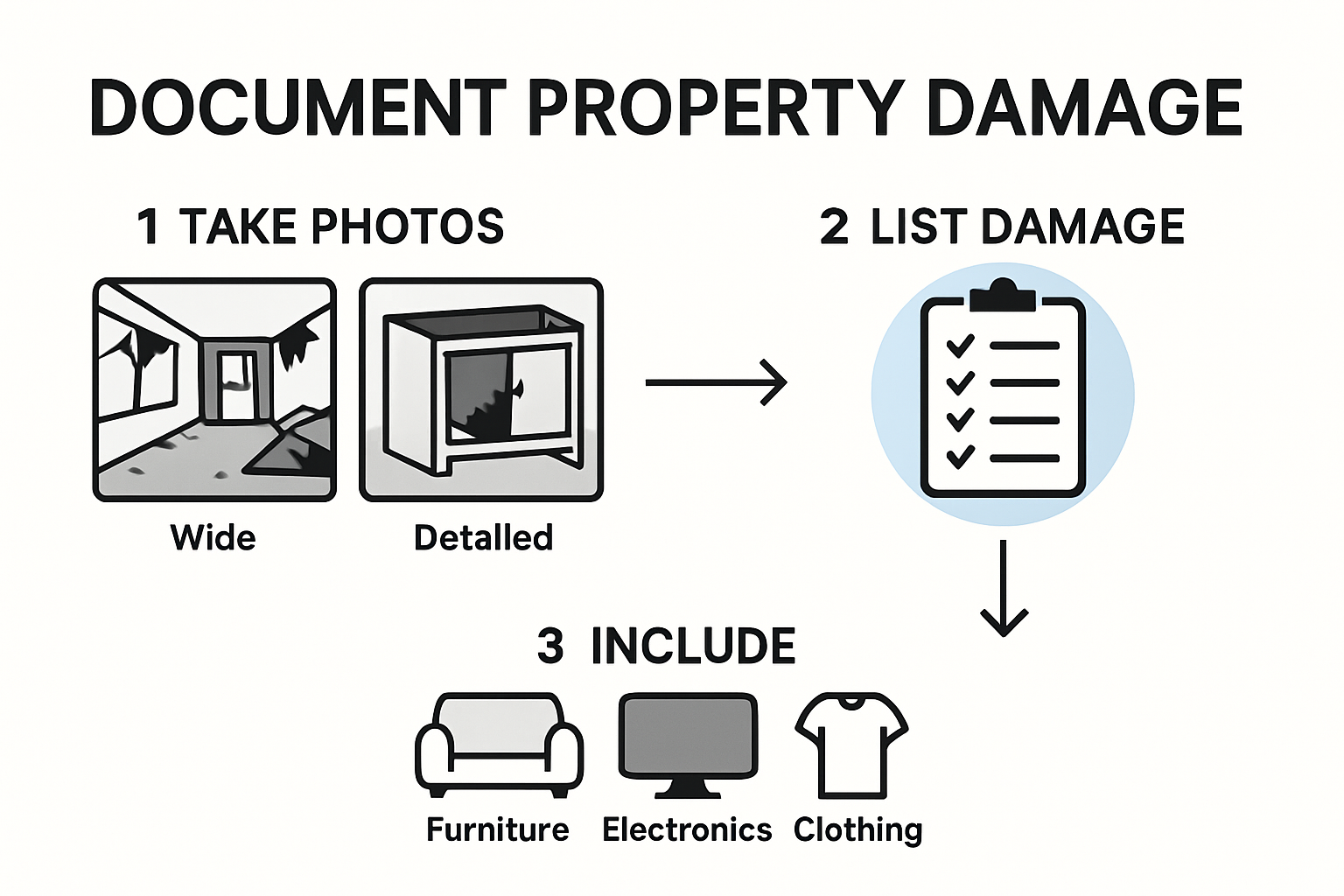
Comprehensive Visual Evidence Collection
Visual documentation represents the most critical component of damage assessment. Learn more about comprehensive field inspection techniques to ensure nothing is overlooked. According to the National Association of Insurance Commissioners, photographic and video evidence must provide clear, high-resolution representations of all damaged areas.
Key visual documentation strategies include:
- Wide-Angle Shots: Capture entire rooms and broader property perspectives
- Close-Up Details: Document specific damage points with macro photography
- Time-Stamped Evidence: Ensure all images include date and time metadata
Professional adjusters recommend using multiple devices and backup storage to preserve critical visual records. Smartphones with high-resolution cameras can provide immediate documentation capabilities during emergencies.
Systematic Damage Inventory Processes
FEMA’s damage assessment guidelines emphasize creating a structured inventory that goes beyond visual evidence. Systematic documentation involves detailed written descriptions, monetary valuations, and categorization of damaged property.
A comprehensive damage inventory should include:
- Detailed item descriptions
- Estimated replacement costs
- Purchase dates and original values
- Serial numbers for electronics and valuable items
- Condition before and after the disaster
Maintaining organized records transforms chaotic loss experiences into clear, actionable documentation that supports recovery efforts.
Professional Documentation Techniques
Professional documentation requires more than just taking pictures. Expert guidelines recommend creating a methodical approach that considers multiple factors during damage assessment.
Advanced documentation techniques include:
- Creating digital spreadsheets for tracking losses
- Using professional measurement tools
- Consulting with specialists for accurate damage assessments
- Maintaining a chronological record of all interactions
By implementing these systematic approaches, disaster victims can create robust documentation that maximizes potential recovery resources. Detailed, well-organized records provide the strongest foundation for insurance claims and assistance applications, turning a challenging experience into a structured path toward restoration.
To help compare the different types of documentation methods described, the following table summarizes their key uses and benefits.
| Documentation Method | Main Purpose | Benefits |
|---|---|---|
| Wide-Angle Photographs | Capture overview of affected areas | Context for extent of damage |
| Close-Up/Macro Photos | Focus on specific damage points | Detail for claims and assessment |
| Time-Stamped Images/Metadata | Verify timing of documentation | Strengthens claim credibility |
| Written Descriptions | Record conditions, item details | Supports value and loss description |
| Digital Spreadsheets/Inventories | Track damage and losses systematically | Organization and comprehensive tracking |
| Serial Numbers/Item IDs | Identify unique items, electronics | Supports validation and reduces fraud risk |
| Chronological Contact/Action Logs | Track communications and interventions | Full context for claims, disputes, and follow-up |
Organizing Records for Insurance and Aid
Organizing records for insurance claims and disaster aid represents a critical step in recovery that can significantly impact financial restoration and support access. Strategic documentation management transforms complex paperwork into a clear pathway toward rebuilding.
Critical Documentation Organization Strategies
Learn about comprehensive aid access strategies that streamline your recovery process. The Federal Trade Commission recommends creating a comprehensive household inventory that goes beyond simple record keeping.
Key organizational strategies include:
- Digital and Physical Backup: Create multiple copies of essential documents
- Secure Storage: Use fireproof and waterproof containers for physical records
- Cloud Storage: Maintain encrypted digital backups in secure online platforms
Professional disaster recovery experts emphasize the importance of accessibility. Your documentation system should allow rapid retrieval of critical information during high-stress periods.
Essential Documents for Aid and Insurance Claims
The Consumer Financial Protection Bureau highlights specific documents crucial for disaster recovery. Comprehensive documentation packages typically include:
- Personal identification documents
- Insurance policy details
- Property ownership records
- Medical history and prescription information
- Financial statements and tax records
- Employment verification documents
- Proof of residence
Below is a checklist table summarizing essential documents you should organize ahead of disasters for quick access during recovery:
| Document Type | Description/Examples | Status (Ready/Update Needed) |
|---|---|---|
| Personal Identification | Driver’s license, passport, SSN card | |
| Insurance Policies | Home, auto, health, life policies | |
| Property Ownership | Deeds, mortgage, titles | |
| Medical Records/Prescriptions | Health records, medication lists | |
| Financial Statements/Tax Records | Bank, retirement, investment, tax docs | |
| Employment Verification | Pay stubs, contracts, offer letters | |
| Proof of Residence | Lease, utility bill, mail |
Digital and Physical Record Management
The Federal Deposit Insurance Corporation recommends a multifaceted approach to document management. Modern disaster recovery requires both digital sophistication and physical preparedness.
Advanced record management techniques include:
- Creating encrypted digital portfolios
- Using cloud storage with robust security protocols
- Maintaining chronological documentation logs
- Developing quick-access emergency information packets
- Regularly updating and verifying document accuracy
By implementing these comprehensive organizational strategies, disaster victims can transform overwhelming paperwork into a structured recovery roadmap. Effective record management reduces stress, accelerates aid processing, and provides clear evidence to support insurance claims and assistance applications.
Best Practices for Digital and Physical Storage
Effective disaster documentation relies on robust storage strategies that protect critical information across digital and physical platforms. Creating resilient, accessible, and secure storage systems ensures your important records remain safe during and after emergencies.
Digital Storage Strategies
Explore our comprehensive disaster preparedness recommendations for advanced storage techniques. The U.S. Geological Survey emphasizes the critical importance of routine data backups to protect against potential information loss.
Comprehensive digital storage approaches include:
- Automated Backup Systems: Configure regular, automatic data backups
- Multiple Storage Locations: Use cloud and local storage platforms
- Encryption Protection: Secure sensitive documents with advanced encryption
Professional data management experts recommend creating redundant storage systems that provide multiple layers of protection against potential data loss.
Physical Document Preservation
The Inter-university Consortium for Political and Social Research recommends maintaining multiple physical copies of critical documents in different secure locations. Physical storage requires strategic planning to ensure document integrity and accessibility.
Key physical storage recommendations include:
- Waterproof and fireproof document containers
- Climate-controlled storage environments
- Acid-free archival quality storage materials
- Distributed storage across multiple secure locations
Carefully selected physical storage solutions protect documents from environmental damage and unexpected disasters.

Advanced Storage Management Techniques
Archives New Zealand highlights the importance of creating comprehensive storage strategies that balance digital and physical preservation methods.
Advanced storage management techniques include:
- Creating detailed inventory systems
- Implementing regular document verification processes
- Developing comprehensive disaster recovery plans
- Establishing partnerships for alternate document storage
- Utilizing professional archival management technologies
By implementing these sophisticated storage approaches, disaster victims can create robust documentation protection systems. Effective storage strategies transform vulnerable records into resilient, accessible resources that support recovery efforts and preserve critical information for future needs.
Frequently Asked Questions
What are the essential steps for preparing disaster documentation in 2025?
To prepare for disaster documentation in 2025, develop a comprehensive documentation strategy that includes digital backups, physical document protection, and systematic inventory management. This ensures that critical information is readily accessible during crises.
How can I effectively document damage and loss after a disaster?
Effectively documenting damage involves collecting comprehensive visual evidence using wide-angle and close-up photos, maintaining systematic damage inventories, and utilizing professional documentation techniques for thorough assessments.
What types of documents should I organize for insurance claims following a disaster?
You should organize personal identification documents, insurance policy details, property ownership records, medical history, financial statements, employment verification, and proof of residence to streamline the recovery process.
What are the best practices for storing digital and physical records in disaster situations?
Best practices for storage include using automated backup systems, maintaining multiple storage locations, employing encryption for sensitive documents, and utilizing waterproof and fireproof containers for physical records.
Turn Disaster Documentation into Recovery with Expert Help
If you are feeling overwhelmed by the lists, photos, and urgent decisions that disaster documentation demands, you are definitely not alone. The article has highlighted how lost records and unorganized files can slow your access to aid, delay insurance claims, or even interrupt your search for temporary shelter. When every minute counts, missing documents and confusion add unnecessary stress at the worst possible moment.
Now is the time to use resources like Uncategorized – Disaster Victim Services | Helping You Recover After Disaster to bridge the gap between chaos and a clear recovery plan. DisasterVictimServices.com connects you instantly to emergency housing solutions, guides you through the insurance process, and coordinates with critical partners so you can focus on rebuilding. Get started now at Disaster Victim Services for personal support and proven solutions that help you turn proper documentation into swift, confident recovery.
Recommended
- Disaster Safety Checklist 2025: Essential Steps for Every Family and Organization – Disaster Victim Services | Helping You Recover After Disaster
- Disaster Preparedness Checklist 2025: Essential Guide for All Responders – Disaster Victim Services | Helping You Recover After Disaster
- Evacuation Checklist 2025: Essential Steps for Safety – Disaster Victim Services | Helping You Recover After Disaster
- How to Replace Documents After a Disaster: 2025 Guide – Disaster Victim Services | Helping You Recover After Disaster