

When disaster strikes, chaos often follows unless agencies unite under a clear plan. Studies show that effective collaboration can reduce recovery time by up to 30 percent, making the difference between swift rebuilding and prolonged hardship. Structured teamwork across emergency responders, government bodies, and community leaders is the backbone of successful disaster recovery. This guide breaks down practical steps to help organizations work together, streamline communication, and create lasting support for those most in need.
Table of Contents
- Step 1: Establish Unified Response Collaboration Protocols
- Step 2: Coordinate Emergency Housing and Critical Services
- Step 3: Integrate Multi-Agency Communication Channels
- Step 4: Engage Stakeholders In Individualized Recovery Planning
- Step 5: Validate and Monitor Recovery Progress Collaboratively
Quick Summary
| Key Point | Explanation |
|---|---|
| 1. Establish unified response protocols | Create a structured framework among agencies to improve disaster recovery effectiveness. |
| 2. Coordinate emergency housing resources | Develop a thorough inventory and support system for housing displaced individuals after a disaster. |
| 3. Integrate multi-agency communication | Use a centralized communication hub for real-time updates among involved organizations. |
| 4. Implement individualized recovery planning | Tailor recovery plans based on specific needs of each disaster victim for better support. |
| 5. Monitor recovery progress collaboratively | Create a shared dashboard to track recovery metrics and engage affected individuals in feedback. |
Step 1: Establish unified response collaboration protocols
When disaster strikes, creating a unified response framework becomes critical for effective recovery. According to FEMA, establishing clear coordination structures among federal, state, and local agencies is fundamental to successful long-term disaster management.
To build an effective unified response protocol, start by identifying key stakeholders who will participate in the recovery effort. This typically includes emergency responders, government agencies, insurance representatives, medical personnel, and community leaders. Each organization should designate a primary point of contact responsible for communication and decision making. NCBI recommends developing a single set of objectives and a comprehensive incident action plan that provides clear guidelines for collaborative response.
Implement a communication matrix that outlines how different agencies will share information, report progress, and escalate critical issues. This matrix should include preferred communication channels, frequency of updates, and emergency contact protocols. By establishing transparent communication pathways, you minimize confusion and ensure a coordinated approach to disaster recovery.
A critical warning: do not assume that existing relationships between organizations guarantee smooth collaboration. Proactively schedule joint planning sessions and conduct periodic coordination drills to test and refine your unified response protocols. These practice sessions will help identify potential communication gaps and strengthen interdepartmental cooperation before an actual emergency occurs.
The next step in your disaster recovery journey involves developing specific role assignments and creating a comprehensive resource allocation strategy that ensures every team knows their responsibilities and how they interconnect.
Step 2: Coordinate emergency housing and critical services
Coordinating emergency housing and critical services is a complex yet crucial step in disaster recovery. According to FEMA, successful housing recovery requires extensive collaboration among federal, state, and local partners to develop comprehensive support plans.
Start by creating a detailed inventory of available emergency housing resources. This includes temporary shelters, hotels, rental properties, and potential community housing options. National Academies Press recommends mapping out various Emergency Support Functions that can provide critical assistance. Prioritize vulnerable populations such as families with children, elderly individuals, and those with medical needs.
Establish a centralized coordination center that can quickly match displaced individuals with appropriate housing and support services. This center should have real time communication channels with emergency responders, social services, and housing providers. Develop a streamlined referral system that allows for rapid placement and ensures no individual falls through the cracks during the recovery process.
Pro Tip: Maintain a flexible and adaptable housing strategy that can quickly adjust to changing community needs and unexpected challenges.
Each housing placement should include a comprehensive support package that goes beyond just shelter. This means connecting individuals with medical services, mental health resources, financial assistance, and other critical support mechanisms. Your goal is not just to provide a roof but to create a pathway toward stability and recovery.

In the next phase, you will focus on tracking and monitoring these housing placements to ensure ongoing support and smooth transition for disaster victims.
Step 3: Integrate multi-agency communication channels
Establishing seamless communication across multiple agencies is a critical component of effective disaster recovery. According to FEMA, successful disaster response requires integrated communication channels that connect partners across different government levels and sectors.
Begin by creating a comprehensive communication matrix that maps out every agency involved in the recovery effort. This matrix should clearly define communication protocols, preferred contact methods, and escalation procedures. UN Office for Disaster Risk Reduction recommends developing a unified communication platform that allows real time information sharing and collaborative decision making.
Implement a centralized communication hub that serves as the primary coordination point for all agencies. This hub should utilize secure digital platforms that enable instant messaging, document sharing, and real time updates. Ensure that each agency designates specific communication liaisons who are trained in cross agency collaboration and have the authority to make immediate decisions.
Pro Tip: Conduct regular joint communication drills to test and refine your multi agency communication system before an actual emergency occurs.
Develop a standardized reporting template that all agencies can use to share critical information quickly and consistently. This template should include key metrics such as resource allocation, immediate needs, logistical challenges, and progress updates. By creating a uniform reporting system, you eliminate communication barriers and ensure that every agency has a clear understanding of the overall recovery landscape.
In the next phase, you will focus on establishing robust data sharing mechanisms that allow for transparent and efficient information exchange across all participating agencies.
Step 4: Engage stakeholders in individualized recovery planning
Individualized recovery planning represents a critical approach to helping disaster victims rebuild their lives with personalized support. According to UN-Habitat, government and humanitarian agencies must coordinate shelter responses that address the unique needs of each affected individual and family.
Begin by conducting comprehensive individual assessments that capture each stakeholder’s specific circumstances. These assessments should explore personal challenges such as medical needs, employment status, family composition, financial resources, and psychological well being. Fair Housing Resource Center recommends developing a tailored recovery strategy that ensures continuous support and addresses the distinctive requirements of each disaster victim.
Create a personalized recovery roadmap for each stakeholder that outlines clear milestones, available resources, and specific support mechanisms. This roadmap should include actionable steps for housing reconstruction, financial recovery, mental health support, job placement assistance, and other critical rehabilitation services. Assign a dedicated case manager who will work directly with each individual to navigate their unique recovery journey.
Pro Tip: Schedule regular check in meetings to review and adjust individual recovery plans as circumstances evolve.
Establish a transparent communication system that keeps stakeholders informed about their progress and available resources. Provide multiple channels for feedback and support, including digital platforms, phone lines, and in person consultation opportunities. By maintaining an adaptable and responsive approach, you demonstrate a commitment to meeting each stakeholder’s specific recovery needs.
In the next phase, you will develop comprehensive tracking mechanisms to monitor individual recovery progress and ensure that no stakeholder is left behind in the recovery process.
Step 5: Validate and monitor recovery progress collaboratively
Collaborative monitoring is essential for ensuring effective and transparent disaster recovery efforts. FEMA emphasizes the importance of establishing key coordination structures that enable multiple agencies to track and validate long-term housing recovery progress.
Develop a comprehensive shared dashboard that allows all participating agencies to update and track recovery metrics in real time. This platform should include standardized indicators such as housing reconstruction status, financial assistance distribution, mental health support engagement, and individual recovery milestones. UN-Habitat recommends creating transparent reporting mechanisms that enable collaborative validation of recovery efforts across different organizational boundaries.
Schedule regular inter agency review meetings where representatives from government bodies, humanitarian organizations, insurance providers, and community support groups can collectively assess recovery progress. During these meetings, analyze aggregate data, identify potential bottlenecks, and collaboratively develop strategies to address emerging challenges. Ensure that these sessions include both quantitative metrics and qualitative feedback from disaster victims.
Pro Tip: Implement a color coded tracking system that provides immediate visual representation of recovery progress across different domains.
Establish a feedback loop that allows disaster victims to contribute their perspectives on the recovery process. Create multiple channels for input including digital surveys, community forums, and direct consultation sessions. By integrating stakeholder experiences into your monitoring framework, you can continuously refine and improve the recovery approach.
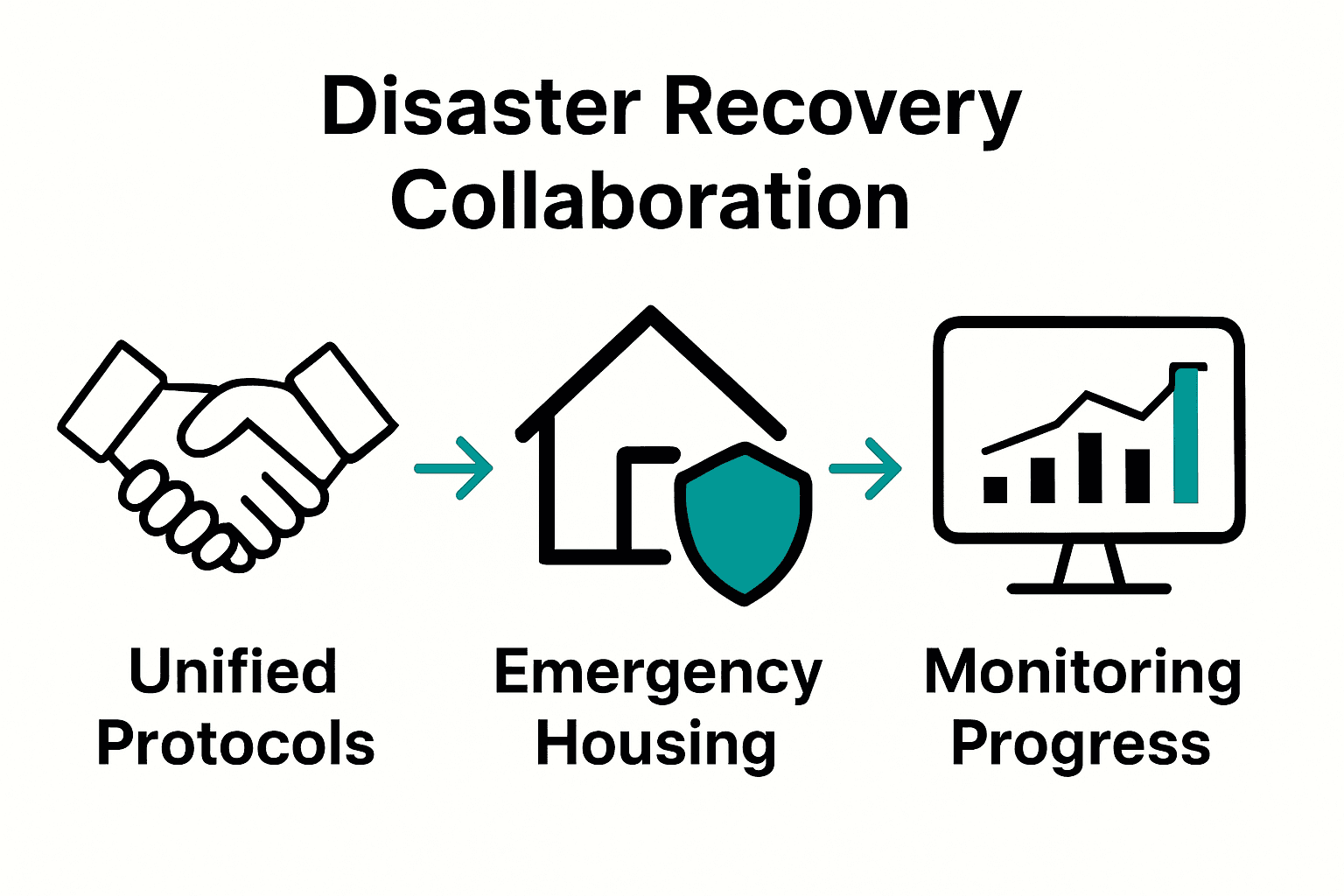
In the final phase, you will develop comprehensive documentation and conduct a thorough evaluation of the entire collaborative recovery process to capture critical insights for future disaster response strategies.
Streamline Your Disaster Recovery with Expert Collaboration
The “Collaborative Disaster Recovery Guide for Seamless Recovery” highlights the critical need for unified response protocols and multi-agency communication to overcome common challenges in disaster recovery. If you are navigating complex coordination among agencies, emergency housing placement, and personalized support plans, the pain of fragmented communication and slow resource allocation can feel overwhelming. The guide’s focus on clear communication matrices, centralized coordination centers, and transparent monitoring underscores how vital a trusted partner is to help accelerate these processes and ensure no victim is left behind.
At DisasterVictimServices.com, we specialize in the very collaborative approach this guide champions. Our team works closely with insurance carriers, government agencies, and first responders to deliver rapid emergency housing solutions and keep vital communication flowing smoothly. You can explore how we implement project strategies and maintain flexible support by visiting our Project design page and learn about varied recovery challenges through our informative Uncategorized content. Don’t wait to establish these lifesaving connections when disaster strikes. Visit DisasterVictimServices.com today to connect with experts ready to guide your recovery every step of the way.
Frequently Asked Questions
How do I establish unified response collaboration protocols after a disaster?
To establish unified response collaboration protocols, identify key stakeholders such as emergency responders and local agencies, and designate a primary point of contact for each. Schedule joint planning sessions and regular coordination drills to refine your protocols and improve communication before an emergency occurs.
What steps should I take to coordinate emergency housing and critical services for disaster victims?
Start by creating a detailed inventory of available emergency housing resources and establish a centralized coordination center to match displaced individuals with appropriate housing. Implement a streamlined referral system that allows for rapid placement and ensures each individual receives comprehensive support, including medical and financial resources.
How can I integrate multi-agency communication channels effectively during disaster recovery?
Create a comprehensive communication matrix that defines protocols and preferences for each participating agency while establishing a centralized communication hub. Utilize secure digital platforms for instant messaging and document sharing, and conduct regular communication drills to refine the system before an emergency.
What approaches are best for engaging stakeholders in individualized recovery planning?
Conduct thorough individual assessments to capture each person’s unique circumstances and create personalized recovery roadmaps that outline specific milestones and available resources. Assign dedicated case managers to guide individuals through their recovery journey and schedule regular check-in meetings to adapt plans as needed.
How do I monitor recovery progress collaboratively among multiple agencies?
Develop a shared dashboard to track recovery metrics in real-time and schedule regular inter-agency review meetings to assess progress collectively. Utilize quantitative data and qualitative feedback from disaster victims to identify challenges and continuously improve recovery efforts.
What should I include in a customized support package for disaster victims?
Include medical services, mental health resources, financial assistance, and other critical support in each housing placement to ensure a comprehensive recovery experience. Tailor these packages based on individual assessments to effectively meet the unique needs of each disaster victim.
Recommended
- Complete Guide to Disaster Recovery Plans – Disaster Victim Services | Helping You Recover After Disaster
- How to Access Support: Guide for Disaster Recovery 2025 – Disaster Victim Services | Helping You Recover After Disaster
- Disaster Recovery Process Steps: A Complete Guide 2025 – Disaster Victim Services | Helping You Recover After Disaster
- How to Rebuild Safely: Essential Steps for Disaster Recovery 2025 – Disaster Victim Services | Helping You Recover After Disaster