
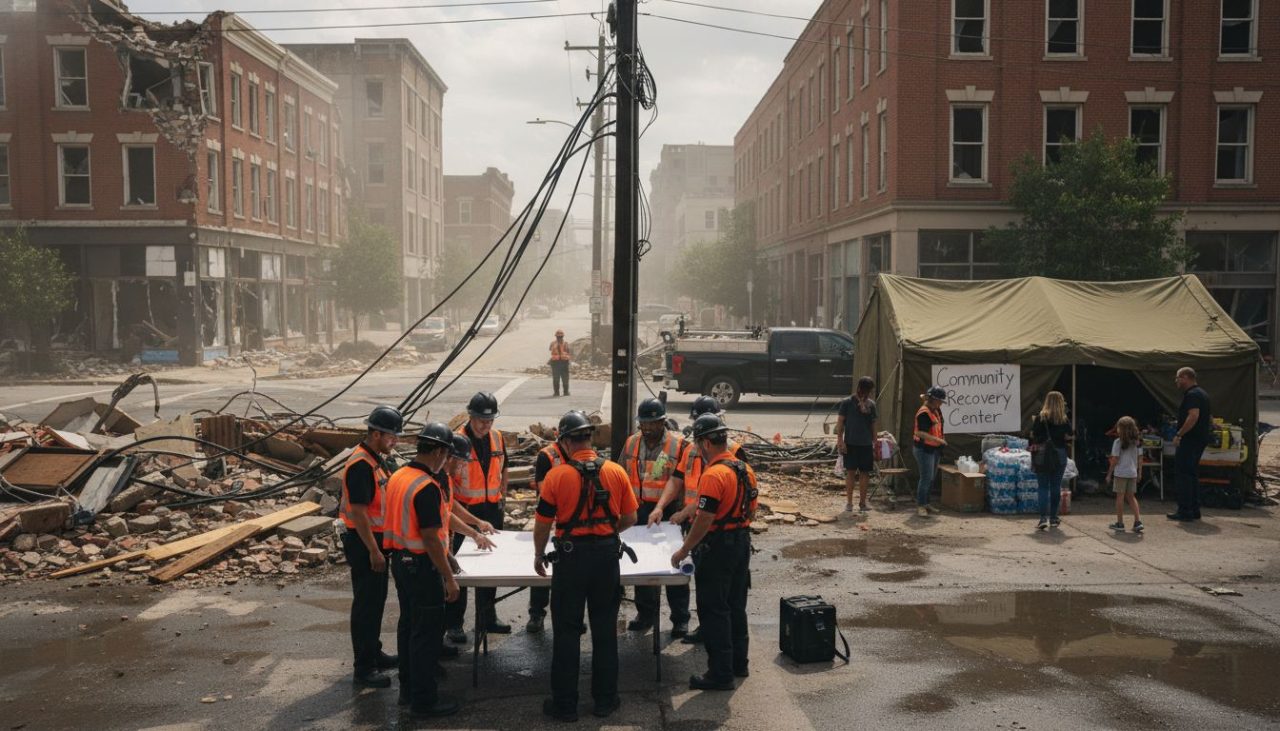
Disasters leave lasting scars on communities, but effective restoration can change everything. More than half of affected regions never fully recover without coordinated rebuilding efforts. When catastrophe strikes, families, businesses, and vital services are thrown into chaos, making structured recovery not just important but life-changing. Understanding how post-disaster restoration works is key to building stronger, safer communities in the aftermath of tragedy, guiding everyone from emergency responders to local leaders.
Table of Contents
- Defining Post-Disaster Restoration Services
- Types of Post-Disaster Restoration Efforts
- Restoration Process: From Crisis to Recovery
- Roles of Agencies and Professionals Involved
- Key Challenges and Mistakes to Avoid
Key Takeaways
| Point | Details |
|---|---|
| Comprehensive Restoration Approach | Post-disaster restoration encompasses structural, economic, community, and infrastructure recovery efforts, emphasizing a holistic recovery strategy. |
| Collaboration is Essential | Successful recovery requires coordinated efforts among federal, state, local agencies, and professionals, ensuring all aspects of community needs are addressed. |
| Adaptive Strategies are Necessary | Restoration efforts must be tailored to specific community contexts and future resilience needs, recognizing that each disaster presents unique challenges. |
| Addressing Psychological Needs | Providing mental health support is critical, as overlooking psychological trauma can severely impede long-term recovery and community well-being. |
Defining Post-Disaster Restoration Services
Post-disaster restoration services represent a comprehensive, strategic approach to recovering and rebuilding communities after catastrophic events. According to UNESCO, these services are critical phases of disaster risk reduction that focus on restoring infrastructure, supporting displaced populations, and improving community resilience.
At its core, post-disaster restoration involves a multi-phase process of systematic recovery that goes beyond simple repair. These services encompass several key dimensions:
- Structural Rehabilitation: Repairing and reconstructing damaged buildings, infrastructure, and critical community facilities
- Community Support: Providing emergency housing, psychological support, and logistical assistance to affected populations
- Infrastructure Restoration: Rebuilding essential services like electricity, water, transportation, and communication networks
- Economic Recovery: Supporting local businesses, employment initiatives, and economic stabilization efforts
The National Disaster Recovery Framework highlights that effective restoration requires coordinated efforts across multiple agencies and stakeholders. This collaborative approach ensures that recovery is not just about physical reconstruction, but about rebuilding stronger, more resilient communities.
Successful post-disaster restoration services recognize that every disaster is unique. They demand flexible, adaptive strategies that can respond to specific community needs while maintaining a holistic view of long-term recovery and resilience. By integrating technical expertise with compassionate support, these services transform crisis moments into opportunities for community renewal and strengthened infrastructure.

Types of Post-Disaster Restoration Efforts
Post-disaster restoration efforts are complex and multifaceted, designed to address the comprehensive needs of communities impacted by catastrophic events. FEMA’s Public Assistance Program highlights several critical types of restoration efforts that span emergency response and long-term recovery strategies.
Restoration efforts can be broadly categorized into key domains:
- Emergency Infrastructure Restoration: Immediate repair of critical systems like power, water, transportation, and communication networks
- Structural Reconstruction: Repairing and rebuilding damaged residential, commercial, and public buildings
- Environmental Remediation: Cleaning and restoring natural environments affected by disasters
- Economic Recovery Support: Providing financial assistance and resources to help businesses and individuals rebuild
- Social and Community Restoration: Supporting mental health services, community reconnection, and social support systems
Some restoration efforts require specialized approaches tailored to specific environmental contexts. For instance, coastal restoration techniques like beach nourishment demonstrate how targeted interventions can protect and rebuild vulnerable geographic areas. These methods not only restore immediate damage but also enhance long-term resilience against future environmental challenges.
Effective post-disaster restoration is never a one-size-fits-all solution. Each effort must be carefully designed to address unique community needs, considering factors like local infrastructure, environmental conditions, economic landscape, and social dynamics. By implementing comprehensive, adaptive restoration strategies, communities can transform devastating losses into opportunities for renewal, strengthening their capacity to withstand and recover from future disasters.
Restoration Process: From Crisis to Recovery
Post-disaster restoration is a complex journey that transforms immediate crisis into long-term community renewal. According to UNESCO, the restoration process follows a structured approach that systematically addresses the comprehensive challenges faced by impacted communities.
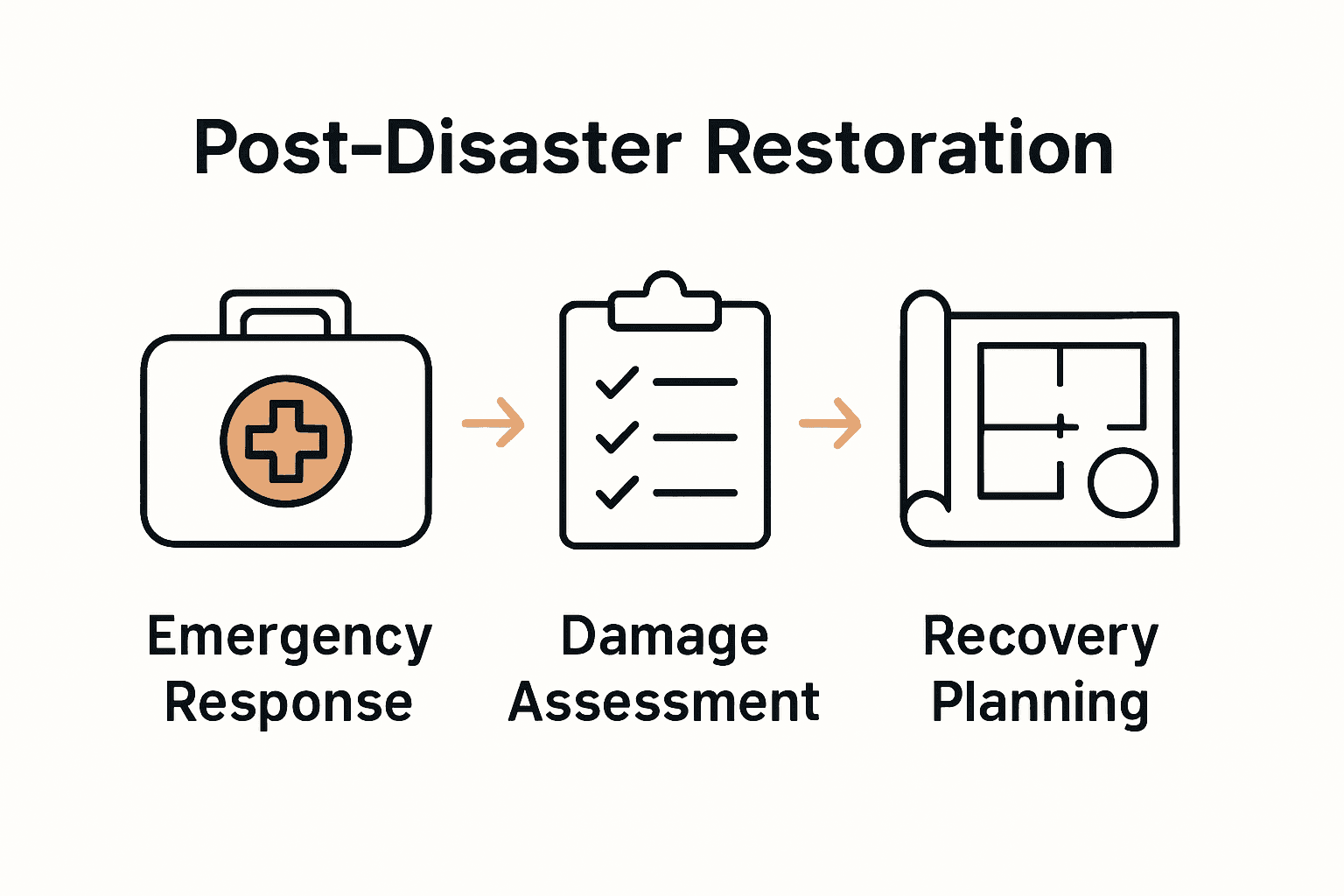
The restoration process typically unfolds through critical stages:
- Emergency Response Phase
- Immediate safety and life-saving interventions
- Evacuation and temporary shelter provisions
- Critical infrastructure stabilization
- Emergency medical and psychological support
- Damage Assessment Phase
- Comprehensive damage evaluation
- Infrastructure and property condition mapping
- Economic impact analysis
- Resource and support needs identification
- Recovery Planning Phase
- Developing strategic reconstruction plans
- Securing funding and resources
- Prioritizing restoration efforts
- Coordinating multi-agency interventions
The National Disaster Recovery Framework emphasizes that successful restoration requires seamless coordination between government agencies, community organizations, and local stakeholders. This collaborative approach ensures that recovery efforts are not just about rebuilding physical infrastructure, but about restoring community resilience and hope.
Ultimately, the restoration process is a dynamic, adaptive journey. Each disaster presents unique challenges, demanding flexible strategies that can pivot based on evolving community needs. By maintaining a holistic, compassionate approach, restoration efforts can transform devastating losses into opportunities for renewal, stronger infrastructure, and more resilient communities.
Roles of Agencies and Professionals Involved
Post-disaster restoration is a complex ecosystem involving multiple agencies, professionals, and organizations working in intricate collaboration. FEMA’s Public Assistance Program highlights the critical importance of coordinated efforts across federal, state, local, and private sectors to effectively manage disaster recovery.
Key agencies and professionals involved in restoration efforts include:
-
Federal Agencies
- FEMA (Federal Emergency Management Agency)
- Department of Homeland Security
- Small Business Administration
- Army Corps of Engineers
-
State and Local Agencies
- State Emergency Management Offices
- Local Government Emergency Response Teams
- Public Works Departments
- State Health Departments
-
Professional Specialists
- Disaster Recovery Consultants
- Structural Engineers
- Mental Health Professionals
- Insurance Claims Adjusters
- Environmental Remediation Experts
The National Disaster Recovery Framework emphasizes that effective restoration requires clear role definition and seamless communication between these diverse stakeholders. Each agency and professional brings specialized skills and resources crucial to comprehensive community recovery.
Successful post-disaster restoration demands more than technical expertise. It requires empathy, adaptability, and a shared commitment to rebuilding lives. Professionals must work not just as individual contributors, but as an integrated network, ensuring that every aspect of community recovery is addressed with precision, compassion, and strategic planning.
Key Challenges and Mistakes to Avoid
Post-disaster restoration is fraught with complex challenges that can significantly impede recovery efforts. The Law Institute highlights that inadequate strategies can derail the entire restoration process, making it crucial to understand and proactively address potential pitfalls.
Common Challenges and Critical Mistakes in Restoration Efforts:
-
Psychological Trauma Neglect
- Overlooking mental health support
- Failing to provide comprehensive counseling
- Ignoring long-term emotional recovery needs
-
Resource Misallocation
- Inefficient distribution of emergency funds
- Uncoordinated relief efforts
- Lack of transparent resource management
-
Infrastructure Vulnerability
- Rebuilding without considering future disaster risks
- Ignoring resilience and adaptive design principles
- Repeating previous structural vulnerabilities
Resilience in engineering and construction underscores the importance of designing infrastructure that can withstand future challenges. This means moving beyond simple reconstruction to creating adaptive, robust systems that can resist and recover from potential disasters.
Ultimately, successful restoration demands a holistic approach. Professionals must balance immediate needs with long-term resilience, prioritize community well-being, and remain flexible in their strategies. By anticipating challenges and maintaining a forward-thinking perspective, restoration efforts can transform potential setbacks into opportunities for meaningful, sustainable recovery.
Take Control of Your Post-Disaster Restoration Journey
Recovering from a disaster means facing many challenges like damaged homes, disrupted infrastructure, and emotional strain. This article highlights how crucial it is to have a well-coordinated approach that includes structural rehabilitation, community support, and resilient rebuilding. If you are navigating these stressful times, you need trusted partners who understand both the immediate crisis and the long-term recovery ahead.
At DisasterVictimServices.com, we combine compassionate emergency housing solutions with expert coordination among insurers and recovery professionals. Whether you are planning structural repairs or need guidance on renovation, our team supports you every step of the way. Don’t wait to rebuild stronger and smarter. Visit our project design page or connect with us directly via DisasterVictimServices.com to start your recovery with confidence today.
Frequently Asked Questions
What are the key components of post-disaster restoration services?
Post-disaster restoration services include structural rehabilitation, community support, infrastructure restoration, and economic recovery efforts. These components work together to rebuild communities after catastrophic events.
How is the post-disaster restoration process structured?
The post-disaster restoration process typically involves several phases: emergency response, damage assessment, and recovery planning, ensuring a comprehensive approach to community rehabilitation and resilience.
Who are the main agencies involved in post-disaster restoration?
Key agencies include federal bodies like FEMA, state and local emergency management offices, and various professionals such as disaster recovery consultants, mental health professionals, and structural engineers, all working collaboratively in restoration efforts.
What are common challenges faced during post-disaster restoration?
Common challenges include neglect of psychological trauma, resource misallocation, and rebuilding infrastructure without considering future disaster risks. Addressing these issues is crucial for effective recovery and resilience against future disasters.
Recommended
- How to Handle Disaster: A Step-by-Step Recovery Guide – Disaster Victim Services | Helping You Recover After Disaster
- How to Manage Displacement: Practical Steps for Disaster Recovery 2025 – Disaster Victim Services | Helping You Recover After Disaster
- Long-Term Disaster Recovery: Complete Guide for 2024 – Disaster Victim Services | Helping You Recover After Disaster
- Understanding Disaster Property Loss Steps for Recovery – Disaster Victim Services | Helping You Recover After Disaster