

Global insured losses from natural disasters have soared to $80 billion in just the first half of 2025, signaling a year unlike any before. These numbers highlight a dramatic shift as communities face wildfires, severe storms, and rising displacements that upend daily life. As disaster patterns become more extreme and unpredictable, staying informed about the latest trends and solutions is key to building resilience and protecting lives in this challenging era.
Table of Contents
- Defining Current Disaster Trends In 2025
- Major Disaster Types And Recent Changes
- Emerging Causes And Risk Factors This Year
- National Patterns Of Displacement And Impact
- Emergency Housing And Response Innovations
- Key Roles And Collaboration In Recovery
Key Takeaways
| Point | Details |
|---|---|
| Rising Disaster Risks | The frequency and intensity of wildfires, severe storms, and climate-induced flooding are increasing, necessitating urgent adaptations in disaster management strategies. |
| Importance of Technology | Investing in advanced predictive technologies and integrated response systems is essential for effective disaster preparedness and community resilience. |
| Need for Collaboration | A multi-stakeholder approach is critical for disaster recovery, emphasizing integrated efforts among government agencies, community organizations, and emergency responders. |
| Innovative Housing Solutions | Emergency housing is evolving towards modular, technology-enabled designs that prioritize rapid deployment and community support for displaced individuals. |
Defining Current Disaster Trends in 2025
The landscape of global disasters is rapidly transforming in 2025, marked by unprecedented challenges that demand immediate attention and strategic response. According to Reuters, global insured losses from natural catastrophes have already reached a staggering $80 billion in just the first half of the year – nearly double the 10-year historical average. These escalating figures underscore a critical turning point in disaster management and climate resilience.
Key disaster trends emerging in 2025 reveal a complex interplay of environmental, technological, and socioeconomic factors. The most prominent trends include increasingly intense wildfire events, more frequent severe thunderstorms, and climate-induced displacement. Academic research highlights specific examples like Hurricane Helene and the Los Angeles wildfires, emphasizing an urgent need for comprehensive climate mitigation and adaptation strategies.
These evolving disaster trends are not just statistical anomalies but represent fundamental shifts in our environmental ecosystem. Stakeholders across multiple sectors – from emergency responders and insurance professionals to government agencies and community organizations – must develop more dynamic, proactive approaches to disaster preparedness. The data suggests we’re moving beyond traditional reactive models toward integrated, technology-enabled disaster response frameworks that prioritize rapid intervention, resilient infrastructure, and community-centered recovery strategies.
The implications are profound. As natural catastrophes become more unpredictable and severe, understanding these emerging trends becomes crucial for effective risk management. Professionals must invest in advanced predictive technologies, robust communication networks, and adaptive response protocols. Early warning systems, comprehensive insurance coverage, and community resilience programs will be key differentiators in mitigating potential disaster impacts.
Major Disaster Types and Recent Changes
In 2025, the landscape of natural disasters has dramatically transformed, revealing unprecedented patterns of environmental disruption and increased severity. Wikipedia highlights the Palisades Fire as a critical example, demonstrating the escalating destructive potential of wildfire events that are causing significant structural damage and human displacement across the United States.
The year 2025 has been particularly characterized by three major disaster types that demand urgent attention: wildfires, severe storm systems, and climate-induced flooding. According to Wikipedia, the February North American storm complex serves as a stark reminder of these emerging trends, bringing devastating flash flooding and tornadoes that resulted in at least 18 fatalities. These events underscore the growing complexity and unpredictability of natural disaster patterns.
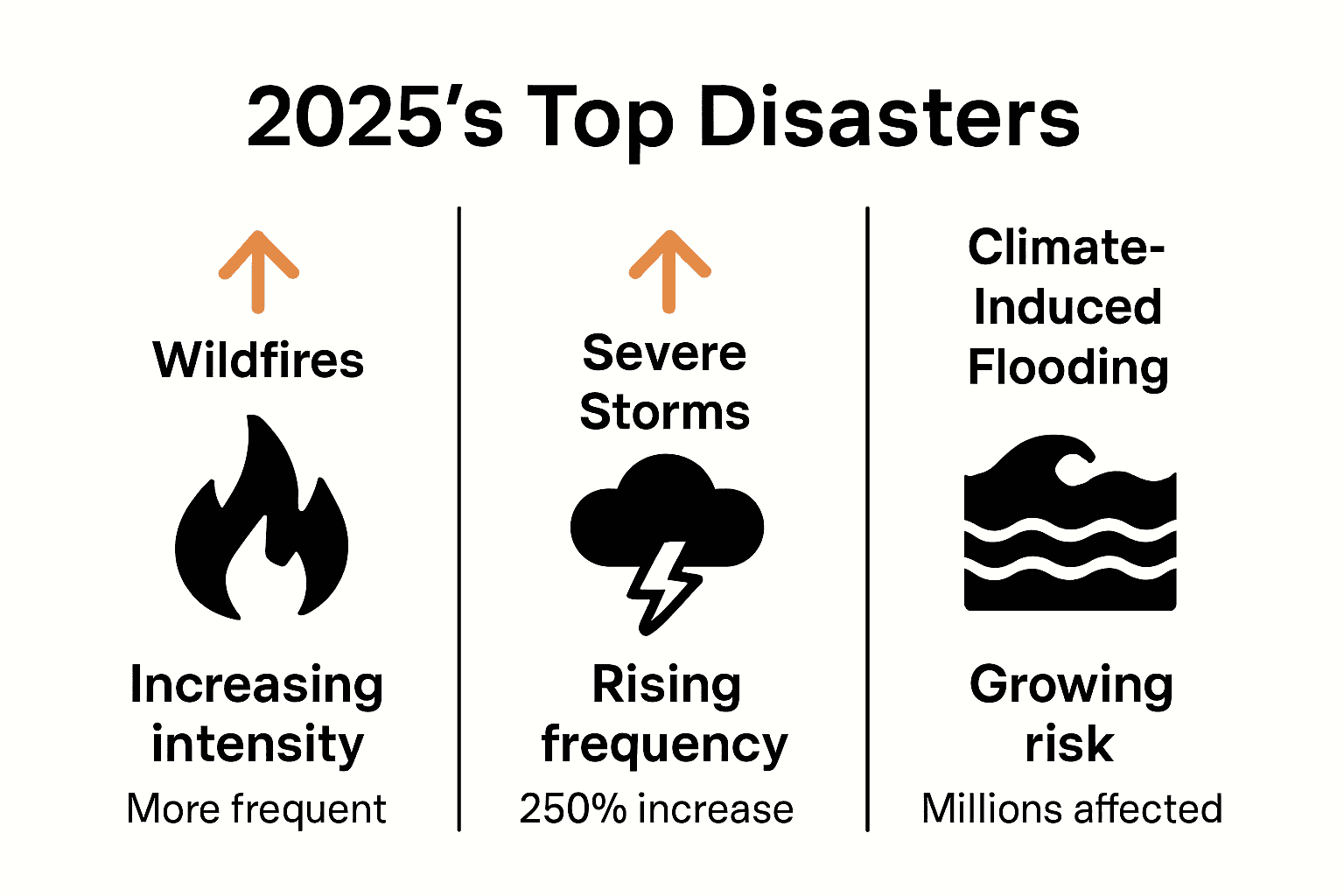
Beyond immediate physical destruction, these disaster trends reveal deeper systemic vulnerabilities in our infrastructure, emergency response mechanisms, and community resilience. Wildfires are no longer isolated incidents but represent widespread ecological challenges, with increasing frequency and intensity driven by climate change, prolonged drought conditions, and urban expansion into wildland interfaces. Storm systems are becoming more erratic, with traditional seasonal predictions losing reliability and extreme weather events occurring with greater unpredictability.
For professionals and communities alike, understanding these evolving disaster types requires a multifaceted approach. This means investing in advanced predictive technologies, developing robust early warning systems, enhancing community preparedness programs, and creating adaptive infrastructure that can withstand increasingly severe environmental challenges. The future of disaster management lies not just in reactive strategies, but in proactive, comprehensive risk mitigation frameworks that prioritize human safety and ecological sustainability.
Emerging Causes and Risk Factors This Year
Climate change and human development are fundamentally reshaping the landscape of disaster risks in 2025. Live Science reveals that by June 2025, the United States had already experienced record-breaking damages from extreme weather events, driven by a complex interplay of environmental and anthropogenic factors. The escalating costs and frequency of these disasters underscore the urgent need for comprehensive risk assessment and mitigation strategies.
The emerging risk factors are multifaceted and increasingly interconnected. Coastal vulnerabilities have become particularly pronounced, with advanced predictive models highlighting significant challenges. ArXiv research utilizing deep learning techniques projects heightened coastal storm surge risks, primarily attributed to intensified tropical cyclones and rising sea levels. These projections indicate that traditional risk management approaches are becoming obsolete in the face of rapidly evolving environmental dynamics.
Three primary emerging causes stand out in 2025’s disaster landscape: climate change acceleration, urban expansion into high-risk zones, and infrastructure vulnerability. Human settlements are increasingly encroaching on environmentally sensitive areas, creating complex risk ecosystems. Prolonged drought conditions, unprecedented heat waves, and shifting precipitation patterns are transforming previously stable ecological regions into potential disaster zones. The traditional boundaries between natural and human-induced disasters are blurring, demanding a more holistic and adaptive approach to risk management.
For stakeholders across various sectors, understanding these emerging risk factors requires a fundamental reimagining of preparedness and resilience. This means investing in advanced predictive technologies, developing adaptive infrastructure, creating robust early warning systems, and implementing comprehensive community-based risk reduction strategies. The future of disaster management lies in proactive, integrated approaches that recognize the intricate connections between environmental changes, human activities, and systemic vulnerabilities.
National Patterns of Displacement and Impact
Displacement patterns in the United States have reached unprecedented levels in 2025, reflecting the complex interplay of environmental, economic, and social challenges. Wikipedia highlights the May Mid-Atlantic flood as a critical example, demonstrating how slow-moving weather systems can cause significant community disruption, particularly along the Potomac River. These events are not isolated incidents but part of a broader national trend of increasing environmental volatility.
The scale of displacement extends beyond natural disasters, encompassing broader social and economic dynamics. Associated Press recently reported on New York City’s closure of a large migrant tent camp at Floyd Bennett Field, underscoring the complex challenges of managing large-scale population movements. These displacement trends reveal critical gaps in current emergency response and housing infrastructure, demanding innovative and adaptive solutions.
Three primary factors are driving national displacement patterns in 2025: climate-induced environmental changes, economic instability, and urban infrastructure vulnerabilities. Coastal and river communities are experiencing the most significant disruptions, with rising sea levels, increased flood risks, and extreme weather events forcing large-scale population relocations. Urban centers are particularly vulnerable, facing challenges in providing temporary housing, maintaining essential services, and supporting displaced populations through comprehensive recovery programs.
Addressing these displacement challenges requires a multifaceted, collaborative approach. Stakeholders across government agencies, emergency response organizations, community groups, and social services must develop integrated strategies that prioritize rapid housing solutions, psychological support, economic stabilization, and long-term community resilience. The goal is not just short-term relief but creating adaptive frameworks that can effectively respond to the dynamic and increasingly unpredictable nature of displacement in 2025.
Emergency Housing and Response Innovations
Emergency housing solutions are undergoing a radical transformation in 2025, driven by unprecedented challenges and technological innovations. Associated Press highlights an emerging trend with Lansing, Michigan’s groundbreaking ‘pod city’ initiative, introducing modular mini homes called ModPods to address growing housing displacement challenges. These compact, rapidly deployable units represent a cutting-edge approach to emergency shelter that prioritizes both efficiency and human dignity.
The landscape of disaster response is shifting from traditional temporary housing models to more adaptive, technology-enabled solutions. Modular housing, rapid deployment strategies, and smart infrastructure are becoming critical components of emergency management. Society of Actuaries research underscores the importance of developing flexible housing strategies that can quickly respond to diverse and unpredictable disaster scenarios, emphasizing the need for innovative approaches that go beyond conventional emergency shelter methods.
Three primary innovations are reshaping emergency housing in 2025: adaptive modular design, integrated technology solutions, and community-centered deployment strategies. These approaches recognize that emergency housing is not just about providing a physical structure, but creating supportive environments that facilitate psychological recovery and community resilience. Advanced prefabricated housing units can now be deployed within hours, equipped with essential utilities, connectivity options, and designed to provide both immediate shelter and a sense of personal space for displaced individuals.
The future of emergency housing demands a holistic, collaborative approach that integrates multiple stakeholders – from government agencies and emergency response organizations to technology developers and community leaders.
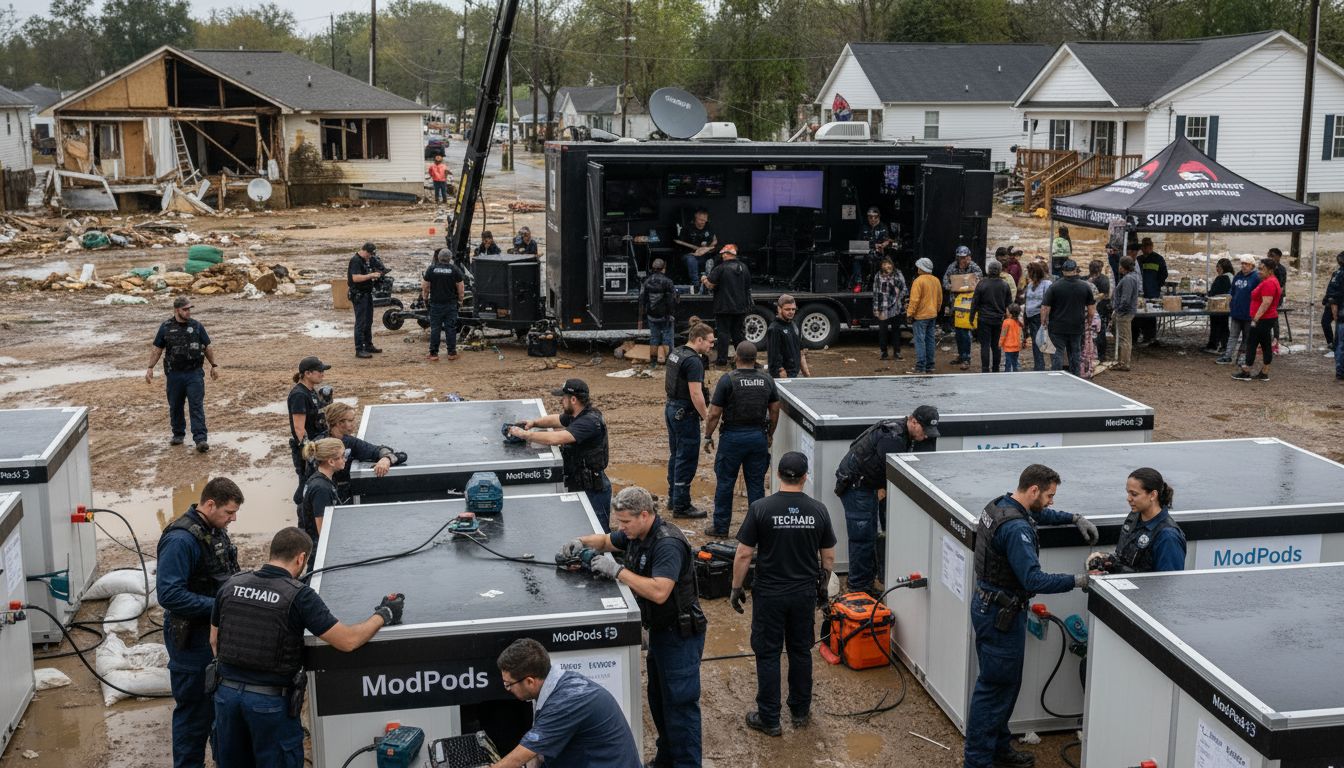 By prioritizing scalable, adaptable solutions that combine rapid deployment capabilities with human-centric design, we can transform emergency housing from a temporary survival mechanism to a comprehensive recovery ecosystem. This means developing housing solutions that are not just functional, but also supportive of mental health, community reconnection, and long-term resilience.
Key Roles and Collaboration in Recovery
Disaster recovery in 2025 has evolved into a complex, multi-stakeholder ecosystem that demands unprecedented levels of coordination and strategic planning. Pew Charitable Trusts highlights the critical importance of building disaster-ready budgets that prioritize efficient resource allocation and collaborative approaches. This shift represents a fundamental reimagining of how different agencies and organizations work together during crisis response and recovery efforts.
The traditional siloed approach to disaster management is rapidly becoming obsolete. ArXiv research introduces an advanced optimization-based decision support model that assists homeland security policymakers in selecting projects that best mitigate risks. This approach underscores the growing complexity of recovery efforts, which now require sophisticated strategic planning and data-driven decision-making across multiple organizational boundaries.
Three primary roles are emerging as critical in the 2025 disaster recovery landscape: strategic coordinators, technological integrators, and community resilience facilitators. These roles transcend traditional bureaucratic boundaries, focusing on creating adaptive, interconnected response systems. Strategic coordinators develop comprehensive recovery frameworks, technological integrators leverage advanced data and communication technologies, and community resilience facilitators ensure that recovery efforts are human-centered and responsive to local needs.
Successful recovery in 2025 demands a holistic approach that recognizes the interconnected nature of disaster response. This means breaking down institutional barriers, developing shared communication protocols, and creating flexible, adaptive frameworks that can respond rapidly to changing conditions. Collaboration is no longer just a buzzword but a critical operational strategy that determines the effectiveness of recovery efforts. By prioritizing integrated approaches, real-time information sharing, and community-centered strategies, stakeholders can transform disaster recovery from a reactive process to a proactive, resilient ecosystem.
Prepare and Recover with Trusted Disaster Support
The urgent disaster trends identified for 2025 reveal critical challenges like escalating wildfires, severe storms, and climate-driven displacement. These events cause severe disruption and urgent housing needs for affected families. If you or your community face the overwhelming burden of sudden displacement, understanding these risks is the first step toward preparedness and swift recovery. Immediate access to emergency housing and expert coordination can make all the difference in navigating these crises.
At DisasterVictimServices.com, we specialize in connecting disaster victims to reliable emergency housing options while collaborating closely with insurance carriers, government agencies, and first responders. Our 24/7 support and deep expertise in disaster recovery logistics ensure you are not alone when disaster strikes. Explore our latest insights and solutions in the New Category to stay informed about evolving disaster responses. Ready to move forward with confidence The time to act is now to secure your safety and begin rebuilding. Visit DisasterVictimServices.com to learn more and get immediate assistance. For additional helpful resources, see our Uncategorized Section.
Frequently Asked Questions
What are the major disaster trends emerging in 2025?
Key disaster trends in 2025 include increasingly intense wildfire events, more frequent severe thunderstorms, and climate-induced displacement, which reflect a fundamental shift in our environmental ecosystem.
How have recent natural disasters influenced emergency housing solutions?
Emergency housing solutions are evolving towards adaptive, technology-enabled options, such as modular mini homes, which prioritize efficiency and human dignity while responding to growing housing displacement challenges.
What are the primary causes behind increasing disaster risks in 2025?
The primary causes include climate change acceleration, urban expansion into high-risk zones, and infrastructure vulnerability, all of which contribute to a more complex disaster landscape.
How can communities enhance their resilience against natural disasters?
Communities can enhance resilience by investing in advanced predictive technologies, developing robust early warning systems, and implementing comprehensive community-based risk reduction strategies to adapt to increasingly unpredictable disasters.
Recommended
- Natural Disaster Statistics 2025: Key Trends for Families & Responders – Disaster Victim Services | Helping You Recover After Disaster
- Disaster Recovery Statistics 2025: Key Trends for Agencies and Families – Disaster Victim Services | Helping You Recover After Disaster
- 2025 Disaster Recovery Trends Explained: Key Shifts Ahead – Disaster Victim Services | Helping You Recover After Disaster
- Natural Disaster Statistics 2025: Key Trends for Families & Responders – Disaster Victim Services | Helping You Recover After Disaster
- Understanding Personal Finance Trends 2025 for Better Decisions – Finblog
- 7 Top Digital Trends 2025 You Must Know for Growth