

Every year, more than half a million people in the United States experience homelessness or sudden displacement, highlighting just how unpredictable life can become. When disaster strikes or finances hit a breaking point, having access to safe shelter becomes a lifeline. Emergency housing solutions matter because they mean the difference between stability and crisis for vulnerable families. This overview breaks down what emergency housing really means and explains how these vital resources work when you need them most.
Table of Contents
- Emergency Housing Solutions Defined And Explained
- Types Of Emergency Housing Available Nationwide
- How Emergency Housing Placement Works
- Legal And Eligibility Criteria For Access
- Financial Responsibilities And Cost Considerations
Key Takeaways
| Point | Details |
|---|---|
| Emergency Housing Importance | Emergency housing solutions provide critical support during crises, ensuring safety and stability for displaced individuals and families. |
| Types of Emergency Housing | Options include congregate shelters, non-congregate shelters, transitional housing, and rapid rehousing, each serving specific needs. |
| Placement Process | Initiating emergency housing involves contacting local services via the 211 helpline, followed by assessment, matching, and placement steps. |
| Eligibility Criteria | Access is contingent on income verification, residency status, immediate housing crisis, and family composition considerations. |
Emergency Housing Solutions Defined and Explained
Emergency housing solutions are critical support systems designed to provide immediate, temporary shelter for individuals and families who have been displaced from their homes due to disasters, financial hardship, or unexpected circumstances. According to USA.gov, these solutions are essential lifelines that help vulnerable populations maintain safety and stability during challenging transitions.
At its core, emergency housing encompasses a range of temporary shelter options managed by public and private organizations. As research from Social Knowledge highlights, these shelters serve a critical function for those who are homeless or unable to return to their primary residences. The primary objectives of emergency housing include:
- Providing immediate physical safety
- Protecting vulnerable individuals from exposure and environmental risks
- Offering a stable base for accessing additional support services
- Preventing prolonged homelessness
Navigating emergency housing solutions can be complex, but resources like the national 211 helpline can significantly simplify the process. By dialing 211, individuals can quickly connect with local social service agencies that specialize in emergency housing referrals. Understand the emergency housing process in more depth with our comprehensive guide on emergency shelter, which offers detailed insights into accessing and utilizing these critical support systems.
Types of Emergency Housing Available Nationwide
Emergency housing in the United States encompasses a diverse range of shelter options designed to meet the varying needs of displaced individuals and families.
Here’s a comparison of the main types of emergency housing solutions:
| Housing Type | Key Features | Typical Duration |
|---|---|---|
| Congregate Shelters | Shared living spaces Immediate entry |
Short-term (days-weeks) |
| Non-Congregate Shelters | Private/semi-private rooms More privacy |
Short-term (days-weeks) |
| Transitional Housing | Case management Supportive services |
Medium-term (months) |
| Rapid Rehousing | Financial aid Quick placement |
Short to medium-term |
| According to FMFNC, these solutions can be categorized into several key types that provide critical support during times of crisis. |
Emergency Shelters represent the most immediate form of temporary housing, offering short-term protection for those suddenly without a home. Municipal Research highlights different shelter configurations that address various needs:
- Congregate Shelters: Large facilities housing multiple individuals or families in shared spaces
- Non-Congregate Shelters: Private or semi-private accommodations offering more personal space
- Transitional Housing: Longer-term solutions bridging emergency shelter and permanent housing
- Rapid Rehousing: Programs designed to quickly relocate individuals into stable housing
Understanding the nuanced landscape of emergency housing can feel overwhelming, which is why our guide to emergency shelter types provides comprehensive insights into navigating these critical support systems. Each housing type serves a unique purpose, helping disaster victims, low-income families, and individuals experiencing sudden displacement find safety and stability during challenging life transitions.
How Emergency Housing Placement Works
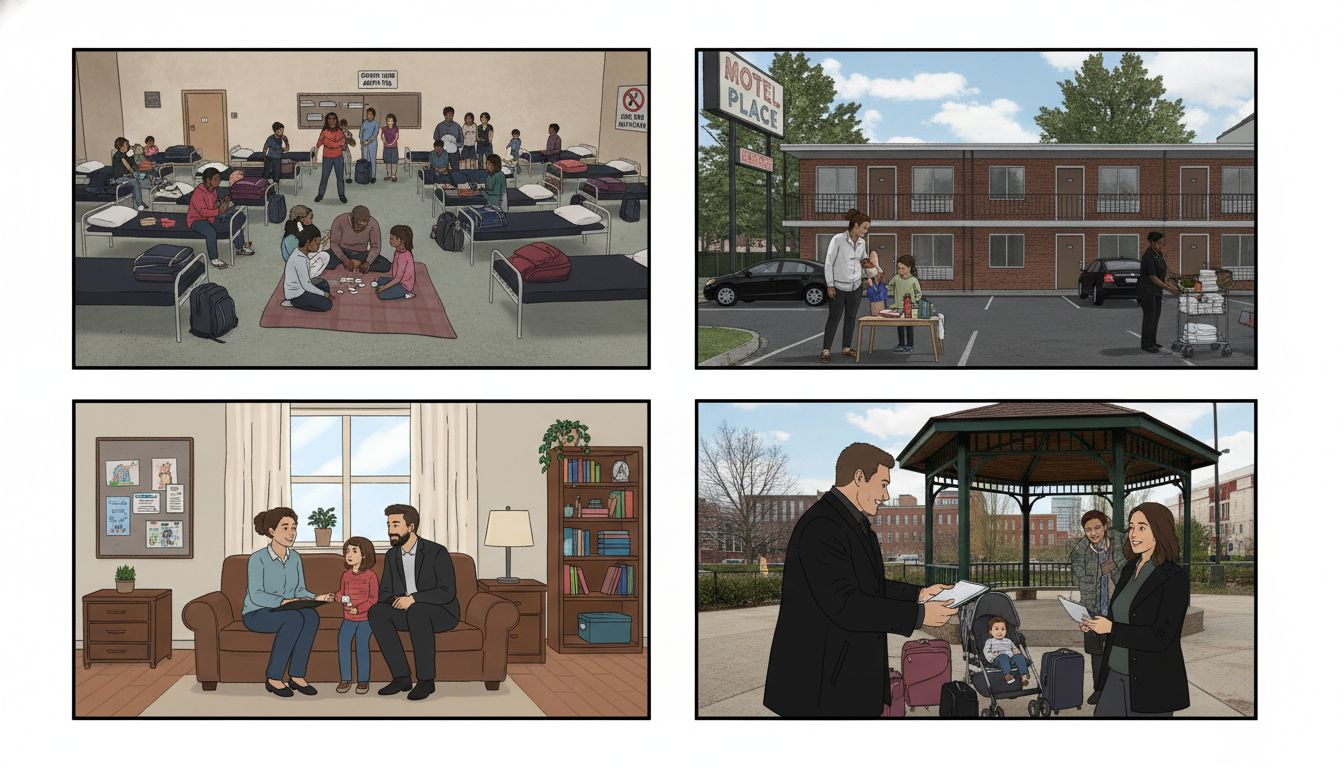
Emergency housing placement is a structured process designed to quickly connect displaced individuals and families with temporary shelter and support services. USA.gov highlights that individuals can initiate this process by dialing 211, a national helpline that serves as the primary gateway to local social service resources and emergency housing referrals.
The placement process typically involves several critical steps that ensure individuals receive appropriate and immediate assistance:
- Initial Contact: Reach out to local social services through the 211 helpline
- Assessment: Professionals evaluate the individual’s or family’s specific housing needs
- Matching: Connect with available shelter options that match the individual’s requirements
- Placement: Coordinate transportation and immediate shelter accommodation
- Support Services: Connect individuals with additional resources like food, healthcare, and long-term housing solutions
The Department of Housing and Urban Development (HUD) plays a crucial role in coordinating these efforts, offering comprehensive programs to prevent homelessness and provide temporary housing solutions.
Learn more about the step-by-step housing placement process with our detailed guide, which breaks down the intricate workflow of emergency housing assistance and helps individuals navigate these critical support systems during challenging times.
Legal and Eligibility Criteria for Access
Emergency housing assistance in the United States involves complex legal frameworks and specific eligibility requirements designed to support the most vulnerable populations. USA.gov explains that eligibility varies significantly across different programs, with key factors including immediate housing need, income thresholds, and individual circumstances.
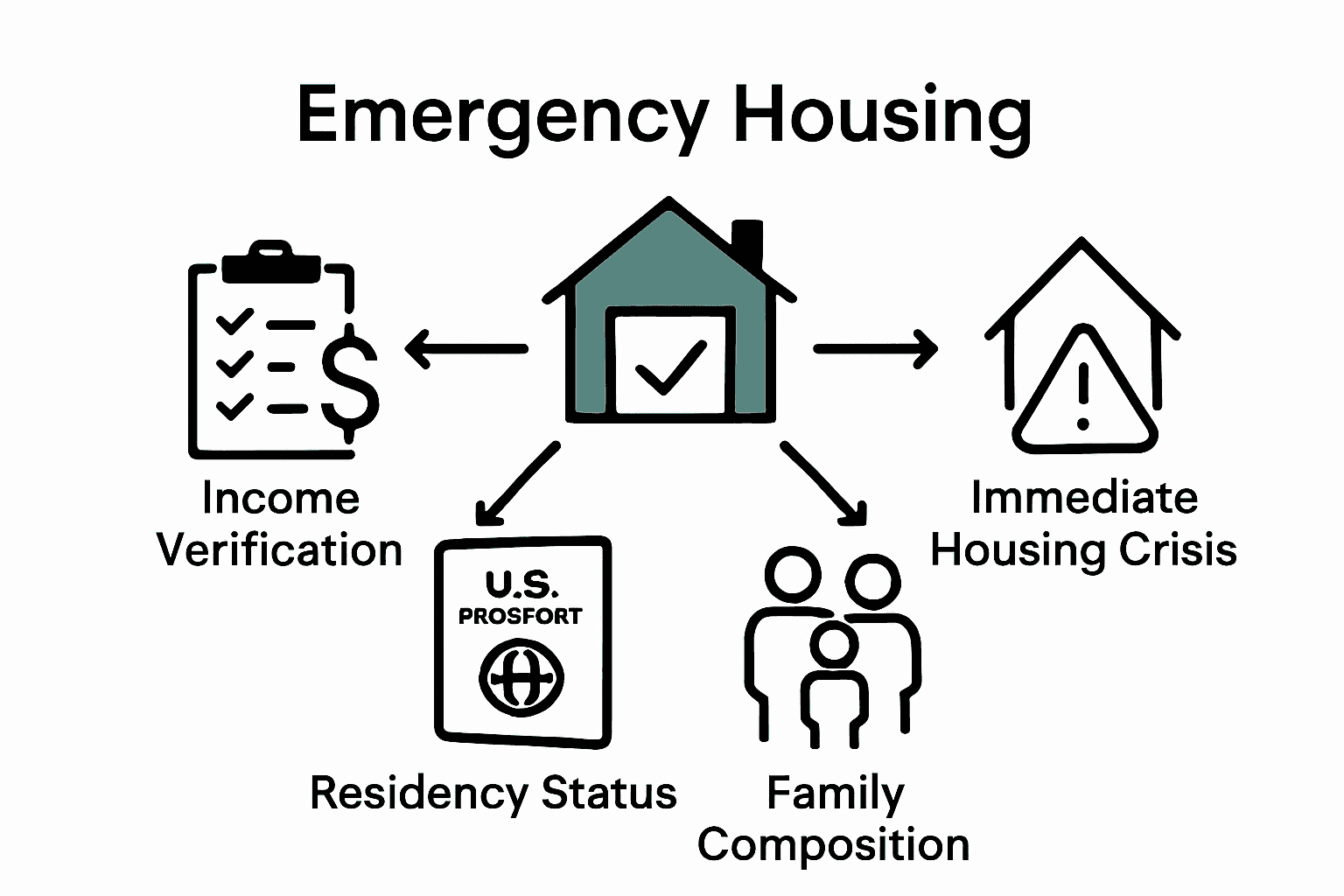
Core Eligibility Criteria typically encompass several critical dimensions:
- Income Verification: Demonstrating financial hardship below specific federal or local thresholds
- Residency Status: Proof of legal residency or citizenship in the United States
- Immediate Housing Crisis: Documentation showing current displacement or imminent housing loss
- Family Composition: Special considerations for families with children, seniors, or individuals with disabilities
- Disaster Impact: Additional support for those affected by natural disasters or emergency events
Navigation of these intricate legal requirements can feel overwhelming, which is why understanding the nuanced landscape of emergency housing eligibility is crucial.
 Explore our comprehensive guide to understanding housing eligibility requirements to help you confidently determine your qualifications and access the support you need during challenging times.
Financial Responsibilities and Cost Considerations
Emergency housing assistance involves complex financial arrangements designed to minimize the economic burden on displaced individuals while providing critical support. Financial Matters Foundation highlights that these programs typically incorporate multiple financial support mechanisms beyond just temporary shelter.
Key Financial Support Components include:
- Short-Term Rental Assistance: Temporary financial support to cover housing costs
- Case Management Services: Free professional guidance to help stabilize financial situations
- Transitional Support: Resources to help individuals move toward permanent housing solutions
- Minimal to No-Cost Options: Many emergency housing programs designed to minimize direct expenses for recipients
- Flexible Payment Structures: Sliding scale fees based on individual income and ability to pay
Understanding the financial landscape of emergency housing can be challenging, which is why proper guidance is crucial. Navigate the complexities of emergency housing finances with our comprehensive guide to help you make informed decisions during difficult times. The goal is to provide financial relief and a pathway to stability, ensuring that temporary housing challenges don’t become long-term economic burdens.
Find Immediate Support With Trusted Emergency Housing Assistance
Experiencing a sudden loss of home due to disaster or crisis can leave you feeling overwhelmed and uncertain about the next steps. This guide highlights the urgent need for safe and reliable emergency housing solutions that offer more than just shelter. You deserve a compassionate partner who understands the challenges of quick placement, eligibility complexities, and financial barriers explained in the article.
At DisasterVictimServices.com, we specialize in connecting you with emergency housing resources swiftly and efficiently. Our team works closely with government agencies, insurance carriers, and first responders to ease your burden. Explore insights and tools on our Uncategorized resource page to better understand your options. For those rebuilding after immediate shelter, our Renovation support category offers guidance on the path to permanent recovery.
Don’t face this critical moment alone. Reach out now at DisasterVictimServices.com to access urgent emergency housing support and take confident steps toward stability and restoration.
Frequently Asked Questions
What are emergency housing solutions?
Emergency housing solutions are temporary shelter options provided to individuals and families displaced from their homes due to disasters, financial hardships, or unforeseen circumstances. They aim to offer safety, stability, and access to essential services during challenging transitions.
How does the emergency housing placement process work?
The emergency housing placement process typically involves contacting local social services via the 211 helpline, undergoing an assessment of housing needs, being matched with available shelter options, and receiving coordination for transportation and immediate shelter accommodation.
What types of emergency housing types are available?
There are several types of emergency housing, including congregate shelters (shared spaces), non-congregate shelters (private/semi-private rooms), transitional housing (medium-term solutions with support services), and rapid rehousing programs that aim for quick placement into stable housing.
What are the eligibility criteria for accessing emergency housing assistance?
Eligibility for emergency housing assistance usually includes income verification to demonstrate financial hardship, residency status, documentation of an immediate housing crisis, and special considerations for families with children or individuals with disabilities.
Recommended
- How Emergency Shelter Works: Complete Guide – Disaster Victim Services | Helping You Recover After Disaster
- Understanding the Emergency Housing Process for Families – Disaster Victim Services | Helping You Recover After Disaster
- Step by Step Shelter Placement Guide for Fast Relief – Disaster Victim Services | Helping You Recover After Disaster
- 7 Types of Emergency Shelter You Need to Know – Disaster Victim Services | Helping You Recover After Disaster
- Understanding Housing Executive Temporary Accommodation – Guestly Homes