
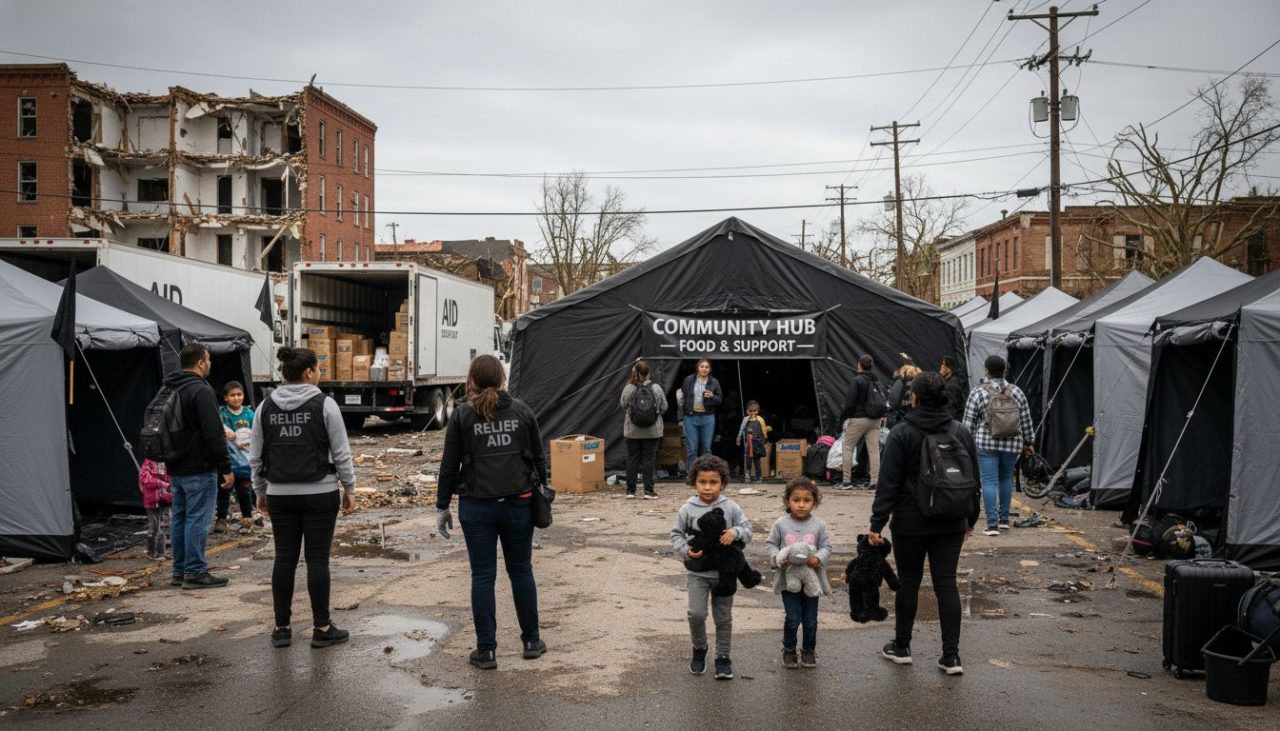
After a disaster strikes, millions of people are left without a safe place to call home. For families forced to flee, the urgent need for shelter becomes their biggest worry. In fact, nearly 90 percent of displaced people rely on temporary shelter within days of an emergency. Understanding what these shelters really provide goes far beyond four walls. This article sheds light on why temporary shelter is a vital first step in recovery and what makes it absolutely essential in times of crisis.
Table of Contents
- Defining Temporary Shelter In Disaster Response
- Major Types Of Temporary Shelter Solutions
- Key Benefits For Disaster Victims And Families
- Safety, Health, And Legal Considerations
- Cost, Insurance, And Financial Implications
- Temporary Shelter Vs. Long-Term Housing Options
Key Takeaways
| Point | Details |
|---|---|
| Holistic Role of Temporary Shelter | Temporary shelters provide safety, emotional comfort, and support for recovery, going beyond mere physical protection. |
| Diverse Shelter Solutions | Various types of temporary shelters are available, tailored to specific needs, deployment speeds, and durability for effective disaster response. |
| Importance of Safety and Health | Temporary shelter design must prioritize structural integrity and health protection while considering cultural appropriateness and privacy. |
| Transition to Long-Term Housing | The shift from temporary shelters to permanent housing involves complex psychological and logistical challenges requiring robust support systems. |
Defining Temporary Shelter in Disaster Response
Temporary shelter represents far more than just a physical structure during a disaster – it’s a critical lifeline that provides safety, protection, and hope for individuals and families experiencing devastating displacement. According to the International Federation of Red Cross and Red Crescent Societies, shelter is a comprehensive process that transcends merely constructing immediate housing, focusing instead on enabling communities to progressively improve their living environments and enhance long-term resilience.
At its core, a temporary shelter serves multiple essential functions beyond basic physical protection. The United Nations High Commissioner for Refugees defines it as a habitable covered living space designed to offer much more than just four walls and a roof. These critical spaces provide:
- Secure and healthy living environments
- Privacy and personal dignity
- Protection from harsh environmental conditions
- Space for storing personal belongings
- Emotional and psychological comfort during traumatic times
Understanding temporary shelter’s nuanced role is crucial. It’s not just about immediate survival but about creating a transitional space that supports physical safety and emotional recovery. These shelters act as a bridge between crisis and reconstruction, offering displaced individuals a sense of stability and hope during incredibly challenging circumstances. By recognizing temporary shelter as a holistic support system rather than a mere physical structure, we can better appreciate its profound importance in disaster recovery efforts.
For those seeking more comprehensive insights into emergency shelter options, check out our guide on types of emergency shelter, which explores the diverse solutions available to disaster victims.
Major Types of Temporary Shelter Solutions
Temporary shelter solutions are not one-size-fits-all, but rather a diverse range of options carefully designed to meet varying disaster response needs. According to United Nations High Commissioner for Refugees, emergency shelter solutions encompass multiple approaches tailored to specific environmental and situational challenges.
The primary temporary shelter types include:
Here’s a comparison of the main types of temporary shelter solutions:
| Shelter Type | Deployment Speed | Durability | Typical Use Case |
|---|---|---|---|
| Family Tents | Very Fast | Low | Immediate protection post-disaster |
| Plastic Sheeting Shelters | Fast | Very Low | Emergency, short-term use |
| Transitional Shelters | Moderate | Moderate to High |
Medium-term housing |
| Prefabricated Housing | Fast | High | Rapid, modular living solution |
| Community Centers | Varies (Slower) |
High | Large-scale group accommodation |
- Family Tents: Lightweight, quick-to-deploy structures providing immediate protection
- Plastic Sheeting Shelters: Affordable and versatile emergency solutions
- Transitional Shelters: More durable structures designed for medium-term housing
- Prefabricated Housing Units: Rapidly constructed modular living spaces
- Community Shelter Centers: Large-scale facilities supporting multiple displaced families
Organizations like ShelterBox have developed specialized transitional shelters utilizing robust materials such as timber, cement, and corrugated iron. These shelters are not just temporary structures, but carefully engineered solutions that provide extended protection while supporting community rebuilding efforts. By offering training alongside shelter construction, these organizations ensure communities can maintain and adapt their living spaces.
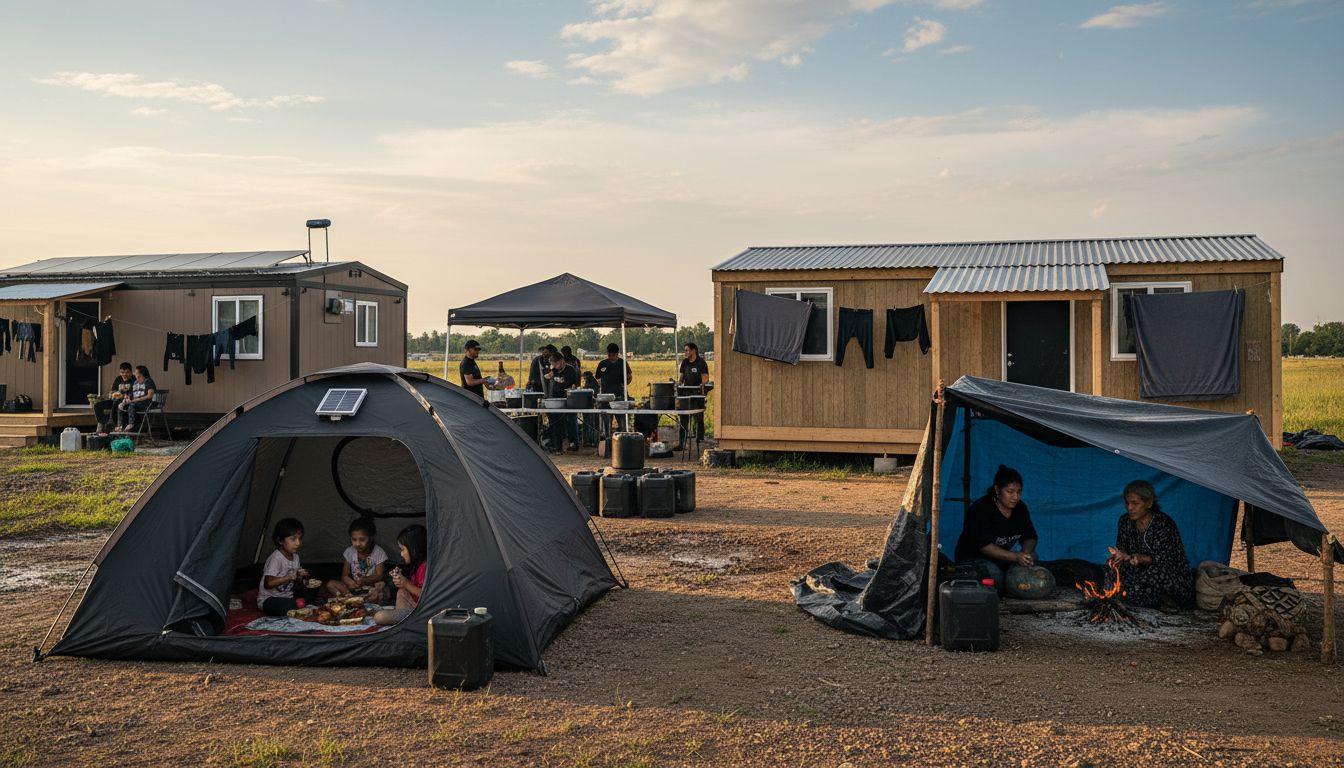
Understanding the nuanced requirements of different disaster scenarios is crucial in selecting appropriate shelter solutions. Factors like local climate, available resources, cultural preferences, and potential duration of displacement all play significant roles in determining the most suitable temporary housing approach. For more detailed insights into navigating these complex selection processes, explore our guide on disaster shelter selection, which provides comprehensive strategies for relief organizations and disaster response teams.
Key Benefits for Disaster Victims and Families
Temporary shelter goes far beyond mere physical protection – it represents a critical lifeline of hope and recovery for families devastated by disaster. According to research from Redalyc, these shelters are fundamental to human survival, directly contributing to essential human needs in the aftermath of catastrophic events.
The key benefits of temporary shelter for disaster victims include:
- Immediate Physical Safety: Protection from environmental hazards and dangerous conditions
- Psychological Security: A sense of stability during traumatic times
- Preservation of Human Dignity: Private spaces that maintain personal respect
- Basic Survival Support: Access to critical resources like water, food storage, and rest
- Community Reconnection: Spaces that allow families to stay together and support each other
Moreover, temporary shelters serve as crucial transition points in the disaster recovery journey. They provide more than just a roof – they offer a psychological anchor, helping families process trauma and begin rebuilding their lives.
The emotional comfort of having a safe, secure space cannot be overstated, especially for children and vulnerable populations who have experienced significant disruption.
Navigating the complex emotional and practical challenges of displacement is never easy. For families seeking comprehensive support during these challenging times, our guide on disaster victim support offers critical insights and practical strategies to help you move forward with resilience and hope.
Safety, Health, and Legal Considerations
Temporary shelter solutions require meticulous planning and strategic design to ensure the comprehensive protection of disaster victims. According to United Nations High Commissioner for Refugees, multiple critical criteria must be carefully evaluated when developing emergency shelter solutions, including hazard risks, construction speed, privacy, cultural appropriateness, and compliance with building standards.
Key safety considerations for temporary shelters encompass:
- Structural Integrity: Ensuring robust construction that withstands environmental challenges
- Risk Mitigation: Implementing defensive design strategies to minimize potential hazards
- Health Protection: Creating environments that prevent disease transmission
- Privacy Preservation: Designing spaces that maintain human dignity
- Accessibility: Accommodating vulnerable populations with specialized needs
The Wilson Center emphasizes advanced risk reduction techniques such as establishing strong structural connections, installing elevated foundations, and creating defensible spaces around shelter installations. These strategies go beyond basic protection, focusing on creating resilient environments that support long-term recovery and community resilience.
Navigation of the complex legal landscape surrounding temporary shelter requires careful understanding of local regulations and victim rights. For professionals seeking comprehensive guidance on conducting thorough safety assessments, our guide on safety assessment protocols provides detailed strategies for ensuring comprehensive protection during disaster response efforts.
Cost, Insurance, and Financial Implications
Temporary shelter solutions represent a complex financial landscape that extends far beyond initial housing costs. According to FEMA, understanding the multifaceted economic considerations of emergency sheltering is crucial for effective disaster response and recovery planning.
Key financial aspects of temporary shelter include:
- Direct Shelter Costs: Expenses for construction, materials, and deployment
- Operational Expenses: Ongoing maintenance and support infrastructure
- Insurance Coverage: Potential reimbursement and liability considerations
- Government Assistance: Potential funding sources and support programs
- Long-Term Economic Impact: Community-wide financial implications of sheltering solutions
Research from ERIC highlights the critical importance of understanding diverse funding sources and economic mechanisms that support emergency shelter initiatives. These financial strategies are not just about immediate costs, but about creating sustainable solutions that minimize economic strain on disaster-affected communities and government agencies.
Navigating the complex financial terrain of temporary shelter requires strategic planning and comprehensive understanding. For disaster victims and relief organizations seeking detailed guidance on managing these financial challenges, our guide on accessing support for disaster recovery offers critical insights into financial resources and strategic planning.
Temporary Shelter vs. Long-Term Housing Options
Navigating the complex transition from emergency shelter to permanent housing requires a nuanced understanding of the unique challenges and opportunities facing disaster victims. University of Colorado Boulder highlights the critical research need in understanding how communities can effectively bridge the gap between immediate response and long-term recovery.
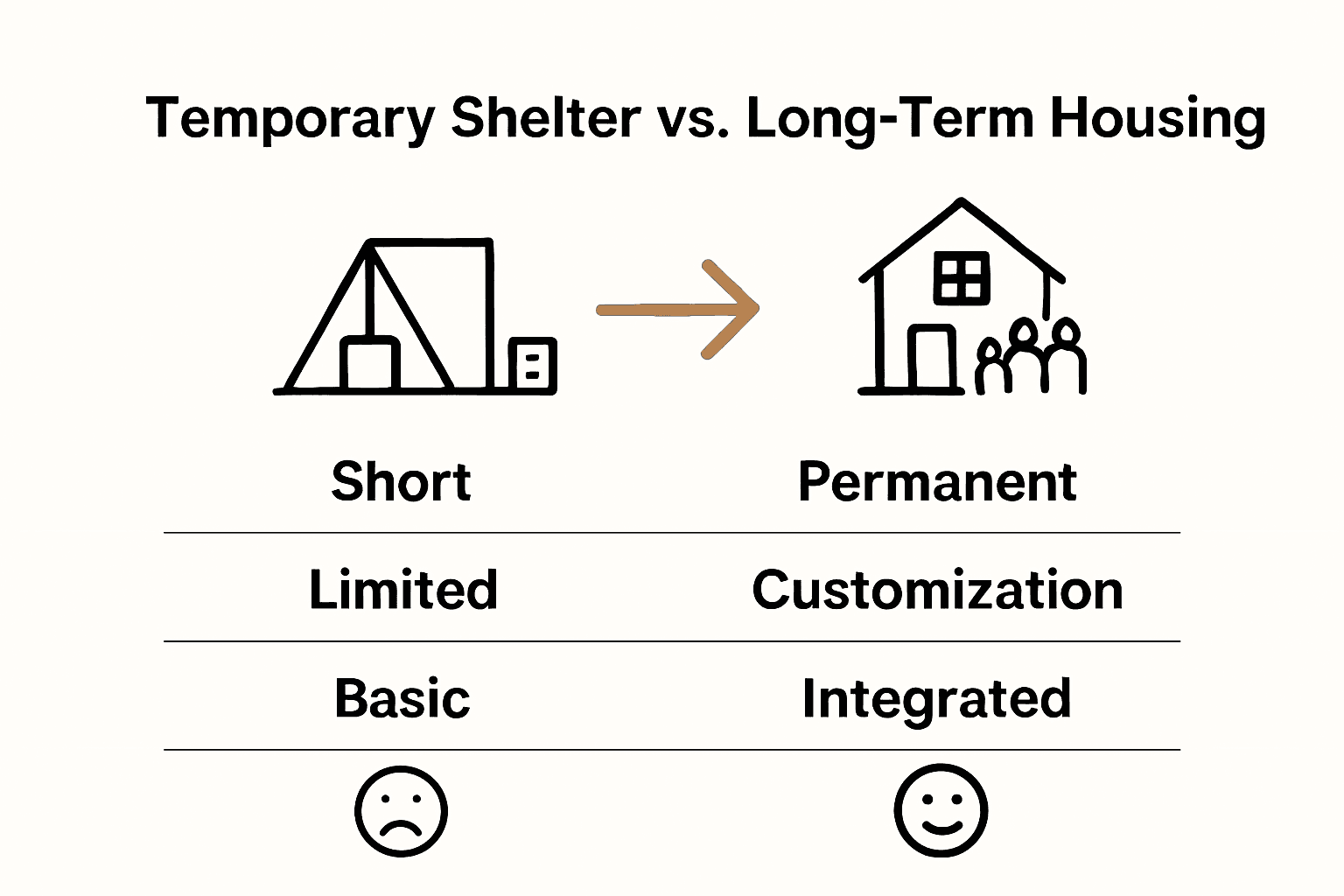
Key differences between temporary shelter and long-term housing include:
- Duration: Short-term emergency solutions vs. permanent residential structures
- Customization: Limited personalization in temporary shelters vs. tailored long-term housing
- Infrastructure: Basic essential support vs. comprehensive community integration
- Cost: Immediate emergency funding vs. sustained financial investment
- Psychological Impact: Transitional psychological state vs. sense of stability and belonging
The transition from temporary shelter to permanent housing is not merely a physical move, but a complex psychological and logistical journey.
 Disaster victims must navigate multiple challenges, including financial constraints, emotional recovery, and practical considerations of rebuilding their lives. This process requires comprehensive support systems that address both immediate survival needs and long-term community resilience.
For disaster victims seeking guidance on navigating this critical transition, our guide on emergency housing solutions provides comprehensive strategies and insights to help you move confidently from temporary shelter to stable, sustainable housing.
Find the Right Temporary Shelter Support When Disaster Strikes
Disasters force families into sudden displacement and urgent need for safe, dignified shelter. This article highlights how temporary shelters provide crucial physical safety and emotional stability during these challenging times. If you or your loved ones face this difficult transition, you are not alone. Understanding the importance of swift, reliable emergency housing is essential to regaining control and starting recovery.
At DisasterVictimServices.com, we specialize in connecting disaster victims with immediate temporary housing solutions. Our team works closely with insurance carriers, government agencies, and first responders to streamline your access to shelter and support. Learn more about how we support rebuilding efforts and emergency response in our Developing category.
Don’t wait until uncertainty grows. Visit DisasterVictimServices.com now to access compassionate, expert guidance tailored to your unique needs. Explore resources in our Uncategorized section as you begin your path to safety and recovery.
Frequently Asked Questions
What is temporary shelter in disaster response?
Temporary shelter is a habitable covered living space that provides safety, protection, and psychological comfort for individuals and families displaced by disasters. It goes beyond physical structures to support emotional recovery and community resilience.
What are the different types of temporary shelter solutions?
Types of temporary shelters include family tents, plastic sheeting shelters, transitional shelters, prefabricated housing units, and community center shelters. Each type varies in deployment speed, durability, and typical use case to meet diverse disaster response needs.
What are the key benefits of temporary shelter for disaster victims?
Temporary shelters provide immediate physical safety, psychological security, preservation of dignity, access to basic survival resources, and support for community reconnection, serving as critical lifelines during recovery.
What safety considerations are essential for temporary shelters?
Safety considerations for temporary shelters include ensuring structural integrity, mitigating risk, protecting health, preserving privacy, and providing accessibility for vulnerable populations to ensure comprehensive protection during disasters.
Recommended
- 7 Types of Emergency Shelter You Need to Know – Disaster Victim Services | Helping You Recover After Disaster
- Understanding Disaster Shelter Selection Guide: Key Insights – Disaster Victim Services | Helping You Recover After Disaster
- How Emergency Shelter Works: Complete Guide – Disaster Victim Services | Helping You Recover After Disaster
- Shelter Transition: Everything You Need to Know – Disaster Victim Services | Helping You Recover After Disaster