

Every minute counts when disaster strikes, yet limited resources can make those minutes feel even shorter. In mass emergencies, over 60 percent of victims require triage within the first hour to have the best chance of survival. Understanding how disaster triage works empowers responders and communities to save more lives, even under the most chaotic circumstances. This guide breaks down the principles, categories, and tough decisions involved in triage, making a complex process clear and actionable.
Table of Contents
- Defining Disaster Triage and Its Core Principles
- Triage Categories and Tagging Systems Explained
- Step-By-Step Disaster Triage Procedures
- Key Roles and Protocols in Triage Response
- Risks, Common Pitfalls, and Legal Safeguards
Key Takeaways
| Point | Details |
|---|---|
| Core Principles of Triage | Disaster triage focuses on quickly evaluating and prioritizing victims using systematic protocols to ensure optimal use of limited medical resources. |
| Color-Coded Tagging System | The standardized color-coded tags (Red, Yellow, Green, Black) enable rapid categorization of patients based on the severity of injuries and urgency for treatment. |
| Key Roles in Triage | Effective triage requires a coordinated effort with designated roles such as Triage Officer, Medical Director, and Incident Commander for structured decision-making. |
| Ethical Challenges | Triage presents ethical dilemmas, including emotional burdens and potential biases, necessitating adherence to established criteria for fairness in resource allocation. |
Defining Disaster Triage and Its Core Principles
Disaster triage is a systematic process designed to quickly evaluate and prioritize victims during emergencies, ensuring that limited medical resources are allocated most effectively. According to a systematic review from PubMed, the core principles of disaster triage revolve around rapid classification and prioritization of injured individuals with an emphasis on speed and accuracy.
At its fundamental level, disaster triage involves sorting patients into categories based on the severity of their injuries and immediate medical needs. These categories typically include critically urgent cases requiring immediate intervention, patients who can safely wait for treatment, and those with injuries so severe that survival is unlikely. The goal is not to provide perfect care for everyone simultaneously, but to save the maximum number of lives possible under constrained circumstances.
The key principles guiding disaster triage include:
- Rapid Assessment: Quick evaluation of each victim’s condition
- Resource Optimization: Allocating medical attention where it can be most effective
Emergency responders use standardized protocols like the START (Simple Triage and Rapid Treatment) method to make these critical decisions. Learn more about emergency response coordination with our guide on how to coordinate response in disasters. These protocols help transform chaotic disaster scenes into structured environments where life-saving decisions can be made efficiently and systematically.
Triage Categories and Tagging Systems Explained
In disaster response, triage tagging systems play a critical role in quickly categorizing and prioritizing medical needs. According to the American College of Emergency Physicians, the World Medical Association recommends a standardized color-coded approach to rapidly assess and manage patient care during emergencies.
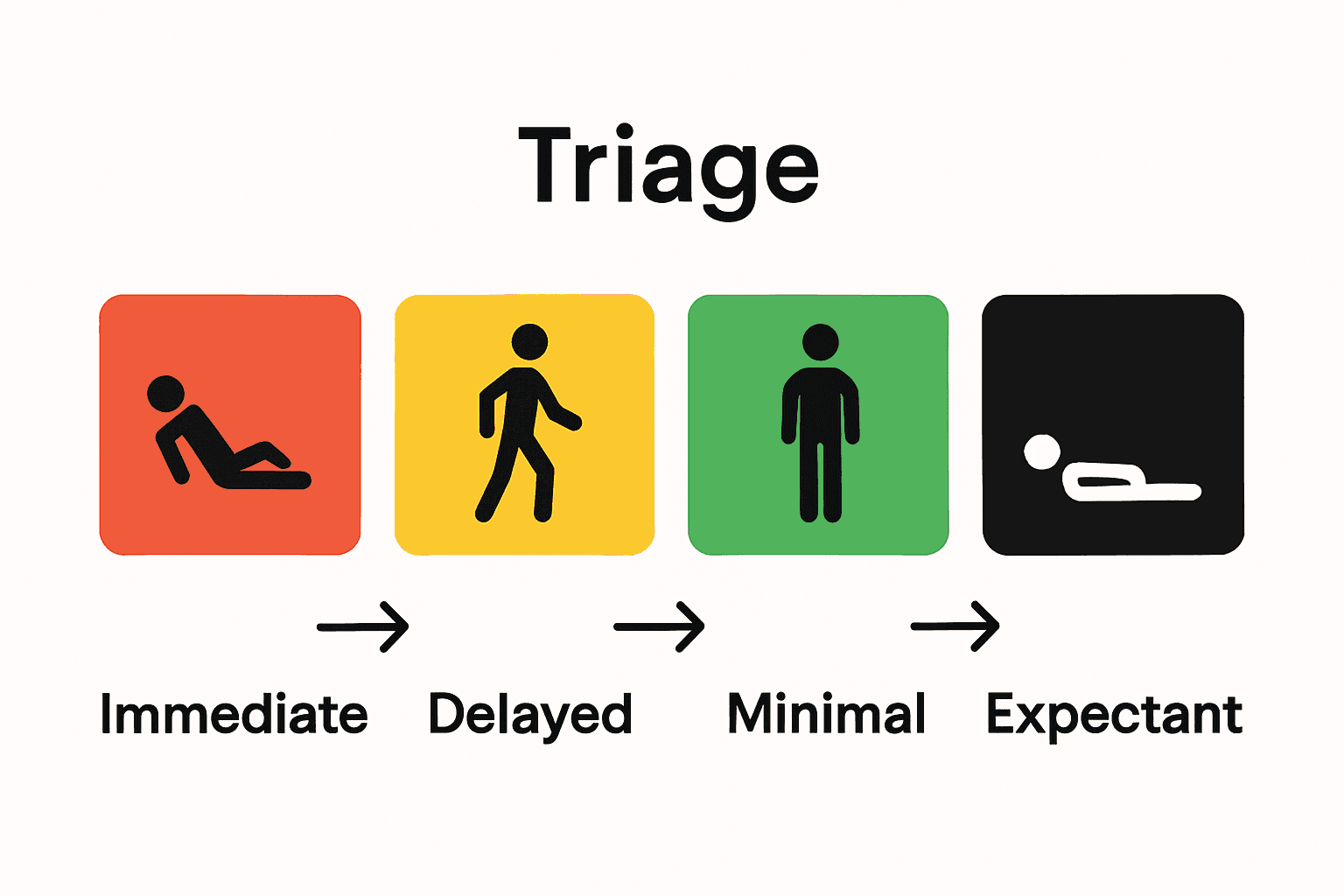
The standard triage categorization typically includes four primary color-coded tags:
- Red Tag (Immediate): Critically injured patients requiring urgent medical intervention
- Yellow Tag (Delayed): Patients with serious but not immediately life-threatening injuries
- Green Tag (Minimal): Walking wounded with minor injuries who can self-treat or wait
- Black Tag (Expectant): Patients with such severe injuries that survival is unlikely
As outlined in the Journal of Medical Ethics, these categories represent more than simple medical classifications—they embody difficult ethical decisions about resource allocation and potential survival. Learn more about trauma-informed care approaches with our guide on understanding the 4 R’s framework, which provides additional context for supporting victims through challenging medical triage scenarios.
Emergency responders use these tagging systems to make rapid, systematic assessments in chaotic environments. By quickly identifying and marking patients, medical teams can efficiently channel limited resources to where they can save the most lives, transforming potentially overwhelming disaster scenes into structured, strategic medical response zones.
Step-By-Step Disaster Triage Procedures
Disaster triage requires a systematic, rapid approach to assess and prioritize medical needs in chaotic emergency situations. According to CIDRAP, establishing a structured four-tier color-coded triage process is crucial for effective emergency response.
The standard disaster triage procedure involves several critical steps:
- Establish a Triage Area: Create a designated, safe zone for initial patient assessment
- Initial Rapid Assessment: Quickly evaluate patients’ conditions using the START method
- Color Tagging: Assign appropriate color tags based on injury severity
- Resource Allocation: Direct patients to treatment areas matching their tag color
Key Assessment Techniques
Emergency responders employ specific techniques to rapidly categorize patients. The primary assessment focuses on four critical indicators:
- Ability to walk
- Respiratory rate
- Perfusion (circulation)
- Mental status
Learn more about comprehensive emergency response with our step-by-step emergency response guide, which provides additional context for managing complex disaster scenarios. By following these systematic procedures, medical teams can make swift, life-saving decisions in high-pressure environments, ensuring that limited resources are used most effectively to save the maximum number of lives possible.
Key Roles and Protocols in Triage Response
Effective disaster triage demands a coordinated approach with clear roles and precise protocols. According to CIDRAP, the fundamental guiding theory is to accomplish the best for the most using the least available resources.
Primary Roles in Disaster Triage
The core team responsible for triage typically includes:
- Triage Officer: Leads initial patient assessment and categorization
- Medical Director: Oversees overall triage strategy and resource allocation
- Incident Commander: Coordinates communication between different response teams
- Field Medics: Perform immediate patient evaluations and provide critical care
Each team member has specialized responsibilities that contribute to a systematic and efficient response. The triage officer serves as the critical decision-maker, rapidly evaluating patients and assigning color tags that determine their treatment priority.
Learn more about first responder roles with our comprehensive guide on key duties in emergency situations, which provides deeper insights into the complex dynamics of emergency response. Successful disaster triage hinges on clear communication, quick decision-making, and a disciplined approach to managing limited medical resources during high-stress scenarios.

Risks, Common Pitfalls, and Legal Safeguards
Disaster triage presents complex ethical and legal challenges that demand careful navigation. According to the American College of Emergency Physicians, making decisions under resource constraints requires adherence to established criteria to ensure fairness and effectiveness.
Critical Ethical Challenges
The most significant risks in disaster triage include:
- Emotional Burden: Psychological stress of making life-and-death decisions
- Potential Bias: Unconscious discrimination in patient prioritization
- Resource Limitations: Insufficient medical supplies or personnel
- Communication Breakdowns: Miscommunication leading to treatment errors
As outlined in the Journal of Medical Ethics, one of the most emotionally challenging aspects involves categorizing patients as ‘expectant’ – a decision that requires immense emotional resilience from medical professionals.
Learn more about comprehensive risk assessment strategies with our guide on understanding risk assessment guidelines, which provides additional insights into managing complex emergency scenarios. Legal safeguards are critical, requiring medical teams to document decisions transparently, follow established protocols, and prioritize patient care while maintaining ethical integrity.
Navigate Disaster Triage with Confidence and Compassion
Understanding the disaster triage process is crucial when seconds count and lives hang in the balance. This guide highlights the core challenge faced by responders: making rapid, ethical decisions to prioritize care under extreme pressure using methods like color-coded tagging and the START protocol. For victims and families caught in these upheavals, having trusted support to help navigate every step after initial triage is essential.
At DisasterVictimServices.com, we recognize the emotional burden and urgency that come with disaster response situations. Our dedicated team specializes in immediate emergency housing solutions and coordinated recovery efforts to relieve the stress that follows triage decisions. With our collaborative approach working alongside first responders, insurance carriers, and government agencies, we streamline the path from crisis to rebuilding.
Discover how our services complement critical medical response by offering compassionate, expert guidance that helps you move forward with stability. Check out our Uncategorized resources for broad support insights or explore our Project Design solutions tailored to disaster recovery logistics. When you need assured help and clear answers immediately, visit DisasterVictimServices.com right now and take the first step toward reclaiming your life.
Frequently Asked Questions
What is disaster triage?
Disaster triage is a systematic process used to evaluate and prioritize victims during emergencies, allowing for effective allocation of limited medical resources based on the severity of injuries and immediate medical needs.
What are the main triage categories used in disaster response?
The main triage categories typically include: Red Tag (Immediate), Yellow Tag (Delayed), Green Tag (Minimal), and Black Tag (Expectant), each indicating the severity of the patient’s condition and the urgency of required treatment.
How do emergency responders assess injury severity in disaster situations?
Emergency responders primarily use standardized protocols like the START method, focusing on indicators such as the ability to walk, respiratory rate, perfusion, and mental status to make rapid assessments of patients’ conditions.
What roles are essential in the disaster triage process?
Key roles in the disaster triage process include the Triage Officer, who leads initial assessments; the Medical Director, who oversees triage strategy; the Incident Commander, who coordinates communications; and Field Medics, who perform immediate evaluations and care.
Recommended
- Disaster Recovery Coordination Steps for Effective Relief – Disaster Victim Services | Helping You Recover After Disaster
- Step by Step Adjuster Response for Disaster Recovery – Disaster Victim Services | Helping You Recover After Disaster
- Disaster Recovery Process Steps: A Complete Guide 2025 – Disaster Victim Services | Helping You Recover After Disaster
- Step by Step Emergency Response Guide for Disaster Relief – Disaster Victim Services | Helping You Recover After Disaster