
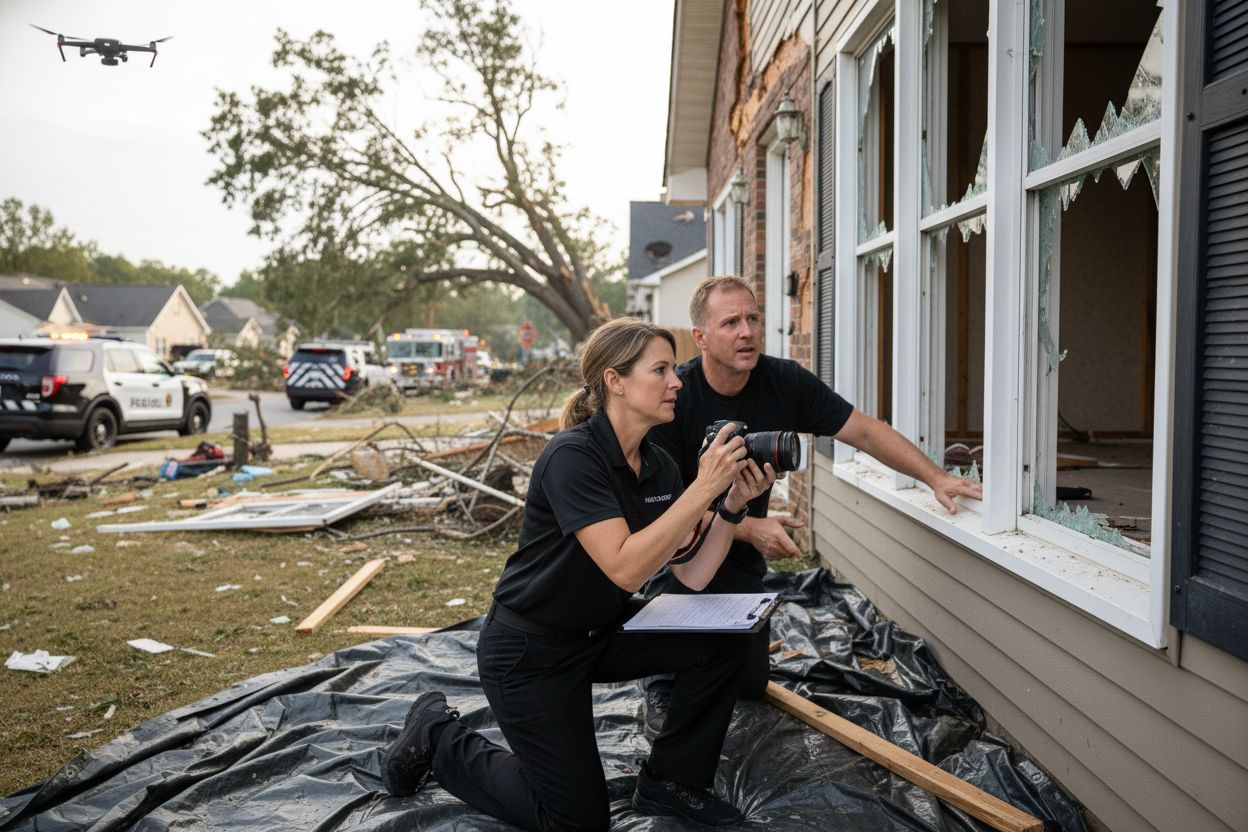
Disasters can reshape entire communities within hours, and insurance adjusters are often the first step toward rebuilding what was lost. Over 90 percent of insurance claims after natural disasters depend on the accuracy and speed of initial assessments, yet many people fixate on paperwork or technical details. What most do not expect is that the single greatest impact on recovery has nothing to do with forms or equipment. It all starts with how you gather and communicate the story from day one.
Table of Contents
- Step 1: Gather Essential Information About The Disaster
- Step 2: Assess The Damage And Document Findings
- Step 3: Communicate Effectively With All Stakeholders
- Step 4: Process Claims And Evaluate Coverage Options
- Step 5: Finalize Reports And Ensure Follow-Up Actions
Quick Summary
| Key Point | Explanation |
|---|---|
| 1. Gather comprehensive disaster information | Begin by collecting detailed narratives and documents from stakeholders to inform recovery processes. |
| 2. Conduct thorough damage assessments | Use professional tools to systematically document all types of damage for effective claims and recovery. |
| 3. Establish clear communication with stakeholders | Ensure transparent and empathetic communication with all involved parties to build trust and facilitate recovery. |
| 4. Process claims with detailed policy analysis | Carefully review insurance policies to determine coverage and ensure all necessary documentation is included. |
| 5. Create comprehensive final reports | Compile all findings, recommendations, and resources into a cohesive report to support disaster victims in their recovery journey. |
Step 1: Gather essential information about the disaster
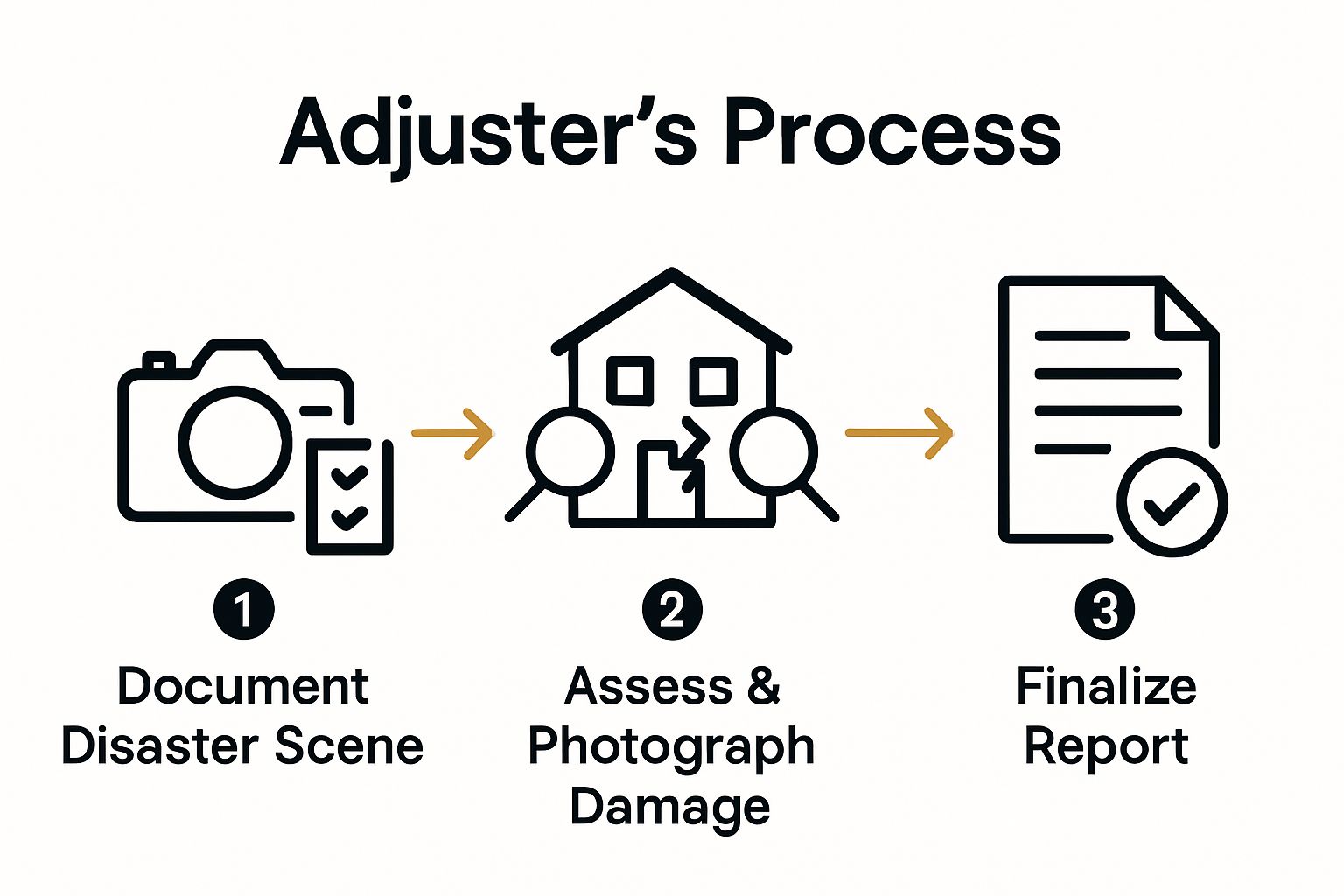
When disaster strikes, the first critical step for an insurance adjuster is gathering comprehensive information that forms the foundation of an effective recovery response. This initial phase determines how smoothly the entire claims and recovery process will unfold. Successful information gathering requires systematic documentation, strategic communication, and meticulous attention to detail.
Begin by establishing immediate contact with the primary stakeholders involved in the disaster scenario. This typically includes the disaster victims, local emergency management authorities, and initial first responders who were on the scene. Your primary objective is collecting a comprehensive narrative that captures the full scope of the incident. Document precise details about when and where the disaster occurred, the specific type of disaster (hurricane, flood, wildfire, etc.), and its immediate impact on the affected area.
Collect critical documentation that will support the claims process. Recommended essential documents include:
- Incident reports from local authorities
- Photographs documenting property damage
- Initial damage assessment reports
- Insurance policy information
- Proof of residence and ownership
Effective communication during this stage means asking targeted, open-ended questions that reveal nuanced insights about the disaster’s impact. Instead of simply requesting facts, encourage detailed narratives that help you understand the full context. Ask disaster victims to walk you through their experience chronologically, which often uncovers critical details that standard reporting might miss.
Technological tools can significantly enhance information gathering. Utilize digital platforms and mobile applications that allow immediate documentation and secure data transmission. Learn more about our disaster recovery support resources to streamline your initial information collection process.
Verify all collected information through multiple sources to ensure accuracy and reliability. Cross-reference reports from different agencies, conduct preliminary site assessments if possible, and maintain detailed records of all communications. The comprehensiveness of your initial information gathering will directly impact the efficiency and effectiveness of subsequent recovery steps.
Step 2: Assess the damage and document findings
After gathering initial information, the next critical phase in disaster recovery is conducting a thorough and systematic damage assessment. This step transforms the preliminary data collected into a comprehensive visual and documented record that will guide the entire claims and recovery process. Precision and meticulousness are paramount during this evaluation.
Prepare for your damage assessment by assembling a robust documentation toolkit. Professional grade equipment is essential for capturing accurate evidence. This includes high-resolution digital cameras with date and time stamping, measuring tools, moisture meters, thermal imaging cameras, and protective personal equipment. Smartphone technology can also provide supplementary documentation, but professional grade tools offer more detailed and legally admissible evidence.
Recommended assessment tools:
- High resolution digital camera with GPS tagging
- Laser measuring device
- Moisture detection equipment
- Thermal imaging camera
- Protective personal safety gear
- Detailed inspection checklist
When conducting the site assessment, systematically document every aspect of the damage. Start with structural integrity evaluations, examining foundations, walls, roofing, and critical infrastructure. Photograph each area from multiple angles, ensuring comprehensive visual documentation. Learn more about advanced field inspection techniques to enhance your assessment methodology.
According to damage assessment guidelines from professional disaster recovery experts, thorough documentation should include precise measurements, condition descriptions, and potential safety hazards. Note existing damage conditions, distinguishing between pre disaster and new damage. Pay special attention to areas prone to hidden damage like electrical systems, plumbing, and structural supports.
Verification of your assessment involves cross referencing physical observations with initial reports, victim statements, and photographic evidence.
Below is a summary table of recommended damage assessment tools and their primary purposes to help ensure a thorough site evaluation during disaster recovery.
| Tool or Equipment | Purpose |
|---|---|
| High resolution digital camera | Capture clear, timestamped images of damage |
| Laser measuring device | Take precise measurements of affected areas |
| Moisture detection equipment | Identify hidden or water-related damage |
| Thermal imaging camera | Detect heat loss, moisture, and structural issues |
| Protective personal safety gear | Ensure adjuster safety during inspections |
| Detailed inspection checklist | Maintain consistency and thorough documentation |
| Create a comprehensive report that includes detailed descriptions, measurements, photographic documentation, and preliminary damage cost estimations. This documentation serves as the critical foundation for insurance claims, reconstruction planning, and potential legal proceedings. |
Step 3: Communicate effectively with all stakeholders
Communication serves as the critical lifeline during disaster recovery, transforming complex challenges into coordinated solutions. An insurance adjuster must become a master communicator, bridging information gaps between multiple stakeholders while maintaining clarity, empathy, and professionalism. This step is about creating transparent, supportive communication channels that build trust and facilitate smooth recovery processes.
Establishing clear communication protocols means creating a structured approach that reaches every relevant party. Begin by developing a comprehensive contact matrix that includes disaster victims, insurance company representatives, local government officials, emergency responders, and potential reconstruction contractors. Each stakeholder requires a tailored communication strategy that addresses their specific informational needs and emotional state.
Key communication channels to utilize:
- Direct phone contact
- Secure email communication
- Official written documentation
- Virtual video conference platforms
- Dedicated disaster recovery communication portals
Effective communication goes beyond simply sharing information. It requires active listening and demonstrating genuine understanding of each stakeholder’s unique situation. For disaster victims, this means providing compassionate, clear explanations about the claims process, potential timelines, and available support resources. Use plain language, avoid technical jargon, and be prepared to repeat complex information multiple times.
Learn more about accessing comprehensive support during disaster recovery to enhance your communication strategies. According to emergency management communication guidelines, successful stakeholder engagement requires consistent, transparent, and empathetic messaging that addresses both practical and emotional needs.
Verify the effectiveness of your communication strategy by requesting confirmation of receipt, understanding, and next steps from each stakeholder group. Implement a tracking system that documents all communication attempts, responses, and follow-up actions. This documentation not only ensures comprehensive communication but also provides a legal and professional record of your disaster recovery efforts. Remember that excellent communication can transform a potentially stressful recovery experience into a supportive, collaborative journey towards restoration.
Step 4: Process claims and evaluate coverage options
Processing insurance claims and evaluating coverage options represent the critical financial resolution phase of disaster recovery. This step transforms documented damage assessments and communication efforts into tangible financial support for disaster victims. Adjusters must navigate complex policy details with precision, empathy, and a comprehensive understanding of insurance contract nuances.
Policy analysis begins with a meticulous review of the specific insurance documentation. Carefully examine the policy’s coverage limits, exclusions, and specific disaster-related provisions. Each insurance contract contains unique language that determines the extent of financial recovery possible. Pay special attention to clauses related to natural disasters, additional living expenses, and partial or total property replacement costs.
Key documentation requirements for claim processing:
- Original insurance policy documents
- Comprehensive damage assessment reports
- Photographic evidence of property damage
- Repair and replacement cost estimates
- Victim’s personal impact statement
Develop a systematic approach to claim evaluation that balances technical accuracy with compassionate understanding. Break down the claim into specific categories of damage, cross-referencing each with corresponding policy provisions. Calculate potential reimbursement amounts carefully, considering depreciation, current replacement costs, and policy-specific limitations. Explore our comprehensive guide on insurance claim verification to enhance your claim processing skills.
According to insurance claims processing guidelines, adjusters must maintain rigorous documentation throughout the evaluation process. Create a transparent, itemized breakdown of coverage determinations that clearly explains approved and denied claim components. This approach not only facilitates fair resolution but also builds trust with disaster victims who are navigating an emotionally challenging recovery journey.
Verification of the claim processing step involves a comprehensive review that confirms all documentation is complete, calculations are accurate, and policy interpretations are consistent. Prepare a detailed report that outlines coverage decisions, potential next steps, and available support resources. The goal is to provide clear, actionable financial guidance that supports the disaster victim’s path to recovery.

Step 5: Finalize reports and ensure follow-up actions
The final stage of disaster recovery requires comprehensive reporting and strategic follow-up actions that transition disaster victims from crisis management to long-term recovery. This critical step transforms all previous documentation, communication, and claims processing into a cohesive narrative that supports ongoing recovery efforts and provides clear pathways for future assistance.
Comprehensive reporting demands precision and empathy. Compile a detailed document that synthesizes all collected information, damage assessments, communication records, and claim processing outcomes. This report serves multiple purposes: legal documentation, insurance record, personal recovery blueprint, and potential resource allocation guide. Ensure each section is clear, factual, and written with sensitivity to the emotional challenges disaster victims are experiencing.
Essential report components:
- Comprehensive damage assessment summary
- Detailed claim processing outcomes
- Recommended next steps for recovery
- Contact information for support services
- Potential additional resource references
Follow-up actions extend beyond paperwork. Proactively connect disaster victims with local support networks, reconstruction resources, and emotional support services. Create a personalized follow-up timeline that outlines potential recovery milestones, anticipated challenges, and available assistance mechanisms. Discover more about comprehensive disaster recovery support to enhance your follow-up strategies.
According to government recovery protocol guidelines, effective follow-up includes continuous communication and tracking of recovery progress. Schedule multiple check-in points with disaster victims to monitor their recovery journey, reassess potential needs, and provide updated guidance. These interactions demonstrate ongoing commitment and help identify emerging challenges that might require additional intervention.
Verification of this final step involves creating a comprehensive closure document that confirms all recovery process components have been addressed.
Here is a checklist table summarizing verification steps adjusters should complete at each stage to ensure a reliable and comprehensive disaster recovery process.
| Recovery Step | Key Verification Actions |
|---|---|
| Gather Essential Information | Cross-check facts with multiple sources; keep detailed records |
| Assess Damage and Document Findings | Match photos and measurements with initial victim statements |
| Communicate with Stakeholders | Confirm receipt and understanding of all communications |
| Process Claims and Evaluate Coverage | Review all calculations and policy interpretations |
| Finalize Reports and Ensure Follow-Up | Create closure summary and verify resources provided |
| This document should include a clear summary of actions taken, resources provided, and potential future support options. The goal is to empower disaster victims with a sense of hope, direction, and tangible progress toward complete recovery. |
Move Forward Faster With Expert Disaster Recovery Support
Recovering from disaster is overwhelming, especially when you have to coordinate damage assessments, manage documentation, and communicate with multiple agencies. If you are struggling with complex claims or facing uncertainty about your next steps, you are not alone. Many disaster victims feel the same frustration outlined in our step-by-step adjuster response guide. You deserve a partner that understands the urgent need for prompt communication and precise documentation.
Let our team at Disaster Victim Services bridge the gap between you and critical recovery solutions. We work side by side with adjusters, insurance professionals, and contractors to ensure your transition from crisis to rebuilding is smooth and swift. Explore our latest solutions and emergency support by visiting our Uncategorized resource hub. For those facing repairs or reconstruction needs, see our Remodeling services that can accelerate your recovery. Take the next step and connect with professionals who will champion your restoration process today.
Frequently Asked Questions
What is the first step in the adjuster response for disaster recovery?
The first step is to gather essential information about the disaster. Establish contact with primary stakeholders and document details about when and where the disaster occurred, the type of disaster, and its immediate impact.
How can I effectively assess the damage during a disaster recovery?
To conduct a thorough damage assessment, use professional-grade equipment like high-resolution cameras and moisture meters. Carefully document every aspect of the damage with detailed photographs, measurements, and descriptions to create a comprehensive report.
What communication strategies should I employ when working with disaster victims?
Utilize a mix of communication channels such as direct phone calls, secure emails, and virtual meetings. Focus on listening actively and explaining the claims process in clear, compassionate terms to support disaster victims.
How do I process insurance claims after a disaster?
Begin by reviewing the insurance policy thoroughly, noting coverage limits and exclusions. Organize the claim components into categories, cross-referencing them with the damage assessments and providing detailed documentation to ensure accurate processing.
What key components should be included in the final recovery report?
The final recovery report should include a summary of the damage assessment, claim processing outcomes, and recommended next steps for recovery. Ensure it provides contact information for support services and any potential additional resources that may assist the disaster victims.
How can I ensure effective follow-up actions during the recovery process?
Develop a personalized follow-up timeline that outlines recovery milestones and available assistance mechanisms. Schedule regular check-ins to monitor progress and reassess needs, which will help to maintain open communication and address any emerging challenges.
Recommended
- Disaster Recovery Process Steps: A Complete Guide 2025 – Disaster Victim Services | Helping You Recover After Disaster
- How to Handle Disaster: A Step-by-Step Recovery Guide – Disaster Victim Services | Helping You Recover After Disaster
- Disaster Recovery Phases Explained for 2025: Guide for Victims, Pros & Agencies – Disaster Victim Services | Helping You Recover After Disaster
- How to Rebuild Safely: Essential Steps for Disaster Recovery 2025 – Disaster Victim Services | Helping You Recover After Disaster