
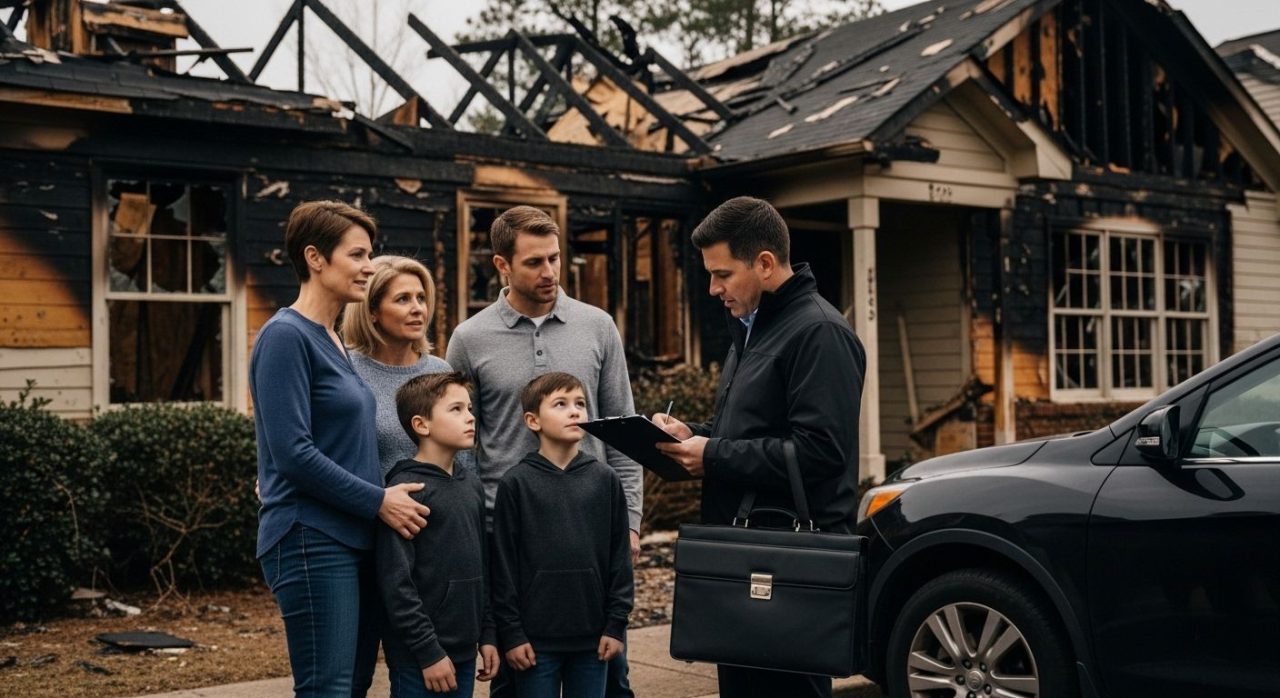
Insurance claims can feel overwhelming after a disaster strikes. Big loss, piles of paperwork, and deadlines that wait for no one. Yet most people are surprised to learn that claims with complete photographic evidence are approved up to 50 percent faster than those missing documentation. The real secret? It is not just about the amount of damage you suffered. It is whether you know how to prove every last detail—and that changes everything.
Table of Contents
- Understanding The Insurance Claim Verification Process
- Essential Documents Needed For Verification
- Step-By-Step Guide To Verifying Insurance Claims
- Best Practices For Faster And Accurate Claim Approval
Quick Summary
| Takeaway | Explanation |
|---|---|
| Thorough documentation is essential | Collect detailed photographic and video evidence of all damage immediately to support your claim. |
| Prepare for the adjuster’s visit | Organize relevant documents and have a comprehensive inventory ready to facilitate the verification process. |
| Timely communication is crucial | Notify your insurance provider right after discovering damage to ensure adherence to reporting timelines and maintain eligibility. |
| Navigating challenges requires patience | Be ready to provide extensive proof and clear answers to adjusters’ questions to address verification complexities effectively. |
| Seek professional assistance when necessary | Consider hiring experts if facing difficulties or significant property damage to optimize your claims experience. |
Understanding the Insurance Claim Verification Process
Disaster victims face a complex journey when navigating insurance claim verification, a critical process that determines financial recovery after catastrophic events. The insurance claim verification steps require meticulous attention, strategic documentation, and a comprehensive understanding of how insurers assess damage.
Initial Documentation and Evidence Gathering
The foundation of a successful insurance claim begins with thorough documentation. Experts from the Consumer Financial Protection Bureau recommend immediate and comprehensive evidence collection. Disaster victims must capture detailed photographic and video evidence of all property damage, creating a visual record that serves as crucial proof during the verification process.
Photographs should include wide establishing shots and close-up images highlighting specific damage points. These visual records must be time-stamped and capture the extent of destruction from multiple angles. Digital files should be backed up in multiple secure locations to prevent potential loss.
The Adjuster’s Role in Claim Verification
According to FEMA’s guidelines, the insurance adjuster plays a pivotal role in the claim verification process. These professional investigators will conduct an on-site assessment, carefully examining the reported damage and comparing it against the photographic evidence submitted by the claimant.
Adjusters follow a systematic approach to verify claims, which includes:
- Measuring and documenting structural damage
- Assessing the cause and extent of property destruction
- Estimating repair or replacement costs
- Determining coverage limits and potential exclusions
Preparing for the adjuster’s visit requires organization and transparency. Victims should compile all relevant documentation, including property records, previous maintenance receipts, and a comprehensive inventory of damaged items. This preparation can significantly expedite the verification process.
Navigating Complex Verification Challenges
Insurance claim verification is not a straightforward process. The Office for Victims of Crime emphasizes the importance of understanding eligibility criteria and meticulously documenting every aspect of the claim. Disaster victims must be prepared to provide extensive evidence and potentially answer detailed questions about the incident.
Common verification challenges include:
- Proving the precise cause of damage
- Demonstrating the full extent of property loss
- Substantiating repair or replacement costs
Successful navigation requires patience, detailed record-keeping, and clear communication with insurance representatives. Victims should maintain a comprehensive file of all interactions, including dates, names of representatives spoken with, and summaries of discussions.
Learn more about streamlining your recovery process with our expert field inspection guide.
The insurance claim verification process demands resilience, attention to detail, and a strategic approach. By understanding these critical steps, disaster victims can more effectively advocate for their rights and secure the financial support needed to rebuild and recover.
Essential Documents Needed for Verification
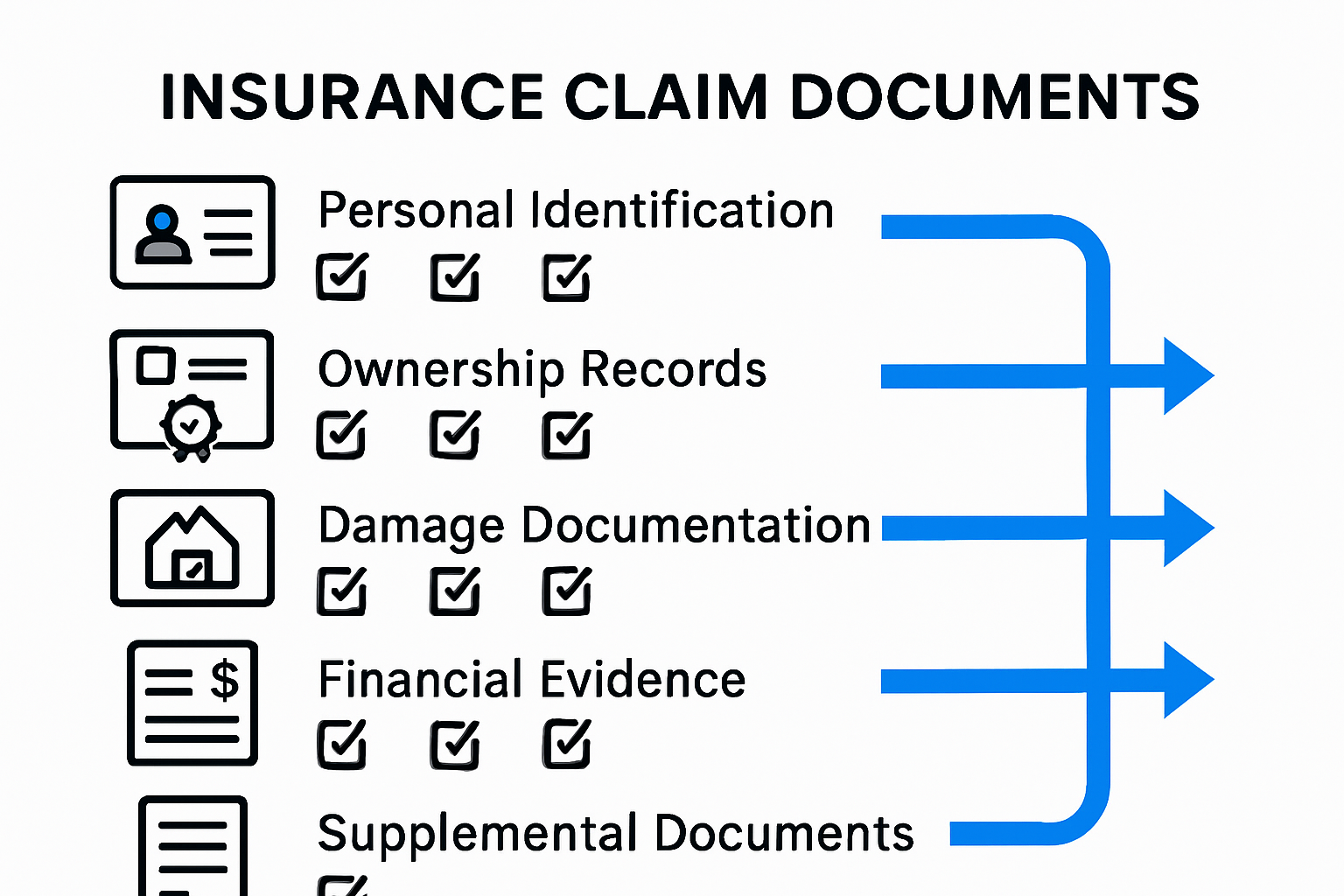
Navigation through insurance claim verification requires strategic preparation and comprehensive documentation. Disaster victims must assemble a robust portfolio of documents that substantiate their losses and support their claim with precision and clarity.
Personal Identification and Ownership Records
FEMA guidelines emphasize the critical importance of establishing personal identity and property ownership through official documentation. Essential personal identification documents include:
- Government issued photo identification
- Social Security card
- Birth certificate
- Proof of residency (utility bills, lease agreements, mortgage statements)
Property ownership documents play a pivotal role in claim verification. Victims should gather:
- Property deed
- Tax assessment records
- Property insurance policy
- Recent property appraisal documents
These documents serve multiple purposes beyond initial identification. They provide insurance adjusters with verifiable information about property value, ownership history, and potential pre-existing conditions that might impact claim assessment.
Damage Documentation and Financial Evidence
Detailed damage documentation forms the backbone of successful insurance claim verification. Experts recommend comprehensive evidence collection that goes beyond simple photographs. Critical financial and damage-related documents include:
- Comprehensive photographic and video evidence of damage
- Professional damage assessment reports
- Repair estimates from licensed contractors
- Inventory of damaged personal property with estimated replacement costs
- Receipts for emergency repairs and temporary housing
- Insurance policy details and previous claim history
Financial documentation helps substantiate the monetary impact of the disaster. Victims should maintain organized records of all expenses related to the incident, including temporary relocation costs, emergency repairs, and replacement of essential items.
Supporting Supplemental Documentation
Beyond primary identification and damage records, supplemental documentation can strengthen an insurance claim. Additional supporting documents might include:
- Police or fire department incident reports
- Weather service reports documenting natural disaster conditions
- Communication logs with insurance representatives
- Medical records demonstrating personal injury related to the incident
Explore our comprehensive guide on preparing critical documents for disaster relief.
Successful insurance claim verification requires meticulous attention to detail and proactive documentation. By assembling a comprehensive portfolio of evidence, disaster victims significantly enhance their ability to navigate the complex claims process and secure the financial support necessary for recovery.
Here is a table summarizing the essential document types required for insurance claim verification, organized by category for easy reference:
| Document Category | Examples |
|---|---|
| Personal Identification | Photo ID, Social Security card, Birth certificate, Proof of residency |
| Ownership Records | Property deed, Tax assessment, Insurance policy, Appraisal docs |
| Damage Documentation | Photos, Videos, Damage assessment reports |
| Financial/Repair Evidence | Repair estimates, Receipts, Inventory with replacement costs |
| Supplemental Documents | Police/Fire reports, Weather reports, Med/communication logs |
Step-by-Step Guide to Verifying Insurance Claims
Verifying insurance claims requires a methodical approach that demands precision, organization, and strategic documentation. Disaster victims must navigate a complex process that involves multiple critical steps to ensure their claim receives proper consideration and potential compensation.
Initial Claim Preparation and Notification
According to FEMA guidelines, the first crucial step in the insurance claim verification process is prompt notification to your insurance provider. Victims should contact their insurance agent immediately after discovering damage, providing initial details about the incident.
Key actions during initial preparation include:
- Documenting the exact date and time of damage
- Gathering contact information for all involved parties
- Preventing further property damage through temporary protective measures
- Keeping a detailed log of all communications with insurance representatives
Timely communication is critical. Insurance companies typically have specific timeframes for reporting damages, and delayed notification could potentially compromise claim eligibility.
Comprehensive Damage Documentation and Evidence Collection
VTLawHelp.org recommends a systematic approach to documenting property damage. Victims must create a comprehensive visual and written record that provides irrefutable evidence of the extent of destruction.
Essential documentation strategies include:
- Taking high-resolution photographs from multiple angles
- Recording video walkthroughs of damaged areas
- Creating a detailed inventory of damaged items
- Preserving damaged property for potential adjuster inspection
- Obtaining professional damage assessment reports
Professional documentation helps establish the scope of damage and supports the claim’s legitimacy. Detailed evidence reduces potential disputes and accelerates the verification process.
Navigating the Claims Verification Process
The final stage involves working closely with insurance adjusters to verify and process the claim. This requires patience, organization, and proactive communication. Victims should be prepared to answer detailed questions, provide additional documentation, and potentially negotiate claim settlements.
Strategic steps during verification include:
- Responding promptly to adjuster information requests
- Maintaining organized records of all claim-related communications
- Understanding your specific insurance policy coverage
- Getting independent repair estimates
- Keeping receipts for any emergency repairs or temporary housing
Learn more about expert adjuster field inspection techniques.
Successful insurance claim verification is not just about documenting damage but presenting a clear, organized narrative that demonstrates the full impact of the disaster. By following these systematic steps, disaster victims can significantly improve their chances of receiving fair and comprehensive compensation.
Below is a table outlining the key steps in the claim verification process and their main objectives to help keep you organized:
| Step | Main Objective |
|---|---|
| Initial Claim Preparation & Notification | Notify insurer quickly; document date, contact info, prevent further damage |
| Damage Documentation & Evidence Collection | Capture detailed visual/written evidence; inventory damage, get professional reports |
| Working with the Adjuster | Respond to requests, provide supporting docs, maintain clear records, negotiate fairly |
Best Practices for Faster and Accurate Claim Approval
Accelerating insurance claim approval requires strategic preparation, meticulous documentation, and proactive communication. Disaster victims must understand the nuanced approaches that can significantly expedite their claim processing while ensuring accuracy and completeness.
Strategic Documentation and Evidence Preparation
The Early Childhood Learning & Knowledge Center emphasizes the critical importance of comprehensive documentation in claim approval. Victims should develop a systematic approach to collecting and organizing evidence that demonstrates the full extent of their losses.
Key strategic documentation practices include:
- Creating a chronological timeline of the disaster
- Developing a comprehensive inventory of damaged property
- Capturing high-resolution images and videos from multiple perspectives
- Collecting professional assessment reports
- Maintaining digital and physical copies of all documentation
Detailed documentation serves multiple purposes. It provides clear evidence for insurance adjusters, reduces potential disputes, and creates a robust narrative of the damage sustained during the disaster.
Communication and Claims Management Techniques
Dalal & Montclair Consulting Services recommend a proactive approach to communication with insurance providers. Effective communication can dramatically reduce processing times and minimize potential complications.
Essential communication strategies include:
- Establishing a dedicated point of contact for claim communication
- Responding promptly to all adjuster inquiries
- Maintaining a detailed log of all interactions
- Asking clarifying questions about policy coverage
- Understanding and adhering to specific claim submission requirements
Proactive communication demonstrates preparedness and can help build trust with insurance representatives, potentially expediting the claim review process.
Professional Assistance and Claim Optimization
Sigma7’s research on FEMA claims highlights the value of professional guidance in navigating complex claim verification processes. While not always necessary, expert assistance can provide significant advantages in challenging claim scenarios.
Consider seeking professional support when:
- Dealing with complex or extensive property damage
- Encountering challenges in the claims process
- Facing potential claim denials
- Managing large-scale or multiple property losses
- Requiring specialized damage assessment
Explore our comprehensive guide on expert field inspection techniques.
Successful claim approval is a collaborative process that requires preparation, precision, and persistence. By implementing these best practices, disaster victims can significantly improve their chances of receiving fair and timely compensation, transforming a challenging experience into a structured path toward recovery.

Frequently Asked Questions
What is the insurance claim verification process after a disaster?
The insurance claim verification process involves documenting damage, gathering essential evidence, and working with an insurance adjuster to assess losses and determine coverage.
How can I prepare for the insurance adjuster’s visit?
To prepare for the adjuster’s visit, organize relevant documents, create a comprehensive inventory of damaged items, and ensure all photographic evidence of the damage is ready to present.
What essential documents do I need for verifying my insurance claim?
Essential documents include personal identification, property ownership records, damage documentation (photos and assessments), repair estimates, and any supplemental documentation like police reports.
How can I expedite the insurance claim approval process?
To expedite the process, ensure thorough documentation of all damages, maintain clear communication with your insurance provider, and consider seeking professional assistance if needed.
Take Control of Your Insurance Claim Recovery
Feeling overwhelmed by insurance claim verification steps, stacks of required documents, and the uncertainty of disaster recovery? You are not alone. Many disaster victims, like those described in our 2025 guide, face the stress of confusing adjuster visits, tight reporting timelines, and the challenge of collecting indisputable evidence for fair compensation. At Disaster Victim Services, we step in when you need help the most. We offer personalized, around-the-clock support to bridge the gap between your urgent needs and complicated insurance claims.
Do not let documentation errors or missed steps threaten your recovery. Schedule a consultation with our expert team today or find immediate guidance in our resources for disaster recovery and insurance support. For swift assistance and access to emergency housing, visit Disaster Victim Services now and take your first step toward feeling safe and secure again.
Recommended
- How to Verify Displacement in 2025: A Guide for Disaster Response – Disaster Victim Services | Helping You Recover After Disaster
- Essential Steps After Home Damage: Guide for 2025 – Disaster Victim Services | Helping You Recover After Disaster
- Key Steps After Home Loss: 2025 Guide for Families & Responders – Disaster Victim Services | Helping You Recover After Disaster
- How to Access Support: Guide for Disaster Recovery 2025 – Disaster Victim Services | Helping You Recover After Disaster