
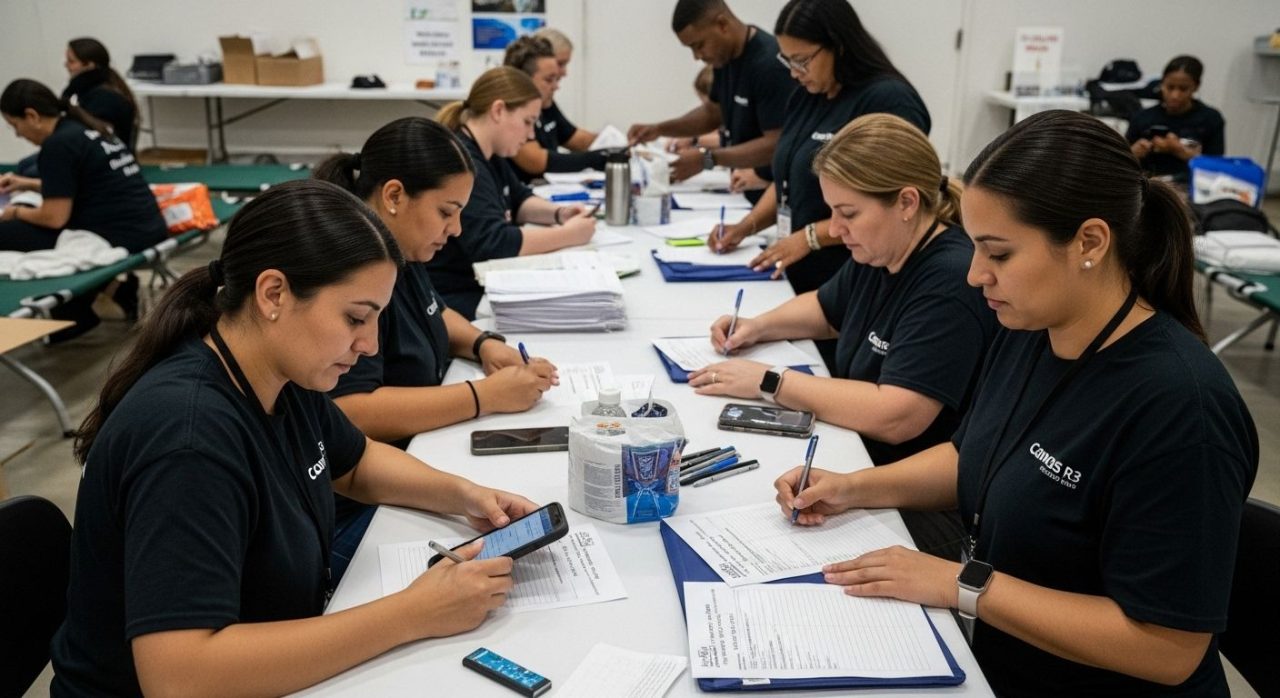
Millions of people are removed from their homes each year by disasters and extreme weather. Over 25 million people face displacement annually from these events, a number that keeps rising with each new crisis. You might think advanced tech would make it easy to track and verify these situations. The real challenge runs deeper, because it’s not just about counting heads or scanning documents. It’s about capturing the hidden struggles, the emotional upheaval, and the long-term disruptions that numbers alone never show.
Table of Contents
- Understanding Displacement and Its Importance
- Key Methods to Verify Displacement
- Documentation Needed for Verification
- Best Practices for Accurate and Fair Assessment
Quick Summary
| Takeaway | Explanation |
|---|---|
| Holistic understanding of displacement is essential. | Displacement involves emotional, economic, and social challenges affecting individuals and communities. A comprehensive approach is needed for effective support. |
| Use advanced verification methods for accurate tracking. | Combine technological tools like GIS and biometric registration with community engagement to effectively verify displacement status. |
| Compile thorough documentation for assistance claims. | Essential documents include ID, residency proof, and pre/post-disaster records to help streamline the support process for displaced individuals. |
| Adopt vulnerability-centered assessment strategies. | Assess specific demographic needs to create targeted support frameworks that address the unique challenges faced by various populations. |
| Ensure transparency in verification processes. | Clear communication and independent oversight are vital for building trust among displaced individuals and ensuring fair treatment during assessments. |
Understanding Displacement and Its Importance
Disaster displacement represents a critical humanitarian challenge that disrupts lives and communities in profound ways. When individuals are suddenly forced from their homes due to extreme events, they face immediate and long-term challenges that extend far beyond physical relocation.
The Human Impact of Displacement
According to the United Nations Office for Disaster Risk Reduction, approximately 25 million people are displaced annually due to extreme weather events. This staggering number reveals the significant scale of human vulnerability in the face of natural disasters. Displacement is not merely a geographical shift but a complex experience that encompasses emotional, economic, and social disruption.
The Administration for Children and Families highlights that displaced individuals often require comprehensive support across multiple domains. These needs include immediate housing assistance, income support, transportation solutions, employment reconnection, and educational continuity. Low-income populations are particularly susceptible to these challenges, making robust displacement verification and response mechanisms crucial.
Long-Term Consequences of Prolonged Displacement
Research published in the Natural Hazards Review reveals the profound long-term implications of displacement. Between 2008 and 2018, over 265 million people worldwide experienced sudden-onset disaster displacement. The study underscores that extended displacement periods correlate with significant negative outcomes such as job loss, income decline, educational interruptions, and increased psychological stress.
Verifying displacement goes beyond simple location tracking. It involves understanding the comprehensive human experience of being uprooted. Our comprehensive guide on displacement identification methods provides deeper insights into the nuanced approaches emergency responders and relief organizations must adopt.
Effective displacement verification requires a holistic approach that considers not just physical location but the intricate web of human needs and vulnerabilities. By recognizing displacement as a multifaceted challenge, response teams can develop more compassionate and targeted strategies to support affected individuals and communities.
Understanding displacement is the first critical step in creating meaningful, responsive support systems that help individuals and families navigate the challenging journey from crisis to recovery.
Key Methods to Verify Displacement
Verifying displacement requires a systematic and comprehensive approach that combines technological tools, administrative documentation, and direct human assessment. Emergency responders and relief organizations must employ multiple strategies to accurately identify and track individuals who have been displaced by disasters.
Documentation and Registration Protocols
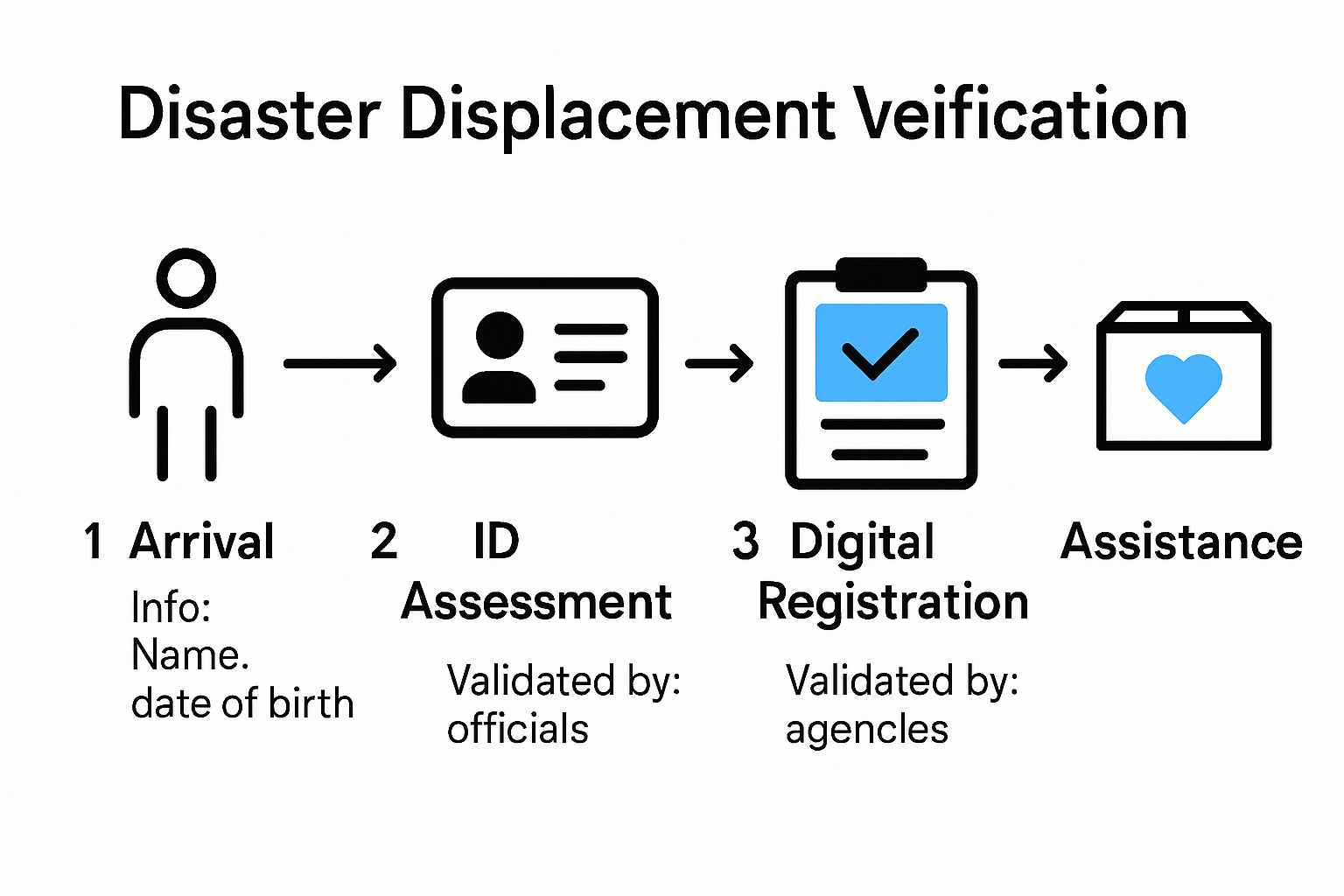
The first critical step in displacement verification involves establishing robust documentation and registration systems. Research from the Platform on Disaster Displacement highlights the importance of creating standardized processes for tracking displaced populations. These protocols typically include collecting comprehensive personal information such as full names, identification numbers, original residential addresses, current temporary locations, and contact details.
Government agencies and relief organizations often utilize digital registration platforms that enable rapid and accurate data collection. These systems allow for real-time tracking of displaced individuals, helping coordinate emergency housing, medical support, and other critical services. By implementing secure digital registration methods, responders can quickly verify an individual’s displacement status and develop targeted assistance strategies.
Geographical and Technological Verification Techniques
Advanced technological tools play a crucial role in modern displacement verification. According to the United Nations Office for Disaster Risk Reduction, geospatial mapping and satellite imagery can provide critical insights into population movements. Geographic Information Systems (GIS) enable emergency responders to track population shifts, identify temporary settlement areas, and understand the scale of displacement.
Additional verification techniques include:
- Biometric Registration: Using fingerprint or facial recognition technologies to create unique identification profiles
- Mobile Phone Tracking: Analyzing mobile network data to understand population movements
- Drone Surveillance: Capturing aerial imagery to document displacement patterns and settlement locations
Our comprehensive guide on displacement identification methods provides deeper insights into these advanced technological approaches.
Community Engagement and Verification
Beyond technological methods, direct community engagement remains essential in verifying displacement. The Norwegian Refugee Council emphasizes the importance of local partnerships and community-based verification strategies. This approach involves working closely with local leaders, community representatives, and social networks to cross-reference and validate displacement information.
Community-based verification techniques include conducting in-person interviews, organizing community meetings, and establishing local verification committees. These methods help ensure that displacement verification goes beyond mere data collection and considers the nuanced human experiences of those affected by disasters.
Successful displacement verification requires a holistic approach that combines technological innovation, administrative precision, and compassionate human interaction. By integrating multiple verification methods, emergency responders can develop a comprehensive understanding of displacement dynamics and provide more effective, targeted support to affected individuals and communities.
To help clarify the different methods to verify displacement, the following table summarizes the key verification approaches mentioned in this section, their descriptions, and practical examples:
| Verification Method | Description | Practical Example |
|---|---|---|
| Documentation & Registration | Collecting personal information and registering displaced people | Digital platforms for rapid registration |
| Geographical & Tech Techniques | Using GIS, satellites, biometrics, and mobile data to track movement | GIS mapping, biometric ID, phone tracking |
| Community Engagement | Working with local leaders and communities for validation | Community meetings, interviews, committees |
Documentation Needed for Verification
Documentation serves as the critical backbone of displacement verification, providing essential evidence to support individuals’ claims and help emergency responders develop targeted assistance strategies. Comprehensive and accurate documentation ensures that displaced individuals receive the support they need during challenging times.
Personal Identification and Residency Proof
FEMA guidelines outline specific documentation requirements for disaster assistance. Essential personal documents include government-issued identification, proof of residency, and ownership records. Acceptable documents for verification encompass:
- Government Identification: Driver’s license, passport, state ID
- Residency Proof: Utility bills, lease agreements, mortgage statements
- Ownership Documentation: Property deeds, tax assessment records, insurance policies
In situations where standard documentation becomes difficult to obtain due to disaster damage, alternative verification methods become crucial. Displaced individuals might need to provide sworn statements or work with local authorities to reconstruct critical personal records.
Pre-Disaster and Post-Disaster Documentation
Research from ICF highlights the importance of maintaining comprehensive documentation before and after disaster events. Preparatory documentation strategies include:
- Maintaining digital copies of critical documents in secure cloud storage
- Photographing property and personal belongings before potential disaster events
- Keeping insurance policies and contact information in easily accessible locations
- Creating digital backups of medical records, birth certificates, and other important paperwork
Our comprehensive guide on displacement identification methods provides additional insights into effective documentation strategies for disaster response.
Digital and Physical Documentation Verification
Modern displacement verification increasingly relies on digital platforms that enable secure, efficient document management. Emergency responders and relief organizations utilize advanced digital systems to:
- Scan and digitize physical documents
- Create secure digital profiles for displaced individuals
- Cross-reference documentation across multiple agencies
- Protect sensitive personal information through encrypted platforms
Physical documentation remains equally important. Emergency response teams often require original or certified copies of documents to process assistance claims. Individuals should maintain both digital and physical copies of critical documents, storing them in waterproof, portable containers that can be quickly accessed during emergency evacuations.
To clarify what types of documentation are needed and accepted, the table below lists documentation categories, specific examples, and their main uses in displacement verification:
| Documentation Category | Examples | Purpose in Verification |
|---|---|---|
| Government Identification | Driver’s license, passport, state ID | Proves identity |
| Residency Proof | Utility bills, lease agreement, mortgage statement | Proves residency |
| Ownership Documentation | Property deed, tax assessment, insurance policy | Proves property ownership |
| Alternative Methods | Sworn statement, local authority confirmation | Used when standard docs are missing |
Successful documentation for displacement verification requires a multi-layered approach that combines technological innovation, comprehensive record-keeping, and flexible verification methods. By understanding and preparing the right documentation, displaced individuals can more effectively navigate the complex process of receiving critical support and rebuilding their lives after disaster events.
Best Practices for Accurate and Fair Assessment
Accurate and fair displacement assessment requires a comprehensive approach that prioritizes human dignity, equity, and systematic evaluation. Emergency responders and relief organizations must develop robust methodologies that address the complex challenges of verifying displacement while maintaining transparency and compassion.
Vulnerability-Centered Assessment Strategies
The International Institute for Environment and Development emphasizes the critical importance of integrating detailed vulnerability analyses into displacement risk assessments. This approach goes beyond generic statistical tracking, focusing instead on understanding the specific needs and challenges faced by different population groups.
Key elements of vulnerability-centered assessment include:
- Demographic Sensitivity: Recognizing unique challenges for elderly, children, disabled, and minority populations
- Socioeconomic Context: Analyzing economic resilience and pre-existing community support structures
- Psychological Impact: Assessing mental health and trauma recovery needs
By developing nuanced assessment frameworks, response teams can create more targeted and effective support strategies that address individual and community-specific challenges.
Transparent and Trustworthy Verification Processes
Research from the Center for Security in Politics highlights the fundamental role of trust in disaster response efforts. Transparent communication and coordinated action are essential to maintaining public confidence during displacement verification processes.
Best practices for building trust include:
- Providing clear, accessible information about assessment procedures
- Establishing multiple communication channels for displaced individuals
- Creating independent oversight mechanisms
- Ensuring consistent and fair treatment across all assessment stages
Our comprehensive guide on displacement identification methods offers additional insights into developing transparent verification protocols.
Proactive Mitigation and Continuous Improvement
FEMA’s Mitigation Best Practices underscore the importance of continuous learning and adaptation in displacement assessment. Emergency response teams must develop dynamic assessment frameworks that evolve based on real-world experiences and emerging technological capabilities.
Continuous improvement strategies include:
- Regular training and skill development for assessment teams
- Periodic review and update of assessment protocols
- Integration of technological innovations
- Collaboration with academic and research institutions
- Gathering and analyzing feedback from displaced individuals
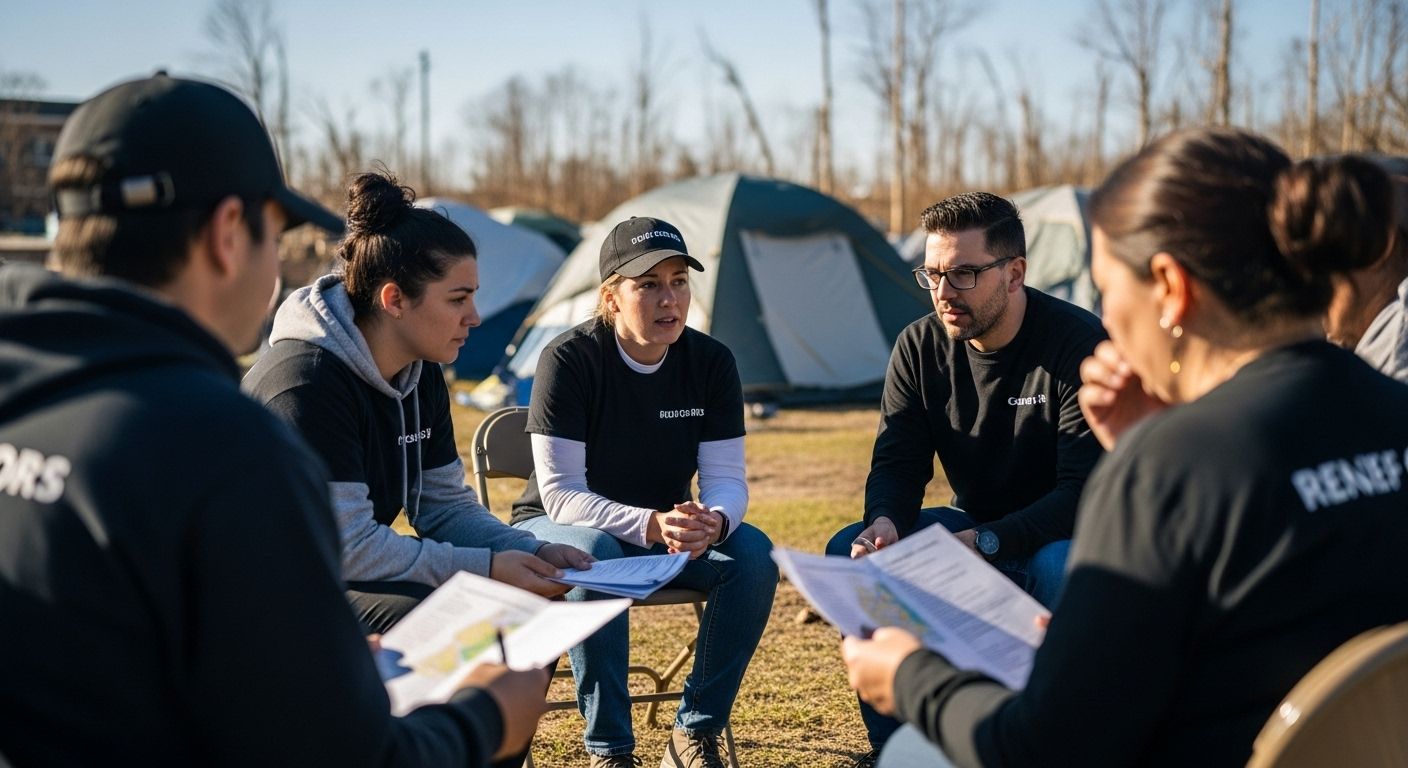
Successful displacement assessment requires a holistic approach that balances technological precision with human compassion. By prioritizing vulnerability, transparency, and continuous improvement, emergency responders can create more effective, equitable, and humane verification processes that support individuals and communities during their most challenging moments.
Frequently Asked Questions
How can displacement be verified after a disaster?
Verification of displacement can be achieved through a combination of documentation and registration protocols, community engagement, and advanced technological methods such as GIS mapping and biometric registration.
What documentation is needed for verifying displacement?
Essential documentation includes government-issued identification, proof of residency (like utility bills or lease agreements), and ownership documentation (such as property deeds). Pre- and post-disaster records are also critical.
Why is it important to understand the human impact of displacement?
Understanding the human impact of displacement is crucial because it encompasses not just geographical changes, but also emotional, social, and economic challenges faced by individuals and communities affected by disasters.
What are best practices for ensuring fair assessment during displacement verification?
Best practices include using vulnerability-centered assessment strategies, maintaining transparency in verification processes, and continuously improving methodologies based on feedback and technological advancements.
Your Trusted Partner for Displacement Verification and Disaster Recovery
Navigating the complicated process of displacement verification can feel overwhelming after a disaster. The article highlights how critical it is to provide accurate documentation, reliable registration, and trustworthy support when you need it most. Many families struggle with lost records, uncertainty, and urgent housing needs during this vulnerable time. At DisasterVictimServices.com, we understand that beyond paperwork and technology, true recovery starts with compassion and expert guidance.
Ready to turn knowledge into action? Our team specializes in emergency housing solutions and smooth coordination with insurance claims and support professionals. Connect with compassionate disaster experts who will guide you through every step, from document recovery to temporary housing and beyond. Act now to secure immediate help and practical solutions by visiting our main site or learn more about our approach to emergency assistance and recovery logistics.
Recommended
- Displacement Identification Methods: Essential Guide for 2025 – Disaster Victim Services | Helping You Recover After Disaster
- How to Handle Displacement: Key Steps for Recovery in 2025 – Disaster Victim Services | Helping You Recover After Disaster
- How to Handle Relocations in 2025: A Guide for Disaster Relief Teams – Disaster Victim Services | Helping You Recover After Disaster
- Displacement Trends 2025: What Families and Responders Need to Know – Disaster Victim Services | Helping You Recover After Disaster