
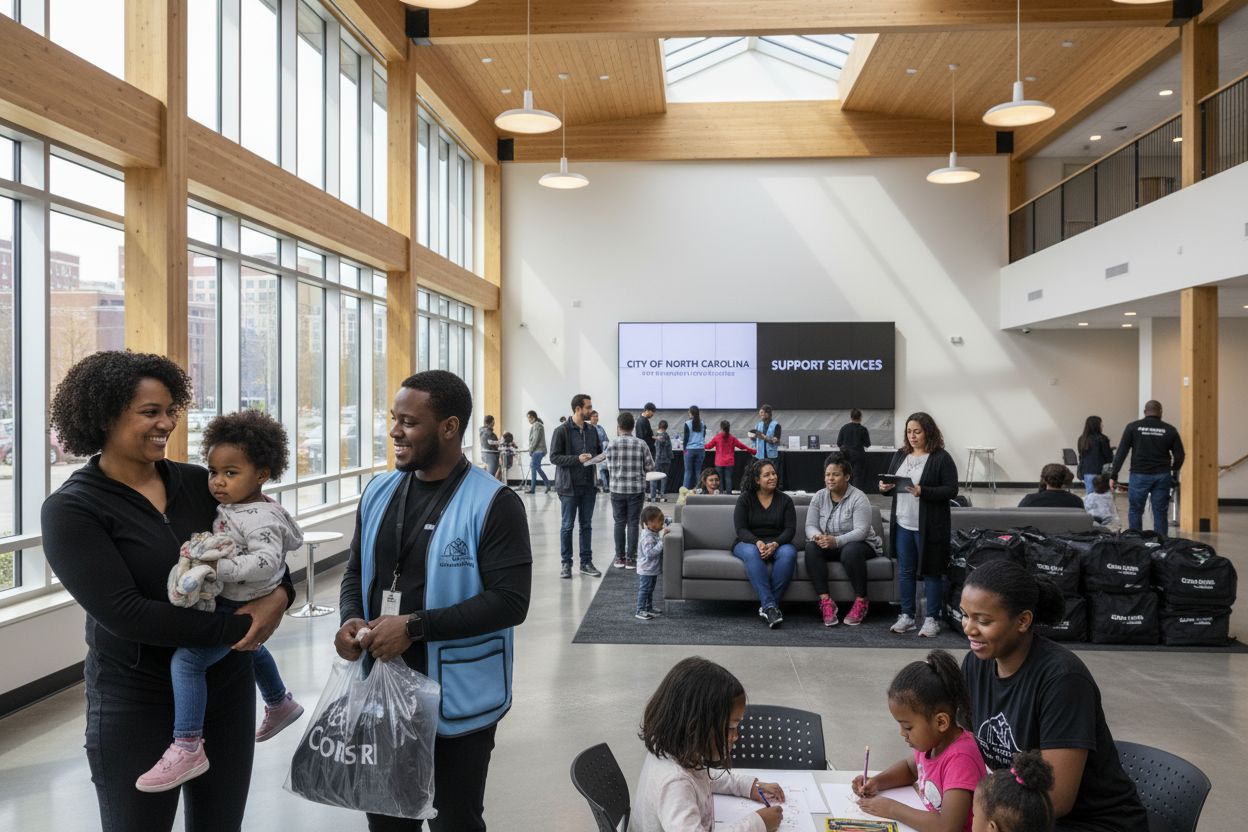
Displacement rips millions of families from their homes every year, forcing urgent choices as they face sudden loss of stability and community. Most people think it is just about finding somewhere new to sleep. But the real shock is the hidden layers of trauma and disruption that come with each move. More than 100 million people are now forcibly displaced worldwide, according to recent UNHCR data. What unfolds next is not only a struggle for shelter but a deep, life-changing journey that tests resilience and hope in unexpected ways.
Table of Contents
- Understanding Displacement And Its Impact
- Emergency Shelters: Immediate Relief Options
- Transitional Housing: A Step Toward Stability
- Financial Assistance Programs: Supporting Affected Families
- Community Support Networks: Building Resilience
- Long-Term Recovery Plans: Sustainable Solutions
- Collaboration Between Agencies: Enhancing Effectiveness
Quick Summary
| Takeaway | Explanation |
|---|---|
| Displacement is a multifaceted challenge. | It involves emotional, social, and economic impacts on families that require holistic support. |
| Emergency shelters must provide comprehensive support. | Effective shelters offer a safe environment and access to essential services like medical care and counseling. |
| Transitional housing aids in sustainable recovery. | These programs offer longer-term support that helps families regain stability through skill development and affordable housing. |
| Financial assistance is crucial for recovery. | Targeted financial support helps families navigate economic challenges post-displacement, facilitating a quicker return to stability. |
| Community networks enhance resilience. | Building strong connections within communities offers emotional and practical support, transforming individual recovery into collective healing. |
1: Understanding Displacement and Its Impact
Displacement represents a critical humanitarian challenge that dramatically disrupts families’ lives, forcing them to abandon their homes and familiar environments due to emergencies such as natural disasters, conflicts, or severe economic instability. Displacement research from the United Nations High Commissioner for Refugees (UNHCR) reveals that millions of individuals worldwide experience forced relocation annually, creating substantial psychological and economic challenges.
At its core, displacement goes beyond physical movement. It encompasses a profound emotional and social transformation that challenges families’ sense of stability, security, and identity. When families are suddenly uprooted, they face multiple interconnected challenges:
- Loss of personal belongings and critical documentation
- Disruption of social networks and community connections
- Immediate financial strain and potential employment interruption
- Psychological stress and potential trauma
The impact of displacement extends far beyond immediate physical displacement. Families must navigate complex emotional landscapes while simultaneously addressing practical survival needs. Children experience significant disruption to their educational continuity, while adults confront the challenging task of rebuilding social and economic foundations in unfamiliar environments.
Understanding displacement requires recognizing its multifaceted nature. It is not merely a geographical transition but a comprehensive life transformation that demands resilience, adaptability, and strategic support. Our guide on displacement identification methods provides deeper insights into recognizing and addressing these complex challenges.
By developing compassionate, comprehensive approaches that prioritize both immediate relief and long-term recovery, communities and support systems can help displaced families rebuild their lives with dignity and hope.
2: Emergency Shelters: Immediate Relief Options
Emergency shelters represent the critical first line of support for families experiencing sudden displacement, providing immediate protection, safety, and basic necessities during crisis situations. Research from the Federal Emergency Management Agency (FEMA) indicates that effective emergency sheltering goes beyond simple housing—it’s about creating a secure environment that supports physical and emotional recovery.
These shelters serve as temporary sanctuaries that address multiple urgent needs simultaneously. When families are suddenly uprooted, emergency shelters offer a structured, supportive environment that helps mitigate the immediate trauma of displacement.
Key considerations for effective emergency shelters include:
- Proximity to the affected community
- Sufficient capacity to accommodate displaced families
- Basic amenities like clean water, sanitation, and sleeping arrangements
- Access to medical support and psychological first aid
- Safe spaces for children and vulnerable populations
Modern emergency shelters are increasingly designed with holistic support in mind. They are not merely temporary structures but comprehensive support centers that help families transition from crisis to recovery. Our comprehensive guide on shelter selection provides deeper insights into choosing the most appropriate emergency housing solutions.
Unique shelter models now integrate wraparound services, including immediate counseling, family reunification support, and connection to longer-term housing resources. These comprehensive approaches recognize that displacement is not just a physical challenge but a complex emotional and social experience that requires nuanced, compassionate intervention.
By prioritizing dignity, safety, and comprehensive support, emergency shelters transform from mere temporary housing into critical recovery platforms that help families rebuild their lives with resilience and hope.
3: Transitional Housing: A Step Toward Stability
Transitional housing represents a critical bridge between emergency shelters and permanent housing solutions, offering displaced families a structured pathway to rebuild their lives with dignity and purpose. Research from the National Low Income Housing Coalition demonstrates that these programs are essential in helping families stabilize after experiencing significant disruption.
Transitional housing goes beyond temporary accommodation, providing a comprehensive support system that addresses multiple dimensions of family recovery. Unlike emergency shelters, these programs typically offer longer-term residency, ranging from several months to two years, allowing families to develop sustainable strategies for rebuilding their lives.
Key characteristics of effective transitional housing include:
- Structured support services and skill development programs
- Affordable rental rates with flexible payment options
- Connection to job training and employment resources
- Counseling and mental health support
- Assistance with permanent housing placement
The most successful transitional housing models recognize that displacement is a holistic challenge requiring multifaceted support. These programs help families rebuild not just their physical living situation, but their economic and emotional foundations. Our guide on safe housing placement offers additional insights into navigating this critical transition.
By providing a stable environment with wrap-around services, transitional housing programs help families develop critical life skills, rebuild financial stability, and restore their sense of hope and self-sufficiency. These programs represent more than just a roof overhead—they are comprehensive recovery platforms designed to transform displacement from a moment of crisis into an opportunity for resilient transformation.
4: Financial Assistance Programs: Supporting Affected Families
Financial assistance programs play a crucial role in helping displaced families navigate the complex economic challenges triggered by sudden displacement. Research from the National Disaster Recovery Framework reveals that targeted financial support can significantly accelerate family recovery and reduce long-term economic vulnerability.
Financial assistance goes beyond immediate monetary relief, providing a comprehensive support system that addresses multiple dimensions of economic recovery. These programs recognize that displacement creates profound financial disruptions that extend far beyond temporary housing needs.
Critical components of effective financial assistance programs include:
- Immediate emergency grants for basic necessities
- Temporary housing cost subsidies
- Job retraining and employment support resources
- Debt relief and financial counseling services
- Support for replacing essential documentation
The most sophisticated financial assistance models understand that economic recovery is a multifaceted process. They provide not just temporary financial relief, but comprehensive economic rehabilitation strategies that help families rebuild their financial foundations. Our comprehensive guide on housing assistance offers deeper insights into navigating these complex support systems.
By offering targeted, holistic financial support, these programs transform economic challenges from overwhelming obstacles into manageable steps toward recovery. They recognize that true healing requires more than temporary financial bandages—it demands strategic, compassionate support that empowers families to rebuild their economic stability and restore their sense of hope and self-sufficiency.
5: Community Support Networks: Building Resilience
Community support networks emerge as powerful lifelines for displaced families, transforming individual struggles into collective healing and recovery. Research from the American Psychological Association demonstrates that strong social connections can significantly mitigate the psychological and emotional impacts of displacement.
Community support transcends traditional assistance models, creating interconnected systems of emotional, practical, and social support that help families navigate the complex journey of recovery. These networks represent dynamic ecosystems of compassion, resilience, and mutual aid.
Key elements of effective community support networks include:
- Local faith-based organization engagement
- Neighborhood mutual assistance groups
- Peer support and trauma recovery programs
- Cultural preservation and community reconnection initiatives
- Collaborative resource sharing platforms
The most transformative community support approaches recognize that recovery is a collective journey. They move beyond transactional assistance, focusing instead on rebuilding social fabric, restoring dignity, and empowering displaced families to become active participants in their own recovery. Our comprehensive guide on accessing support networks provides deeper insights into building these crucial connections.
By fostering environments of genuine connection, empathy, and practical support, community networks transform displacement from an isolating experience into an opportunity for collective healing and community resilience. These networks demonstrate that when communities stand together, no family has to face displacement alone.
6: Long-Term Recovery Plans: Sustainable Solutions
Long-term recovery plans represent the critical bridge between immediate disaster response and comprehensive family rehabilitation, transforming temporary survival strategies into sustainable pathways for rebuilding lives. Research from the National Institute of Building Sciences demonstrates that strategic, forward-thinking recovery approaches can significantly reduce future vulnerability and enhance community resilience.
Long-term recovery plans are more than reconstruction blueprints. They are holistic roadmaps that address psychological, economic, and social dimensions of displacement, recognizing that true recovery extends far beyond physical infrastructure.
Key components of effective long-term recovery strategies include:
- Comprehensive psychological support and trauma recovery programs
- Economic rehabilitation and skill development initiatives
- Sustainable housing reconstruction planning
- Community resilience and adaptation training
- Integrated social support and family reconnection services
The most innovative long-term recovery models understand that displacement is a transformative experience that requires nuanced, personalized approaches. These strategies don’t just aim to return families to their pre-disaster state but to create stronger, more adaptive systems of support and empowerment. Our guide on disaster recovery phases offers deeper insights into developing comprehensive recovery strategies.
By prioritizing human dignity, adaptive learning, and comprehensive support, long-term recovery plans transform potential tragedy into opportunities for personal growth, community strengthening, and systemic resilience. They represent a profound commitment to helping displaced families not just survive, but truly thrive in the aftermath of significant disruption.
7: Collaboration Between Agencies: Enhancing Effectiveness
Agency collaboration represents the cornerstone of effective displacement response, transforming fragmented efforts into comprehensive, coordinated support systems. Research from the Federal Emergency Management Agency reveals that multi-agency partnerships can dramatically improve recovery outcomes for displaced families.
Effective collaboration transcends traditional organizational boundaries, creating integrated networks that leverage diverse expertise, resources, and perspectives to address complex displacement challenges. These collaborative approaches recognize that no single agency can successfully manage displacement alone.
Key elements of successful inter-agency collaboration include:
- Shared digital communication platforms
- Standardized data exchange protocols
- Cross-training and skill-sharing programs
- Unified resource allocation strategies
- Integrated case management systems
The most advanced collaborative models understand that displacement response requires collective intelligence. They prioritize transparent communication, mutual respect, and a unified commitment to supporting affected families. Our comprehensive guide on first responder coordination provides deeper insights into building effective inter-agency partnerships.
By breaking down institutional silos and creating flexible, responsive support networks, agencies can transform displacement from an overwhelming challenge into a coordinated, compassionate recovery process. These collaborative approaches demonstrate that when organizations work together seamlessly, families receive more comprehensive, efficient, and humane support during their most vulnerable moments.
Below is a comprehensive table summarizing the seven key displacement solutions explored in the article, highlighting the main features and benefits for families facing urgent relocation and recovery challenges.
| Solution Area | Key Points and Features | Main Benefits for Displaced Families |
|---|---|---|
| Understanding Displacement | Displacement affects emotional, social, and economic well-being; requires holistic support | Recognizes deep life disruption, tailors effective aid |
| Emergency Shelters | Provides immediate safety, basic needs, medical care, counseling, and safe spaces in crises | Rapid relief, physical/emotional security, stabilization |
| Transitional Housing | Offers structured, longer-term support, affordable housing, job training, and counseling | Pathway to independence, restores stability and skillset |
| Financial Assistance Programs | Grants for essentials, housing subsidies, job retraining, and financial counseling | Eases economic burdens, facilitates recovery |
| Community Support Networks | Local mutual aid, faith initiatives, peer support, preserving connections and social fabric | Builds resilience, fosters healing, combats isolation |
| Long-Term Recovery Plans | Psychological care, economic rehabilitation, sustainable housing, resilience training | Sustainable solutions, prepares for future stability |
| Collaboration Between Agencies | Multi-agency partnerships, data sharing, resource coordination, unified case management | Comprehensive, efficient support and resource access |
Take Confident Steps Toward Safety and Recovery
Experiencing family displacement after a disaster can feel overwhelming. The article laid out the emotional stress, loss of stability, and the urgent need for both immediate and long-term solutions. If you are facing lost housing, disrupted routines, or uncertainty about where your family will sleep tonight, you do not have to manage these challenges alone.
At DisasterVictimServices.com, our team is dedicated to swift, compassionate response for families in transition. We partner with agencies, insurance carriers, and emergency responders to deliver emergency housing and personalized recovery support. Visit Uncategorized – Disaster Victim Services | Helping You Recover After Disaster for insight into our latest family-focused services and see how we address displacement at every stage. If you are seeking immediate guidance or ongoing support, act now and let our experts help you rebuild with dignity and hope. Start your recovery journey at DisasterVictimServices.com today.
Frequently Asked Questions
What is displacement, and why is it a significant issue for families?
Displacement refers to the forced relocation of families due to emergencies like natural disasters, conflicts, or economic instability, creating substantial emotional, social, and economic challenges for those affected.
What types of immediate relief options are available for displaced families?
Immediate relief options for displaced families include emergency shelters that provide safety, basic necessities, medical support, and access to psychological first aid.
How does transitional housing support families recovering from displacement?
Transitional housing offers displaced families a structured pathway to stability, providing longer-term accommodations along with support services like job training, counseling, and assistance with permanent housing placement.
Why are community support networks essential for displaced families?
Community support networks create a collective environment that fosters emotional, practical, and social aid, helping families navigate their recovery journey and restore their sense of connection and resilience.
Recommended
- Displacement Trends 2025: What Families and Responders Need to Know – Disaster Victim Services | Helping You Recover After Disaster
- How to Handle Displacement: Key Steps for Recovery in 2025 – Disaster Victim Services | Helping You Recover After Disaster
- Displacement Trends 2025: What Families and Responders Need to Know – Disaster Victim Services | Helping You Recover After Disaster
- Safe Housing Placement Steps for Disaster Response 2025 – Disaster Victim Services | Helping You Recover After Disaster