

Crisis intervention might sound like a technical term, but it is at the heart of every emergency support system. Imagine, one immediate response can reduce the risk of long-term psychological distress by up to 50 percent, according to recent research. Most people assume crisis support is mainly about calming emotions, yet the true focus is regaining functional stability and restoring hope—right when it matters most.
Table of Contents
- Defining Crisis Intervention: Key Concepts Explained
- The Importance of Crisis Intervention in Emergencies
- Understanding the Theory Behind Crisis Intervention
- Real-World Applications of Crisis Intervention Strategies
- The Role of Different Entities in Crisis Intervention
Quick Summary
| Takeaway | Explanation |
|---|---|
| Crisis intervention offers immediate support. | It provides essential psychological and social assistance during acute emotional distress to help individuals stabilize. |
| Recognize unique individual experiences in crises. | Each person’s crisis experience requires tailored approaches based on their specific needs and circumstances. |
| Focus on immediate stabilization and coping strategies. | The primary aim is to help individuals restore emotional balance and develop short-term coping methods quickly. |
| Crisis intervention promotes community resilience. | By addressing individuals’ needs, it supports broader community healing and recovery from traumatic events. |
| Collaboration is crucial for effective intervention. | Different entities must work together to create an integrated support system and share resources for crisis management. |
Defining Crisis Intervention: Key Concepts Explained
Crisis intervention represents a specialized psychological and social support approach designed to provide immediate assistance during acute emotional or situational distress. This strategy focuses on helping individuals rapidly stabilize their immediate circumstances and emotional state when confronting overwhelming challenges.
The Fundamental Nature of Crisis Situations
A crisis emerges when an individual experiences a sudden, significant disruption that overwhelms their typical coping mechanisms. According to research from the Washington State Department of Social and Health Services, a crisis represents a critical moment where an individual’s normal functioning breaks down, requiring immediate specialized support.
Key characteristics of a crisis typically include:
Below is a table summarizing the core characteristics that define a crisis, providing a clear overview for quick reference.
| Characteristic | Description |
|---|---|
| Unexpectedness | Occurs suddenly, often with little or no warning |
| Profound Emotional Impact | Causes intense emotional reactions or upheaval |
| Loss of Coping Capabilities | Temporarily overwhelms an individual’s normal ability to cope |
| Critical Disruption | Significantly impairs usual functioning and daily routines |
| Potential for Transformation | Presents risk for long-term effects or meaningful personal change |
- Unexpected and sudden occurrence
- Profound emotional impact
- Temporary loss of personal adaptive capabilities
- Potential for significant psychological transformation
Core Principles of Crisis Intervention
Crisis intervention fundamentals are built upon several critical principles designed to provide rapid, effective support. The primary goal is not long-term therapy but immediate stabilization and restoration of psychological equilibrium. Professionals aim to help individuals regain functional capacity and develop adaptive strategies for managing their current challenges.
The intervention process typically involves:
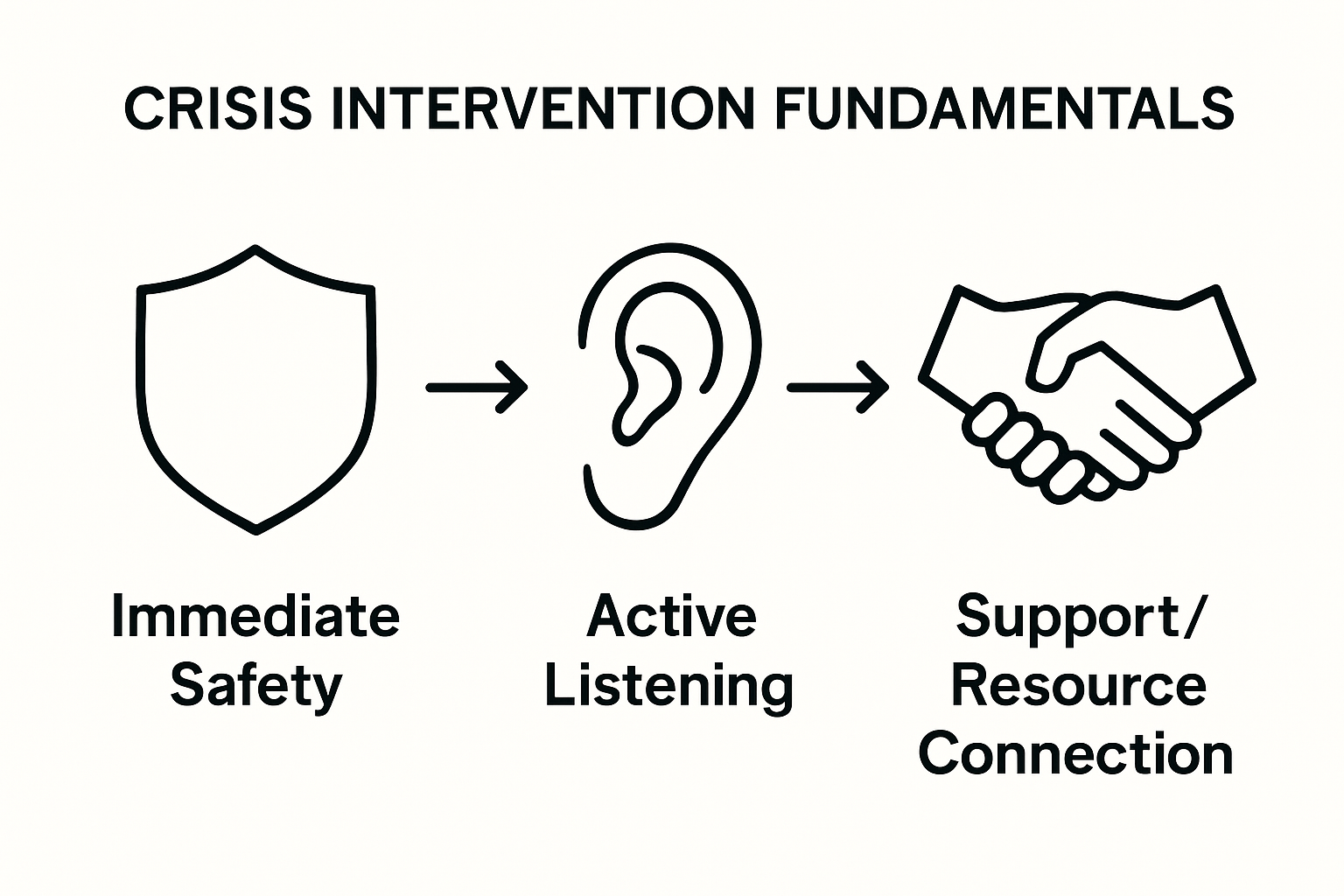
- Establishing immediate psychological safety
- Actively listening and validating the individual’s emotional experience
- Collaboratively developing short-term coping strategies
- Connecting individuals with additional support resources
For more comprehensive insights into emergency response strategies, read our guide on emergency response basics.
Understanding crisis intervention requires recognizing that each person’s experience is unique. While the fundamental approach remains consistent, the specific implementation must be tailored to individual needs, cultural backgrounds, and specific circumstances. By providing immediate, compassionate, and targeted support, crisis intervention helps individuals navigate through their most challenging moments with dignity and resilience.
The Importance of Crisis Intervention in Emergencies
Crisis intervention plays a critical role in mitigating psychological trauma and supporting individuals during their most vulnerable moments. By providing immediate, targeted assistance, these specialized interventions help prevent long-term emotional damage and support rapid psychological recovery.
Psychological Impact of Emergency Situations
Emergency scenarios can profoundly disrupt an individual’s sense of safety and emotional equilibrium. Sudden traumatic events can trigger intense psychological responses that, if left unaddressed, may lead to chronic mental health challenges. According to research published in Psychiatric Services, timely crisis intervention significantly reduces the risk of prolonged psychological distress.
Key psychological risks during emergencies include:
- Acute stress reactions
- Potential development of post-traumatic stress disorder
- Increased vulnerability to depression and anxiety
- Disruption of normal coping mechanisms
Critical Role in Community Resilience
Crisis intervention extends beyond individual support, serving as a crucial mechanism for broader community healing and resilience. By providing immediate psychological first aid, professionals help restore a sense of safety, predictability, and hope during chaotic circumstances.
The intervention process contributes to community recovery through:
- Preventing widespread psychological breakdown
- Supporting collective emotional processing
- Facilitating faster community recovery
- Reducing long-term mental health treatment needs
Explore our guide on first aid disaster basics to understand complementary emergency support strategies.
Effective crisis intervention recognizes that emotional recovery is as critical as physical safety. By offering compassionate, immediate support, these specialized interventions transform moments of extreme vulnerability into opportunities for psychological resilience and healing. The goal is not just survival, but empowering individuals to rebuild their emotional foundations with strength and dignity.
Understanding the Theory Behind Crisis Intervention
Crisis intervention theory provides a structured psychological framework for understanding and addressing acute emotional disturbances. This theoretical approach offers critical insights into how individuals respond to overwhelming situations and the most effective strategies for providing immediate psychological support.
Foundational Psychological Principles
Crisis intervention theory emerges from understanding human psychological vulnerability during extreme stress. According to research from the National Center for Biotechnology Information, the theoretical framework draws from seminal work by mental health pioneers like Gerald Caplan and Erich Lindemann, who explored how individuals process traumatic experiences.
Key theoretical foundations include:
- Recognition of individual psychological breaking points
- Understanding stress as a universal human experience
- Identifying predictable psychological response patterns
- Acknowledging the potential for psychological transformation
Adaptive Coping and Psychological Resilience
The theoretical model of crisis intervention emphasizes human capacity for adaptation and resilience. Rather than viewing crisis as purely destructive, the theory recognizes these moments as potential opportunities for psychological growth and meaningful personal transformation.
Core theoretical components encompass:
- Immediate psychological stabilization
- Restoring individual functional capacity
- Preventing long-term psychological damage
- Supporting natural healing mechanisms
Learn more about first responder roles in crisis support to understand practical implementation of these theoretical principles.
Ultimately, crisis intervention theory bridges psychological research with practical support strategies. By providing a comprehensive understanding of human psychological responses during extreme stress, this theoretical framework enables professionals to offer targeted, compassionate assistance that supports individual and collective healing processes.
Real-World Applications of Crisis Intervention Strategies
Crisis intervention strategies translate theoretical frameworks into practical, life-saving approaches across multiple professional domains. These strategies provide structured methods for addressing acute psychological and emotional challenges in diverse, high-stress environments.
Professional Implementation Contexts
Professionals in various fields utilize crisis intervention strategies to manage complex emotional scenarios. According to research exploring public safety administration, effective crisis intervention requires adaptable, context-specific approaches.
Key professional domains implementing crisis intervention include:
- Emergency medical services
- Law enforcement
- Educational institutions
- Mental health facilities
- Disaster response organizations
- Social service agencies
Strategic Response Techniques
Successful crisis intervention demands a nuanced, empathetic approach that balances immediate stabilization with long-term psychological support. Professionals are trained to recognize distress signals, de-escalate potential conflicts, and provide compassionate guidance during vulnerable moments.
Core strategic response techniques involve:
- Rapid psychological assessment
- Active listening and validation
- Establishing immediate safety protocols
- Connecting individuals with appropriate support resources
- Managing potential emotional triggers
Learn about emerging emergency response trends to understand how crisis intervention strategies continue to evolve.
Real-world crisis intervention is not about creating perfect solutions but providing human-centered support during moments of profound vulnerability. By combining professional training, emotional intelligence, and structured intervention techniques, professionals can transform potential psychological crises into opportunities for healing and resilience.

The Role of Different Entities in Crisis Intervention
Crisis intervention requires a comprehensive, collaborative approach involving multiple professional entities working synchronously to provide immediate and effective psychological support. These interconnected systems form a critical safety network designed to address complex emotional and psychological challenges during high-stress situations.
Institutional Responsibilities and Coordination
Different institutional entities play unique yet complementary roles in crisis intervention.
The following table organizes key professional entities involved in crisis intervention, highlighting their primary responsibilities to clarify their distinct, yet cooperative, roles in a coordinated response.
| Entity Type | Primary Role in Crisis Intervention |
|---|---|
| Healthcare Systems | Provide medical and psychological assessment |
| Emergency Services | Offer immediate response |
| Mental Health Professionals | Conduct specialized interventions |
| Community Support Organizations | Facilitate long-term recovery |
| Government Agencies | Coordinate comprehensive support strategies |
| Educational Institutions | Support vulnerable populations |
| According to research published in Frontiers in Psychiatry, successful crisis response depends on seamless coordination and clear communication protocols across various professional domains. |
Key institutional entities include:
- Healthcare systems providing medical and psychological assessment
- Emergency services offering immediate response
- Mental health professionals conducting specialized interventions
- Community support organizations facilitating long-term recovery
- Government agencies coordinating comprehensive support strategies
- Educational institutions supporting vulnerable populations
Collaborative Intervention Frameworks
Effective crisis intervention transcends individual organizational boundaries, requiring a holistic, integrated approach. Professionals from different sectors must work together, sharing resources, information, and expertise to create comprehensive support strategies.
Critical collaborative elements involve:
- Establishing shared communication protocols
- Developing integrated response mechanisms
- Cross-training professionals from different domains
- Creating standardized assessment and referral processes
- Maintaining confidential information exchange systems
Learn more about incident command chain protocols to understand comprehensive emergency coordination strategies.
Ultimately, crisis intervention represents a complex ecosystem of human support, where each entity contributes specialized skills toward a singular goal: providing compassionate, effective assistance during individuals’ most vulnerable moments. The strength of crisis intervention lies not in individual efforts, but in the collective commitment to human resilience and healing.
Turn Knowledge into Action: Get Immediate Support When Crisis Hits
Learning about the fundamentals of crisis intervention is a vital first step, but putting that knowledge into practice is never easy when a real emergency disrupts your life. Sudden, overwhelming events cause emotional distress, disrupt your safety, and threaten your well-being. You need more than just information—you need experienced guidance and practical solutions right now. When traditional coping feels out of reach, our team at Disaster Victim Services stands ready to help you stabilize and begin the path to recovery.
If you have just faced a crisis or want to make sure your family is ready for anything, do not wait for uncertainty to escalate. Explore practical support resources and discover how our experts bridge the gap between understanding crisis intervention and accessing vital emergency services. Connect with professionals who prioritize compassion, safety, and real results. Visit Disaster Victim Services today to reclaim peace of mind and move forward with confidence.
Frequently Asked Questions
What is crisis intervention?
Crisis intervention is a specialized psychological and social support method that provides immediate assistance to individuals experiencing acute emotional or situational distress. It focuses on stabilizing an individual’s situation and emotional state during overwhelming challenges.
What are the key characteristics of a crisis?
A crisis typically involves unexpected occurrences, profound emotional impacts, a temporary loss of personal coping capabilities, and potential for significant psychological transformation.
How does crisis intervention help prevent long-term psychological issues?
By providing immediate and targeted support, crisis intervention helps to address acute emotional disturbances, preventing the onset of chronic mental health challenges such as post-traumatic stress disorder, anxiety, and depression.
Who are the professionals involved in crisis intervention?
Professionals involved in crisis intervention include those in emergency medical services, law enforcement, mental health facilities, educational institutions, disaster response organizations, and social service agencies.
Recommended
- Emergency Response Basics for 2025: A Practical Guide – Disaster Victim Services | Helping You Recover After Disaster
- Incident Command Chain Explained: Roles and Steps for 2025 – Disaster Victim Services | Helping You Recover After Disaster
- First Aid Basics 2025: Essential Guide for Disaster Recovery Teams – Disaster Victim Services | Helping You Recover After Disaster
- First Aid Disaster Basics: Essential Steps for 2025 Recovery – Disaster Victim Services | Helping You Recover After Disaster