
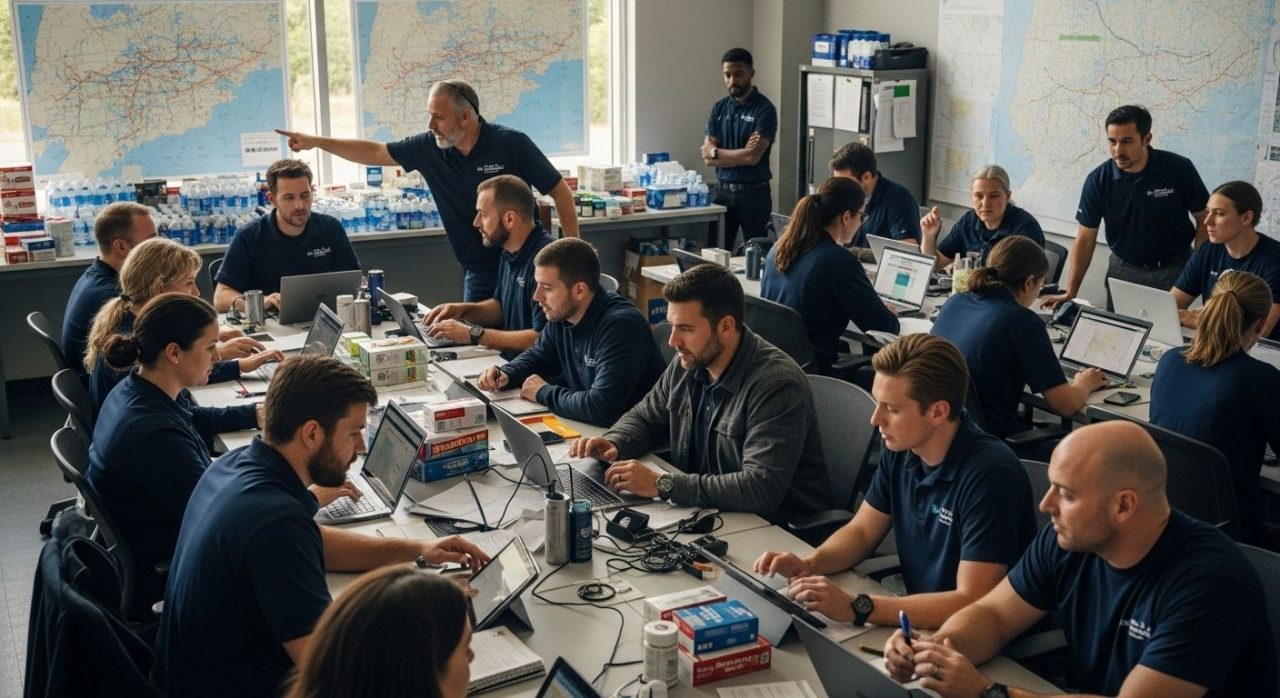
Disaster relief operations rarely make the headlines until a crisis unfolds. Then suddenly millions of lives depend on moving food, water, and medicine fast. Yet studies show that up to 40 percent of emergency supplies never reach those in need due to logistics breakdowns. The real game shift comes from the backstage work—planning, technology, and coordination—that decides who gets help and how quickly hope arrives.
Table of Contents
- Understanding Core Logistical Support Needs
- Building Strong Coordination Among Stakeholders
- Optimizing Resource Management And Distribution
- Leveraging Technology For Efficient Logistics
Quick Summary
| Takeaway | Explanation |
|---|---|
| Identify critical resources swiftly. | Prioritize essential needs like shelter, water, food, and medical supplies during initial disaster response. |
| Establish clear communication protocols. | Create unified command systems and use digital platforms for effective real-time information sharing among stakeholders. |
| Utilize data-driven resource allocation. | Employ analytics and predictive models for efficient distribution of supplies by understanding historical data and real-time needs. |
| Leverage technology for logistics optimization. | Integrate advanced tools like GIS, IoT, and drones to enhance resource tracking and situational awareness in disaster responses. |
| Focus on collaborative training initiatives. | Engage stakeholders in joint exercises to improve understanding and readiness for potential emergency scenarios, ensuring effective coordination. |
Understanding Core Logistical Support Needs
Disaster relief demands a strategic and comprehensive approach to logistical support that goes far beyond simple resource distribution. The core of effective emergency response lies in understanding the intricate needs of displaced populations and creating robust systems that can rapidly mobilize critical resources.
Identifying Critical Resource Requirements
In disaster scenarios, identifying and prioritizing core logistical support needs becomes a critical first step for successful emergency response. Comprehensive resource management requires a nuanced understanding of immediate human survival requirements. According to research from the National Center for Biotechnology Information, effective disaster relief logistics demand robust coordination among government agencies, private sector partners, and non governmental organizations to ensure efficient communication and resource distribution.
The primary resource categories typically include:
To better understand the different types of critical resources required in disaster situations, the following table summarizes the core categories and their specific examples as mentioned in the content:
| Resource Category | Examples |
|---|---|
| Shelter | Temporary housing solutions |
| Water | Clean drinking water, sanitation resources |
| Food | Nutritionally balanced emergency meals |
| Medical Supplies | Healthcare, first aid equipment |
| Communication | Emergency communication infrastructure |
- Shelter: Immediate temporary housing solutions
- Water: Clean drinking water and sanitation resources
- Food: Nutritionally balanced emergency meal provisions
- Medical Supplies: Essential healthcare and first aid equipment
- Communication: Emergency communication infrastructure
Strategic Staffing and Coordination
A comprehensive disaster response strategy requires meticulous planning of human resources. The Substance Abuse and Mental Health Services Administration emphasizes the importance of a detailed staffing plan that addresses critical roles such as program managers, crisis counselors, and administrative support personnel. These professionals are essential in addressing the complex needs of affected populations during emergency situations.
Effective coordination involves creating clear communication channels, establishing decision making protocols, and developing flexible response mechanisms that can adapt to rapidly changing disaster conditions. This approach ensures that resources are deployed efficiently and support reaches those who need it most.
Resource Management and Distribution Strategies
Successful logistical support hinges on developing sophisticated resource management techniques. Indiana Department of Homeland Security guidelines highlight the importance of movement control and distribution management in mass care scenarios. Emergency responders must develop sophisticated tracking systems that enable real time monitoring of resource allocation, ensuring that critical supplies reach affected communities with maximum speed and minimal waste.
Key strategic considerations include:
- Establishing centralized distribution centers
- Creating flexible supply chain networks
- Implementing advanced tracking and inventory management technologies
- Developing rapid deployment protocols
- Maintaining contingency reserves for unexpected challenges
By understanding and anticipating core logistical support needs, organizations can transform emergency response from reactive interventions to proactive, strategic support systems that genuinely make a difference in disaster recovery efforts.
Building Strong Coordination Among Stakeholders
Effective disaster relief demands seamless collaboration across multiple organizations, agencies, and sectors. Strong coordination among stakeholders is not just a procedural requirement but a critical lifeline that determines the speed and effectiveness of emergency response efforts.
Establishing Clear Communication Frameworks
Communication represents the foundational element of successful stakeholder coordination. According to the U.S. Government Accountability Office, establishing robust interagency agreements and shared information platforms is essential for coordinated disaster response. These frameworks enable real time information exchange, reducing response times and preventing potential resource allocation conflicts.
Key communication strategies include:
- Unified Command Systems: Creating centralized decision making structures
- Digital Communication Platforms: Implementing secure, real time information sharing technologies
- Standardized Reporting Protocols: Developing consistent documentation methods across organizations
Collaborative Training and Preparedness Initiatives
Coordination goes beyond theoretical planning. Our comprehensive guide on disaster response strategies emphasizes the importance of joint training exercises that simulate complex emergency scenarios. These collaborative efforts help different stakeholders understand each other’s capabilities, limitations, and operational procedures.
Multi agency training programs provide significant benefits:
- Identifying potential coordination gaps before actual emergencies
- Building interpersonal relationships among response teams
- Developing mutual understanding of organizational protocols
- Creating flexible, adaptive response mechanisms
Resource Sharing and Integrated Logistics
Successful disaster relief requires more than good intentions. Stakeholders must develop sophisticated resource sharing mechanisms that transcend traditional organizational boundaries. This approach involves creating flexible logistics networks where government agencies, nonprofit organizations, private sector partners, and community groups can rapidly mobilize and distribute critical resources.
Strategic resource integration involves:
- Developing comprehensive inventory management systems
- Creating mutual aid agreements
- Establishing pre disaster resource allocation frameworks
- Implementing transparent tracking mechanisms
- Promoting cross sector collaboration
By prioritizing strong coordination, stakeholders transform fragmented response efforts into cohesive, efficient emergency support systems. The goal is not just managing a crisis but creating a resilient network capable of responding swiftly and effectively to unexpected challenges.
Building these coordination frameworks requires ongoing commitment, continuous training, and a shared vision of comprehensive emergency support. When stakeholders move beyond isolated operational silos and embrace collaborative approaches, they create a powerful, adaptive response mechanism that can significantly mitigate disaster impacts.
Optimizing Resource Management and Distribution
Resource management and distribution represent the critical backbone of effective disaster relief operations. The ability to rapidly mobilize, track, and deploy essential supplies can mean the difference between life and death for affected populations.
Strategic Resource Positioning and Inventory Management
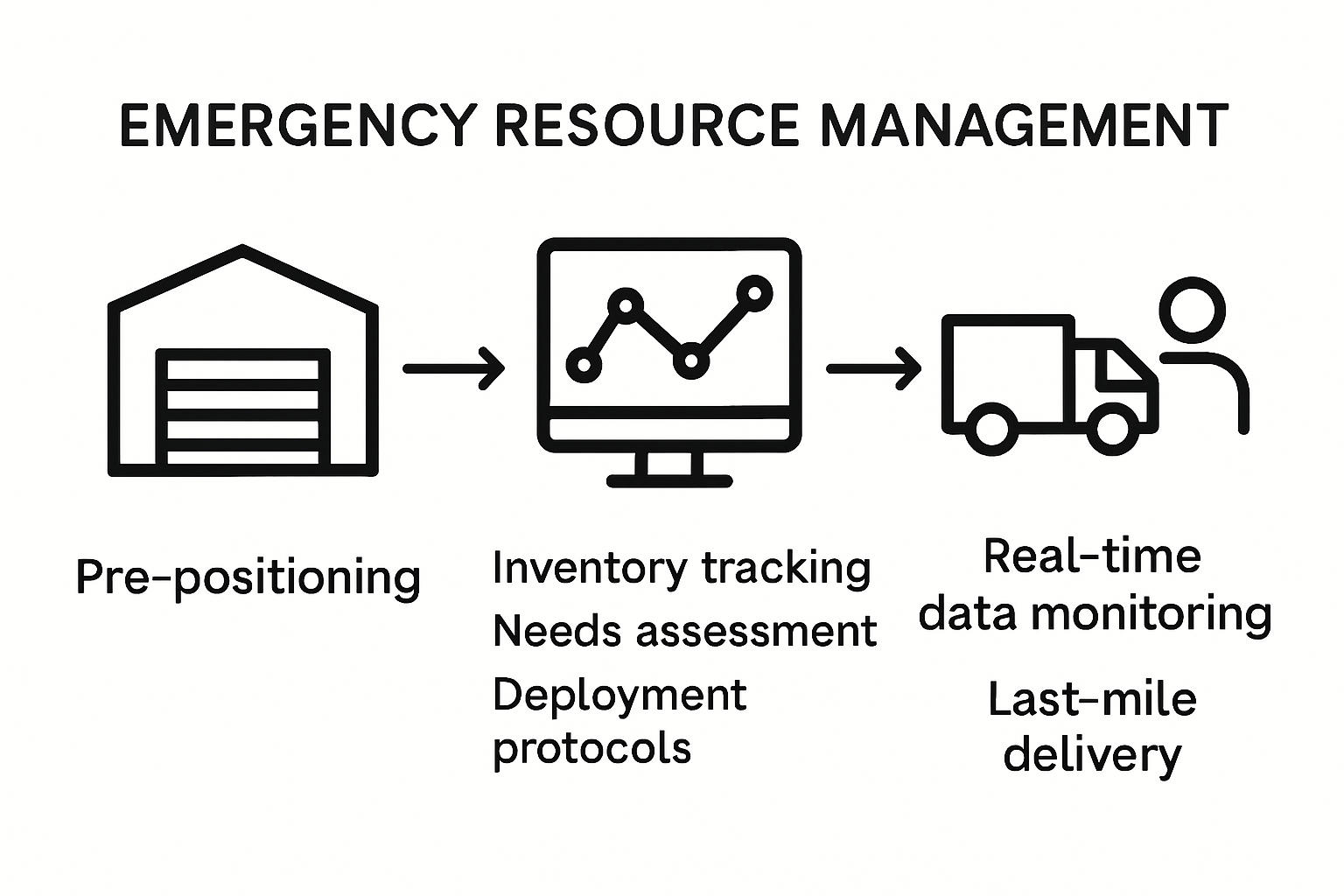
Our strategic resource allocation guide highlights the importance of proactive planning in resource management. According to RAND Corporation research, pre positioning resources and creating adaptive supply chain networks are fundamental to efficient disaster response. This approach requires sophisticated inventory management systems that enable real time tracking and rapid deployment of critical supplies.
Key strategic approaches include:
- Predictive Inventory Modeling: Anticipating potential resource needs based on disaster scenarios
- Geographic Diversification: Strategically distributing resources across multiple locations
- Scalable Storage Solutions: Developing flexible warehousing capabilities
- Rapid Deployment Protocols: Creating fast track distribution mechanisms
- Continuous Inventory Monitoring: Implementing advanced tracking technologies
Data Driven Decision Making in Resource Allocation
The National Academies of Sciences, Engineering, and Medicine emphasize the critical role of data analytics in optimizing resource distribution. Advanced predictive models and real time data analysis enable emergency responders to make precise, timely decisions about resource allocation.
Critical data analysis techniques involve:
- Utilizing historical disaster data
- Implementing machine learning predictive models
- Creating dynamic risk assessment frameworks
- Developing real time resource tracking systems
- Integrating geographic information systems
Technology and Logistics Integration
Modern disaster relief demands sophisticated technological integration. Emergency response teams must leverage cutting edge technologies to create more responsive and efficient resource distribution networks. This includes advanced tracking systems, automated inventory management platforms, and integrated communication technologies that provide unprecedented visibility into resource movement and availability.
The following table organizes key modern technologies and their applications in disaster relief logistics, summarizing information from the technology-focused section:
| Technology | Key Applications in Disaster Relief |
|---|---|
| GIS | Terrain mapping, resource tracking, predictive modeling |
| IoT | Sensor networks, real-time data, resource tracking |
| Imaging & Recon | Drone mapping, satellite imagery, laser radar scans |
| Mobile Apps | Resource management, field communication |
| Blockchain | Secure, transparent resource tracking |
Technological integration strategies include:
- Implementing blockchain based tracking systems
- Developing mobile resource management applications
- Creating interoperable communication platforms
- Utilizing drone and satellite based monitoring
- Establishing cloud based inventory management systems
Optimizing resource management goes beyond simple logistics. It represents a complex ecosystem of strategic planning, technological innovation, and human expertise. By continuously refining these approaches, disaster response organizations can create more resilient, adaptable support systems that respond more effectively to complex emergency scenarios.
The ultimate goal is creating a dynamic resource management approach that can rapidly adapt to changing conditions while ensuring critical supplies reach those who need them most. This requires ongoing investment in technology, training, and collaborative frameworks that prioritize efficiency and human impact.
Leveraging Technology for Efficient Logistics
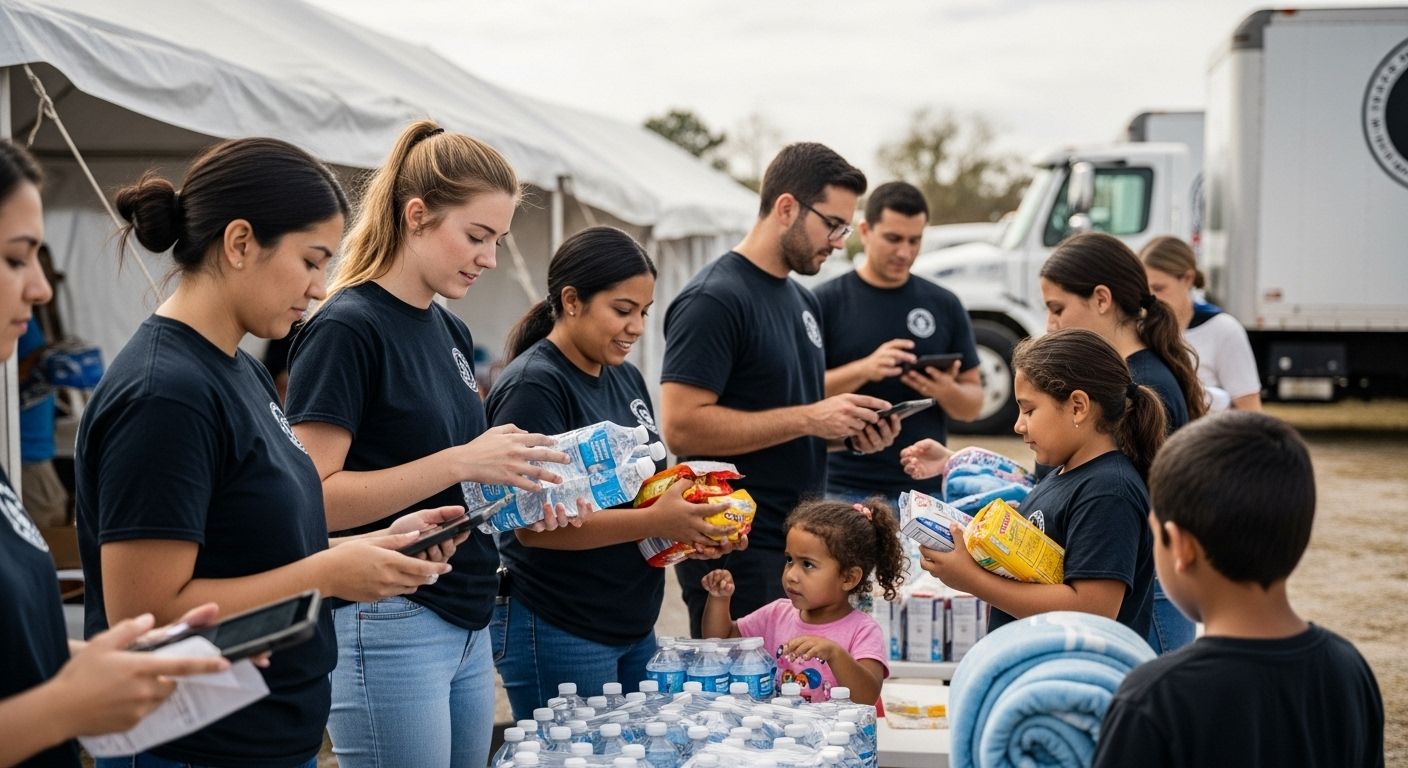
Technology has transformed disaster relief logistics from reactive response to proactive, data driven strategic planning. By integrating advanced technological solutions, emergency response teams can dramatically improve their efficiency, speed, and precision in delivering critical support.
Advanced Geographic Information Systems
Our critical logistical support guide highlights the revolutionary impact of Geographic Information Systems (GIS) in disaster response. According to World Vision International, GIS enables responders to visualize, analyze, and interpret complex data relationships, creating comprehensive maps that provide real time operational insights.
Key GIS technological capabilities include:
- Terrain Mapping: Generating high resolution terrain visualizations
- Resource Tracking: Monitoring supply movement in real time
- Predictive Modeling: Identifying potential disaster impact zones
- Infrastructure Assessment: Evaluating damage and accessibility
- Population Displacement Tracking: Monitoring movement of affected communities
Internet of Things and Data Collection
Harvard’s Data Smart City Solutions reveals the transformative potential of Internet of Things (IoT) technologies in disaster response. IoT devices can broadcast critical environmental data such as temperature, water quality, and atmospheric conditions, enabling emergency responders to make immediate, informed decisions.
Innovative IoT applications in disaster logistics include:
- Wireless sensor networks for environmental monitoring
- Smart infrastructure damage assessment systems
- Real time communication platforms
- Automated resource tracking mechanisms
- Emergency communication infrastructure restoration
Advanced Imaging and Reconnaissance Technologies
Cutting edge imaging technologies have revolutionized disaster response capabilities. MIT Lincoln Laboratory’s research demonstrates how advanced laser radar imaging systems can generate high resolution three dimensional terrain maps, identifying critical infrastructure, road trafficability, and potential helicopter landing zones within minutes of a disaster event.
Emergency reconnaissance technologies provide unprecedented situational awareness:
- Drone based aerial mapping
- Satellite imagery analysis
- Laser radar terrain scanning
- Machine learning powered damage assessment
- Automated infrastructure vulnerability prediction
Technology is not merely a supplementary tool in disaster logistics but a critical transformation agent. By embracing these advanced technological solutions, emergency response organizations can create more responsive, efficient, and human centric support systems. The integration of GIS, IoT, and advanced imaging technologies represents a paradigm shift from traditional reactive approaches to proactive, data driven emergency management.
As technological capabilities continue to evolve, the potential for more precise, rapid, and effective disaster response grows exponentially. The future of emergency logistics lies in the seamless integration of human expertise and technological innovation, creating a more resilient and adaptive approach to supporting communities in their most vulnerable moments.
Frequently Asked Questions
What are the critical resources needed for disaster relief?
Critical resources typically include shelter (temporary housing), clean water, nutritionally balanced food, medical supplies (healthcare and first aid), and communication infrastructure for effective coordination.
How can organizations ensure effective communication during disaster relief?
Organizations can establish clear communication frameworks by implementing unified command systems, using digital communication platforms for real-time information sharing, and creating standardized reporting protocols across all stakeholders involved in the relief efforts.
What role does technology play in optimizing disaster relief logistics?
Technology enhances disaster relief logistics by integrating tools such as Geographic Information Systems (GIS) for mapping and real-time tracking, the Internet of Things (IoT) for environmental data collection, and advanced imaging technologies for reconnaissance and damage assessment, enabling more efficient resource distribution.
Why is collaborative training important for disaster response?
Collaborative training helps different stakeholders understand each other’s capabilities and limitations, builds interpersonal relationships among response teams, and prepares them to work together effectively during actual emergencies, ensuring a more coordinated effort in disaster response.
Turn Best Practices Into Real Relief—Act Now With Trusted Logistics Support
Real disaster relief comes down to more than planning. In urgent moments, families and communities need immediate access to safe shelter, fast-moving supplies, and a logistics partner that can get critical resources where they are most needed. The article highlights how logistics breakdowns can delay life-saving support and how coordination, resource management, and technology are essential for a swift recovery. But putting these best practices into motion takes an experienced team and proven systems already in place.
Take action now and put your learning into practice with New – Disaster Victim Services. Our team pairs expert logistical support, 24/7 emergency housing, and seamless coordination with all stakeholders to help you avoid the common pitfalls described in the guide. Visit DisasterVictimServices.com for rapid solutions designed around your exact needs. Move from information to preparation and secure reliable disaster recovery today.
Recommended
- Critical Logistical Support Steps for Disaster Relief 2025 – Disaster Victim Services | Helping You Recover After Disaster
- How to Handle Relocations in 2025: A Guide for Disaster Relief Teams – Disaster Victim Services | Helping You Recover After Disaster
- How to Deploy Aid: Effective Strategies for Disaster Response 2025 – Disaster Victim Services | Helping You Recover After Disaster
- Disaster Preparedness Checklist 2025: Essential Guide for All Responders – Disaster Victim Services | Helping You Recover After Disaster