

Disaster recovery plans are no longer just a file in a drawer. With over 40 percent of businesses never reopening after a major disaster, preparedness has become survival. Most people focus on backups and evacuation routes. The real difference-maker is how well you map each step—from readiness to reconstitution—long before chaos arrives.
Table of Contents
- Understanding The Disaster Recovery Process Steps
- Planning And Preparedness For Quick Recovery
- Executing Recovery: Step-By-Step Process
- Roles And Collaboration Among Key Stakeholders
Quick Summary
| Takeaway | Explanation |
|---|---|
| Establish a Strategic Recovery Framework | Implement a structured four-phase approach: readiness, activation, continuity, and reconstitution for effective disaster recovery. |
| Conduct a Business Impact Analysis | Identify critical functions and prioritize recovery efforts to minimize operational disruptions during and after a disaster. |
| Assemble a Multidisciplinary Recovery Team | Gather diverse expertise to enhance recovery execution and ensure comprehensive response strategies that address various needs. |
| Develop Clear Communication Protocols | Establish transparent communication channels among stakeholders to facilitate cooperation and streamline recovery efforts efficiently. |
| Foster a Culture of Continuous Preparedness | Embrace ongoing training and regular updates to recovery plans, ensuring readiness for unexpected challenges and fostering resilience. |
Understanding the Disaster Recovery Process Steps
Disaster recovery is a systematic approach to responding to and recovering from unexpected catastrophic events that disrupt normal operations and threaten the stability of individuals, businesses, and communities. Understanding the disaster recovery process steps is crucial for effectively managing and mitigating the impact of these challenging situations.
The Strategic Framework of Disaster Recovery
A comprehensive disaster recovery process involves multiple interconnected stages designed to restore functionality and support affected populations. Learn more about comprehensive recovery strategies to understand how professionals approach these complex scenarios.
According to the Centers for Medicare & Medicaid Services, disaster recovery typically follows a four-phase approach that provides a structured method for addressing emergencies:
- Readiness and Preparedness: This initial phase involves developing comprehensive plans, identifying potential risks, and establishing communication protocols before a disaster occurs.
- Activation: When a disaster strikes, this phase triggers the immediate implementation of emergency response strategies.
- Continuity Operations: During this critical stage, essential functions are maintained to minimize disruption and support affected populations.
- Reconstitution: The final phase focuses on restoring normal operations and supporting long-term recovery efforts.
To visually clarify the four major phases of disaster recovery, here’s a table summarizing each phase and its core focus:
Each phase of the disaster recovery process has a distinct purpose and set of primary activities. The table below outlines these essential phases and their main objectives for easier reference.
| Phase | Description | Key Focus |
|---|---|---|
| Readiness and Preparedness | Planning, risk assessment, and establishing protocols before disaster | Preparation & Prevention |
| Activation | Initiation of emergency response strategies immediately after disaster strikes | Rapid Response & Action |
| Continuity Operations | Maintaining essential services and minimizing disruption during and immediately after the disaster | Sustaining Critical Functions |
| Reconstitution | Restoring normal operations and supporting long-term community/business recovery | Restoration & Long-Term Recovery |
Critical Components of Effective Disaster Recovery
Successful disaster recovery requires a multifaceted approach that goes beyond simple response mechanisms. Ready.gov emphasizes the importance of developing a comprehensive IT disaster recovery plan that includes several key elements:
- Business Impact Analysis: Identifying critical systems and resources that must be prioritized during recovery
- Recovery Time Objectives: Establishing clear timelines for restoring essential functions
- Data Backup Strategies: Implementing robust methods to protect and quickly restore critical information
The University of Iowa College of Public Health highlights the significance of establishing a Recovery Control Center. This centralized coordination point ensures that recovery efforts are systematic, efficient, and focused on addressing the most pressing needs of affected individuals and communities.
Understanding these disaster recovery process steps is not just about technical implementation. It requires a holistic approach that combines strategic planning, rapid response, and compassionate support. Each phase demands careful consideration, precise execution, and a commitment to helping individuals and communities rebuild and recover from unexpected challenges.
By breaking down the recovery process into manageable steps, organizations and communities can create more resilient systems that can effectively respond to and overcome disaster scenarios. The key is preparation, adaptability, and a comprehensive understanding of the complex dynamics involved in disaster recovery.
Planning and Preparedness for Quick Recovery
Planning and preparedness are critical foundations for effective disaster recovery, serving as the strategic blueprint that determines how quickly and efficiently communities and organizations can respond to unexpected catastrophic events. The ability to anticipate potential challenges and develop comprehensive recovery strategies can significantly reduce the overall impact of a disaster.
Developing a Comprehensive Recovery Strategy
Explore our detailed preparedness strategies to understand the intricate process of creating a robust disaster recovery plan. According to FEMA’s National Disaster Recovery Framework, effective recovery planning requires a flexible approach that addresses the complex interdependencies of community systems.
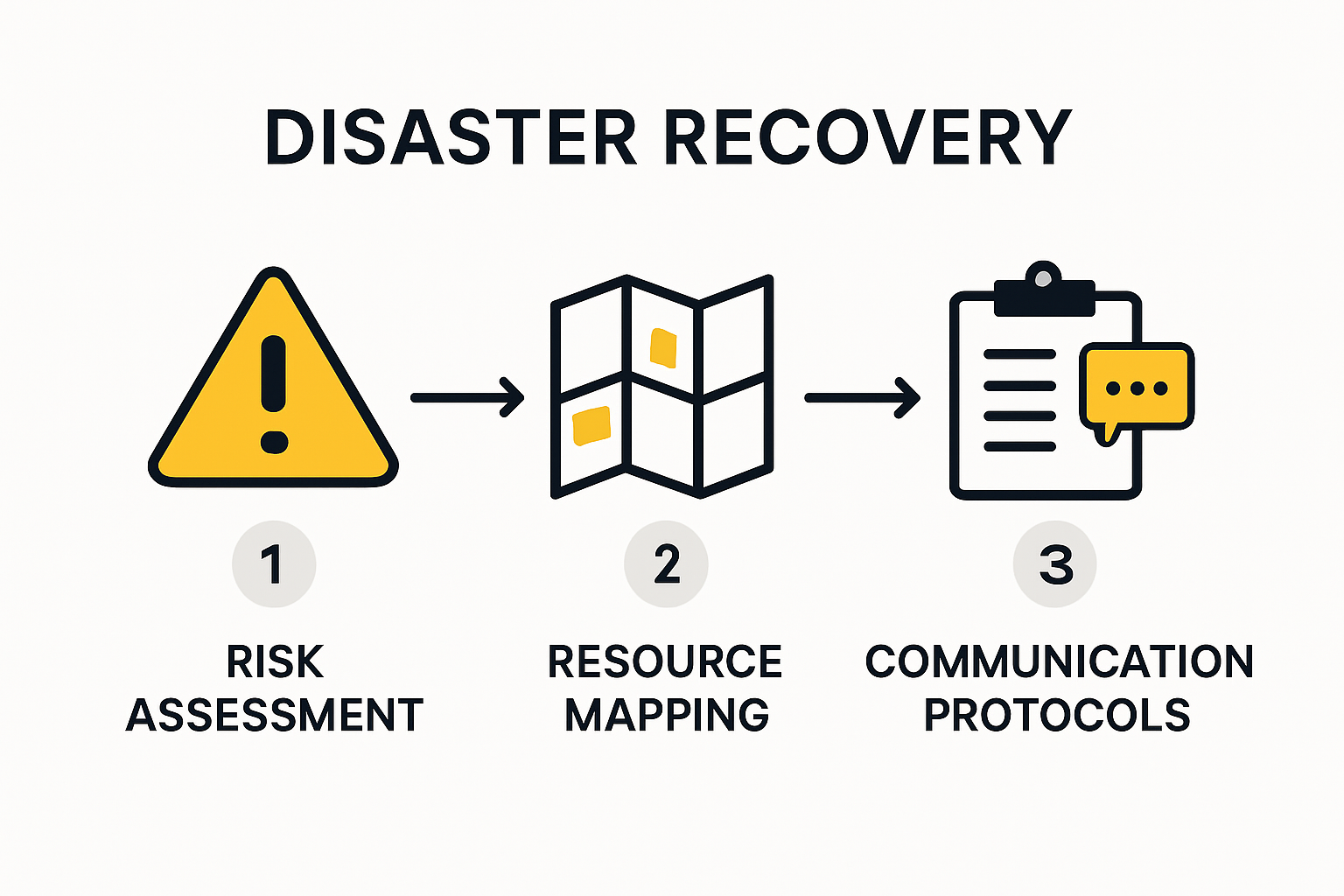
A comprehensive recovery strategy involves several critical components:
- Risk Assessment: Identifying potential threats and vulnerabilities specific to the community or organization
- Resource Mapping: Cataloging available resources, support networks, and potential assistance channels
- Communication Protocols: Establishing clear communication pathways for rapid information dissemination
Business Impact Analysis and Critical Process Identification
Ready.gov emphasizes the importance of conducting a thorough business impact analysis as a fundamental step in disaster preparedness. This process involves:
- Identifying Critical Functions: Determining which processes and systems are essential for maintaining operations
- Assessing Potential Disruptions: Evaluating the potential economic and operational consequences of different disaster scenarios
- Developing Recovery Prioritization: Creating a strategic approach to restore the most crucial functions first
The University of Texas at Austin recommends developing detailed recovery strategies that include specific workarounds and alternative approaches for maintaining essential services during and after a disaster.
Preparedness is more than just creating a document. It requires ongoing commitment, regular training, and continuous adaptation. Organizations and communities must develop a culture of resilience that goes beyond simple planning. This involves:
- Regular training and simulation exercises
- Continuous review and updating of recovery plans
- Building strong interdepartmental and inter-agency communication networks
Effective planning transforms potential chaos into a structured response. By anticipating challenges, mapping resources, and developing flexible strategies, communities can significantly reduce the impact of disasters. The goal is not just to survive but to create a robust system that can quickly adapt, recover, and emerge stronger from unexpected challenges.
Remember that preparedness is an ongoing process. It requires consistent effort, investment in training, and a proactive approach to risk management. Those who invest time and resources in comprehensive planning will be best positioned to navigate the complexities of disaster recovery with efficiency and compassion.
Executing Recovery: Step-by-Step Process
Executing a disaster recovery process requires precision, strategic planning, and a systematic approach that addresses the complex challenges faced by individuals and communities in the aftermath of a catastrophic event. The execution phase transforms preparatory plans into actionable steps that restore functionality and support affected populations.
Assembling the Recovery Team
Learn about effective recovery coordination and understand the critical importance of building a robust recovery team. According to the University of Missouri System, establishing a diverse and comprehensive disaster recovery committee is fundamental to successful implementation.
Key considerations for assembling an effective recovery team include:
- Multidisciplinary Expertise: Incorporating professionals from various fields such as emergency management, healthcare, infrastructure, and social services
- Clear Role Definition: Establishing specific responsibilities and communication channels
- Stakeholder Representation: Ensuring diverse perspectives are included in the recovery process
Implementing Strategic Recovery Actions
Google Cloud’s Disaster Recovery Planning Guide provides critical insights into executing recovery strategies. The implementation process involves several crucial steps:
- Immediate Response Activation: Triggering predefined emergency protocols
- Resource Mobilization: Quickly deploying available resources and support systems
- Damage Assessment: Conducting comprehensive evaluations of affected areas
- Priority Restoration: Focusing on critical infrastructure and essential services
According to Disaster.Shiksha, successful recovery execution requires a comprehensive approach that goes beyond immediate response. This involves:
- Establishing clear communication networks
- Coordinating multi-agency support efforts
- Implementing flexible and adaptive recovery strategies
Below is a table breaking down the primary steps in executing recovery, clarifying each phase and its main actions. This provides readers with a structured snapshot of the recovery process implementation.
| Step | Main Actions |
|---|---|
| Immediate Response Activation | Activate emergency protocols and alert necessary teams |
| Resource Mobilization | Deploy available resources, equipment, and personnel |
| Damage Assessment | Evaluate extent of damage and identify priority restoration areas |
| Priority Restoration | Restore critical infrastructure and essential operations |
| Communication Coordination | Maintain effective information flow among all stakeholders |
Continuous Monitoring and Adaptation
Recovery is not a linear process but a dynamic journey that requires constant evaluation and adjustment. Effective execution demands:
- Regular progress assessments
- Ongoing risk management
- Flexible response mechanisms
- Transparent reporting and communication
The most successful recovery efforts recognize that each disaster presents unique challenges. No single approach works universally. Organizations and communities must remain agile, responsive, and compassionate throughout the recovery process.
Technological tools and data-driven approaches now play a crucial role in recovery execution. Advanced mapping technologies, real-time communication platforms, and integrated management systems enable more efficient and targeted recovery efforts.
Ultimately, executing a disaster recovery process is about more than restoring physical infrastructure. It is about rebuilding hope, supporting affected individuals, and creating more resilient communities that can withstand and recover from future challenges. The true measure of success lies not just in the speed of recovery but in the strength and unity demonstrated throughout the process.
Roles and Collaboration Among Key Stakeholders
Effective disaster recovery demands seamless collaboration among diverse stakeholders, each playing a critical role in navigating the complex challenges of post-disaster restoration. The intricate process requires coordinated efforts, clear communication, and a shared commitment to rebuilding and supporting affected communities.
Defining Stakeholder Roles and Responsibilities
Explore collaborative recovery strategies to understand the nuanced interactions between different recovery participants. According to FEMA’s Community Recovery Management Toolkit, Local Disaster Recovery Managers (LDRMs) serve as crucial coordinators in organizing and advancing recovery efforts.
Key stakeholders typically include:
- Government Agencies: Providing regulatory support, funding, and policy guidance
- Emergency Responders: Conducting immediate rescue and stabilization operations
- Community Organizations: Offering direct support and localized assistance
- Healthcare Providers: Addressing medical and psychological needs
- Insurance Companies: Managing financial recovery and claims processes
Below is a table summarizing the primary roles of key disaster recovery stakeholders and their main responsibilities. This helps clarify the contributions of each participant during the recovery process.
| Stakeholder | Primary Responsibilities |
|---|---|
| Government Agencies | Regulatory support, funding, policy guidance |
| Emergency Responders | Immediate rescue and stabilization operations |
| Community Organizations | Direct community support, localized assistance |
| Healthcare Providers | Medical care, psychological support |
| Insurance Companies | Financial recovery, insurance claims processing |
Collaborative Frameworks and Communication Strategies
The U.S. Government Accountability Office emphasizes that successful disaster recovery hinges on establishing clear communication channels and shared recovery objectives. Effective collaboration requires:
- Unified Goal Setting: Developing common recovery priorities
- Resource Coordination: Maximizing collective capabilities
- Information Sharing: Creating transparent communication mechanisms
- Adaptive Response: Maintaining flexibility in recovery approaches
The Inter-university Consortium for Political and Social Research recommends forming multidisciplinary disaster planning teams that include representatives from various sectors. This approach ensures comprehensive planning and holistic support strategies.
Overcoming Collaboration Challenges

Collaboration among stakeholders is not without challenges. Potential barriers include:
- Bureaucratic complexities
- Competing organizational priorities
- Communication gaps
- Resource limitations
- Cultural and institutional differences
Successful stakeholder collaboration requires:
- Mutual respect and understanding
- Clear communication protocols
- Flexibility and adaptability
- Shared technological platforms
- Continuous training and joint exercises
The most effective disaster recovery efforts transcend organizational boundaries. They represent a unified human response to challenging circumstances. By recognizing each stakeholder’s unique strengths and fostering an environment of mutual support, communities can transform potential fragmentation into a powerful, coordinated recovery mechanism.
Ultimately, successful collaboration is about more than procedural efficiency. It is about creating a compassionate, responsive network that can quickly mobilize resources, support affected individuals, and rebuild stronger, more resilient communities in the face of adversity.
Frequently Asked Questions
What are the main steps in the disaster recovery process?
The disaster recovery process typically follows four major steps: readiness and preparedness, activation, continuity operations, and reconstitution. Each phase helps organizations effectively manage and recover from catastrophic events.
How can businesses conduct a business impact analysis for disaster recovery?
Businesses can conduct a business impact analysis by identifying critical functions, assessing potential disruptions, and prioritizing recovery efforts. This process helps ensure that essential operations are restored quickly after a disaster.
What role does a recovery team play in disaster recovery?
A recovery team brings together multidisciplinary expertise to manage the recovery process effectively. They are responsible for executing recovery plans, coordinating communication, and ensuring critical functions are restored efficiently.
Why is continuous monitoring important in disaster recovery?
Continuous monitoring is essential for adapting to changing conditions during the recovery process. It allows organizations to assess their progress, manage risks, and make necessary adjustments to their recovery strategies, ensuring a more resilient response to future challenges.
Ready to Turn Recovery Plans into Real Results?
Disaster recovery is more than a series of steps on paper. When facing the reality of displacement, uncertainty, and loss, the process described in this guide becomes personal and urgent. Pain points such as restoring continuity, securing emergency housing, and creating effective communication channels are not just theory—they are your next critical moves. If you found the recovery phases and checklist in this guide valuable, you will appreciate having a team that supports you at every stage of disaster response.
Explore our Uncategorized resources for additional insights tailored to your situation. When immediate action is needed, do not wait—let our compassionate experts at Disaster Victim Services step in to help you secure emergency housing, streamline claims, and coordinate all parties involved. Make your next step count by connecting with us now. Your recovery starts here.
Recommended
- How to Access Support: Guide for Disaster Recovery 2025 – Disaster Victim Services | Helping You Recover After Disaster
- Disaster Recovery Statistics 2025: Key Trends for Agencies and Families – Disaster Victim Services | Helping You Recover After Disaster
- How to Rebuild Safely: Essential Steps for Disaster Recovery 2025 – Disaster Victim Services | Helping You Recover After Disaster
- Disaster Recovery Phases Explained for 2025: Guide for Victims, Pros & Agencies – Disaster Victim Services | Helping You Recover After Disaster