
Finding help after a disaster can feel like searching for a lifeline in the dark. Technology and community groups have exploded, and now over 65 percent of disaster survivors use digital networks to access support within the first 48 hours. Most people think government aid is the only option, but those who tap into local volunteer groups and online networks often recover faster with more personal support. Curious how it all works? The biggest breakthroughs happen where you least expect.
Table of Contents
- Understanding Types Of Support Networks
- Steps To Find And Join A Support Network
- Connecting With Local And Online Resources
- Key Tips For Maximizing Support Network Benefits
Quick Summary
| Takeaway | Explanation |
|---|---|
| Utilize government resources for recovery assistance. | Contact FEMA and use local support systems for immediate aid and guidance during disaster recovery. |
| Engage with community support networks. | Local organizations and volunteer groups provide personalized assistance and resources often not covered by government programs. |
| Leverage digital platforms for support discovery. | Use online forums and apps to find real-time support networks and connect with other survivors. |
| Participate actively in recovery efforts. | Attend events, provide peer support, and volunteer to strengthen community ties and improve recovery outcomes. |
| Communicate effectively within networks. | Maintain updated contact details and use multiple channels to ensure timely information and resource sharing among support groups. |
Understanding Types of Support Networks
Disaster recovery requires strategic navigation through complex support networks that provide critical assistance during challenging times. Understanding these networks helps victims access comprehensive resources efficiently and effectively.
Government Emergency Support Systems
Government agencies play a pivotal role in creating robust support networks for disaster survivors. FEMA’s Recovery Support Functions represent a comprehensive framework designed to coordinate critical recovery efforts across multiple domains. These functions address key areas including community assistance, economic recovery, health services, housing, and infrastructure restoration.
FEMA offers several targeted assistance programs that demonstrate the depth of government support networks. These include:
- Mass Care and Emergency Assistance: Providing immediate shelter and basic necessities
- Crisis Counseling Assistance: Supporting mental health during traumatic transitions
- Disaster Case Management: Helping survivors develop personalized recovery plans
These programs illustrate how government networks create interconnected support systems that address physical, emotional, and logistical challenges faced by disaster victims.
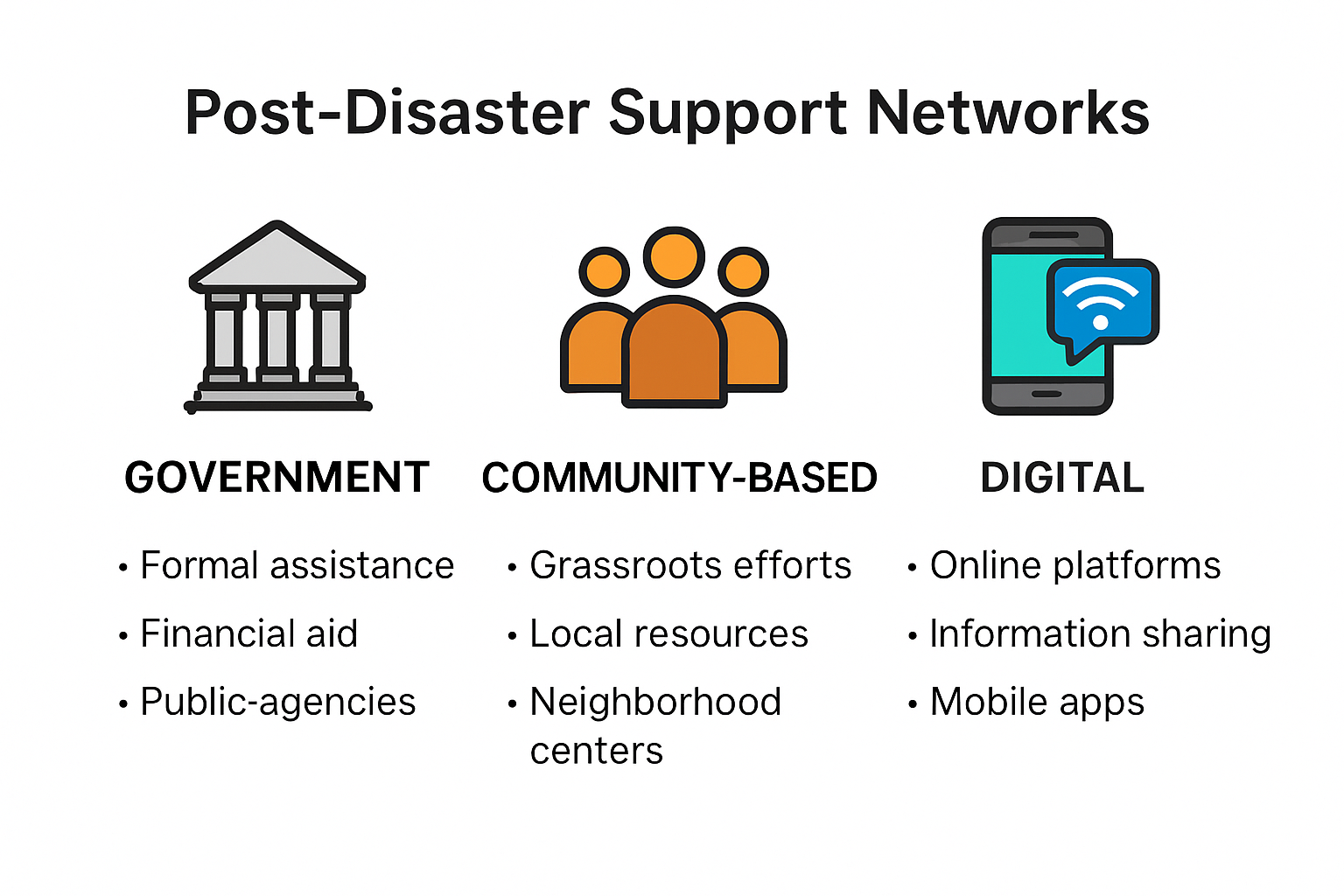
To help readers compare the main types of disaster support networks, here is a summary table highlighting key features of government, community, and digital support options:
| Type of Support Network | Main Features | Examples |
|---|---|---|
| Government Emergency Support | Structured, official assistance, covers broad recovery needs | FEMA, FEMA Mass Care, Case Management |
| Community-Based Support | Local, agile, personalized aid, understands unique community needs | Churches, NVOAD, neighborhood groups |
| Digital/Technology-Enabled | Real-time info, broad connectivity, resource mapping, remote support | Social media groups, apps, online forums |
Community Based Support Structures
Beyond governmental resources, community networks emerge as powerful support systems during disaster recovery. Local organizations, religious institutions, volunteer groups, and neighborhood associations often provide immediate and personalized assistance that government programs might not fully cover.
The National Voluntary Organizations Active in Disaster highlights how community networks collaborate to deliver comprehensive support. These networks typically offer services like emergency supplies, temporary housing coordination, emotional support groups, and localized resource distribution. Their strength lies in understanding specific community needs and responding with agility and compassion.
Digital and Technology Enabled Support Networks
Technology has transformed how support networks operate in disaster scenarios. Digital platforms now enable real time communication, resource mapping, and immediate assistance coordination. Online support groups, virtual counseling services, and crowdfunding platforms have become critical components of modern disaster recovery ecosystems.
Emergency management technologies allow survivors to access support networks through mobile applications, social media platforms, and dedicated websites. These digital tools provide immediate information about available resources, connect individuals with support services, and create virtual communities of support and resilience.
By understanding these diverse support networks government agencies disaster relief organizations and individual survivors can create more effective recovery strategies that address immediate needs while building long term resilience.
Steps to Find and Join a Support Network
Navigating support networks after a disaster can feel overwhelming, but a structured approach can help survivors connect with critical resources quickly and effectively. Understanding how to locate and engage with appropriate support networks can significantly ease the recovery process.
Utilizing Official Referral Resources
Official government and nonprofit resources provide streamlined pathways to finding support networks. United Way’s 211 service offers an immediate connection point for individuals seeking local assistance. By simply dialing 211, disaster survivors can access comprehensive information about available support groups, emergency services, and local resources tailored to their specific needs.
FEMA’s National Referral List represents another powerful tool for connecting with support networks. This comprehensive directory provides detailed information about organizations offering various forms of assistance. Survivors can search through verified resources, ensuring they connect with legitimate and effective support systems that understand their unique challenges.
Online and Digital Network Discovery

Digital platforms have revolutionized how individuals discover and join support networks. Social media groups, specialized disaster recovery forums, and community websites now offer extensive networks for survivors. Platforms like Facebook and Reddit host specific groups dedicated to disaster recovery, where individuals can share experiences, seek advice, and find local support connections.
Specialized websites and mobile applications focus specifically on disaster support networking. These digital resources often include:
- Geolocation based matching: Finding local support groups
- Real time communication channels: Connecting with other survivors
- Resource information databases: Comprehensive support network directories
When using digital platforms, survivors should prioritize verified and secure networks. Checking organization credentials, reading user reviews, and confirming administrative oversight can help ensure a safe and supportive online experience.
Local Community Engagement Strategies
Personal outreach and local community engagement remain powerful methods for finding support networks. Local religious institutions, community centers, libraries, and municipal offices often maintain updated lists of support groups and recovery resources. Speaking directly with local social workers, counselors, and community leaders can provide personalized guidance in connecting with appropriate support networks.
Attending community meetings, disaster recovery workshops, and local information sessions can also facilitate network discovery. These events not only provide information about available resources but also create opportunities for direct networking with other survivors and support professionals.
The process of finding and joining support networks requires patience, persistence, and an open mindset. By leveraging official resources, exploring digital platforms, and engaging with local communities, disaster survivors can build robust support systems that facilitate healing and recovery.
The following table breaks down the main methods to find and join disaster support networks, summarizing the process and benefits of each approach:
| Method | How It Works | Key Benefits |
|---|---|---|
| Official Referral Resources | Use 211 or FEMA directories to identify support options | Reliable, comprehensive, vetted info |
| Online/Digital Network Discovery | Join social/media groups, use apps/websites | Quick connections, real-time updates |
| Local Community Engagement | In-person outreach, attend events, talk to leaders | Personalized support, local knowledge |
Connecting with Local and Online Resources
Successful disaster recovery depends on effectively accessing and utilizing both local and online resources. Survivors must develop a strategic approach to navigating the complex landscape of support services available through various channels.
Local Resource Centers and Physical Support Locations
FEMA’s assistance guidelines provide critical guidance for connecting with physical resource centers. These local support hubs offer direct, in person assistance that digital platforms cannot fully replicate. Community disaster recovery centers typically provide comprehensive services including:
- Direct application assistance: Help with filing recovery documents
- Immediate information access: Face to face consultations with support specialists
- Resource coordination: Direct connections to local support networks
Local government offices, community centers, and emergency management facilities serve as crucial physical touchpoints. These locations offer personalized guidance, helping survivors navigate complex recovery processes and connect with specific local resources tailored to their immediate needs.
Digital Platforms and Online Assistance Tools
Technology has transformed resource access for disaster survivors. Online platforms now provide unprecedented opportunities for immediate information gathering and support network engagement. Mobile applications and web based resources enable survivors to access critical information from anywhere, at any time.
The Disaster Assistance Improvement Program represents a comprehensive online resource that consolidates multiple support services. This digital platform allows survivors to:
- Search multiple assistance programs: Comprehensive resource database
- Submit online applications: Streamlined recovery support requests
- Track assistance status: Real time updates on support services
Digital tools also include specialized websites, mobile applications, and interactive maps that provide real time information about available resources, shelter locations, and emergency support services. These platforms create a flexible and accessible support ecosystem for disaster survivors.
Multichannel Communication Strategies
Effective resource connection requires a multichannel approach that combines digital and physical communication methods. Survivors should develop a comprehensive strategy that leverages multiple communication platforms. This might include:
- Registering for text message alerts from local emergency services
- Following official social media channels for real time updates
- Maintaining direct contact with local support organizations
- Keeping digital and physical copies of important documentation
By diversifying communication channels, survivors increase their chances of accessing timely and relevant support. This approach ensures multiple pathways for receiving critical information and resources during the recovery process.
The key to successfully connecting with resources lies in proactive engagement. Survivors must remain persistent, organized, and open to various support channels. By combining local and online resources strategically, individuals can create a robust support network that facilitates comprehensive disaster recovery.
Key Tips for Maximizing Support Network Benefits
Successfully navigating support networks requires strategic engagement and proactive participation. Disaster survivors can transform these networks from passive resources into powerful recovery tools by implementing targeted approaches that maximize available support.
Building Meaningful Social Connections
Research from the University of Queensland emphasizes the transformative power of forming new social connections after disasters. These connections are not merely social interactions but critical pathways for physical, material, and emotional support. Survivors should approach network engagement with openness and intentionality.
Effective social connection strategies include:
- Active listening: Engaging genuinely with other survivors
- Sharing experiences: Creating mutual understanding
- Offering reciprocal support: Contributing to network strength
Learn more about effective disaster recovery strategies to understand how collaborative approaches can accelerate personal and community healing.
Communication and Information Exchange
The National Science Foundation research highlights communication as a critical component of network effectiveness. Successful information exchange goes beyond mere data sharing it involves creating trusted channels that facilitate rapid, accurate resource distribution.
Key communication tactics include:
- Maintaining updated contact information
- Using multiple communication platforms
- Participating in community information sessions
- Documenting and sharing relevant recovery experiences
Strategic Network Participation
NORC at the University of Chicago studies demonstrate that communities with strong social networks recover more efficiently. Strategic participation means actively contributing to and benefiting from support ecosystems.
Strategies for meaningful network participation include:
- Attending regular support group meetings
- Volunteering for community recovery initiatives
- Providing peer support to other survivors
- Remaining open to diverse support opportunities
Maximizing support network benefits requires patience, resilience, and a proactive mindset. By understanding network dynamics and engaging authentically, survivors can transform challenging experiences into opportunities for personal growth and community rebuilding. Remember that each interaction contributes to a larger recovery ecosystem where collective strength emerges from individual contributions.
Frequently Asked Questions
How can I find support networks after a disaster?
You can find support networks by utilizing official resources like United Way’s 211 service, exploring digital platforms like social media groups and forums, and engaging with local community organizations or religious institutions.
What types of support networks are available for disaster survivors?
Disaster survivors can access various support networks, including government emergency support systems, community-based organizations that offer personalized assistance, and digital technology-enabled networks that provide real-time information and resources.
How can technology help me connect with support after a disaster?
Technology allows you to access support through online platforms, mobile apps, and social media, where you can find real-time information, connect with other survivors, and identify available community resources and assistance programs.
What is the role of community-based support structures in disaster recovery?
Community-based support structures provide personalized assistance that addresses the unique needs of local residents. These may include emotional support, emergency supplies, and help coordinating temporary housing, often filling gaps left by government programs.
Immediate Support When You Need It Most
If you are feeling overwhelmed after a disaster and struggling to find the right support network, you are not alone. The article clearly shows the confusion, delays, and gaps many people face when seeking emergency housing, local services, or reliable information. At DisasterVictimServices.com, our mission is to eliminate these barriers by delivering compassionate, hands-on help when it matters most. Our deeply connected team specializes in both immediate relief and long-term recovery, bridging the gap between official resources and real-world solutions for people just like you.
Ready to move from information to action? Visit Disaster Victim Services and discover how our New Recovery Resources can transform your next step into a confident solution. Do not wait to navigate this process by yourself. Reach out now for the expert guidance and fast response you and your family deserve.
Recommended
- How to Improve Response After Disasters: Essential Strategies for 2025 – Disaster Victim Services | Helping You Recover After Disaster
- How to Manage Displacement: Practical Steps for Disaster Recovery 2025 – Disaster Victim Services | Helping You Recover After Disaster
- Emergency Response Trends 2025: What Stakeholders Need to Know – Disaster Victim Services | Helping You Recover After Disaster
- How to Access Support: Guide for Disaster Recovery 2025 – Disaster Victim Services | Helping You Recover After Disaster