
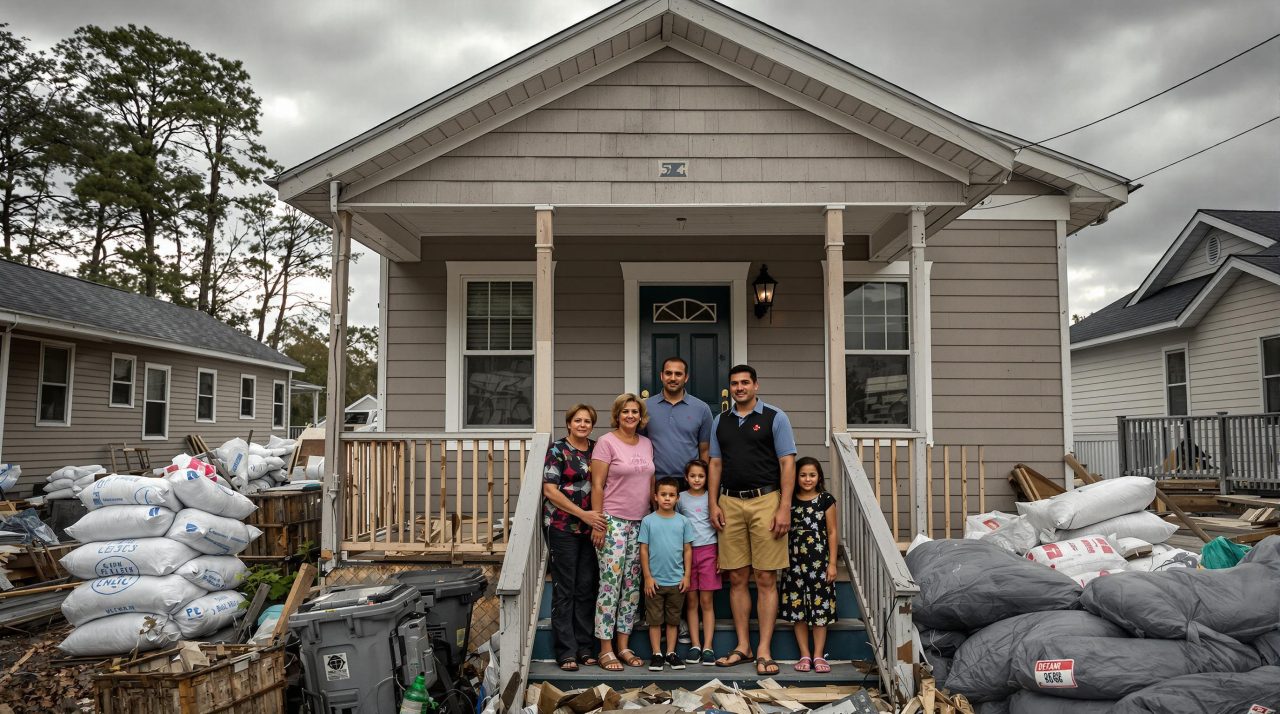
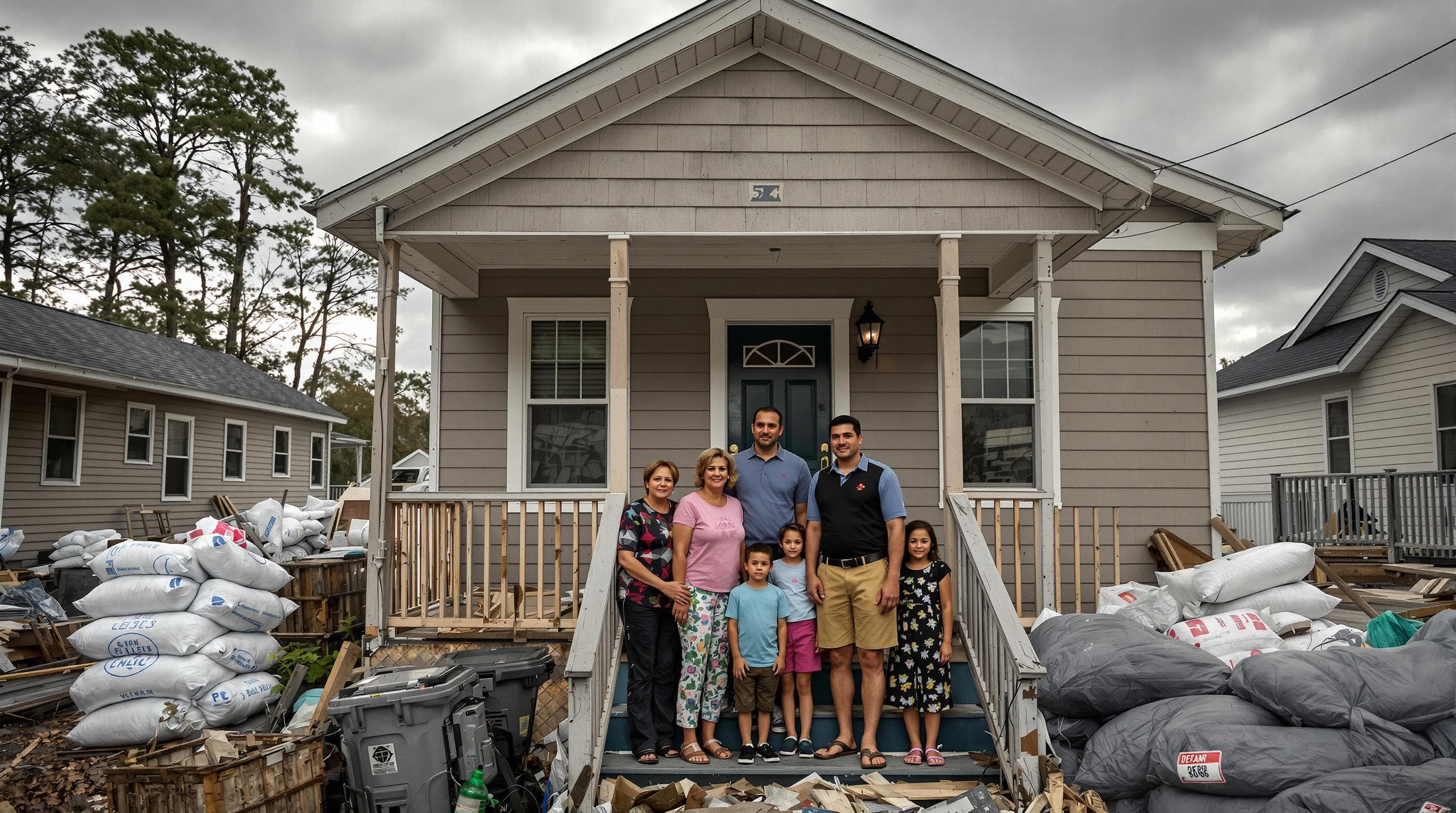
Displacement is on the rise and it is leaving deep marks on families and entire communities. Think disasters are rare setbacks? Think again. The annual number of extreme events in the US has doubled since 2018 and there have been 232 billion-dollar disasters in the Gulf Coast alone over just four decades. Most surprising of all, it is not always the natural disasters themselves pushing people out. It is the hidden economic pressures, aging infrastructure, and social disruptions coming together in unexpected ways. Ready to see why staying put is becoming just as risky as moving?
Table of Contents
- Key Drivers Of Displacement In 2025
- Impacts On Families And Communities
- Response Strategies For Agencies And Professionals
- Innovative Solutions For Recovery And Prevention
Quick Summary
| Takeaway | Explanation |
|---|---|
| Community-Driven Approaches Are Essential | Engaging affected populations in decision-making ensures that relocation plans reflect local values and priorities, enhancing the effectiveness of intervention strategies. |
| Comprehensive Risk Assessment Is Crucial | Agencies must develop multidimensional tools that consider economic vulnerabilities and long-term sustainability, moving beyond immediate physical threats to effectively mitigate displacement risks. |
| Focus on Marginalized Communities | It is imperative to prioritize vulnerable populations, like low-income communities and communities of color, with targeted interventions that address historical inequities and create pathways for resilience. |
| Innovative Technology Can Improve Prevention | Utilizing advanced technologies, such as AI and real-time monitoring, allows for more accurate forecasting and proactive measures to minimize displacement impacts. |
| Cross-Sector Collaboration Is Key | Successful recovery strategies rely on collaboration among government agencies, private sectors, and community groups to integrate support systems and address the multifaceted challenges of displacement. |
Key Drivers of Displacement in 2025
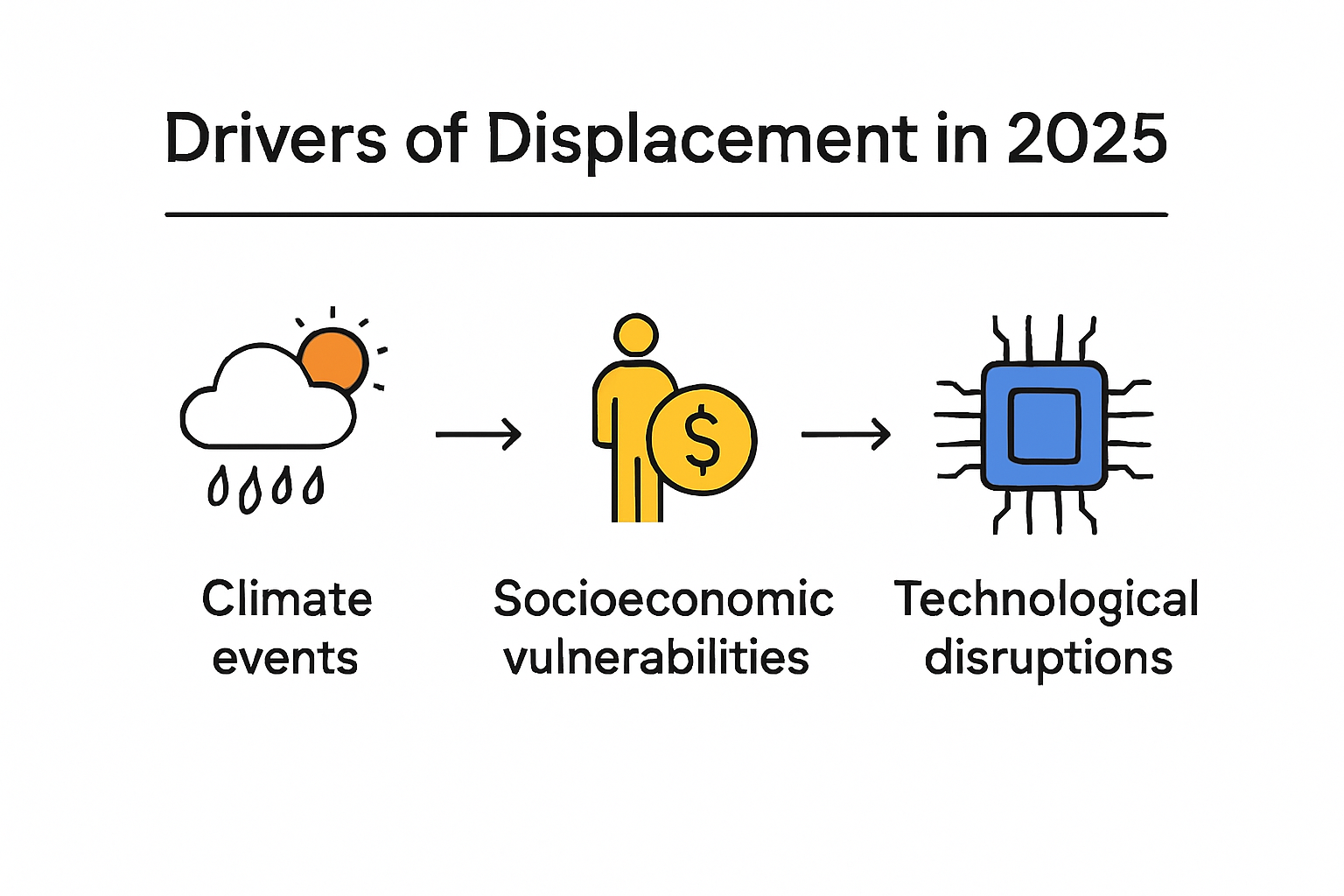
Disaster displacement is rapidly evolving, driven by complex interconnected factors that threaten community stability and individual safety. Understanding these key drivers becomes crucial for families, emergency responders, and policymakers preparing for potential disruptions in 2025.
Climate Change and Extreme Weather Events
Climate change continues to be the most significant catalyst for displacement. Recent analysis from the National Academies of Sciences reveals a stark reality: the U.S. Gulf Coast has experienced 232 billion-dollar disasters between 1980 and 2023, with the annual number of extreme events doubling since 2018. These escalating climate-related incidents create unprecedented challenges for communities.
Wildfires, hurricanes, flooding, and prolonged droughts are transforming entire regional landscapes. In 2023 alone, the United States confronted 28 climate and weather-related disasters, resulting in $95.1 billion in damages and 492 fatalities. Research from the American Journal of Public Health highlights that these events disproportionately impact marginalized communities, creating complex social and economic vulnerabilities.
Socioeconomic Vulnerability and Infrastructure Challenges
Beyond environmental factors, socioeconomic conditions significantly influence displacement trends. The Administration for Children and Families reports that over one million people are annually displaced by disasters, with storms, flooding, and wildfires being primary triggers. Low-income communities and communities of color face heightened risks, struggling with limited resources for recovery and relocation.
Infrastructure resilience plays a critical role. Aging infrastructure, inadequate urban planning, and insufficient emergency response systems compound displacement risks. Many communities find themselves ill-prepared to absorb sudden environmental or economic shocks, creating a cascade of displacement challenges.
Technological and Economic Disruptions
Emerging technological and economic shifts are introducing new displacement dynamics. Automation, remote work trends, and economic restructuring are causing geographic mobility unprecedented in recent decades. Regions dependent on traditional industries face potential mass migrations as economic landscapes transform.
The intersection of climate change, technological disruption, and economic instability creates a complex ecosystem of potential displacement. Families and responders must develop adaptive strategies that anticipate these multifaceted challenges. Read our comprehensive guide on managing displacement risks to better understand and prepare for these evolving trends.
As displacement trends continue to evolve, proactive preparation, community resilience, and adaptive strategies will be paramount in mitigating potential disruptions and supporting affected populations.
To help readers understand the critical statistics behind displacement-related disasters and their impacts, here is a summary table highlighting key data points mentioned in this section:
| Statistic | Value | Timeframe/Location |
|---|---|---|
| Billion-dollar disasters in Gulf Coast | 232 | 1980-2023 (Gulf Coast) |
| Annual number of extreme events (US) | Doubled | Since 2018 |
| Major climate/weather disasters (US) | 28 | 2023 |
| Total disaster damages (US) | $95.1 billion | 2023 |
| Fatalities from disasters (US) | 492 | 2023 |
| People displaced by disasters (US) | ~1 million annually | Recent years |
Impacts on Families and Communities
Displacement represents far more than a physical relocation. It is a profound disruption that fundamentally transforms family dynamics, community structures, and individual psychological well-being. Understanding these multifaceted impacts becomes crucial for developing effective support strategies.
Psychological and Social Disruption
Research from the American Journal of Public Health reveals the complex emotional landscape of displacement. Approximately 1.5% of U.S. adults reported displacement due to natural disasters between 2022 and 2023, with marginalized populations experiencing disproportionate challenges. Sexual and gender minority populations, individuals with disabilities, and those with lower incomes faced heightened psychological stress during and after displacement.
The emotional toll extends beyond immediate trauma. Families experience significant disruptions in social networks, educational continuity, and sense of community. Children particularly suffer from interrupted schooling, loss of peer connections, and potential long-term developmental impacts. Mental health professionals emphasize the critical need for targeted psychological support during these transitions.
Economic and Resource Vulnerability
Economic consequences of displacement create cascading challenges for affected families. The Administration for Children and Families reports that approximately one million new disaster displacements occur annually, with immediate needs including housing, income support, transportation, and employment assistance.
Displaced populations often encounter significant financial strain. Loss of employment, reduced income opportunities, and unexpected relocation expenses compound existing economic vulnerabilities. Low-income communities and communities of color experience these challenges more acutely, with limited resources for recovery and rebuilding.
Long-Term Community Transformation
Displacement triggers profound structural changes within communities. Research from the Center for American Progress highlights historical patterns of displacement, noting that between 2000 and 2013, over 110,000 Black residents and 24,000 Hispanic residents were displaced from urban areas due to various socioeconomic factors.
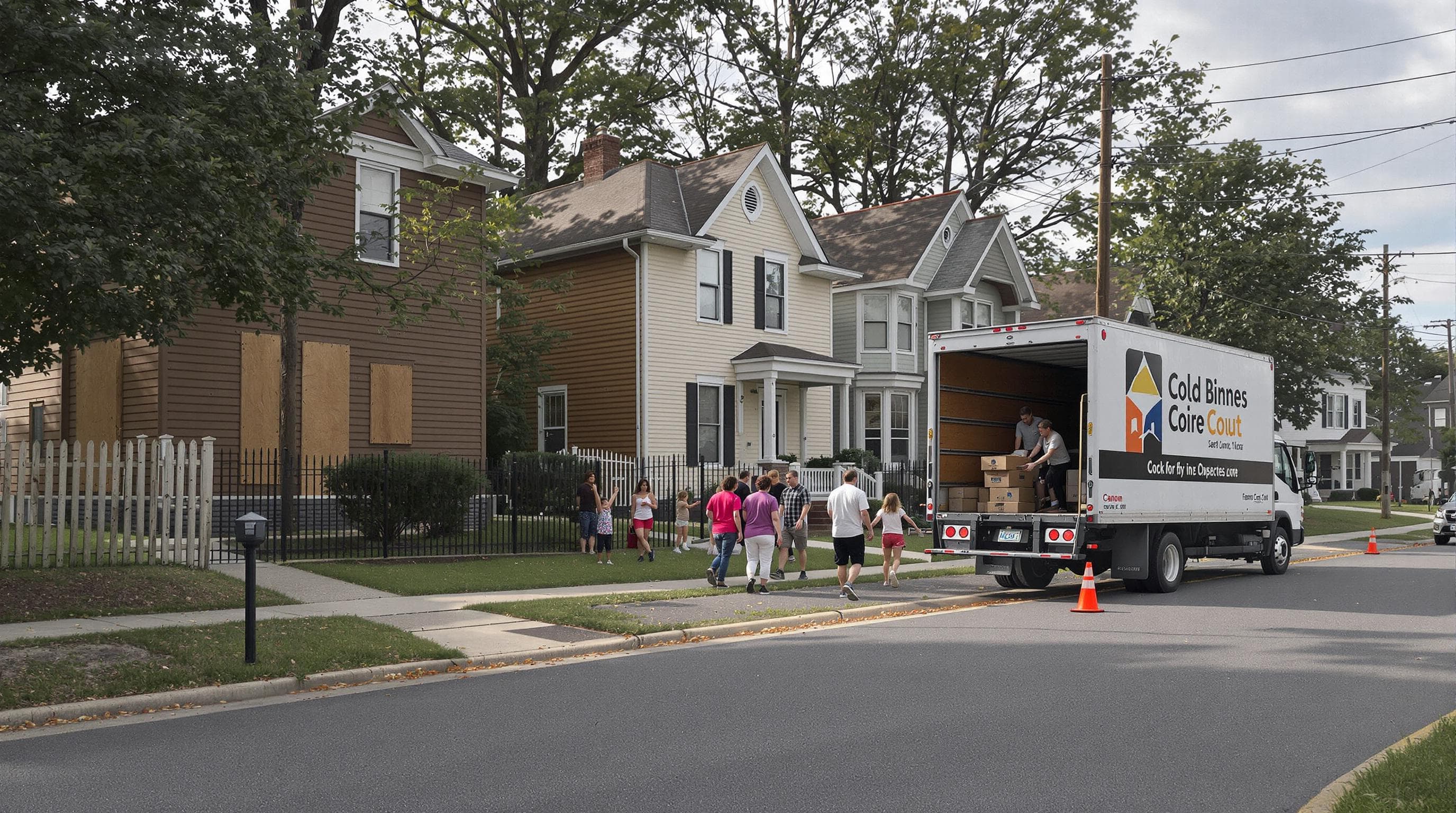
These shifts disrupt established social ecosystems, cultural networks, and generational community bonds. Neighborhoods experience demographic transformations, altered economic landscapes, and potential fragmentation of long-standing social support systems. Learn more about community recovery strategies to understand how communities can rebuild and adapt.
Addressing displacement requires a holistic approach that recognizes its comprehensive impact on human experience. Comprehensive support must balance immediate physical needs with long-term psychological, social, and economic recovery strategies.
Below is a summary table outlining the major impacts of displacement on families and communities, as discussed in this section:
| Impact Area | Description | Populations Most Affected |
|---|---|---|
| Psychological Stress | Heightened trauma, stress, and emotional disruption during and after displacement | Marginalized groups, children, sexual and gender minorities, people with disabilities, low-income families |
| Social Network Disruption | Loss of community connections, support systems, and peer relationships | Displaced families, children, minority communities |
| Educational Disruption | Interrupted schooling, loss of learning continuity, developmental impacts | Children and youth |
| Economic Hardship | Loss of income/jobs, relocation costs, limited resources for recovery | Low-income and communities of color |
| Community Fragmentation | Loss of cultural bonds, social support, generational continuity | Black and Hispanic residents, long-term urban communities |
Response Strategies for Agencies and Professionals
Effective displacement response requires a comprehensive, adaptive approach that prioritizes human dignity, community resilience, and strategic intervention. Agencies and professionals must develop nuanced strategies that address the complex challenges of population movement and community disruption.
Community-Driven Relocation Approaches
The National Academies of Sciences emphasizes the critical importance of community-driven relocation strategies. Traditional top-down approaches are increasingly recognized as ineffective. Instead, agencies must engage directly with affected populations, ensuring that relocation plans reflect local values, cultural contexts, and community priorities.
Successful intervention requires deep collaboration. This means creating participatory decision-making processes where community members are active partners rather than passive recipients of assistance. Professionals must develop communication frameworks that genuinely incorporate local knowledge, traditional practices, and community-specific needs.
Comprehensive Risk Assessment and Mitigation
The Urban Institute outlines critical principles for addressing displacement risks. Key among these is the need for comprehensive risk assessment that goes beyond immediate physical threats. Agencies must develop multidimensional evaluation tools that consider economic vulnerability, social network disruption, and long-term community sustainability.
Effective risk mitigation involves more than emergency response. It requires proactive strategies that include economic support, mental health resources, educational continuity, and workforce reintegration. Explore our detailed emergency housing referral workflow to understand the comprehensive approach needed in displacement scenarios.
Equity-Focused Intervention Strategies
Local Housing Solutions provides critical guidance on developing equitable intervention strategies. Agencies must prioritize vulnerable populations, including low-income communities, communities of color, and populations with limited resources.
This approach demands a nuanced understanding of systemic barriers. Professionals must develop targeted interventions that address historical inequities, provide tailored support, and create pathways for community resilience. This includes flexible funding mechanisms, culturally sensitive support services, and long-term community development initiatives.
The most effective response strategies recognize displacement as a complex human experience. They move beyond transactional assistance to create holistic support systems that preserve human dignity, community connections, and individual potential. Agencies and professionals must continue to evolve their approaches, embracing flexibility, empathy, and innovative solutions in an increasingly unpredictable environmental and social landscape.
Innovative Solutions for Recovery and Prevention
Disaster displacement demands groundbreaking approaches that transcend traditional response mechanisms. Innovative solutions are increasingly critical in addressing the complex challenges of prevention, recovery, and community resilience.
Technology-Enabled Prevention and Early Warning Systems
Advanced technological interventions are revolutionizing displacement prevention strategies. Artificial intelligence and machine learning now enable sophisticated predictive modeling that can forecast potential displacement risks with unprecedented accuracy. Technological advances in disaster response are transforming how agencies anticipate and mitigate potential displacement scenarios.
Satellite imaging, real-time climate monitoring, and advanced sensor networks provide actionable intelligence for emergency management teams. These technologies allow for early risk identification, enabling proactive evacuation and resource allocation strategies that can significantly reduce displacement impacts.
Adaptive Community Resilience Frameworks
The National Academies of Sciences emphasizes the critical importance of developing adaptive community resilience frameworks. These approaches go beyond traditional emergency response, focusing on building long-term community capacity to withstand and recover from displacement-inducing events.
Successful frameworks incorporate multiple dimensions of resilience. This includes economic diversification, infrastructure reinforcement, social network strengthening, and comprehensive mental health support. Community-based adaptation strategies ensure that local populations are not just passive recipients of assistance but active participants in their own recovery and prevention efforts.
Integrated Cross-Sector Recovery Strategies
Innovative displacement recovery requires unprecedented levels of cross-sector collaboration. Government agencies, private sector organizations, technology companies, and community groups must develop integrated approaches that address the multifaceted challenges of displacement.
These strategies involve creating flexible funding mechanisms, developing rapid response protocols, and establishing comprehensive support systems that address immediate needs while simultaneously building long-term recovery capabilities. This might include innovative housing solutions, workforce reintegration programs, and technology-enabled support networks that provide continuous assistance to displaced populations.
The future of displacement management lies in anticipatory, adaptive, and human-centered approaches. By combining technological innovation, community engagement, and comprehensive support strategies, we can transform how societies respond to and prevent displacement challenges. The goal is not just to react to disasters but to build more resilient, adaptive communities capable of withstanding and recovering from complex displacement scenarios.
Frequently Asked Questions
What are the main drivers of displacement in 2025?
The key drivers of displacement in 2025 include climate change and extreme weather events, socioeconomic vulnerability, infrastructure challenges, and technological and economic disruptions that lead to geographic mobility and instability.
How does displacement impact families and communities?
Displacement causes profound psychological stress, disruption of social networks, economic hardship, and long-term community transformation, particularly affecting marginalized groups, children, and those with limited resources.
What strategies can agencies and professionals use to address displacement?
Agencies should utilize community-driven relocation approaches, conduct comprehensive risk assessments, and implement equity-focused intervention strategies to effectively support displaced populations and foster community resilience.
How can technology aid in preventing displacement?
Technology can enhance displacement prevention through early warning systems, predictive modeling, and real-time monitoring, allowing for proactive measures that significantly reduce the impacts of potential displacement events.
Facing New Displacement Realities? Discover Practical Solutions for Families and Responders
The challenges highlighted in “Displacement Trends 2025” reveal just how overwhelming it feels when disasters force families from their homes. Escalating climate risks, sudden economic disruptions, and uncertain housing situations can leave you worried about what comes next. If you are seeking clarity, rapid assistance, and truly compassionate support, you are not alone. Many families and emergency professionals are searching for clear answers and comprehensive solutions for disaster recovery needs like fast emergency housing, reliable communication, and ongoing guidance.
Take meaningful action now while uncertainty is still high. Explore our newest solutions or visit Disaster Victim Services to connect with experts who understand both the emotional and logistical demands of displacement. Do not wait for the next disaster to disrupt your life or response efforts. Let us help you regain stability and safety quickly. Your pathway to recovery and support starts here.
Recommended
- How to Handle Relocations in 2025: A Guide for Disaster Relief Teams – Disaster Victim Services | Helping You Recover After Disaster
- Safe Housing Placement Steps for Disaster Response 2025 – Disaster Victim Services | Helping You Recover After Disaster
- Emergency Response Trends 2025: What Stakeholders Need to Know – Disaster Victim Services | Helping You Recover After Disaster
- How to Manage Displacement: Practical Steps for Disaster Recovery 2025 – Disaster Victim Services | Helping You Recover After Disaster