

Facing a home fire can feel like everything you know has been turned upside down and the confusion in the aftermath can put anyone’s nerves on edge. But one detail stands out above the chaos. More than 350000 home fires happen in the US each year, causing billions in property loss and leaving countless families to navigate a maze of recovery steps. Most people believe the hardest part is escaping the fire itself. In reality, the real challenge begins the moment the flames are out. The road to recovery is where the smallest decisions matter most.
Table of Contents
- Ensuring Safety And Contacting Help
- Assessing Damage And Documenting Losses
- Navigating Insurance And Financial Support
- Restoration, Cleanup, And Community Resources
Quick Summary
| Takeaway | Explanation |
|---|---|
| Prioritize Safety and Communication | Always ensure personal safety and evacuate before re-entering a fire-damaged property. Contact emergency services, and notify your insurance provider and local authorities immediately. |
| Document Damage Thoroughly | After the fire, conduct a detailed assessment of property damage and create a comprehensive inventory of lost or damaged items. This documentation is vital for insurance claims. |
| Understand Insurance Coverage and Financial Support | Review your insurance policy with your provider to understand coverage details and required documentation. Explore additional financial assistance options from federal programs and nonprofit organizations. |
| Engage Professional Restoration Services | Hire certified professionals for the restoration process to address hidden damages from smoke and water. Proper restoration is crucial for long-term recovery. |
| Utilize Community Resources | Reach out to local agencies and support organizations for assistance with housing, personal items, and emotional support during the recovery process. |
Ensuring Safety and Contacting Help
Immediate action and strategic communication become critical when recovering from a home fire. The moments following a fire can be overwhelming, but understanding the right steps can protect your safety and jumpstart your recovery process.
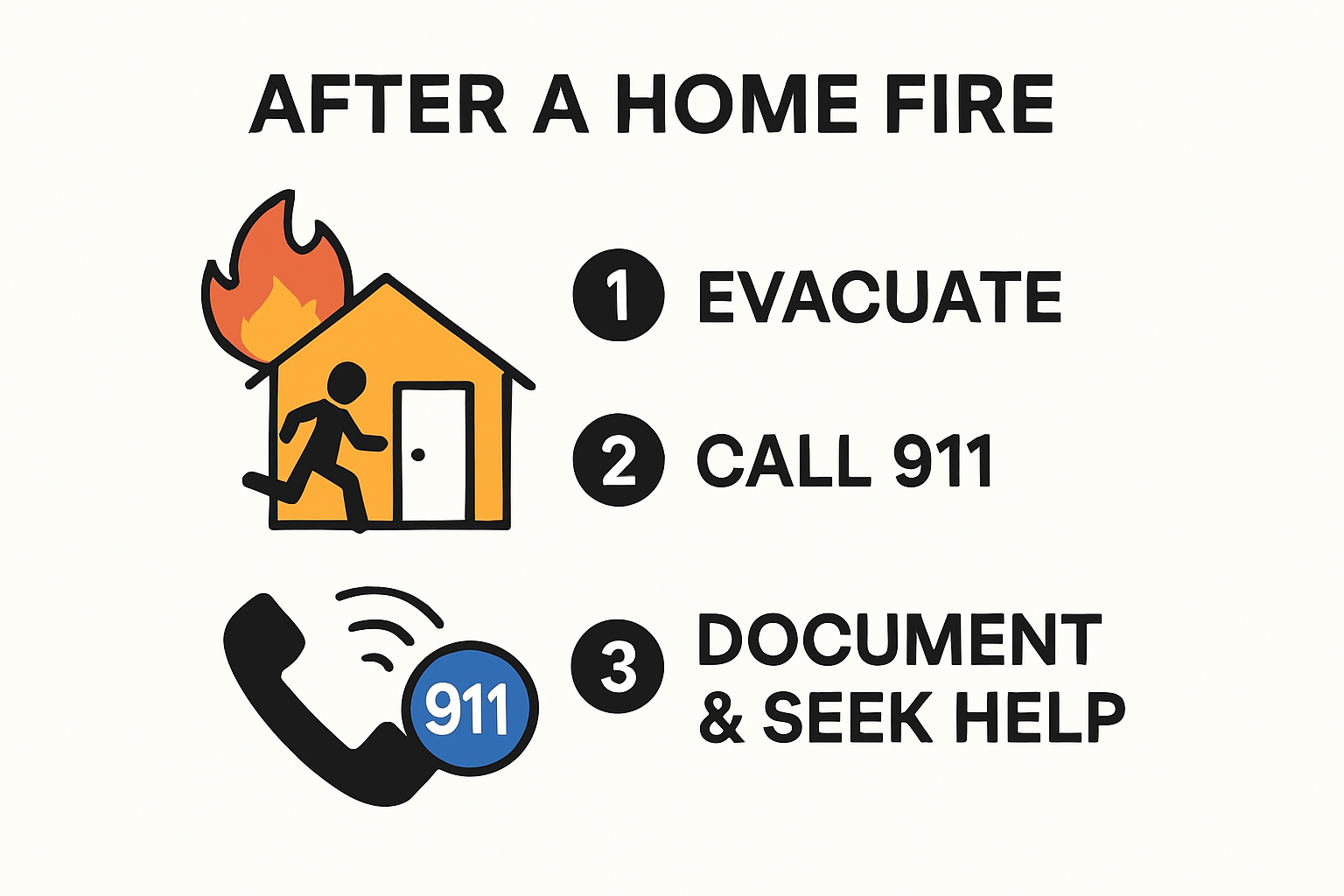
Prioritizing Personal Safety and Evacuation
Your first priority is always personal safety. Never attempt to re-enter a fire damaged structure until local authorities confirm it is safe. The Children’s Hospital of Pittsburgh emphasizes establishing a predetermined meeting location for family members and informing emergency responders about any potential individuals or pets remaining inside the building.
After evacuating, conduct a rapid personal assessment. Check yourself and family members for potential injuries. Even if burns or smoke exposure seem minor, seek medical attention immediately. Smoke inhalation and hidden injuries can pose significant health risks that might not be immediately apparent.
Emergency Communication and Reporting
Contact emergency services immediately if you have not already done so. Call 911 to report the fire and request medical assistance if needed. Once the immediate emergency is addressed, you’ll need to make several critical phone calls:
- Insurance Provider: Notify your homeowners or renters insurance company about the fire. Request guidance on documentation and initial claim steps.
- Local Authorities: File an official fire report with local law enforcement or fire department.
- Utility Companies: Contact gas, electric, and water providers to disconnect services to the damaged property.
Seeking Immediate Support and Resources
Reach out to support networks during this challenging time. Family, friends, and our emergency housing support services can provide immediate assistance. Many communities offer disaster relief programs that can help with temporary housing, clothing, and essential supplies.
Documentation becomes crucial in the aftermath. Photograph the damage comprehensively, preserve any salvageable items, and begin collecting receipts for expenses related to emergency accommodations and essential replacements. These records will be vital for insurance claims and potential disaster assistance applications.
Remember that emotional support is just as important as physical recovery. Many communities provide counseling services and support groups specifically designed for fire survivors. Do not hesitate to seek professional help to process the trauma and stress associated with experiencing a home fire.
Your immediate actions in the hours and days following a fire can significantly impact your long term recovery. Stay calm, prioritize safety, and systematically work through the necessary steps to rebuild and restore your life.
Assessing Damage and Documenting Losses
After ensuring your immediate safety, the next critical phase in fire recovery involves methodically assessing property damage and creating comprehensive documentation for insurance and potential recovery assistance.
Initial Property Damage Assessment
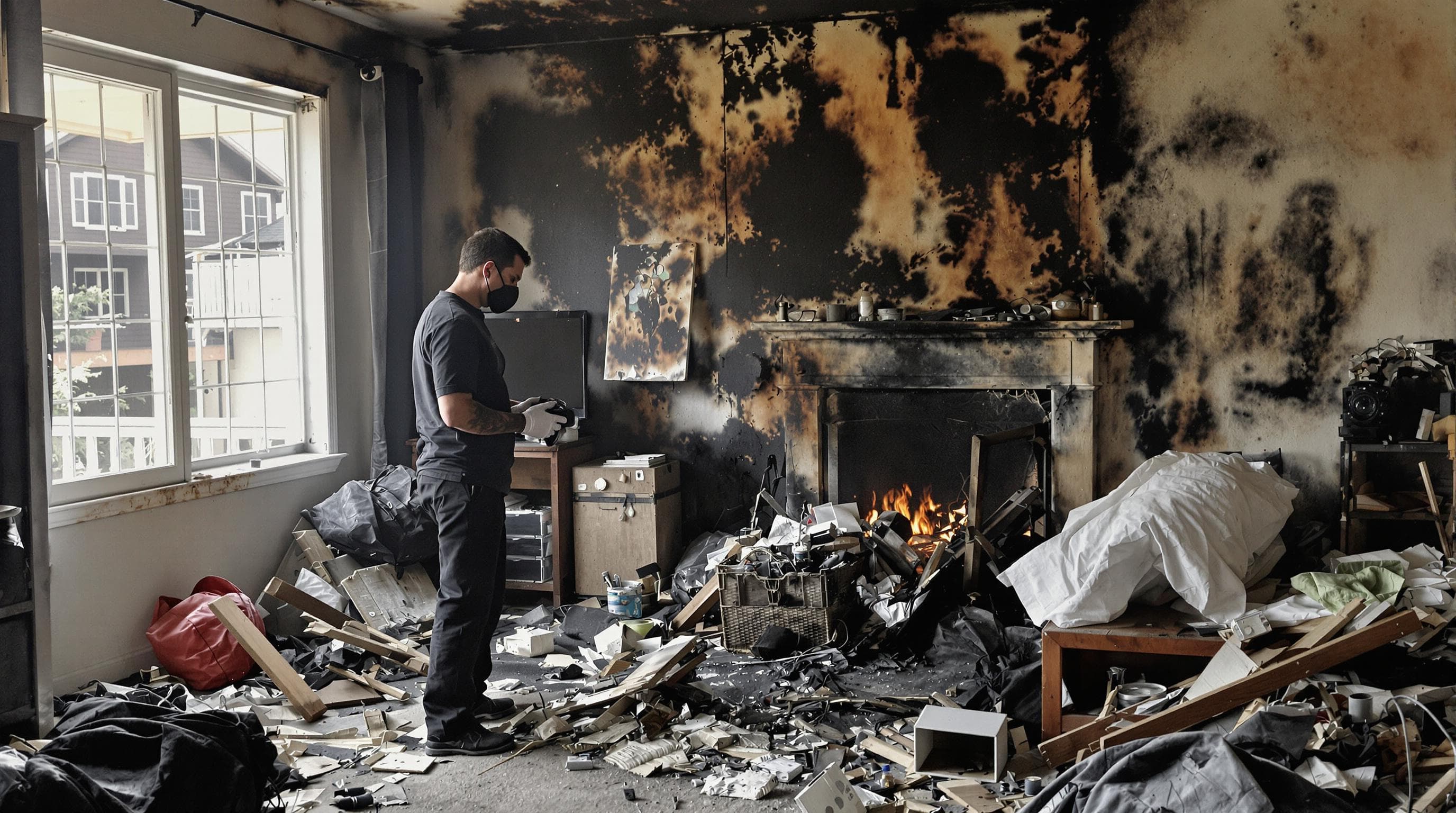
Carefully approach your property only after receiving official clearance from local fire authorities. Wear protective gear such as sturdy boots, long pants, gloves, and a face mask to prevent exposure to potentially hazardous debris. The National Association of Insurance Commissioners (NAIC) recommends carefully documenting all damage through systematic photography and detailed written records.
Begin by conducting a room by room assessment. Note structural damage, destroyed personal belongings, and areas with smoke or water damage. Take multiple photographs from different angles, capturing both wide views and close up details of damaged items. Systematic documentation will significantly support your insurance claim process and potential disaster relief applications.
Comprehensive Inventory Documentation
Creating a detailed inventory becomes crucial in the aftermath of a home fire. List every damaged or destroyed item including furniture, electronics, clothing, and personal possessions. For each item, record:
- Original purchase date
- Estimated original cost
- Current replacement value
- Photographs
- Serial numbers (if applicable)
Preserve any remaining receipts, credit card statements, or other financial records that can help substantiate your claims. Our home loss recovery guide provides additional resources for creating comprehensive documentation.
To help organize the key actions discussed in this section, the following table summarizes steps for damage assessment and inventory creation after a home fire:
| Step | Description |
|---|---|
| Obtain Official Clearance | Wait for local authorities to confirm the safety of accessing your property |
| Wear Protective Gear | Use boots, gloves, long pants, and a face mask to stay safe during assessment |
| Document Damage | Take detailed photographs and written notes of all damaged areas and belongings |
| Room-by-Room Assessment | Systematically check each room for destruction, water, and smoke damage |
| List Damaged/Destroyed Items | Create an inventory including purchase dates, costs, replacement values, and photos |
| Gather Documentation | Collect receipts, credit card statements, and photos as supporting evidence |
| Consider Professional Assessment | Hire experts for objective evaluation and hidden damage detection |
Professional Assessment and Expert Consultation
Consider hiring a professional fire damage assessor or public insurance adjuster who can provide an objective evaluation of the property damage. These experts can help identify damages that might not be immediately visible and provide a more accurate estimate for insurance claims.
Contact your insurance provider to understand their specific documentation requirements. Some insurers have dedicated claims specialists who can guide you through the documentation process and help you navigate potential challenges.
Remember that thorough, organized documentation is your strongest tool in recovering financial losses and rebuilding after a devastating fire. Take your time, be meticulous, and do not hesitate to seek professional assistance in documenting and assessing the full extent of your property damage.
Navigating Insurance and Financial Support
After experiencing a home fire, understanding and navigating insurance claims and financial support becomes crucial for recovering and rebuilding your life. The complexity of insurance processes and potential financial challenges can be overwhelming, but strategic approaches can help you manage this critical phase effectively.
Understanding Your Insurance Coverage
The Consumer Financial Protection Bureau advises homeowners to thoroughly review their insurance policies immediately after a disaster. Contact your insurance provider to understand the specific details of your coverage, including what damages are included and what documentation will be required for claims.
Be prepared to provide comprehensive documentation of your losses. This includes detailed inventories, photographs, repair estimates, and any receipts for emergency expenses. Ask your insurance representative about the claims process, expected timelines, and any additional steps you need to take to ensure a smooth claims experience.
Managing Financial Obligations
The Federal Deposit Insurance Corporation recommends proactively communicating with financial institutions during this challenging time. Contact your mortgage servicer, landlord, and other creditors to discuss potential relief options. Many institutions offer temporary forbearance, modified payment plans, or other financial accommodations for disaster victims.
Consider exploring additional financial support options:
- Federal Disaster Assistance: Check eligibility for FEMA grants or low interest disaster loans
- State and Local Relief Programs: Research local government support for fire victims
- Nonprofit Organizations: Many charities provide emergency financial assistance
The following table summarizes available types of financial support and relief resources mentioned in this section:
| Resource Type | Examples/Providers | Type of Assistance |
|---|---|---|
| Federal Disaster Relief | FEMA (grants, low-interest loans) | Emergency funds, repair/rebuild support |
| State/Local Programs | Local governments, agencies | Housing, grants, financial aid |
| Nonprofit Organizations | Charities, Red Cross, community groups | Emergency funds, items, counseling |
| Financial Institutions | Mortgage servicers, lenders, landlords | Forbearance, modified payment options |
| Insurance Provider | Homeowners/renters insurance companies | Claims payout for covered losses |
Protecting Your Financial Health
The City of San Jos emphasizes the importance of maintaining detailed records of all fire related expenses and communications. Keep copies of insurance correspondence, repair estimates, temporary housing receipts, and any other financial documents related to your recovery.
Our comprehensive recovery guide can help you track these critical financial details. Monitor your credit report during this period and be proactive about addressing any potential issues that might arise from disrupted financial obligations.
Remember that navigating insurance and financial support is a process. Stay organized, communicate clearly with all relevant parties, and do not hesitate to seek professional financial advice if needed. Your careful approach now can significantly ease your path to financial recovery and rebuilding.
Restoration, Cleanup, and Community Resources
Recovering from a home fire involves more than financial and insurance considerations. The restoration and cleanup process requires strategic planning, professional expertise, and leveraging community support to rebuild your life effectively.
Professional Restoration and Cleanup Strategies
Fire damage extends far beyond visible destruction. Smoke, soot, and water used in firefighting can cause extensive hidden damage to your property. Professional restoration experts are crucial in comprehensively assessing and addressing these challenges.
When selecting a restoration company, look for professionals certified in fire and smoke damage restoration. These specialists use advanced techniques to:
- Remove Toxic Residues: Specialized cleaning processes to eliminate harmful smoke particles
- Structural Assessment: Detailed evaluation of potential structural compromises
- Moisture and Mold Prevention: Comprehensive drying and treatment to prevent secondary damage
Our disaster recovery guide provides additional insights into selecting qualified restoration professionals who understand the complex nature of fire damage recovery.
Accessing Community and Government Support
Numerous community resources exist to help fire victims navigate recovery. Local government agencies, nonprofit organizations, and community groups often provide critical support services. These might include:
- Emergency Housing Assistance
- Clothing and Personal Item Donations
- Counseling and Mental Health Resources
- Financial Aid and Grant Programs
Contact local emergency management offices, Red Cross chapters, and community churches to explore available support. Many organizations specialize in disaster relief and can provide immediate and long term assistance.
Long Term Recovery and Rebuilding
Rebuilding after a fire is a multiphase journey that requires patience and strategic planning. Disaster recovery experts recommend developing a comprehensive recovery plan that addresses both immediate needs and long term restoration goals.
Consider creating a detailed timeline for recovery, including:
- Temporary Housing Arrangements
- Property Restoration Phases
- Personal Property Replacement Strategy
- Financial Recovery Milestones
Do not underestimate the emotional toll of fire recovery. Seek support from family, friends, and professional counselors who can help you navigate the psychological challenges of rebuilding your life.
Remember that recovery is a process. Each step you take brings you closer to restoration. Stay organized, seek professional guidance, and leverage available community resources to support your journey toward healing and rebuilding.
Frequently Asked Questions
What should I do immediately after a home fire?
Ensure personal safety first. Evacuate the building, call emergency services, notify your insurance provider, and contact local authorities before assessing any damage.
How do I assess damage after a fire?
Once cleared by authorities, conduct a thorough room-by-room assessment, document damage with photographs, and create a comprehensive inventory of lost or damaged items for your insurance claim.
How can I navigate my insurance claim after a fire?
Contact your insurance provider to understand your coverage. Provide detailed documentation of your losses, including photographs and repair estimates, to facilitate the claims process.
What resources are available for recovery after a fire?
Explore community resources, government assistance programs, and nonprofit organizations that offer support for temporary housing, clothing donations, and counseling services to aid in your recovery.
Your Recovery Journey Starts Here — Let Us Help You Rebuild
Experiencing a home fire is overwhelming, and as highlighted in this guide, the challenges do not end once the flames are out. Navigating safety, documenting losses, and making tough decisions about restoration can weigh heavily on your mind. If you are struggling to secure temporary housing, coordinate with your insurance, or simply do not know where to start, you are not alone. Our team at DisasterVictimServices.com understands the critical moments after a disaster and stands ready to bridge the gap between chaos and stability.
Do not delay your recovery. Visit our remodeling solutions page for help with professional restoration or explore our main site for immediate assistance. Whether you need short-term housing, expert insurance guidance, or a seamless plan to rebuild, reach out today. The faster you act, the sooner you can move forward with confidence and peace of mind.
Recommended
- After Fire Displacement Steps: Essential Guide for 2025 – Disaster Victim Services | Helping You Recover After Disaster
- Key Steps After Home Loss: 2025 Guide for Families & Responders – Disaster Victim Services | Helping You Recover After Disaster
- Essential Steps After Home Loss: 2025 Guide for Recovery – Disaster Victim Services | Helping You Recover After Disaster
- Essential Steps After Home Damage: Guide for 2025 – Disaster Victim Services | Helping You Recover After Disaster