


Every year, natural disasters cause unexpected chaos and disrupt daily life for millions of people across the US. Nearly 60% of Americans admit they do not have a basic emergency supply kit ready at home. Most people rush to stores when danger strikes, hoping shelves will still be stocked. The reality is that the safest families are the ones who planned ahead and kept their supplies tailored, organized, and up to date all year round.
Table of Contents
- What To Include In Your Emergency Supply Checklist
- Special Considerations For Families And Vulnerable Groups
- Emergency Supply Planning For Professionals And Responders
- Maintaining And Updating Emergency Supplies Year-Round
Quick Summary
| Takeaway | Explanation |
|---|---|
| Store Adequate Water | Keep at least one gallon of water per person per day, with a minimum three-day supply in your emergency kit to prepare for potential water supply disruptions. |
| Include Comprehensive Medical Supplies | Ensure your emergency checklist contains a well-stocked first aid kit, essential medical documents, and personal care items like hygiene products and communication devices. |
| Tailor Supplies for Vulnerable Groups | Customize your emergency kit to address the unique needs of elderly individuals, children, and those with chronic health conditions by including specialized items such as medications and mobility aids. |
| Conduct Regular Inspections and Updates | Perform thorough inspections of your emergency supplies at least twice a year, focusing on food and medical items to ensure effectiveness and replace expired products. |
| Adapt Supplies Seasonally | Adjust your emergency supplies based on seasonal risks by adding specific items relevant to challenges like winter storms or hurricane season to enhance your preparedness strategy. |
What to Include in Your Emergency Supply Checklist
Preparing a comprehensive emergency supply checklist requires strategic planning and careful consideration of your specific needs. In 2025, disaster preparedness goes beyond basic survival gear, demanding a more nuanced approach to emergency readiness.
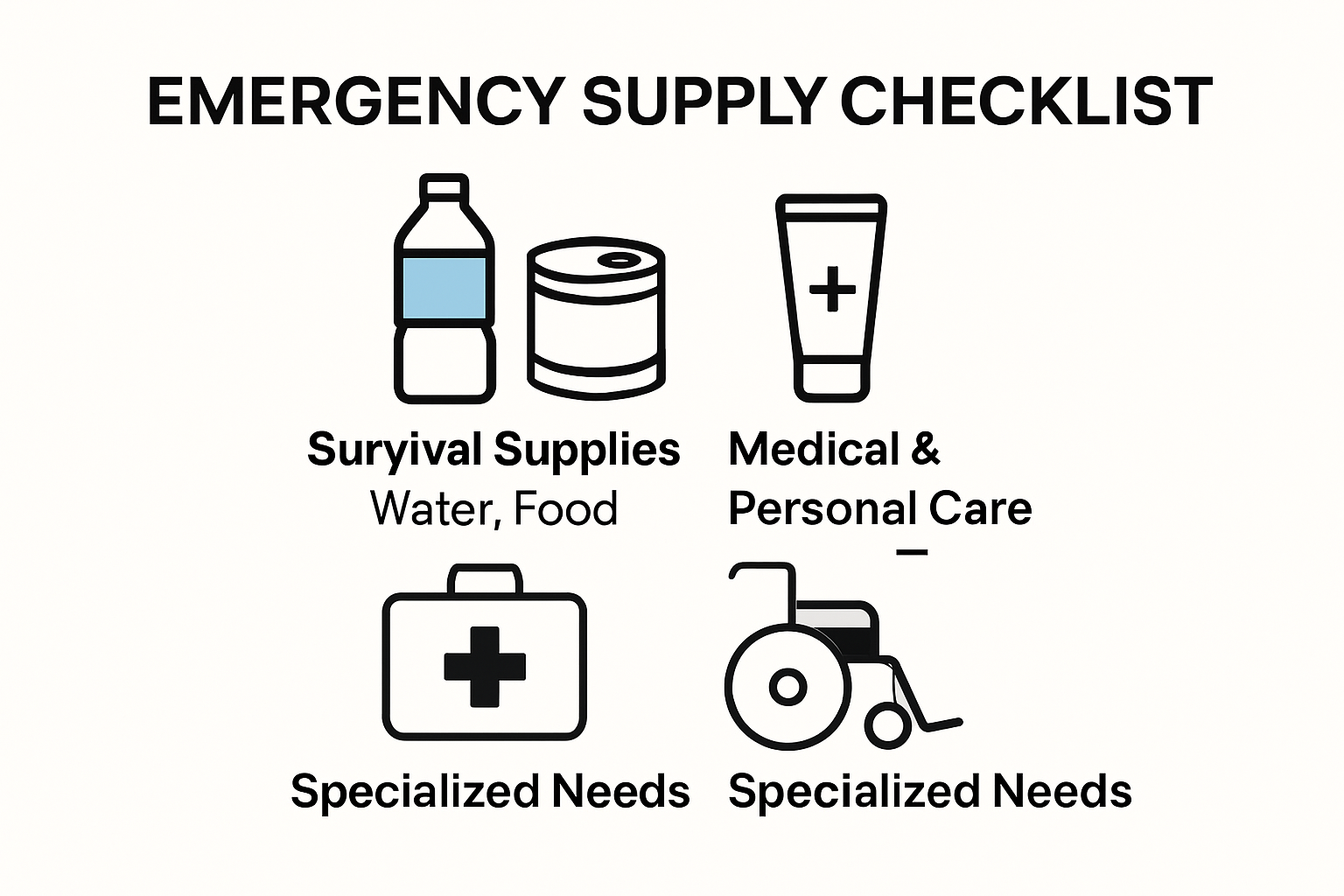
Essential Survival Supplies
Water remains the most critical component of any emergency supply kit. The Centers for Disease Control and Prevention recommends storing one gallon of water per person per day, with a minimum three-day supply for immediate emergencies. This calculation becomes crucial when planning for potential disruptions in water infrastructure.
Food supplies require equally meticulous planning. Focus on non-perishable, high-energy items that provide nutritional value and have extended shelf life. Ideal options include:
- Protein Bars: Compact and nutrient-dense
- Canned Goods: Vegetables, meats, and fruits with long-term storage capabilities
- Dried Meals: Lightweight and easy to prepare
Here’s a table summarizing the essential survival food and water supply guidelines and examples:
| Supply Type | Recommended Amount | Example Items |
|---|---|---|
| Water | 1 gallon/person/day (min 3 days) | Bottled water, water purification tablets |
| Protein | As needed for 3+ days | Protein bars, nuts, shelf-stable meat pouches |
| Carbohydrates | As needed for 3+ days | Canned beans, rice, pasta |
| Fruits/Veggies | As needed for 3+ days | Canned vegetables, canned fruits |
| Ready-to-eat Meals | As needed for 3+ days | Dried meals, MREs (Meals Ready-to-Eat) |
Critical Medical and Personal Care Items
The American Red Cross emphasizes the importance of a comprehensive medical preparedness strategy. Your emergency supply checklist must include a robust first aid kit containing bandages, antiseptic wipes, pain relievers, prescription medications, and essential medical documents.
Personal care items are often overlooked but remain vital. Pack additional supplies such as:
- Hygiene Products: Hand sanitizer, wet wipes, feminine supplies
- Communication Devices: Battery-powered radio, extra phone chargers
- Important Documents: Copies of identification, insurance papers, medical records
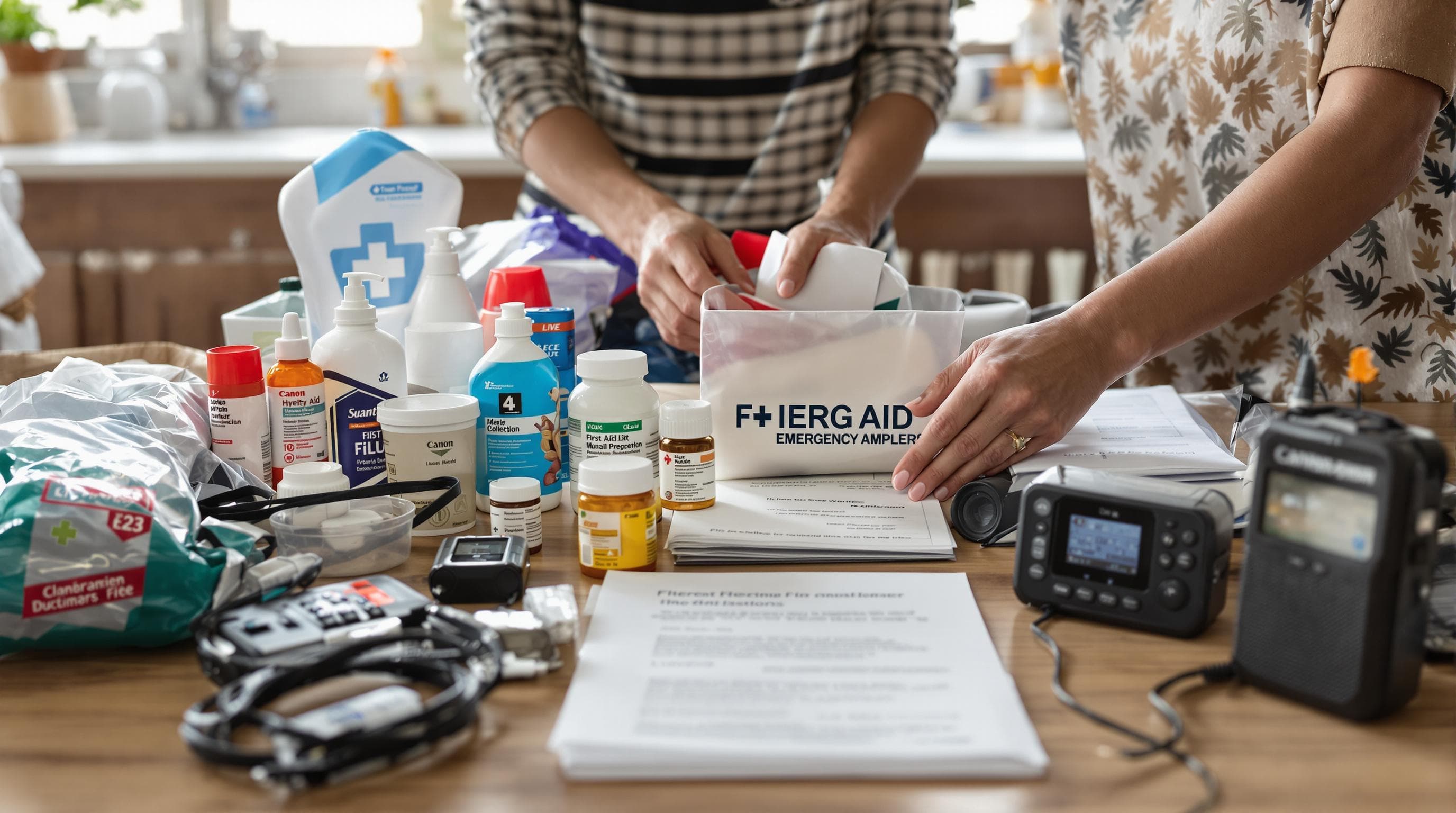
Specialized Emergency Preparedness Considerations
Emergency preparedness extends beyond standard supplies. Consider unique requirements for specific family members, including infants, elderly individuals, or those with special medical needs. Tailor your emergency preparedness strategy to address individual circumstances.
Additional specialized items might include:
- Infant Supplies: Formula, diapers, baby medications
- Mobility Assistance: Extra batteries for medical devices
- Pet Supplies: Food, medications, transportation carriers
Your emergency supply checklist is a living document that requires periodic review and updating. Technology, personal circumstances, and potential disaster scenarios evolve, making annual reassessment critical for maintaining an effective emergency preparedness strategy.
Special Considerations for Families and Vulnerable Groups
Disaster preparedness demands nuanced strategies that recognize the unique challenges faced by different family structures and vulnerable populations. Emergency planning is not a one-size-fits-all approach but requires thoughtful, personalized considerations that address specific needs and potential limitations.
Elderly and Individuals with Mobility Challenges
Seniors and individuals with mobility restrictions require specialized emergency preparedness planning. The National Council on Aging highlights that older adults are particularly susceptible during disaster scenarios, often facing increased health risks and mobility constraints.
Key considerations for elderly and mobility-impaired individuals include:
- Medical Equipment Backup: Portable oxygen tanks, wheelchair batteries, hearing aid extra batteries
- Medication Management: 30-day supply of prescription medications
- Communication Devices: Large-button emergency phones, medical alert systems
- Mobility Assistance: Portable ramps, transfer devices, walker or wheelchair-friendly emergency kits
Families with Children and Special Needs
Families with young children or members with special needs require more comprehensive emergency preparedness strategies. The American Academy of Pediatrics emphasizes the importance of creating tailored emergency plans that account for unique familial dynamics.
Specialized emergency supplies for families should include:
- Infant Supplies: Formula, diapers, baby wipes, specialized medications
- Children’s Comfort Items: Favorite toys, comfort blankets to reduce stress
- Special Needs Documentation: Medical records, communication aids, specialized care instructions
- Sensory-Friendly Supplies: Noise-canceling headphones, weighted blankets for individuals with sensory processing challenges
Chronic Health Conditions and Medical Dependency
Individuals managing chronic health conditions require meticulous emergency planning. The Centers for Disease Control and Prevention recommends developing comprehensive medical emergency plans that address potential treatment interruptions.
Critical emergency preparedness elements for medically dependent individuals include:
- Medical Supply Redundancy: Extended medication supplies, backup medical equipment
- Treatment Continuity Plans: Detailed medical history, current treatment protocols
- Power Backup: Portable generators for medical devices, battery-powered medical equipment
- Emergency Contact Network: Comprehensive list of healthcare providers, emergency contacts
Explore our comprehensive disaster safety guide for more detailed strategies tailored to specific family and individual needs. Remember that effective emergency preparedness is about anticipating challenges and creating flexible, adaptive plans that prioritize safety and well-being across diverse population groups.
Emergency Supply Planning for Professionals and Responders
Emergency professionals and first responders operate in high-stakes environments that demand specialized preparedness strategies beyond standard emergency supply protocols. Their unique role requires comprehensive planning that addresses complex operational challenges and potential life-threatening scenarios.
Professional Equipment and Specialized Gear
Professional emergency responders require robust, specialized equipment that goes beyond typical emergency supply considerations. The National Fire Protection Association emphasizes the critical importance of having redundant, high-performance gear that can withstand extreme conditions.
Key professional emergency supply components include:
- Communication Systems: Satellite phones, multiple battery backup communication devices
- Personal Protective Equipment: Advanced respiratory protection, chemical-resistant suits
- Tactical Medical Supplies: Trauma kits, advanced wound management tools
- Environmental Assessment Equipment: Portable air quality monitors, radiation detection devices
Medical and Logistical Preparedness
Medical professionals and emergency response teams require comprehensive supply strategies that enable immediate, life-saving interventions. The American Red Cross Emergency Preparedness Guide recommends developing multi-layered emergency response protocols that address potential infrastructure disruptions.
Critical medical and logistical preparedness elements include:
- Mobile Medical Units: Fully equipped portable treatment centers
- Extended Medical Supplies: Sufficient medications, surgical equipment
- Power Generation: Portable generators, solar charging systems
- Transportation Resilience: Specialized vehicles with off-road capabilities
Technological and Communication Preparedness
Technology plays a pivotal role in modern emergency response strategies. Professional teams must integrate advanced technological solutions that enhance situational awareness and communication effectiveness.
Technological emergency preparedness considerations include:
- Redundant Communication Networks: Satellite and cellular communication backups
- Data Management Systems: Portable servers, encrypted communication platforms
- Geospatial Tracking: GPS devices, drone reconnaissance equipment
- Remote Coordination Tools: Secure video conferencing and real-time collaboration platforms
Explore our comprehensive disaster response toolkit for professionals seeking advanced emergency preparedness strategies. Effective emergency supply planning for professionals requires continuous training, adaptable technologies, and a holistic approach that anticipates multiple potential scenarios.
Successful emergency response is not just about having the right equipment but understanding how to deploy those resources strategically and efficiently under unpredictable and high-stress conditions.
Maintaining and Updating Emergency Supplies Year-Round
Emergency preparedness is not a one-time task but a continuous process of monitoring, updating, and adapting your supplies to changing circumstances and potential risks. Proactive maintenance ensures that your emergency kit remains functional, relevant, and ready when unexpected situations arise.
Systematic Supply Inspection and Rotation
The American Red Cross recommends conducting comprehensive emergency supply inspections at least twice annually. This systematic approach involves carefully reviewing and rotating all stored items to maintain their quality and effectiveness.
Key inspection protocols include:
- Food and Water Management: Check expiration dates, replace perishable items
- Medical Supply Evaluation: Verify medication potency, replace expired first aid materials
- Battery and Power Source Check: Test and replace batteries in emergency devices
- Document Verification: Update personal identification and critical medical records
The following table summarizes key periodic supply maintenance tasks and their recommended inspection frequency:
| Maintenance Task | Recommended Frequency | Notes |
|---|---|---|
| Food & Water Expiry Check | Every 6 months | Replace expired or near-expiry items |
| Medication & First Aid Inspection | Every 6 months | Check potency, replace expired supplies |
| Battery Testing/Replacement | Every 6 months | Test and replace in all emergency devices |
| Document Verification | Every 12 months | Update IDs, insurance, medical records |
| Seasonal Adaptation (Clothing, Gear) | Before each season | Add/rotate items based on weather risks |
Seasonal Adaptation and Risk Assessment
Emergency preparedness requires dynamic strategies that account for seasonal variations and evolving regional risk profiles. The Federal Emergency Management Agency emphasizes the importance of tailoring emergency supplies to specific seasonal challenges and potential environmental risks.
Seasonal emergency supply considerations include:
- Winter Preparedness: Additional warm clothing, thermal blankets, snow removal tools
- Hurricane Season: Water purification tablets, wind-resistant tarps, battery-powered radios
- Wildfire Season: Respiratory masks, fire-resistant documents storage, emergency evacuation plans
- Heat Wave Preparedness: Electrolyte replacement solutions, cooling towels, sun protection gear
Technology and Digital Preparedness Updates
Modern emergency preparedness extends beyond physical supplies to include digital infrastructure and technological readiness. As communication technologies rapidly evolve, maintaining an up-to-date digital emergency strategy becomes increasingly critical.
Digital emergency preparedness elements to regularly update:
- Communication Devices: Backup chargers, solar power banks
- Digital Documentation: Cloud storage of critical documents
- Emergency Contact Lists: Update phone numbers, email addresses
- Communication Applications: Download latest emergency response apps
Learn more about comprehensive emergency kit management to ensure your preparedness strategy remains robust and adaptable. Remember that effective emergency planning is an ongoing commitment to safety, requiring consistent attention and proactive maintenance.
Ultimately, your emergency supply kit is a living resource that reflects your current needs, potential risks, and technological capabilities. Regular review and strategic updates transform it from a static collection of items into a dynamic, responsive emergency preparedness system.
Frequently Asked Questions
What should I include in my emergency supply kit for 2025?
Include at least one gallon of water per person per day, non-perishable food items, a first aid kit, hygiene products, important documents, and any specialized items needed for family members, such as medications or mobility aids.
How often should I check and update my emergency supplies?
You should conduct a thorough inspection of your emergency supplies at least twice a year, focusing on food and medical items to ensure effectiveness, and replace any expired products.
What are some special considerations for families with children during emergency preparedness?
Families with children should include infant supplies such as formula and diapers, comfort items for stress relief, and copies of medical records or special care instructions in their emergency kits.
How can I tailor my emergency supplies for individuals with chronic health conditions?
Be sure to include extended supplies of medications, backup medical equipment, a detailed medical history, and create a list of healthcare providers and emergency contacts in your emergency kit.
Be Prepared and Supported When Disaster Strikes
Having an emergency supply checklist gives you a critical edge, but real emergencies reveal how stressful and overwhelming it feels to keep everyone safe, manage uncertainty, and secure reliable shelter. Many families face the hard challenge of not only preparing supplies but also knowing or accessing help when a disaster throws life off course. The checklist in this article highlights the importance of comprehensive planning, tailored supplies, and regular updates to your plan. But when the unexpected happens, effective support can make all the difference.
Discover how Disaster Victim Services goes beyond preparation. We provide immediate emergency housing, expert logistics, and compassionate assistance to help you move quickly from crisis to comfort. Take advantage of our experience and resources. Learn about new response solutions for 2025 by visiting our New section, and get help tailored to your specific needs at any stage of recovery. Do not wait until it is too late. Take action now to prepare and connect with the trusted support you deserve.
Recommended
- Disaster Safety Checklist 2025: Essential Steps for Every Family and Organization – Disaster Victim Services | Helping You Recover After Disaster
- How to Pack Emergency Kit: Essential 2025 Guide for Disaster Relief – Disaster Victim Services | Helping You Recover After Disaster
- Disaster Preparedness Checklist 2025: Essential Guide for All Responders – Disaster Victim Services | Helping You Recover After Disaster
- Essential Emergency Preparedness Tips for 2025: A Guide for All – Disaster Victim Services | Helping You Recover After Disaster