


Losing your home throws your whole world into chaos. More than 16 million Americans faced disaster displacement in the past decade, yet many still scramble to figure out what to do first. Most people focus on the clean-up or filing insurance right away. Here is the twist. The very first and most powerful step is not paperwork or packing—it’s ensuring your personal safety above everything else.
Table of Contents
- Immediate Actions After Home Loss
- Working With Insurance and Aid Sources
- Securing Temporary Housing and Essentials
- Planning Long-Term Recovery and Rebuilding
Quick Summary
| Takeaway | Explanation |
|---|---|
| Prioritize Personal Safety | Conduct an external assessment of your home for structural damage and gas leaks before re-entering. Always prioritize your safety when dealing with home loss. |
| Document and Report Damage | Take thorough photographs and videos of all damage for insurance claims and assistance applications. Maintain an inventory of affected belongings and keep relevant documents safe. |
| Secure Immediate Assistance | Contact local authorities and disaster relief organizations to register for assistance, explore temporary housing options, and understand the available support mechanisms. |
| Explore Additional Aid Sources | Look into federal and state assistance programs such as FEMA grants and local community support networks for financial aid and housing solutions. |
| Plan for Long-Term Recovery | Develop a financial recovery plan by documenting expenses, communicate with your mortgage lender about support options, and focus on both physical and emotional rebuilding strategies. |
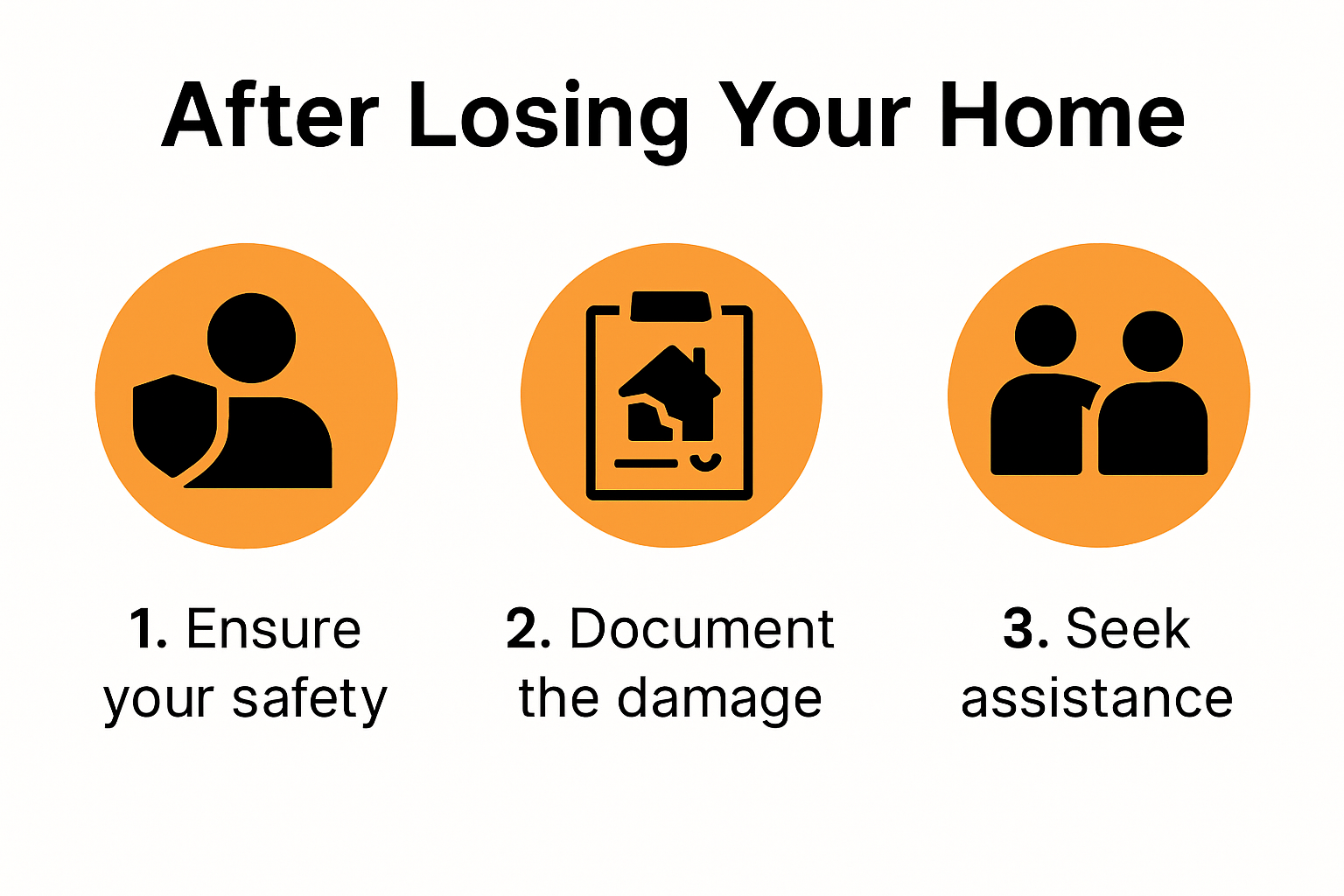
Immediate Actions After Home Loss
Disaster strikes without warning, transforming your familiar living space into a landscape of uncertainty and challenge. Knowing the right steps after home loss can mean the difference between swift recovery and prolonged distress.
Prioritize Personal Safety
Your immediate priority is personal safety. Before attempting to re-enter your damaged home, conduct a careful external assessment. Learn more about emergency home assessment to understand critical safety protocols.
According to the Centers for Disease Control, checking for structural damage is crucial. Look for visible signs like foundation cracks, roof collapse, or wall displacement. Do not enter if you observe significant structural compromise. Gas leaks pose another serious risk. If you detect a gas odor, evacuate immediately and contact emergency services.
Document and Report Damage
Once safety is confirmed, begin comprehensive damage documentation. This step is critical for insurance claims and potential disaster relief. Use your smartphone to capture detailed photographs and videos of all affected areas. Systematic documentation helps establish a clear record of loss.
The Michigan Emergency Management Guide recommends creating a thorough inventory. Photograph damaged personal belongings, structural elements, and areas of destruction. Include wide shots showing overall damage and close-ups revealing specific details. Preserve receipts, serial numbers, and any relevant ownership documents.

Secure Immediate Assistance
Reaching out for support is not a sign of weakness but a strategic recovery move. Local authorities and disaster relief organizations can provide critical resources during this challenging time. Contact your local emergency management office, insurance provider, and relief organizations immediately.
Essential steps include registering for assistance, exploring temporary housing options, and understanding available support mechanisms. Many communities offer emergency funds, temporary shelter, and counseling services for disaster victims. Be prepared to provide detailed information about your situation and documentation of losses.
Remember, your safety and well-being are paramount. While the road to recovery might seem overwhelming, systematic, calm actions will help you navigate this challenging period effectively.
Here is a table summarizing the key initial actions you should take immediately after experiencing a home loss for clarity and effective prioritization:
| Step | Description |
|---|---|
| Assess Personal Safety | Check for structural damage and gas leaks; do not enter if unsafe |
| Document Damage | Photograph/videotape all affected areas, items, and structural elements |
| Create Damage Inventory | Make a detailed list of damaged belongings with photos, receipts, and serial numbers |
| Report Damage | Contact local authorities and insurance provider; provide initial documentation |
| Register for Assistance | Sign up with relief organizations and emergency services for available aid |
| Explore Temporary Housing | Consider shelters, friends/family, hotels, and rental assistance programs |
| Preserve Important Documents | Keep identification, insurance papers, and ownership documents safe and accessible |
Working With Insurance and Aid Sources
Navigation through the complex landscape of insurance claims and aid sources becomes a critical lifeline after experiencing home loss. Understanding the intricate process can significantly impact your recovery trajectory and financial stability.
Understanding Your Insurance Coverage
Insurance policies are complex contracts with specific provisions for disaster recovery. Learn more about accessing emergency aid to help you understand your coverage options.
According to the Consumer Financial Protection Bureau, immediate communication with your insurance provider is crucial. Contact your insurance company within 24 hours of discovering damage. Prepare key documents including your policy number, contact information, and a preliminary inventory of damaged property. Request a detailed explanation of your policy’s disaster coverage, paying special attention to exclusions and claim filing deadlines.
Documenting and Filing Claims
Precise documentation forms the backbone of a successful insurance claim. The Minnesota Department of Commerce recommends creating a comprehensive damage record before initiating repairs. Use high-resolution photographs and videos to capture the extent of destruction. Include timestamps, wide-angle shots showing overall damage, and close-up images revealing specific damage details.
Maintain a meticulous damage tracking system. Create a digital and physical file containing:
- Photographic evidence
- Repair estimates
- Personal property inventory
- Communication logs with insurance representatives
Exploring Additional Aid Sources
Beyond insurance, multiple aid sources can provide critical support. The Pennsylvania Disaster Recovery Guide highlights several potential assistance channels. Federal Emergency Management Agency (FEMA) grants, state-level disaster relief programs, and local community support networks can offer financial assistance.
Contact local emergency management offices, nonprofit organizations, and community support groups. Many provide temporary housing, financial grants, and counseling services. Keep detailed records of all expenses related to disaster recovery, as these may qualify for tax deductions or reimbursement.
Remember that persistence and organization are your greatest allies in navigating insurance claims and aid sources. Each documented detail brings you closer to comprehensive recovery and rebuilding your life after home loss.
To help compare assistance options, here is a table outlining primary insurance and aid sources along with the type of support they typically offer:
| Aid Source | Type of Support | Example Programs/Organizations |
|---|---|---|
| Homeowner’s/Renter’s Insurance | Financial compensation for covered damage | Insurance companies |
| Federal Aid (e.g., FEMA) | Grants for housing, repairs, living expenses | FEMA Individual Assistance |
| State/Local Disaster Relief | Temporary shelter, financial assistance | State Emergency Management, Local Relief |
| Nonprofit & Community Organizations | Emergency funds, counseling, supplies | Red Cross, community groups |
Securing Temporary Housing and Essentials
After experiencing home loss, finding safe and stable temporary housing becomes an immediate priority. The first hours and days following a disaster are critical for establishing a secure living environment and meeting basic survival needs.
Immediate Housing Options
Explore emergency housing strategies to understand your immediate shelter possibilities. According to the Federal Emergency Management Agency, disaster survivors have multiple temporary housing alternatives. These range from emergency shelters and hotel/motel accommodations to rental assistance programs and temporary housing units.
The Consumer Financial Protection Bureau recommends several immediate strategies:
- Contact local emergency management offices
- Reach out to family and friends for potential temporary housing
- Utilize community warming centers or designated emergency shelters
- Investigate short-term rental assistance programs
Essential Survival Kit Preparation
While securing housing, assembling a comprehensive emergency kit becomes crucial. Your survival kit should include critical items that ensure basic comfort and safety. Emergency preparedness involves strategic planning and thoughtful item selection.
Essential kit contents should include:
- Identification documents: Copies of driver’s license, insurance papers, medical records
- Medical supplies: First aid kit, prescription medications, hygiene products
- Communication tools: Charged mobile phone, portable charger, emergency contact list
- Basic clothing: Change of clothes, sturdy shoes, weather-appropriate layers
- Financial resources: Cash, credit cards, emergency funds
Navigating Assistance Programs
Multiple government and nonprofit organizations offer comprehensive support for displaced individuals. The FEMA Individual Assistance Program provides grants for temporary housing, home repairs, and essential living expenses.
Additional support channels include:
- State emergency management agencies
- Local Red Cross chapters
- Community disaster relief organizations
- Religious and nonprofit support networks
When applying for assistance, prepare detailed documentation of your losses and current living situation. Be prepared to provide proof of residence, income verification, and damage assessment reports. Persistence and thorough documentation significantly improve your chances of receiving comprehensive support.
Remember that securing temporary housing is more than finding a physical space. It’s about creating a foundation for recovery, maintaining personal dignity, and positioning yourself to rebuild your life effectively.
Planning Long-Term Recovery and Rebuilding
Recovering from home loss is a complex journey that extends far beyond immediate emergency response. Long-term recovery requires strategic planning, emotional resilience, and a comprehensive approach to rebuilding your life and property.
Financial and Legal Reconstruction
Learn about safe rebuilding strategies to navigate the intricate process of recovery. According to the Consumer Financial Protection Bureau, immediate communication with your mortgage lender is crucial. Discuss potential forbearance options, loan modifications, and financial assistance programs designed for disaster victims.
The Housing Assistance Council recommends developing a comprehensive financial recovery plan that includes:
- Documenting all disaster-related expenses
- Tracking potential tax deductions
- Exploring mortgage assistance programs
- Investigating disaster unemployment benefits
Rebuilding Physical Infrastructure
Structural recovery demands careful planning and professional guidance. According to the Associated Press, FEMA has implemented new rules to streamline disaster assistance. These changes include expanded eligibility for aid and simplified application processes for homeowners with insufficient insurance coverage.
Key rebuilding considerations include:
- Conducting comprehensive structural assessments
- Obtaining multiple contractor estimates
- Researching resilient building techniques
- Understanding local building codes and regulations
- Exploring green reconstruction technologies
Emotional and Community Recovery
Recovery extends beyond physical reconstruction. Emotional healing and community support play critical roles in long-term restoration. Develop a holistic approach that addresses psychological well-being alongside practical rebuilding efforts.
Strategies for emotional recovery include:
- Seeking professional counseling services
- Participating in support groups for disaster survivors
- Maintaining connections with family and community networks
- Practicing self-care and stress management techniques
The rebuilding process is not linear. Some days will feel overwhelming, while others will bring hope and progress. Remember that recovery is a journey, not a destination. Each small step brings you closer to restoring your life and creating a resilient future.
Frequently Asked Questions
What should I do first after losing my home?
Your first priority should be ensuring your personal safety by conducting an external assessment of your home for structural damage and gas leaks before re-entering.
How can I document damage to my home?
Take thorough photographs and videos of all affected areas and personal belongings. Create a detailed inventory including receipts and ownership documents.
What types of assistance can I receive after losing my home?
You can access various types of assistance, including grants from FEMA, local disaster relief programs, and non-profit organizations that offer temporary housing, financial aid, and counseling services.
How do I work with my insurance after experiencing home loss?
Contact your insurance provider within 24 hours to report the damage. Prepare key documents, including your policy number and an inventory of damaged property, and ask for a detailed explanation of your coverage options.
Get Swift Support for Home Loss Recovery—Start Your Journey Today
Experiencing the sudden loss of your home means facing overwhelming uncertainty, safety concerns, and disruption to your daily life. This guide explains how urgent it is to find secure temporary housing, organize your documentation, and work closely with insurance providers. The pain of standing in the aftermath, unsure of your next move or who can truly help, is real and immediate. That is why finding trusted support right away matters so much.
If you or your loved ones need rapid assistance for emergency housing or guidance through complicated insurance claims, lean on the professionals at DisasterVictimServices.com. Our expert team specializes in helping disaster victims like you return to stability with compassion and efficiency. Visit our comprehensive Uncategorized Recovery Resources to find practical next steps tailored to your situation. Do not wait. Take control of your recovery now so you can transition from loss to rebuilding with confidence and the caring support you deserve.
Recommended
- Essential Steps After Home Damage: Guide for 2025 – Disaster Victim Services | Helping You Recover After Disaster
- How to Rebuild Safely: Essential Steps for Disaster Recovery 2025 – Disaster Victim Services | Helping You Recover After Disaster
- Home Safety Tips 2025: Essential Guide for Disaster Recovery – Disaster Victim Services | Helping You Recover After Disaster
- steps after home damage – Disaster Victim Services | Helping You Recover After Disaster
- How to Replace Documents After a Disaster: 2025 Guide – Disaster Victim Services | Helping You Recover After Disaster
- How to Manage Displacement: Practical Steps for Disaster Recovery 2025 – Disaster Victim Services | Helping You Recover After Disaster