


Finding stable housing after a disaster can feel like an uphill climb, especially for families facing sudden upheaval. Here is something unexpected. Some rehousing programs now offer up to 24 months of rental assistance and wraparound services to smooth the path. Most people think rehousing is just about handing over a set of keys, but the real breakthrough lies in how personalized support, streamlined paperwork and a coordinated network help people rebuild their lives with much more than just a new address.
Table of Contents
- Understanding The Rehousing Process Steps
- Key Roles In The Rehousing Journey
- Common Challenges And How To Solve Them
- Tips For A Faster And Safer Rehousing Experience
Quick Summary
| Takeaway | Explanation |
|---|---|
| Comprehensive Approach | Successful rehousing involves three core components: housing identification, rental assistance, and case management, ensuring a holistic transition to stable housing. |
| Personalized Planning | Individual assessments and tailored strategies are essential for addressing unique challenges faced by displaced persons and families during the rehousing process. |
| Collaborative Support Network | A multidisciplinary approach, combining efforts from various professionals and agencies, is crucial for providing comprehensive assistance throughout the rehousing journey. |
| Streamlined Processes | Organizations can enhance the rehousing experience by implementing streamlined documentation, financial support systems, and effective client management strategies. |
| Holistic Support Services | Integrating wraparound services, such as mental health counseling, employment support, and legal assistance, significantly improves outcomes and speeds up the rehousing process. |
Understanding the Rehousing Process Steps
The rehousing process represents a critical lifeline for individuals and families displaced by disasters, emergencies, or unexpected housing disruptions. At its core, this comprehensive approach involves a structured method of transitioning people from temporary or unstable living situations to permanent, safe housing solutions.
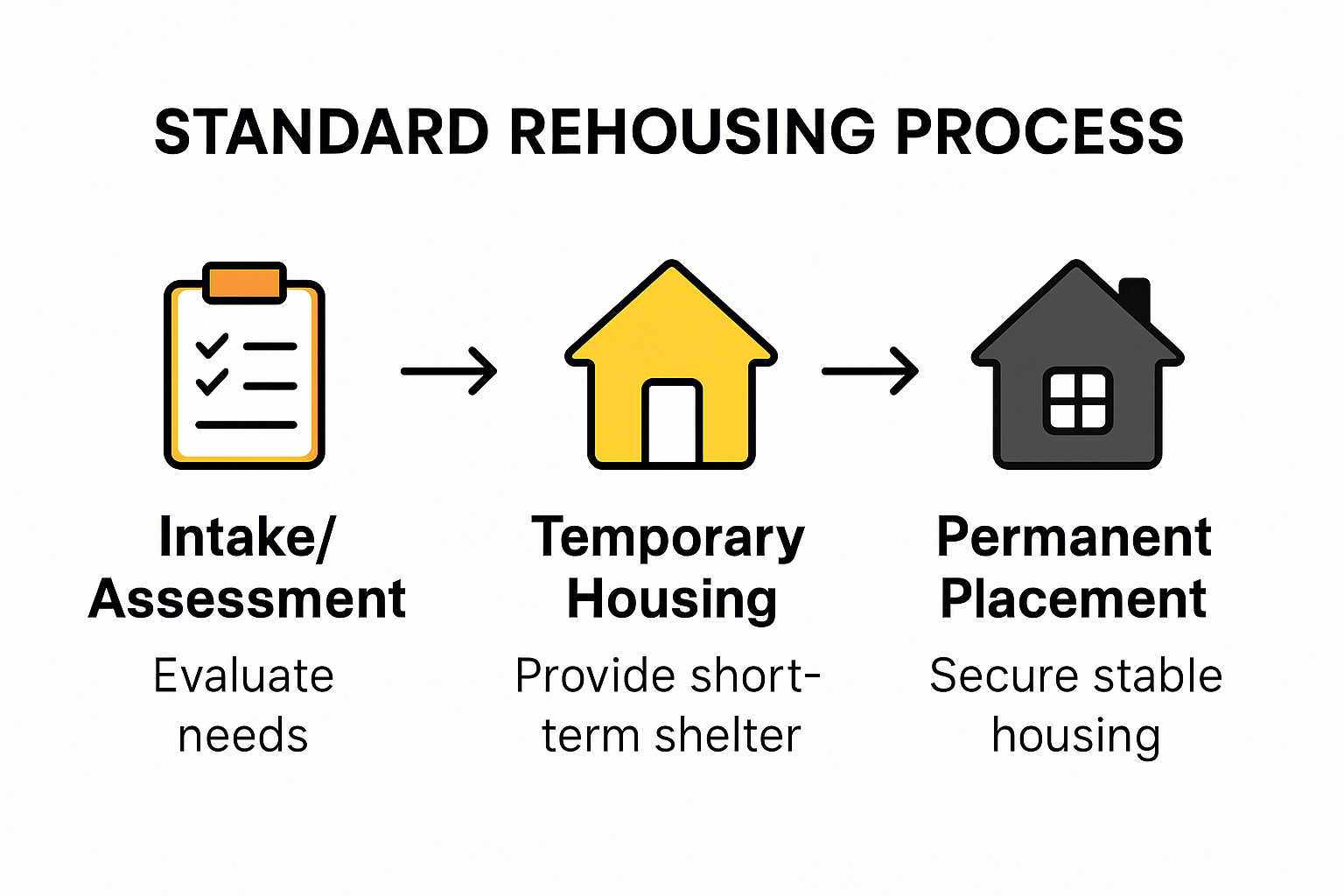
Core Components of Rehousing
Rehousing is more than simply finding a new place to live. According to endhomelessness.org, the process consists of three fundamental components that work together to ensure successful housing transitions:
- Housing Identification: Locating suitable and affordable housing options that meet the specific needs of displaced individuals and families.
- Rental Assistance: Providing financial support to help overcome initial housing barriers such as security deposits, first month’s rent, and moving expenses.
- Case Management: Offering personalized support services that address individual challenges and support long-term housing stability.
Navigating the Rehousing Workflow
The rehousing process requires a systematic approach that balances immediate housing needs with long-term recovery goals. Our guide on disaster relief relocations provides deeper insights into the complex logistics of housing placement.
The Oregon Rehousing Initiative offers a compelling example of comprehensive rehousing support. Their program demonstrates how strategic assistance can make a significant difference. By providing up to 24 months of rental assistance and additional supportive services like employment support and behavioral health resources, they create a holistic approach to helping households rebuild their lives.
Assessment and Personalized Planning
Successful rehousing requires a personalized approach. The Massachusetts Emergency Assistance (EA) Family Shelter Re-Housing Process illustrates this principle by implementing monthly re-housing meetings. These meetings include a 60-day assessment and the development of individualized re-housing plans that address each family’s unique circumstances.
Key considerations in the rehousing process include:
- Comprehensive needs assessment
- Understanding individual family dynamics
- Identifying potential barriers to housing stability
- Creating targeted support strategies
By recognizing that each displaced individual or family has unique challenges, rehousing programs can provide more effective and compassionate support. The goal is not just to find a new place to live, but to help people rebuild their lives with dignity, stability, and hope.
To clarify and summarize the main stages of the rehousing process, the following table outlines each critical step and its associated focus:
| Step | Description |
|---|---|
| Needs Assessment | Evaluate individual/family circumstances and identify barriers and requirements |
| Housing Identification | Find suitable, affordable housing options for the displaced household |
| Rental Assistance | Provide financial support for deposits, first month’s rent, and moving expenses |
| Case Management | Deliver personalized support and develop strategies for housing stability |
| Wraparound Support Services | Offer services such as employment, mental health, and legal assistance |
| Ongoing Monitoring | Review progress and adapt support to ensure successful long-term housing placement |
Key Roles in the Rehousing Journey
The rehousing journey involves a complex network of professionals working collaboratively to support displaced individuals and families through their transition to stable housing. Each role brings specialized expertise and compassionate support to address the multifaceted challenges of housing displacement.
Professional Intervention Specialists
Case managers serve as the critical backbone of the rehousing process. According to endhomelessness.org, these professionals play a pivotal role in helping households identify and select permanent housing options. They are trained to:
- Address potential barriers to housing access
- Connect families with essential resources
- Provide personalized support throughout the housing transition
- Develop comprehensive strategies for long-term housing stability
Our emergency housing referral guide offers deeper insights into the strategic approach these professionals take in supporting displaced families.
Housing Identification and Support Teams
Housing identification specialists represent another crucial component in the rehousing ecosystem. These professionals work directly with landlords and housing providers to create viable opportunities for displaced individuals. Their responsibilities include:
- Recruiting and engaging potential landlords
- Addressing barriers that might prevent landlord participation
- Matching households with appropriate rental housing
- Negotiating flexible housing solutions
These specialists understand that finding housing is more than a transactional process it requires building relationships and trust within the community.
Collaborative Support Network
Successful rehousing demands a multidisciplinary approach. Government agencies, nonprofit organizations, insurance providers, and local community resources must work in concert to create comprehensive support systems. This collaborative model ensures that displaced individuals receive holistic assistance that goes beyond mere housing placement.
Key stakeholders in this network include:
- Emergency management professionals
- Social workers
- Mental health counselors
- Community outreach coordinators
- Legal aid professionals
By leveraging collective expertise and resources, these professionals create a robust support framework that addresses not just immediate housing needs but also long-term recovery and stability. The goal is to transform a moment of crisis into an opportunity for rebuilding and renewal.
The rehousing journey is fundamentally about human resilience. Each professional involved plays a crucial role in helping individuals and families navigate the challenging path from displacement to finding a new home and reclaiming their sense of security and hope.
To help clarify contributions, the table below summarizes the key professional roles and their responsibilities in the rehousing journey:
| Role | Primary Responsibilities |
|---|---|
| Case Manager | Assess needs, provide support, coordinate housing and services |
| Housing Identification Specialist | Recruit landlords, match clients to options, resolve housing barriers |
| Social Worker/Mental Health Counselor | Address wellbeing needs, offer counseling, aid in emotional recovery |
| Community Outreach Coordinator | Connect clients to resources, strengthen community ties |
| Legal Aid Professional | Advise on legal issues, support with documentation and tenant rights |
Common Challenges and How to Solve Them

The rehousing process is fraught with complex challenges that can significantly impede successful housing transitions for displaced individuals and families. Understanding these obstacles and developing strategic solutions is crucial for effective disaster recovery and community resilience.
Documentation and Administrative Barriers
One of the most significant hurdles in the rehousing process involves navigating complex administrative requirements. According to research from the Harvard Kennedy School’s Government Performance Lab, delays frequently occur due to time-consuming document collection and application processes.
Key administrative challenges include:
- Complex paperwork requirements
- Limited support for application completion
- Fragmented communication between agencies
- Inconsistent documentation standards
To address these challenges, organizations can:
- Develop streamlined digital application systems
- Provide dedicated support workers to assist with documentation
- Create centralized document management platforms
- Implement clear, simplified application guidelines
Our comprehensive relocation guide offers additional strategies for managing these administrative complexities.
Financial and Resource Constraints
Financial instability represents another critical challenge in the rehousing journey. The U.S. Department of the Treasury emphasizes the importance of building comprehensive support networks that extend beyond immediate housing needs.
Common financial challenges include:
- Limited rental assistance
- Insufficient emergency funds
- Lack of employment opportunities
- Minimal financial literacy resources
Effective solutions involve:
- Developing holistic support services
- Creating workforce development programs
- Offering financial literacy training
- Establishing emergency financial assistance funds
Psychological and Emotional Recovery
Beyond logistical challenges, the rehousing process involves significant psychological and emotional hurdles. Displaced individuals often experience trauma, stress, and uncertainty during their transition.
Emotional challenges include:
- Post-disaster trauma
- Loss of community connections
- Anxiety about future stability
- Disrupted social support networks
Holistic support strategies involve:
- Providing mental health counseling
- Creating community reconnection programs
- Offering trauma-informed case management
- Supporting family and individual counseling services
The rehousing process is more than a logistical exercise it is a deeply human experience of rebuilding hope, security, and community. By anticipating and proactively addressing these challenges, organizations can transform a potentially overwhelming transition into an opportunity for growth and resilience.
Tips for a Faster and Safer Rehousing Experience
Navigating the rehousing process requires strategic planning, proactive communication, and a comprehensive approach to ensure both speed and safety for displaced individuals and families. By implementing targeted strategies, organizations can significantly improve the rehousing experience.
Streamlining Client Management
According to research from the Public Policy Lab, a client-centered, team-based approach is critical for efficient rehousing. Key factors that contribute to a faster experience include:
- Staff expertise and specialized training
- Clear goal-setting mechanisms
- Effective client management strategies
- Strong relationship-building techniques
- Efficient time management protocols
- Transparent information channels
Our housing placement workflow guide provides additional insights into optimizing these critical management elements.
Comprehensive Support Services
The National Academies of Sciences emphasizes the importance of wraparound services in expediting the rehousing process. Providing integrated support can dramatically reduce transition times and improve overall outcomes.
Critical wraparound services include:
- On-site or nearby healthcare access
- Mental health counseling
- Employment support programs
- Legal assistance resources
- Financial counseling
- Educational support for children and adults
By positioning these services strategically, organizations can create a holistic support ecosystem that addresses multiple barriers simultaneously.
Technology and Communication Strategies
Modern technology offers powerful tools for accelerating the rehousing process. Implementing digital solutions can reduce administrative delays and improve communication between stakeholders.
Recommended technological approaches:
- Digital document management systems
- Real-time communication platforms
- Online application and tracking tools
- Secure client information databases
- Virtual case management resources
- Mobile-friendly support interfaces
These technological interventions can help:
- Reduce processing times
- Minimize paperwork
- Enhance communication transparency
- Provide immediate access to critical resources
- Support remote assistance capabilities
The ultimate goal of these strategies is not just to move people into housing quickly but to create a supportive, dignified transition that addresses the complex needs of displaced individuals. By combining human-centered approaches with strategic technological solutions, organizations can transform the rehousing experience from a challenging process to a pathway of hope and renewal.
Frequently Asked Questions
What are the core components of the rehousing process?
The rehousing process consists of three core components: housing identification, rental assistance, and case management. These components work together to ensure a successful transition to stable housing.
How can I access rental assistance during the rehousing process?
Rental assistance can be accessed through various rehousing programs that may offer support for security deposits, first month’s rent, and moving expenses. It’s essential to connect with local rehousing services or organizations to determine eligibility and resources available.
What role do case managers play in the rehousing journey?
Case managers are crucial in the rehousing journey as they assess individual needs, provide personalized support, connect families with essential resources, and develop comprehensive strategies for long-term housing stability.
How can technology improve the rehousing experience?
Technology can streamline the rehousing process by providing digital document management systems, real-time communication platforms, and online application tools, which reduce administrative delays and improve communication between stakeholders.
Take Control of Your Rehousing Journey With Real Support
Navigating the rehousing process is never simple, especially when documentation hurdles, emotional stress, or complex case management slow down your progress. Families facing sudden displacement want clarity, speed, and compassionate guidance every step of the way. If you are feeling overwhelmed by housing searches, rental assistance paperwork, or the challenge of coordinating multiple services, you are not alone. Our team at Disaster Victim Services understands just how important personalized planning and a holistic approach are to moving from crisis to stability.
Our experts know that real recovery goes beyond short-term fixes. We work directly with families, adjusters, and service providers to address your unique needs and streamline every stage of the rehousing process. If you need help with temporary accommodations, repairs, or finding reliable support for remodeling after a disaster, visit our Remodeling Services page to see how we can guide your next steps. Ready to access immediate assistance from a team that truly cares? Connect with us now at Disaster Victim Services and start building your path to a safe and secure new home today.
Recommended
- How to Handle Relocations in 2025: A Guide for Disaster Relief Teams – Disaster Victim Services | Helping You Recover After Disaster
- Housing Placement Workflow Guide 2025: Steps for Disaster Recovery – Disaster Victim Services | Helping You Recover After Disaster
- Emergency Housing Referral Workflow: A 2025 Guide for Disaster Relief – Disaster Victim Services | Helping You Recover After Disaster
- How to handle relocations – Disaster Victim Services | Helping You Recover After Disaster
- Direct Housing Process Guide 2025: Steps, Eligibility & Tips – Disaster Victim Services | Helping You Recover After Disaster
- How to Manage Displacement: Practical Steps for Disaster Recovery 2025 – Disaster Victim Services | Helping You Recover After Disaster