


When disaster strikes, a clear command chain can mean the difference between confusion and coordinated life-saving action. Yet, despite its critical role, most emergency command systems follow just five functional areas to manage the entire crisis response. Surprising, right? Most people assume these plans are overwhelmingly complex, but the reality is a streamlined structure built for rapid adaptation and sharp communication is what puts responders in control when every second counts.
Table of Contents
- Understanding The Incident Command Chain Structure
- Key Roles And Responsibilities In Emergencies
- Step-By-Step: How The Incident Command Chain Works
- Best Practices For Coordination And Communication
Quick Summary
| Takeaway | Explanation |
|---|---|
| Clear Roles and Responsibilities | The incident command chain establishes defined roles, such as the Incident Commander, to facilitate strategic decision-making and effective coordination during emergencies. |
| Importance of Standardized Communication | Standardized protocols ensure clarity and precision in communication across teams, reducing misunderstandings and enhancing response effectiveness. |
| Dynamic Adaptation | The incident command chain must continuously reassess and adapt to evolving situations, reallocating resources and modifying strategies as necessary for effective management. |
| Interagency Collaboration | Strong collaborative relationships and communication mechanisms among various agencies are essential for transforming challenges into coordinated actions during emergencies. |
| Functional Areas of Management | The structure includes critical functional areas—Command, Operations, Planning, Logistics, and Finance/Administration—that work together to create a comprehensive response strategy. |
Understanding the Incident Command Chain Structure
The incident command chain represents a critical organizational framework designed to manage complex emergency situations with precision and clarity. At its core, this system provides a structured approach to coordinating response efforts across multiple agencies and personnel during high-stakes scenarios.
Core Structural Components
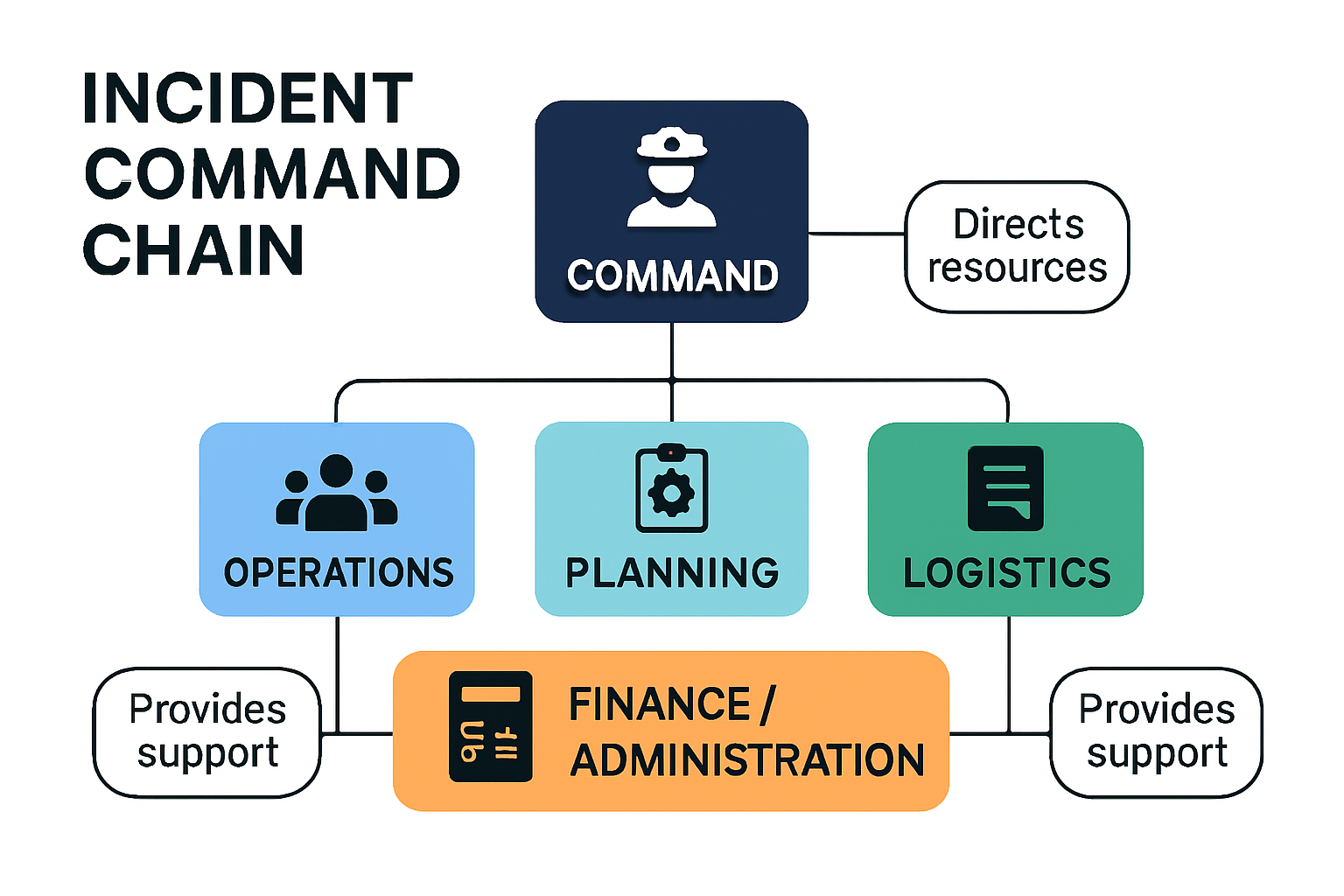
The incident command chain is built upon a hierarchical model that ensures clear communication and defined responsibilities. According to National Incident Management System, the structure fundamentally breaks down into five primary functional areas that work in seamless coordination.
Command Level Responsibilities
At the top of the incident command chain sits the Incident Commander, who holds ultimate decision making authority and strategic oversight. This role requires exceptional leadership skills and the ability to make rapid, informed decisions under extreme pressure. The National Fire Protection Association emphasizes that the Incident Commander must maintain a comprehensive view of the entire incident while managing resource allocation and operational priorities.
Critical Organizational Principles
Two fundamental principles define the effectiveness of the incident command chain: unity of command and span of control. FEMA guidelines specify that unity of command ensures each individual reports to only one supervisor, preventing conflicting instructions and maintaining clear accountability. The span of control principle recommends maintaining a supervisor-to-subordinate ratio between three to seven individuals, which optimizes communication efficiency and prevents organizational overwhelm.
Functional Areas of Incident Management
The incident command chain encompasses five critical functional areas that work collaboratively:
- Command: Provides overall strategic direction and decision making
- Operations: Manages tactical implementation and direct response activities
- Planning: Coordinates information gathering and strategic forecasting
- Logistics: Handles resource procurement and support infrastructure
- Finance/Administration: Manages budgetary tracking and administrative documentation
Each functional area plays a pivotal role in creating a comprehensive and adaptive emergency response system. Learn more about our comprehensive disaster response approach.
Understanding the incident command chain is not just about recognizing a hierarchical structure but comprehending a dynamic system designed to transform chaos into coordinated action. By establishing clear roles, communication protocols, and organizational principles, emergency responders can effectively navigate even the most complex and challenging scenarios.
To help clarify the functional areas and their primary responsibilities, here’s a table summarizing each section’s purpose:
| Functional Area | Primary Responsibility |
|---|---|
| Command | Strategic direction, decision making |
| Operations | Tactical response, direct field activities |
| Planning | Information gathering, forecasting, and plans |
| Logistics | Resource procurement, support infrastructure |
| Finance/Administration | Budget tracking, documentation, payroll |
Key Roles and Responsibilities in Emergencies
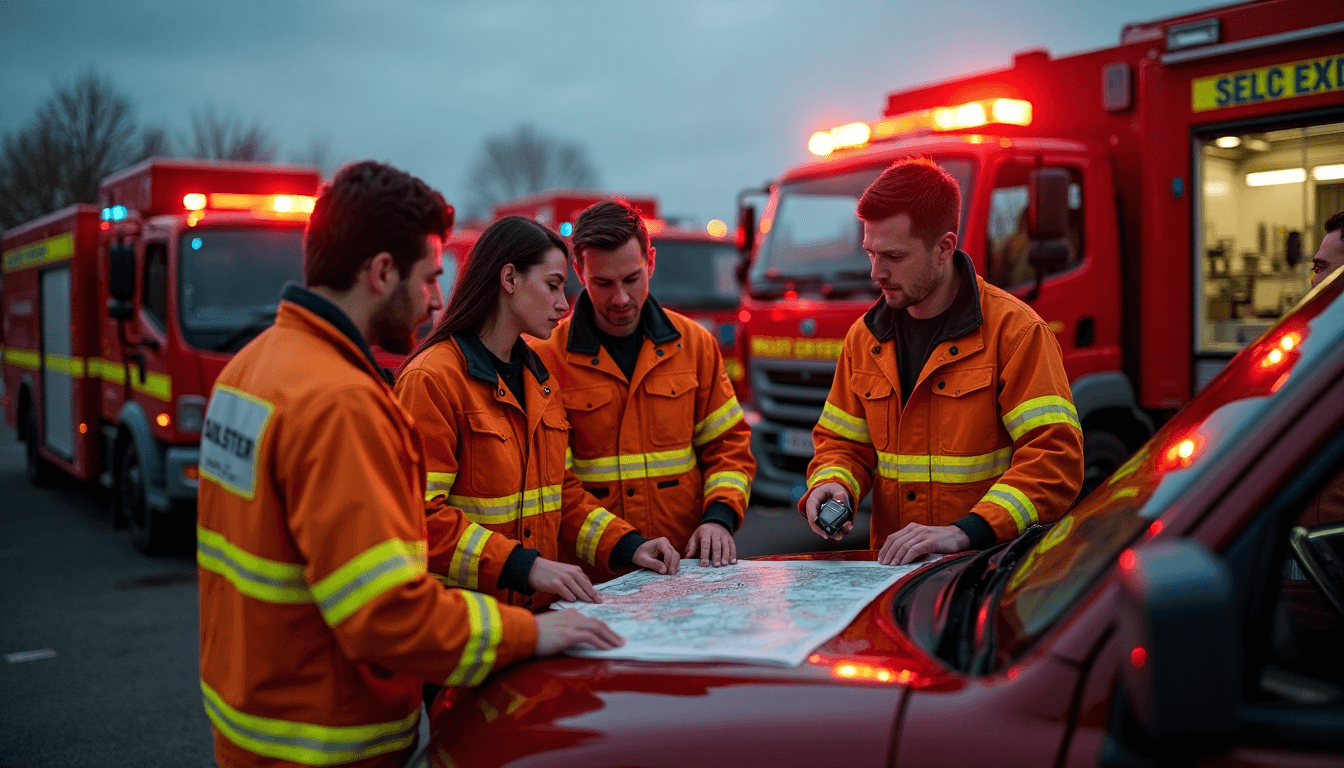
Emergency response requires a sophisticated orchestration of specialized roles, each critical to managing complex and high-stakes situations. The success of any emergency operation hinges on clear, well-defined responsibilities and seamless interdepartmental coordination.
Command and Strategic Leadership
At the apex of emergency management sits the Incident Commander, a role demanding extraordinary leadership and decision making capabilities. According to US Fire Administration, this individual bears ultimate responsibility for strategic direction, resource allocation, and establishing comprehensive incident objectives. The Incident Commander must rapidly assess complex scenarios, make decisive choices under immense pressure, and maintain a holistic view of evolving emergency dynamics.
Supporting the Incident Commander are three critical Command Staff positions: the Public Information Officer, Safety Officer, and Liaison Officer. Federal Emergency Management Agency guidelines specify their unique responsibilities. The Public Information Officer manages external communications, ensuring accurate information dissemination. The Safety Officer monitors operational risks and maintains personnel safety protocols. The Liaison Officer coordinates communication between different responding agencies, facilitating smooth interorganizational collaboration.
Functional Section Responsibilities
Beyond the command structure, four primary functional sections drive emergency response effectiveness:
- Operations Section: Directly implements tactical response strategies
- Planning Section: Develops action plans and tracks incident progression
- Logistics Section: Manages critical resources and support infrastructure
- Finance/Administration Section: Handles financial tracking and administrative documentation
The US Forest Service emphasizes that each section plays a pivotal role in transforming strategic objectives into actionable outcomes. For instance, the Operations Section Chief translates incident commander directives into specific tactical actions, while the Planning Section Chief continuously evaluates and adjusts response strategies based on real time information.
To provide clear insight into major command and support roles and their main functions, see the table below:
| Role | Main Function |
|---|---|
| Incident Commander | Strategic leadership, resource allocation |
| Public Information Officer | External communications, public information |
| Safety Officer | Risk monitoring, personnel safety |
| Liaison Officer | Agency coordination, external agency liaison |
| Operations Section Chief | Implements tactical response strategies |
| Planning Section Chief | Develops action plans, tracks progression |
| Logistics Section Chief | Resource and infrastructure management |
| Finance/Admin Section Chief | Financial tracking, administrative tasks |
Critical Communication and Coordination Protocols
Effective emergency response transcends individual role performance. Learn more about our comprehensive emergency response approach to understand the intricate communication networks that enable rapid, coordinated action.
Successful emergency management demands more than technical expertise. It requires a dynamic, adaptable system where professionals from diverse backgrounds collaborate seamlessly. Each role contributes unique skills, transforming potential chaos into a structured, methodical response that prioritizes human safety and operational efficiency.
Ultimately, the incident command chain represents a complex human system designed to navigate uncertainty, mitigate risks, and protect communities during their most vulnerable moments.
Step-by-Step: How the Incident Command Chain Works
The incident command chain operates as a dynamic, responsive system designed to transform complex emergency scenarios into manageable, strategic operations. Understanding its operational workflow is crucial for effective disaster response and management.
Initial Incident Assessment and Activation
Every emergency response begins with a critical initial assessment. According to FEMA guidelines, the process starts when an incident occurs and requires immediate intervention. The first responding team conducts an immediate situational evaluation, determining the scale, potential risks, and necessary resources.
The National Incident Management System outlines specific activation protocols. When an incident exceeds local response capabilities, the command structure expands. The initial Incident Commander establishes a command post and initiates the formal incident command chain, progressively bringing in additional specialized personnel and resources as the situation demands.
Establishing Operational Frameworks
Once activated, the incident command chain follows a structured progression. The Incident Commander quickly develops initial objectives, which US Fire Administration research indicates should be:
- Clear and specific
- Measurable and achievable
- Prioritized by immediate life safety concerns
- Adaptable to changing circumstances
Subsequent steps involve creating an Incident Action Plan (IAP), which serves as a comprehensive roadmap for response efforts. This plan details tactical strategies, resource allocations, communication protocols, and safety considerations. Each functional section contributes specialized insights to develop a cohesive, integrated approach.
Dynamic Incident Management and Adaptation
The incident command chain is not a static system but a fluid, adaptive mechanism. National Fire Protection Association research emphasizes the importance of continuous reassessment and flexibility. As emergencies evolve, the command structure must rapidly adjust, reallocating resources, modifying strategies, and maintaining clear communication channels.
Key adaptation mechanisms include:
- Regular briefings and status updates
- Continuous risk assessment
- Real time resource tracking
- Immediate communication of changing conditions
Learn more about our comprehensive disaster response strategies to understand the intricate processes that transform potential chaos into coordinated action.
Successful incident command chain implementation requires more than procedural knowledge. It demands a synchronized approach where human expertise, technological support, and strategic thinking converge to protect communities and minimize potential damage during critical emergencies.
To clarify the typical steps in incident command chain operations, below is a summary table outlining each phase and its main activities:
| Step | Main Activities |
|---|---|
| Initial Assessment & Activation | Evaluate situation, determine resources, activate ICS |
| Establishing Operational Frameworks | Set objectives, develop action plans, allocate roles |
| Ongoing Management & Adaptation | Briefings, reassessment, resource tracking, updates |
Best Practices for Coordination and Communication
Effective coordination and communication represent the lifeblood of successful emergency response, transforming potential chaos into synchronized action. The incident command chain relies on robust communication strategies that enable rapid, accurate information exchange across diverse teams and agencies.
Standardized Communication Protocols
Communication in emergency scenarios demands precision and clarity. FEMA’s National Incident Management System emphasizes the critical importance of standardized communication protocols. These protocols ensure that every team member understands instructions unambiguously, reducing potential misunderstandings that could compromise response effectiveness.
The International Association of Emergency Managers recommends implementing a structured communication framework that includes:
- Clear and concise messaging
- Predetermined communication channels
- Consistent terminology
- Redundant communication methods
Professionals utilize tools like radio systems, digital communication platforms, and standardized reporting formats to maintain information integrity. This approach ensures that critical details are transmitted accurately and quickly across multiple response teams.
Technological Integration and Information Sharing
Modern emergency response increasingly relies on advanced technological solutions to enhance coordination. According to National Fire Protection Association research, integrated communication systems allow real time data sharing, enabling rapid decision making and resource allocation.
Key technological strategies include:
- Centralized digital communication platforms
- Geographic Information System (GIS) mapping
- Real time resource tracking systems
- Secure communication networks
Learn more about our comprehensive disaster response coordination techniques to understand the sophisticated approaches used in modern emergency management.
Cross Agency Collaboration Techniques
Successful emergency response transcends individual organizational boundaries. The US Department of Homeland Security highlights the importance of establishing robust inter agency communication mechanisms. This involves creating shared communication protocols, conducting joint training exercises, and developing mutual understanding of each agency’s capabilities and limitations.
Cross agency collaboration requires:
- Regular interagency training sessions
- Shared communication infrastructure
- Established liaison roles
- Mutual respect for organizational expertise
By prioritizing clear, standardized communication and fostering collaborative relationships, emergency response teams can transform complex challenges into coordinated, efficient interventions. The incident command chain’s ultimate strength lies not just in its structural design, but in its ability to create a seamless, adaptive communication network that prioritizes human safety and effective problem solving.
Frequently Asked Questions
What is the incident command chain?
The incident command chain is a structured organizational framework used during emergencies to coordinate response efforts across agencies. It establishes clear roles and responsibilities to ensure effective management and communication in crises.
Who leads the incident command chain?
The Incident Commander leads the incident command chain, holding ultimate decision-making authority and strategic oversight during an emergency response. They are supported by key roles such as the Public Information Officer, Safety Officer, and Liaison Officer.
What are the main functional areas of the incident command chain?
The incident command chain consists of five functional areas: Command, Operations, Planning, Logistics, and Finance/Administration. Each area plays a specific role in managing different aspects of an emergency response.
How does communication work within the incident command chain?
Communication within the incident command chain relies on standardized protocols to ensure clarity and efficiency. This includes using predetermined channels, consistent terminology, and redundant methods to facilitate accurate information exchange among all response teams.
Turn Incident Command into Real-World Recovery with Expert Support
Learning about the incident command chain highlights just how vital clear roles and coordination are during an emergency. But when a disaster suddenly impacts your life or business, knowing who is in charge is rarely enough. Real recovery comes from having support that works directly within those systems to get you help fast. Whether you are trying to bridge the gap between first responders, insurance adjusters, and housing resources or need immediate housing and logistical relief, our team at Disaster Victim Services steps in with the same clarity and coordination you just read about.
If navigating disaster recovery feels overwhelming and you need seamless communication with trusted professionals, start with our Uncategorized – Disaster Victim Services | Helping You Recover After Disaster section for practical guidance. Right now is the moment to move from learning to action. Visit our website to connect with specialists who transform emergency plans into real solutions when you need them most.
Recommended
- Disaster Response Chain: How It Works and Why It Matters in 2025 – Disaster Victim Services | Helping You Recover After Disaster
- Emergency Response Basics for 2025: A Practical Guide – Disaster Victim Services | Helping You Recover After Disaster
- First Responder Coordination Tips 2025: Effective Support for All – Disaster Victim Services | Helping You Recover After Disaster
- How to Coordinate Response in Disasters: A Guide for 2025 – Disaster Victim Services | Helping You Recover After Disaster
- First Aid Disaster Basics: Essential Steps for 2025 Recovery – Disaster Victim Services | Helping You Recover After Disaster
- Essential Emergency Preparedness Tips for 2025: A Guide for All – Disaster Victim Services | Helping You Recover After Disaster