


Emergency situations rarely give a warning. Think you have time to react? Over 60 percent of disaster victims report confusion and uncertainty in the first 10 minutes after a crisis hits. That might sound alarming, but the real surprise is how much can change with just a few simple actions in those early moments. The strategies you use in the first few minutes do more than keep you safe—they set the stage for your community’s recovery and resilience in ways most people never consider.
Table of Contents
- Key Principles Of Emergency Response Basics
- Roles And Responsibilities In A Disaster
- Critical Steps For Immediate Action
- Building Effective Communication During Crises
Quick Summary
| Takeaway | Explanation |
|---|---|
| The Five Foundational Pillars of Emergency Response | Effective emergency management hinges on prevention, protection, mitigation, response, and recovery, creating a holistic approach to disaster management. |
| Roles and Responsibilities in Disaster Management | Clear roles among government levels, first responders, and community members enhance coordination and effectiveness during emergencies. |
| Immediate Action Steps | Rapid assessment and prioritization of threats, effective communication, and protective actions are critical for minimizing damage and ensuring safety during emergencies. |
| Effective Communication is Vital | Multi-layered communication strategies and clear messaging reduce panic and guide coordinated response efforts in chaotic situations. |
Key Principles of Emergency Response Basics
Emergency response fundamentally transforms chaos into coordinated action. Understanding the core principles that guide effective emergency management becomes critical for individuals, communities, and professionals tasked with protecting lives and minimizing damage during unexpected events.
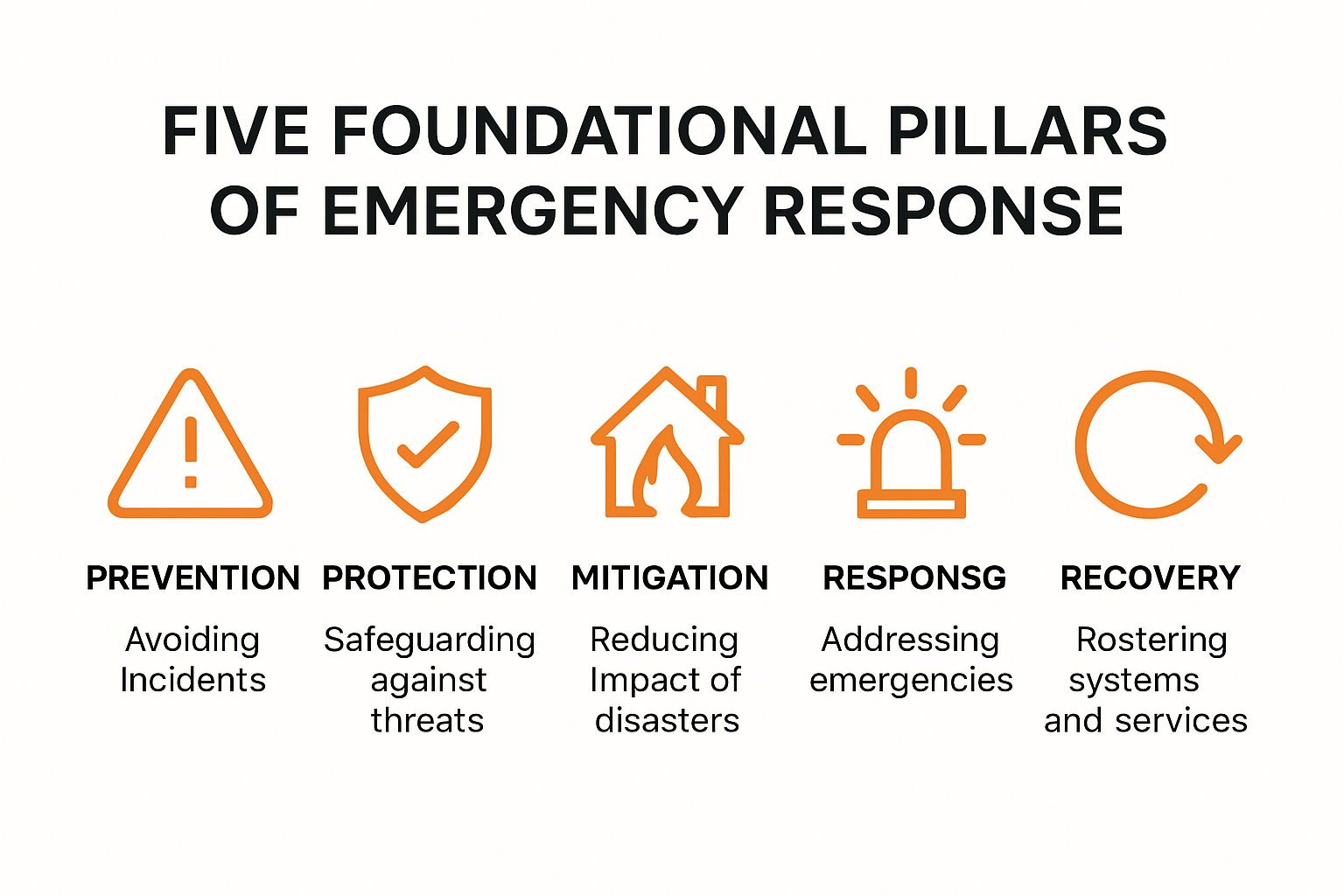
The Five Foundational Pillars of Emergency Response
The National Response Framework outlines five essential principles that form the backbone of comprehensive emergency management: prevention, protection, mitigation, response, and recovery. These interconnected stages create a holistic approach to handling potential disasters.
Prevention represents the proactive strategies implemented to stop emergencies before they occur. This includes risk assessments, early warning systems, and infrastructure improvements designed to reduce potential threats. Government agencies and local communities collaborate to identify potential vulnerabilities and develop targeted strategies that address specific regional risks.
Protection focuses on safeguarding critical systems, people, and resources. This principle involves creating protective measures that minimize potential damage from anticipated threats. Security protocols, structural reinforcements, and community preparedness training fall under this critical category.
Mitigation goes beyond immediate prevention by developing long term strategies to reduce the impact of potential disasters. This involves comprehensive planning, infrastructure upgrades, and strategic interventions that decrease the potential severity of emergency situations. Communities invest in resilience by understanding their unique risk profiles and developing adaptive strategies.
The Dynamic Response and Recovery Framework

Response represents the immediate actions taken when an emergency occurs. Quick, coordinated efforts become paramount in saving lives and preventing further damage. First responders, emergency personnel, and community volunteers work in synchronized efforts to address immediate needs, provide medical assistance, and stabilize dangerous situations.
The National Preparedness Goal emphasizes building capabilities across entire communities. This approach recognizes that effective emergency response requires flexible, collaborative frameworks that can adapt to unique local contexts.
Recovery represents the comprehensive process of returning communities to normal functioning after an emergency. This principle involves not just physical reconstruction but also psychological support, economic restoration, and long term community healing. Insurance claims, rebuilding infrastructure, and providing mental health resources become critical components of this stage.
Community Ownership and Collaborative Response
Federal policy increasingly recognizes that emergency preparedness works most effectively when managed at state, local, and individual levels. This means every person plays a crucial role in emergency response. Individual preparedness, community training, and collaborative planning transform theoretical frameworks into practical, life saving actions.
For those seeking deeper insights into emergency coordination, our comprehensive guide on disaster response coordination offers advanced strategies and practical recommendations for professionals and community leaders.
The principles of emergency response are not static blueprints but dynamic, evolving frameworks that require continuous learning, adaptation, and collaborative effort. By understanding these foundational concepts, communities can build resilience, protect vulnerable populations, and transform potential disasters into opportunities for collective strength and recovery.
Roles and Responsibilities in a Disaster
Disaster response requires a complex, multilayered approach where different entities play critical and interconnected roles. Understanding these responsibilities ensures efficient and effective emergency management across multiple levels of government and community organizations.
Government Coordination and Leadership
The National Response Framework establishes a clear hierarchy of responsibilities among federal, state, local, tribal, and territorial governments. Each level has specific duties that become activated during emergency situations.
Local governments typically serve as the first line of response. They are responsible for immediate emergency management, including evacuation procedures, initial resource allocation, and coordinating first responder teams. When local resources become overwhelmed, state governors can request additional support.
State leadership plays a pivotal role in disaster management. Recent federal reforms emphasize that state governments must formally request federal assistance. This process ensures that federal intervention occurs only when state and local capabilities are exhausted, maintaining a principle of localized emergency management.
Federal agencies like FEMA provide critical backup and specialized support. Their responsibilities include coordinating large scale resources, providing financial assistance, and supporting complex recovery efforts that exceed local capacities.
First Responders and Emergency Personnel
First responders represent the front line of disaster response. Emergency medical technicians, firefighters, police officers, and paramedics work in high stress environments to save lives and stabilize dangerous situations. Their immediate priorities include:
- Rescue operations: Locating and extracting individuals from hazardous environments
- Medical treatment: Providing urgent care and preventing further injury
- Safety containment: Securing areas and preventing additional damage
These professionals undergo extensive training to handle diverse and unpredictable emergency scenarios. Our first aid guide offers deeper insights into the critical skills required for effective emergency medical response.
Community and Individual Preparedness
While government agencies and professional responders play crucial roles, individual and community preparedness significantly impacts overall disaster resilience. Community members are not passive recipients of aid but active participants in emergency response.
Individuals can contribute by:
- Developing personal emergency plans
- Maintaining emergency supply kits
- Understanding local evacuation routes
- Participating in community emergency training programs
- Supporting vulnerable neighbors during crisis situations
Community organizations like neighborhood associations, religious groups, and local nonprofits often serve as critical support networks. They help coordinate resources, provide shelter, and offer psychological support during and after disaster events.
Effective disaster response is not about individual heroism but collaborative action. By understanding and fulfilling specific roles, government agencies, emergency personnel, and community members create a robust, adaptive system capable of responding to complex and unpredictable emergencies.
The key to successful disaster management lies in clear communication, well defined responsibilities, and a shared commitment to protecting human life and community resilience.
Critical Steps for Immediate Action
When disaster strikes, the first moments are crucial. Immediate and calculated actions can mean the difference between life and death, minimizing potential damage and protecting vulnerable populations. Understanding and implementing critical steps quickly becomes paramount for survival and recovery.
Assessing and Prioritizing Immediate Threats
Immediate emergency response demands rapid situational assessment. FEMA’s emergency planning guidance emphasizes the importance of quick protective actions based on specific threats. This involves instantly evaluating the environment for potential risks such as structural damage, fire hazards, chemical exposures, or medical emergencies.
Prioritization becomes critical. First responders and individuals must quickly determine:
- Immediate life threatening situations
- Potential secondary risks
- Areas requiring urgent medical intervention
- Structural integrity of surrounding environments
The Centers for Disease Control and Prevention highlights that rapid, coordinated responses rely on standardized protocols and trained personnel who can make split second decisions under extreme pressure.
Emergency Communication and Resource Mobilization
Effective communication becomes the lifeline during emergencies. Establishing clear communication channels helps coordinate rescue efforts, distribute critical information, and mobilize resources. This involves:
- Activating emergency communication systems
- Notifying local authorities
- Creating information sharing networks
- Utilizing emergency broadcast systems
Our comprehensive guide on disaster response coordination provides deeper insights into creating robust communication strategies during crisis situations.
Protective Actions and Personal Safety
Individuals must take immediate protective actions tailored to specific emergency scenarios. These actions typically fall into three primary categories:
- Evacuation: Quickly and safely moving away from dangerous areas
- Shelter in Place: Securing a safe internal location when external movement poses greater risks
- Lockdown: Implementing security protocols to prevent additional threats
Understanding which action to take requires quick assessment of the specific emergency. For instance, a chemical spill might demand immediate shelter in place, while a structural fire necessitates rapid evacuation.
The University of Texas Emergency Management Guidelines emphasize that immediate emergency response should fundamentally focus on three core objectives:
- Saving and sustaining human lives
- Protecting property and environmental resources
- Meeting basic human survival needs
Successful immediate action is not about perfect execution but about making the best possible decisions with available information. Training, preparation, and a calm approach transform potential panic into coordinated survival strategies.
Remember that every second counts during an emergency. Your ability to act quickly, assess risks rationally, and prioritize safety can significantly impact survival outcomes for yourself and those around you.
Building Effective Communication During Crises
Effective communication becomes the critical lifeline during emergencies. When chaos threatens to overwhelm communities, clear, strategic communication can mean the difference between coordinated response and catastrophic confusion.
Communication Infrastructure and Channels
Communication during crises requires a multi-layered approach that transcends traditional communication methods. State officials recommend utilizing both traditional and non traditional communication channels to ensure broad reach, especially when standard communication infrastructure might be compromised.
Key communication channels include:
- Emergency broadcast radio systems
- Mobile communication networks
- Official government websites
- Social media platforms
- Dedicated emergency communication apps
- Community alert systems
The National Governors Association emphasizes the critical importance of developing redundant communication systems that can operate independently when primary networks fail.
Crafting Clear and Consistent Messaging
Message clarity becomes paramount during emergencies. Communication strategies must focus on delivering precise, actionable information that reduces panic and guides immediate response. This involves:
- Verifying information before public release
- Using simple, direct language
- Providing specific instructions
- Addressing potential misinformation quickly
- Tailoring messages to specific audience needs
Our comprehensive disaster response coordination guide offers deeper insights into developing effective communication protocols during complex emergency scenarios.
Technological and Human Communication Strategies
Emergency communication extends beyond technical infrastructure. Human elements like empathy, clarity, and psychological support play crucial roles in maintaining community resilience.
Advanced communication strategies include:
- Training communication personnel in crisis psychology
- Developing multilingual communication protocols
- Creating real time translation capabilities
- Establishing clear chain of information verification
- Implementing accessibility features for individuals with disabilities
Experts recommend activating comprehensive communication plans within the first 72 hours of an emergency. This rapid response helps build public trust, provides critical guidance, and demonstrates organizational preparedness.
Technology now enables more sophisticated communication approaches. Artificial intelligence powered translation services, automated alert systems, and data driven communication platforms are transforming how communities receive and process emergency information.
The ultimate goal of crisis communication is not just information transmission but creating a sense of collective understanding and coordinated action. By prioritizing clarity, accessibility, and human centered communication, communities can transform potential chaos into structured, supportive response mechanisms.
Remember: In emergencies, communication is not just about sharing information. It is about maintaining human connection, reducing fear, and guiding collective survival strategies.
Frequently Asked Questions
What are the five foundational pillars of emergency response?
The five foundational pillars of emergency response are prevention, protection, mitigation, response, and recovery. These principles create a comprehensive approach to managing disasters effectively.
How can individuals prepare for emergencies?
Individuals can prepare for emergencies by developing personal emergency plans, maintaining emergency supply kits, understanding local evacuation routes, and participating in community training programs.
What should be done immediately after a disaster strikes?
Immediately after a disaster, assess the environment for immediate threats, prioritize immediate life-threatening situations, activate emergency communication systems, and take protective actions tailored to the specific emergency scenario.
Why is communication crucial during a crisis?
Clear and effective communication during a crisis helps coordinate responses, reduces panic, guides actions, and ensures that accurate information is distributed quickly to the public.
Move Confidently From Chaos to Recovery
Sudden emergencies can leave you feeling overwhelmed and uncertain in those first critical moments. As highlighted in this article, knowing how to assess threats, secure immediate safety, and communicate effectively is vital—but taking action is often much harder in real life. When every minute counts, having reliable support and immediate resources becomes the difference between confusion and constructive next steps.
If you or your loved ones are facing the aftermath of a disaster, our New Emergency Recovery Services connect you right away with compassionate, expert assistance. Get access to rapid emergency housing, streamlined insurance claim guidance, and full logistical support from our caring team at DisasterVictimServices.com. Don’t wait during a critical window. Take control of your recovery now by reaching out for professional help and regain stability when you need it most.
Recommended Articles
- First Aid Basics 2025: Essential Guide for Disaster Recovery Teams – Disaster Victim Services | Helping You Recover After Disaster
- How to Coordinate Response in Disasters: A Guide for 2025 – Disaster Victim Services | Helping You Recover After Disaster
- Home Safety Tips 2025: Essential Guide for Disaster Recovery – Disaster Victim Services | Helping You Recover After Disaster