
Over 40 percent of American families impacted by disasters experience some form of housing displacement. When crisis hits, the search for stable shelter becomes urgent and deeply personal for millions across the United States. Understanding how to navigate the steps from initial assessment to securing safe accommodations can make all the difference. This guide breaks down practical strategies for meeting immediate housing needs during recovery, offering clear actions to help every American family find safety when it matters most.
Table of Contents
- Step 1: Assess Immediate Housing Needs
- Step 2: Engage Key Stakeholders and Agencies
- Step 3: Identify and Secure Suitable Temporary Housing
- Step 4: Coordinate Logistics and Move-In Support
- Step 5: Verify Placement and Monitor Ongoing Needs
Quick Summary
| Key Point | Explanation |
|---|---|
| 1. Assess housing needs first | Collect data on displaced families and housing damage to guide recovery efforts. |
| 2. Engage diverse stakeholders | Collaborate with government and nonprofit organizations to coordinate housing solutions. |
| 3. Identify various temporary housing | Match families with appropriate temporary housing based on their specific needs. |
| 4. Coordinate logistics effectively | Plan transportation and move-in support to ensure a smooth transition for families. |
| 5. Monitor ongoing needs continuously | Establish regular check-ins to evaluate families’ housing status and provide support. |
Step 1: Assess Immediate Housing Needs
Assessing immediate housing needs is a critical first step in disaster recovery. This process helps determine the scope of housing displacement and guides emergency response efforts to connect affected families with suitable temporary accommodations.
To effectively assess housing needs, you will need to gather comprehensive data from multiple sources. Housing assessment begins with collecting detailed information about the extent of housing damage and the number of displaced families. Start by connecting with local emergency management agencies, shelters, and community organizations to compile accurate displacement statistics. Key information to collect includes the total number of households impacted, specific housing unit damage assessments, and the immediate shelter requirements for different population segments such as families with children, elderly residents, and individuals with special needs.
Your initial assessment should include a comprehensive survey that captures critical details about each displaced household. This involves documenting the current living situation, family size, specific accommodation requirements, and any urgent medical or accessibility needs. Government agencies like the Census Bureau often provide valuable resources to help streamline this data collection process.
Pro Tip: Create a standardized intake form with clear, concise questions to ensure you collect consistent and actionable information across all displaced households. This will help emergency responders and housing coordinators quickly match families with appropriate temporary housing solutions.
Step 2: Engage Key Stakeholders and Agencies
Engaging key stakeholders and agencies is a pivotal step in coordinating effective temporary housing solutions after a disaster. This process ensures comprehensive support and efficient resource allocation across multiple organizations.
Successful disaster housing recovery requires bringing together a diverse network of governmental and nongovernmental organizations to establish collaborative recovery plans. Begin by identifying and reaching out to critical stakeholders including local emergency management agencies, state housing authorities, federal disaster response teams, nonprofit relief organizations, insurance providers, and community advocacy groups. Each organization brings unique resources and perspectives that can help address the complex challenges of housing displacement.
Your stakeholder engagement strategy should prioritize inclusivity and comprehensive communication. Focus on creating a coordinated disaster housing task force that can develop integrated response plans, share critical information, and streamline resource allocation. Make sure to include representatives from vulnerable population groups to ensure their specific needs are understood and addressed. The Community Recovery Management Toolkit provides valuable resources for organizing and leading collaborative recovery efforts, which can help you establish effective communication channels and decision making processes.
Pro Tip: Create a centralized communication platform or regular virtual meeting schedule to keep all stakeholders informed and aligned throughout the housing recovery process. This approach helps maintain transparency, reduces communication gaps, and accelerates the overall recovery timeline.
Below is a summary of key stakeholder roles and their contributions during temporary housing recovery:
| Stakeholder Type | Primary Role | Key Contribution |
|---|---|---|
| Local Emergency Management | Coordination & leadership | Assess needs, allocate local resources |
| State Housing Authorities | Strategic planning | Secure housing units, policy support |
| Nonprofit Relief Organizations | Service delivery | Provide basic needs, case management |
| Community Advocacy Groups | Representation | Voice marginalized populations |
Step 3: Identify and Secure Suitable Temporary Housing
Identifying and securing suitable temporary housing is a critical phase in disaster recovery that directly impacts displaced families’ ability to stabilize and rebuild their lives. This step requires careful assessment and strategic matching of housing solutions to individual family needs.
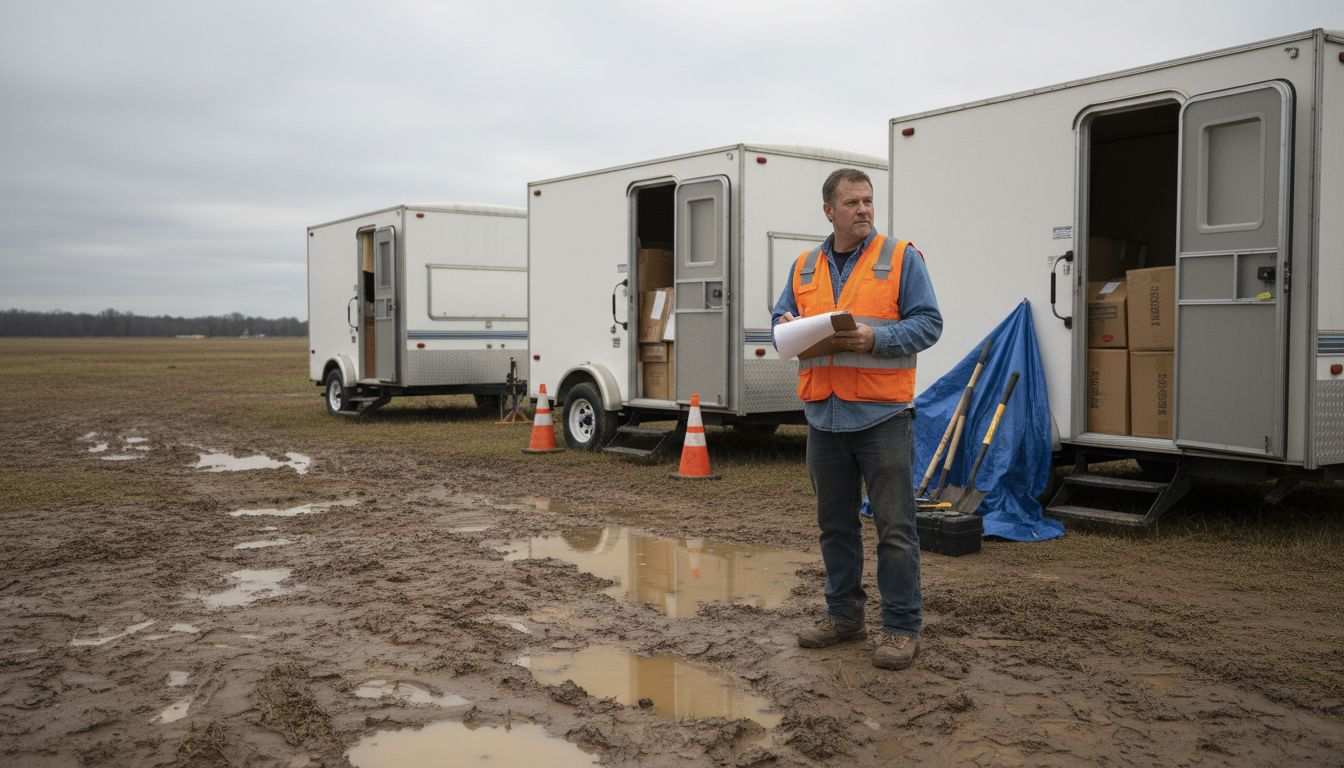
Temporary housing options vary widely, ranging from hotel accommodations to specialized emergency shelters. FEMA trailers represent a key intermediate housing solution designed to provide shelter for disaster victims during the recovery period. When searching for appropriate housing, consider multiple factors including family size, accessibility requirements, proximity to work and school, and potential medical needs. Work closely with local housing authorities and disaster relief organizations to create a comprehensive inventory of available temporary housing units that can accommodate different family configurations and special circumstances.
Your housing selection process should prioritize safety, comfort, and proximity to essential services. Develop a systematic approach to matching families with temporary housing by creating detailed profiles that capture specific requirements such as wheelchair accessibility, number of bedrooms needed, pet accommodations, and any unique health or support needs. Leverage relationships with local property managers, hotels, apartment complexes, and government housing programs to expand your temporary housing options and create flexible solutions for displaced families.
Pro Tip: Create a digital tracking system that allows real-time updates and management of temporary housing placements, enabling quick adjustments and ensuring no family falls through the cracks during the relocation process.
Here is a summary comparing common temporary housing options used in disaster recovery:
| Temporary Housing Type | Typical Use Case | Capacity Range | Pros | Challenges |
|---|---|---|---|---|
| Hotels & Motels | Short-term displacement | 1-5 people | Rapid deployment | Limited accessibility |
| FEMA Trailers | Mid-term recovery | 2-6 people | Customizable, private | Limited availability |
| Congregate Shelters | Immediate emergency shelter | 20-200+ people | Large capacity | Limited privacy, noisy |
| Rented Apartments/Homes | Long-term or family placement | 2-10+ people | Home-like environment | Higher cost, limited supply |
Step 4: Coordinate Logistics and Move-In Support
Coordinating logistics and move-in support is a complex yet critical phase of disaster recovery that ensures displaced families can transition smoothly into their temporary housing. This step requires meticulous planning, precise communication, and comprehensive support systems.
The Universal Logistics Standard provides a strategic framework for managing disaster response coordination among various emergency management stakeholders. Your logistical coordination should focus on creating a comprehensive support plan that addresses transportation, move-in assistance, essential supplies, and immediate family needs. This involves developing a detailed inventory of required resources, establishing clear communication channels with moving teams, and creating personalized move-in packages for each displaced family.
FEMA’s temporary housing process involves multiple complex steps including ordering, transportation, site preparation, installation, inspection, permitting, and utility hookup, which underscores the importance of a well-orchestrated logistics strategy. Develop a comprehensive checklist that covers every aspect of the move-in process, from initial transportation to final utility connections. Assign dedicated support coordinators to each family to help them navigate the transition, manage paperwork, and address any immediate challenges that arise during relocation.
Pro Tip: Create a digital move-in toolkit with printable checklists, emergency contact information, and step-by-step guidance that families can access quickly and easily throughout their relocation process.
Step 5: Verify Placement and Monitor Ongoing Needs
Verifying placement and monitoring ongoing needs is a crucial phase that ensures displaced families continue receiving appropriate support throughout their temporary housing transition. This step requires consistent communication, proactive assessment, and compassionate follow-up.
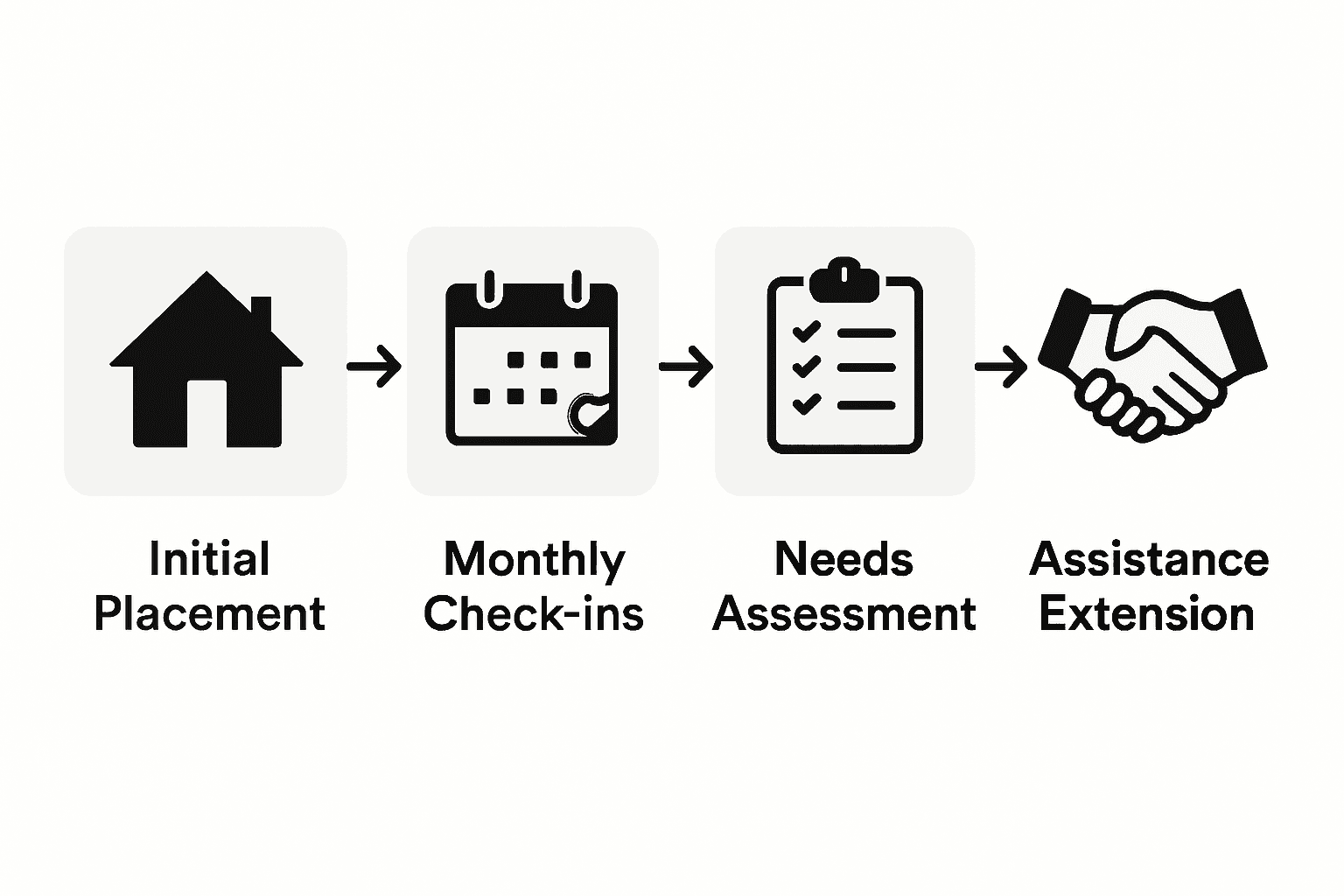
FEMA’s temporary housing program provides assistance for up to 18 months after a Presidential Disaster Declaration, but continued support requires ongoing verification and documentation. Establish a systematic approach to tracking each family’s housing status by implementing regular check-in protocols. Schedule monthly assessments that require families to demonstrate their continued housing needs and document their progress toward permanent housing solutions. During these check-ins, evaluate several key factors including current living conditions, family stability, employment status, and any emerging challenges that might impact their recovery.
Families must formally request housing assistance extensions by providing evidence of their ongoing needs and demonstrating good-faith efforts toward permanent housing solutions. Create a supportive framework that helps families navigate this process by offering guidance on documentation, connecting them with housing resources, and providing personalized support. Develop a comprehensive tracking system that allows case managers to monitor each family’s unique situation, identify potential obstacles, and proactively offer targeted assistance.
Pro Tip: Design a digital dashboard that enables real-time tracking of family housing statuses, allowing case managers to quickly identify families who need additional support or are approaching housing transition milestones.
Navigate Temporary Housing Challenges with Expert Support
Experiencing displacement after a disaster is overwhelming. The article outlines critical steps like assessing housing needs, coordinating stakeholders, and managing logistics to ensure displaced families find safe, suitable temporary housing efficiently. At DisasterVictimServices.com, we understand these challenges and provide compassionate, around-the-clock assistance to connect you with immediate emergency housing solutions. Our collaborative approach with insurance carriers, government agencies, and first responders reduces delays and confusion during this stressful time.
If you want trusted help to navigate the complexities of temporary housing coordination and ensure a smoother transition for your family or community, explore our resources in the Uncategorized category. Start recovering with confidence today by visiting DisasterVictimServices.com and reach out for the expert guidance you need now.
Frequently Asked Questions
How do I assess immediate housing needs after a disaster?
To assess immediate housing needs, start by collecting data on the extent of housing damage and the number of displaced families. Connect with local emergency management agencies and shelters to compile accurate statistics for impacted households.
What key stakeholders should I engage for temporary housing coordination?
Engage stakeholders such as local emergency management agencies, state housing authorities, and nonprofit relief organizations. Create a coordinated disaster housing task force to integrate resources and address diverse housing needs.
What temporary housing options are available during disaster recovery?
Temporary housing options include hotels, FEMA trailers, and congregate shelters. Evaluate family size and accessibility needs to match suitable accommodations for displaced families effectively.
How can I coordinate logistics for move-in support?
Coordinate logistics by developing a support plan that includes transportation, move-in assistance, and essential supplies. Create a detailed checklist to manage each step of the move-in process efficiently for displaced families.
How do I monitor ongoing housing needs after placement?
Monitor ongoing housing needs by implementing regular check-ins with displaced families. Schedule monthly assessments to evaluate their living conditions and provide targeted assistance based on their evolving situations.
What resources can assist in tracking housing placements during recovery?
Use a digital tracking system to manage temporary housing placements and ensure real-time updates. This will help you quickly address any needs or challenges faced by families during their transition.
Recommended
- Disaster Housing Assistance Workflow for Swift Recovery – Disaster Victim Services | Helping You Recover After Disaster
- Safe Housing Placement Steps for Disaster Response 2025 – Disaster Victim Services | Helping You Recover After Disaster
- Housing Placement Process Guide for Disaster Relief 2025 – Disaster Victim Services | Helping You Recover After Disaster
- Step by Step Housing Placement for Displaced Families – Disaster Victim Services | Helping You Recover After Disaster