

Most American communities face disasters that go far beyond immediate physical damage, yet myths about disaster impact data persist. Over ninety percent of Americans are affected by events whose true consequences are hidden in complex statistics, not just headlines. Understanding how this data reveals the economic, environmental, and emotional fallout of disasters is key for smarter decisions and stronger recovery planning. This guide brings clarity to what really matters in disaster tracking, tackling common misconceptions along the way.
Table of Contents
- Disaster Impact Data Explained And Common Myths
- Types Of Disaster Impact Data Tracked
- How Data Collection Shapes Emergency Response
- Roles And Requirements In Data Tracking Partnerships
- Risks, Mistakes, And Missed Opportunities
Key Takeaways
| Point | Details |
|---|---|
| Importance of Disaster Impact Data | Comprehensive data provides insights into environmental, economic, and human impacts, aiding effective recovery strategies. |
| Common Misconceptions | Many believe disaster data only quantifies immediate damages, neglecting its broader implications for resilience and resource allocation. |
| Stakeholder Benefits | Various stakeholders, including local communities and insurance providers, utilize disaster data for planning, risk assessment, and decision-making. |
| Risks of Incomplete Data Tracking | Data discontinuity and outdated technology can hinder response efforts, leaving communities vulnerable to future disasters. |
Disaster Impact Data Explained and Common Myths
Disaster impact data represents a critical tool for understanding the comprehensive consequences of catastrophic events. Unlike simplistic casualty reports, these datasets capture complex interactions between environmental, economic, and human systems during and after emergencies. Tracking disaster statistics provides essential insights that help communities, governments, and organizations develop more effective recovery strategies.
Many people misunderstand disaster impact data, believing it merely counts immediate damages. However, these comprehensive datasets go far beyond surface-level assessments. According to NOAA’s National Centers for Environmental Information, disaster data tracks multifaceted impacts including economic losses, infrastructure disruption, psychological trauma, and long-term community resilience. These nuanced measurements help predict future risks and allocate resources more strategically.
Common myths about disaster impact data include the belief that such information is only relevant for government agencies. In reality, these datasets serve multiple stakeholders – from insurance companies assessing risk to local communities planning infrastructure improvements. The Substance Abuse and Mental Health Services Administration emphasizes that understanding disaster data helps develop comprehensive preparedness and recovery plans across various scenarios.
Here’s how different stakeholders benefit from disaster impact data:
| Stakeholder Type | Main Benefit | Example Use Case |
|---|---|---|
| Local Community | Improved resilience planning | Prioritizing infrastructure repairs |
| Government Agency | Informed policy decisions | Allocating emergency funds |
| Insurance Provider | Better risk assessment | Adjusting policy premiums |
| Researchers | Enhanced data analytics | Modeling disaster trends |
Pro Tip: Data Collection Strategy: Develop a systematic approach to documenting disaster impacts by creating standardized reporting templates that capture both quantitative damages and qualitative community experiences. This approach provides richer, more actionable insights for future recovery efforts.
Types of Disaster Impact Data Tracked
Disaster impact data encompasses a comprehensive range of metrics that go far beyond simple damage assessments. Storm impact statistics reveal the complex layers of information tracked by emergency response professionals and researchers. These datasets include critical categories such as economic losses, human displacement, infrastructure damage, psychological impacts, and long-term community resilience.

Climate Central’s comprehensive tracking demonstrates the intricate nature of disaster data collection. Their database captures events with damages exceeding $1 billion, documenting not just financial costs but also the number of fatalities, geographic spread, and systemic disruptions caused by different types of disasters. This granular approach helps policymakers, insurers, and community planners develop more targeted and effective recovery strategies.
The types of disaster impact data typically tracked include quantitative and qualitative measurements across multiple domains:
- Economic Impacts: Total monetary losses
- Human Cost: Fatalities, injuries, and displaced populations
- Infrastructure Damage: Destruction of buildings, utilities, transportation networks
- Environmental Effects: Ecosystem disruption, long-term environmental changes
- Psychological Trauma: Community mental health indicators
- Social Disruption: Impact on local communities, social structures, and economic productivity
Pro Tip: Data Documentation Strategy: Create a standardized template that captures both numerical data and narrative experiences, ensuring a holistic understanding of disaster impacts beyond mere statistical reporting.
How Data Collection Shapes Emergency Response
Emergency response has been revolutionized by sophisticated data collection methodologies that transform reactive approaches into proactive strategies. Understanding emergency response workflow reveals how comprehensive data gathering enables rapid, targeted interventions during crisis situations. Modern emergency management relies on intricate data systems that capture real-time information, predict potential challenges, and allocate resources with unprecedented precision.
Crisis mapping technologies demonstrate how data collection fundamentally reshapes emergency response capabilities. These advanced systems integrate multiple information streams, allowing responders to develop dynamic, adaptive strategies that respond to evolving disaster scenarios. By tracking geographic, demographic, and infrastructural data simultaneously, emergency teams can create nuanced response plans that address complex humanitarian needs.
The impact of data collection on emergency response can be observed through several critical dimensions:
- Predictive Modeling: Anticipating potential disaster scenarios
- Resource Allocation: Directing personnel and supplies strategically
- Risk Assessment: Identifying vulnerable populations and infrastructure
- Real-Time Coordination: Enabling instantaneous communication across response teams
- Post-Disaster Analysis: Generating insights for future prevention and mitigation
Pro Tip: Data Integration Strategy: Develop cross-agency data sharing protocols that ensure seamless information flow between emergency response organizations, maximizing collective situational awareness and response effectiveness.
Roles and Requirements in Data Tracking Partnerships
Effective disaster impact data tracking requires complex, multilayered partnerships across various organizational ecosystems. Collaboration in disaster response demonstrates the critical importance of establishing clear roles and comprehensive communication protocols between different stakeholders. These partnerships involve intricate networks of government agencies, research institutions, emergency services, and community organizations working together to collect, analyze, and distribute crucial disaster-related information.
Climate Central’s collaborative data collection efforts illustrate the sophisticated approach required for comprehensive disaster tracking. By integrating data from multiple sources, these partnerships create robust information systems that provide unprecedented insights into disaster impacts. Each participating organization brings unique capabilities, from ground-level observation to advanced analytical technologies, enabling a holistic understanding of disaster dynamics.
Key roles in data tracking partnerships typically include:
- Data Collectors: First responders and local agencies gathering initial information
- Technical Analysts: Researchers processing and interpreting raw data
- Policy Makers: Government representatives using insights for strategic planning
- Technology Specialists: Experts developing data integration and visualization tools
- Community Representatives: Local stakeholders providing contextual understanding
- Risk Assessment Professionals: Specialists evaluating potential future scenarios
Pro Tip: Partnership Protocol: Develop standardized data sharing agreements that protect individual organizational interests while creating transparent, collaborative frameworks for disaster impact tracking.
Risks, Mistakes, and Missed Opportunities
Disaster data tracking represents a critical lifeline for community resilience, yet numerous systemic risks threaten its effectiveness. Risk assessment steps for disaster response reveal the complex challenges organizations face when attempting to maintain comprehensive emergency information systems. Incomplete or discontinued data collection can create cascading vulnerabilities that compromise entire emergency response infrastructures.
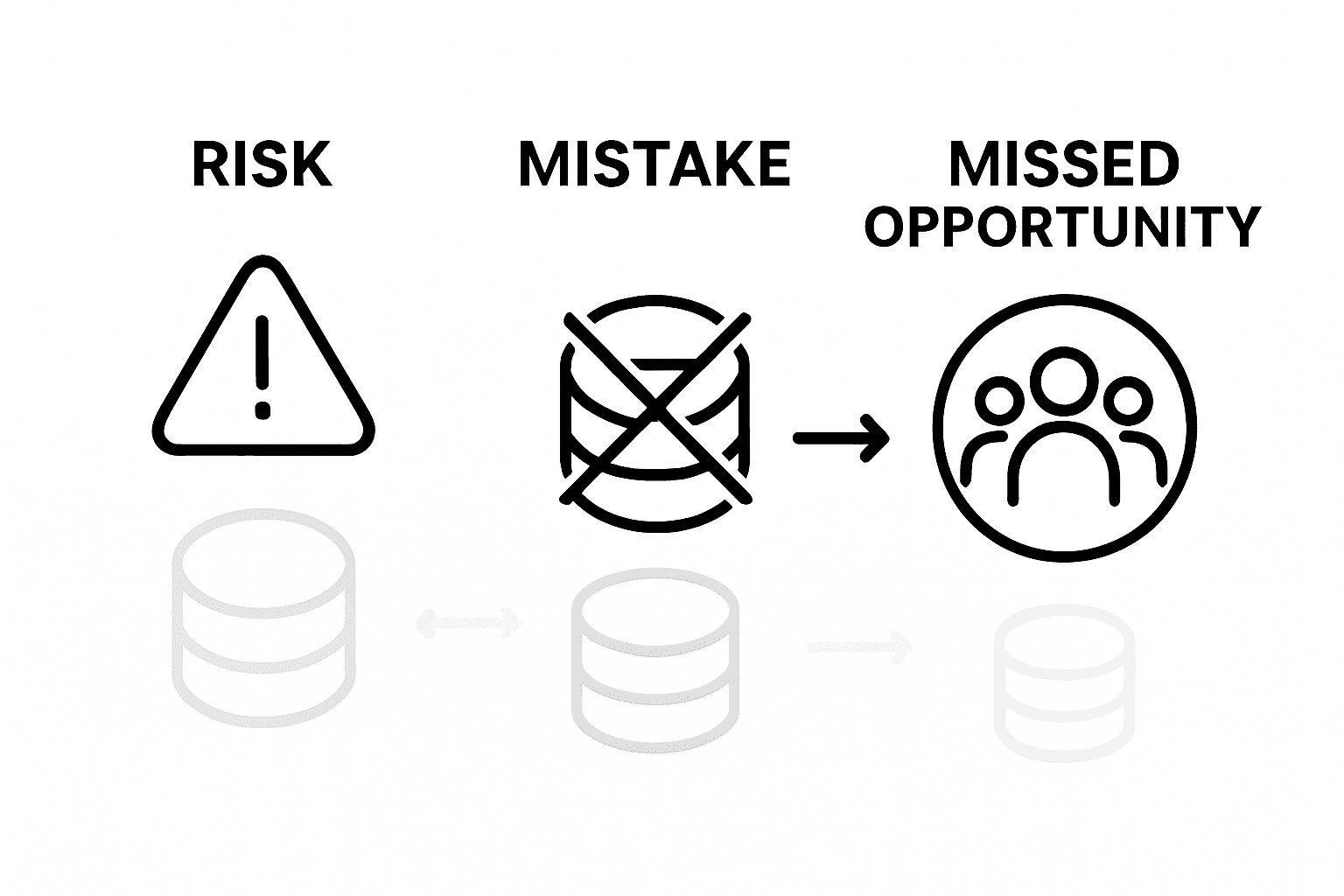
The discontinuation of critical disaster databases demonstrates the profound risks associated with interrupting data tracking efforts. When comprehensive monitoring systems are compromised, communities lose essential predictive capabilities, leaving them vulnerable to repeated mistakes and inadequate preparedness. The consequences extend far beyond immediate statistical gaps, potentially impacting long-term policy development, infrastructure planning, and emergency resource allocation.
Common risks and missed opportunities in disaster data tracking include:
The table below summarizes key risks and their consequences in disaster data tracking:
| Risk Factor | Potential Consequence | Long-Term Effect |
|---|---|---|
| Data discontinuity | Gaps in impact data | Hindered recovery planning |
| Outdated technology | Slower data collection | Delayed response efforts |
| Inadequate standardization | Confused reporting | Misallocated resources |
| Resource constraints | Reduced monitoring | Increased vulnerability |
- Data Discontinuity: Sudden interruptions in tracking critical metrics
- Incomplete Reporting: Failure to capture comprehensive impact information
- Limited Interdisciplinary Collaboration: Siloed data collection approaches
- Technological Limitations: Outdated collection and analysis methodologies
- Resource Constraints: Insufficient funding for sustained monitoring
- Inconsistent Standardization: Lack of uniform data collection protocols
Pro Tip: Resilience Strategy: Develop redundant data collection mechanisms and establish cross-organizational backup protocols to ensure continuous information tracking during potential system disruptions.
Transform Disaster Impact Data into Effective Recovery Solutions
Disaster impact data reveals complex challenges faced by communities after catastrophic events. This valuable information highlights pain points like disrupted infrastructure, economic losses, and human displacement. Understanding these metrics is crucial to avoid risks such as data discontinuity and resource misallocation that slow down recovery efforts. At DisasterVictimServices.com, we connect disaster victims with immediate emergency housing and provide expert coordination among insurance carriers, government agencies, and first responders to ensure efficient recovery.
Don’t let gaps in disaster data limit your preparedness. Explore how our compassionate team leverages insights from disaster impact data to deliver swift, reliable assistance. Visit our New Projects to learn about innovative recovery initiatives and our Uncategorized Resources for valuable disaster support information. When every moment counts, rely on DisasterVictimServices.com to guide you from crisis to rebuilding with confidence.
Frequently Asked Questions
Why is disaster impact data important for recovery planning?
Disaster impact data is essential for recovery planning as it provides comprehensive insights into the multifaceted consequences of disasters, helping stakeholders develop informed strategies for effective response and resource allocation.
What types of information are included in disaster impact data?
Disaster impact data encompasses a wide range of metrics, including economic losses, human costs (fatalities and injuries), infrastructure damage, environmental effects, psychological trauma, and social disruption.
How does tracking disaster impact data benefit different stakeholders?
Tracking disaster impact data benefits various stakeholders by enabling local communities to plan resilience efforts, government agencies to make informed policy decisions, insurance providers to assess risks accurately, and researchers to improve data analytics for future predictions.
What common myths exist about disaster impact data?
A common myth is that disaster impact data only counts immediate damages. In reality, it encapsulates complex interactions among environmental, economic, and social systems, which are crucial for understanding both short-term and long-term impacts of disasters.
Recommended
- Disaster Recovery Statistics 2025: Key Trends for Agencies and Families – Disaster Victim Services | Helping You Recover After Disaster
- Disaster Recovery Statistics 2025: Key Trends for Agencies and Families – Disaster Victim Services | Helping You Recover After Disaster
- Why Collect Disaster Statistics: Complete Guide – Disaster Victim Services | Helping You Recover After Disaster
- How to Access Support: Guide for Disaster Recovery 2025 – Disaster Victim Services | Helping You Recover After Disaster