
Over 600,000 Americans rely on emergency support services every single day for protection and assistance when disaster strikes. Whether you live in a quiet suburb or a busy city, knowing how these services operate can make a life-or-death difference during unexpected events. Understanding the purpose and scope of modern American emergency support services equips you with vital knowledge for safer, more resilient communities.
Table of Contents
- Defining Emergency Support Services And Their Purpose
- Key Types Of Emergency Support Provided
- How Emergency Services Facilitate Recovery
- Legal Mandates And Coordination Standards
- Risks, Responsibilities, And Cost Considerations
Key Takeaways
| Point | Details |
|---|---|
| Emergency Support Services Are Essential | These services provide critical infrastructure and support during disasters to mitigate human suffering and ensure community stability. |
| Diverse Support Functions | Emergency support encompasses various types of assistance, including infrastructure restoration, medical services, and mental health support, crucial for effective recovery. |
| Legal Frameworks Guide Operations | Emergency services operate under complex legal mandates that set coordination and operational standards necessary for effective response and recovery. |
| Financial and Operational Challenges | Emergency services face significant funding, operational, and legal risks that require strategic resource management and innovative solutions to sustain capabilities. |
Defining Emergency Support Services and Their Purpose
Emergency support services represent a critical infrastructure designed to protect, respond, and recover during catastrophic events. These comprehensive services encompass a wide range of specialized activities aimed at mitigating human suffering and preserving community stability when disasters strike. The Emergency Services Sector comprises highly trained personnel dedicated to prevention, protection, and recovery across government and private domains.
At their core, emergency support services function through a coordinated network of professionals who provide immediate assistance during unpredictable situations. This network includes first responders, medical personnel, disaster relief experts, and logistical coordinators who work seamlessly to address complex challenges. Emergency preparedness involves strategic pre-event planning and training, while emergency response focuses on post-event actions like coordinating rescue efforts and providing critical medical care to minimize negative consequences.
The fundamental purpose of emergency support services extends beyond immediate crisis management. These services create robust support systems that help communities rebuild, recover, and restore normalcy after traumatic events. By implementing comprehensive strategies that address physical infrastructure, emotional well-being, and economic recovery, emergency support services function as a lifeline for individuals and communities experiencing unprecedented disruption.
Pro Tip – Comprehensive Preparedness: Always maintain an emergency contact list with critical service numbers, medical information, and key local emergency resources readily available to your household.
Key Types of Emergency Support Provided
Emergency support services encompass a diverse range of critical interventions designed to address multiple dimensions of disaster response and recovery. The Recovery Support Functions framework identifies several key domains where targeted assistance becomes essential during crisis situations. These comprehensive support services range from immediate life-saving interventions to long-term community restoration efforts.
The primary types of emergency support typically include critical infrastructure restoration, medical and health services, temporary housing solutions, economic recovery assistance, and mental health support. Infrastructure support involves rapidly repairing essential systems like power grids, water supply networks, transportation routes, and communication channels. Medical services focus on immediate emergency care, treating injuries, preventing disease spread, and ensuring continuous healthcare access for vulnerable populations.

Temporary housing represents another crucial emergency support service, providing safe shelter for individuals and families displaced by disasters. These solutions can include emergency shelters, temporary apartment rentals, mobile housing units, and coordinated placement with host families or community centers. Economic recovery support helps communities rebuild financial stability through grants, small business assistance, unemployment support, and targeted economic development strategies that address the unique challenges posed by large-scale emergencies.
The table below outlines the major types of emergency support services and highlights their specific roles and long-term value for communities:
| Support Type | Primary Role | Long-Term Community Value |
|---|---|---|
| Infrastructure Restoration | Repair vital utilities and transport | Enables faster overall recovery |
| Medical & Health Services | Provide emergency care and treatment | Reduces post-disaster health risks |
| Temporary Housing | Shelter displaced individuals | Prevents long-term homelessness |
| Economic Recovery | Assist businesses and workers | Maintains local economic stability |
| Mental Health Support | Offer trauma counseling and outreach | Reduces psychological aftereffects |
Pro Tip – Comprehensive Emergency Preparation: Develop a personalized emergency support plan that includes critical contact information, emergency kit contents, and predetermined family communication strategies to ensure rapid response during unexpected crisis situations.
How Emergency Services Facilitate Recovery
Emergency services play a transformative role in community recovery, functioning as the critical backbone that helps societies rebuild and restore normalcy after devastating events. Recovery represents a long-term process where communities and institutions systematically work to reestablish and improve infrastructure and support systems disrupted by disasters. This complex journey involves multiple strategic interventions designed to address immediate survival needs while simultaneously laying groundwork for sustainable reconstruction.
The recovery facilitation process involves several interconnected stages, beginning with immediate emergency response and progressing through comprehensive rehabilitation efforts. First responders and emergency service professionals provide crucial initial stabilization, addressing critical medical needs, ensuring public safety, and preventing secondary disaster complications. They conduct rapid damage assessments, coordinate rescue operations, and establish emergency communication networks that become lifelines for affected communities during the most vulnerable moments.
Beyond immediate crisis management, emergency services implement comprehensive recovery strategies that address psychological, economic, and structural challenges. These strategies include coordinating temporary housing solutions, connecting survivors with financial assistance programs, providing mental health counseling, and supporting local businesses in rebuilding efforts. By creating integrated support systems that address multiple dimensions of community resilience, emergency services transform short-term survival responses into long-term recovery pathways that help communities not just survive, but ultimately thrive in the aftermath of catastrophic events.
Pro Tip – Comprehensive Recovery Preparation: Develop a personal emergency resilience portfolio that includes important documents, emergency contact information, and a comprehensive understanding of local emergency service protocols to expedite recovery processes during unexpected challenges.
Legal Mandates and Coordination Standards
Emergency support services operate within a complex legal framework that defines their roles, responsibilities, and operational boundaries. EMS systems demonstrate significant variation in administration and funding, with local government autonomy playing a critical role in establishing and supporting these essential services. This intricate legal landscape ensures that emergency response mechanisms are both adaptable to local needs and aligned with broader national emergency management standards.
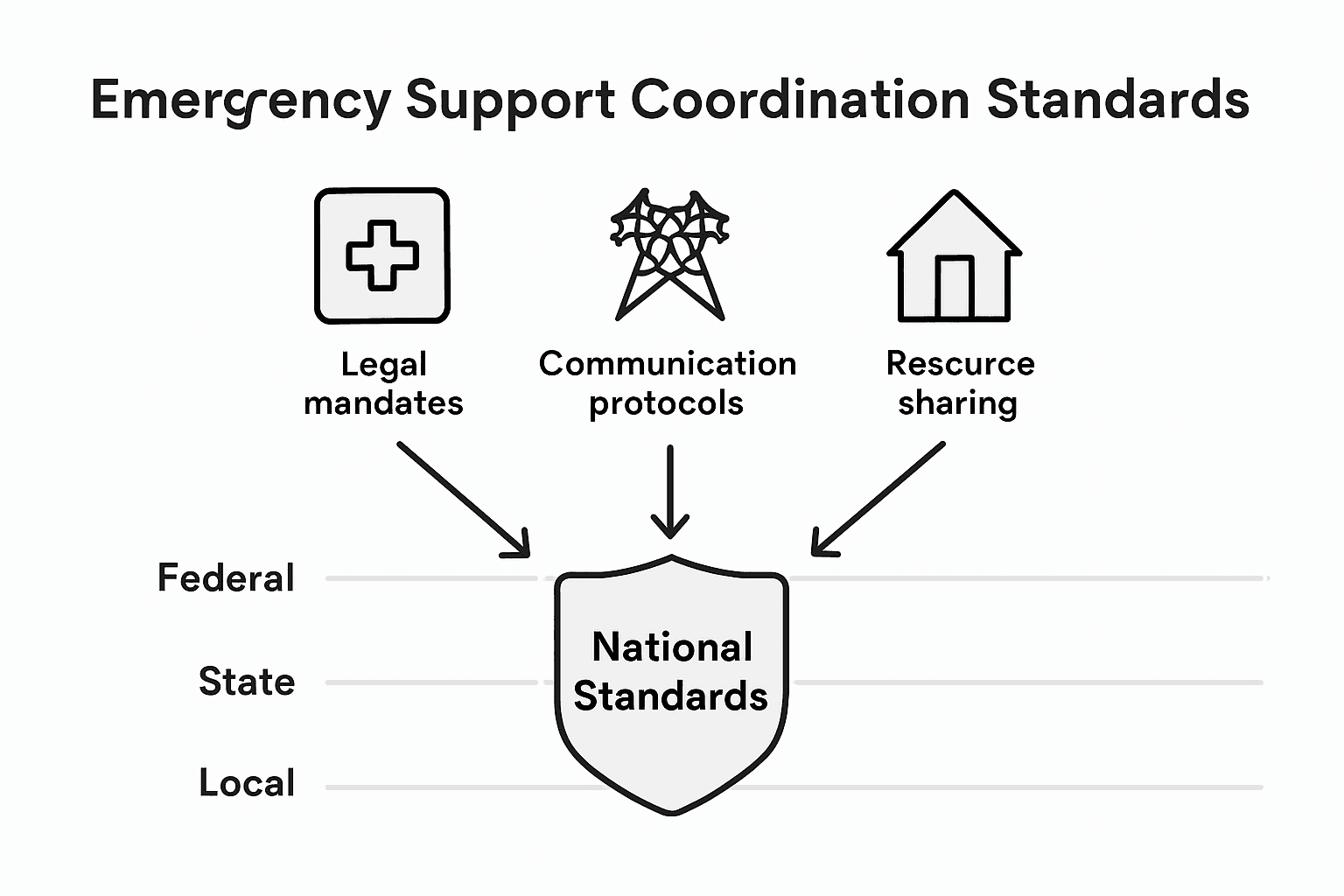
The legal mandates governing emergency services encompass multiple layers of regulatory oversight, including federal, state, and local guidelines that define coordination protocols, resource allocation, and operational standards. These regulations establish clear mechanisms for inter-agency communication, define the scope of emergency responders’ authority, and create standardized protocols for disaster response. Key legislative frameworks like the National Response Framework and the Stafford Act provide comprehensive guidelines that outline how different government agencies and emergency services should collaborate during crisis situations.
Coordination standards require emergency services to develop robust communication networks, implement standardized training programs, and maintain sophisticated resource management systems. These standards ensure that emergency responders can seamlessly integrate their efforts across different jurisdictions and organizational boundaries. Critical components include establishing unified command structures, developing shared communication technologies, creating mutual aid agreements, and implementing comprehensive incident management protocols that enable rapid, coordinated responses to complex emergency scenarios.
Pro Tip – Legal Preparedness: Familiarize yourself with local emergency service regulations and maintain a comprehensive understanding of your community’s emergency response protocols to enhance personal and community resilience during unexpected crisis situations.
Risks, Responsibilities, and Cost Considerations
Emergency support services operate within a complex landscape of financial challenges and operational risks that demand strategic planning and resource management. EMS systems are primarily funded at the local level and often face severe funding constraints, with significant variations in administrative support and resource allocation across different jurisdictions. These financial limitations create substantial challenges for maintaining comprehensive and effective emergency response capabilities.
The risks associated with emergency support services extend far beyond financial considerations, encompassing significant operational, legal, and human safety challenges. Emergency responders face potential physical dangers, psychological stress, and complex liability scenarios that require extensive training, robust insurance coverage, and comprehensive risk mitigation strategies. Responsibilities include rapid decision-making under extreme pressure, maintaining precise communication protocols, managing complex inter-agency collaborations, and ensuring the safety of both victims and response personnel during high-stakes emergency interventions.
Cost considerations in emergency support services involve multiple complex factors, including equipment maintenance, personnel training, technological infrastructure, and ongoing operational expenses. Organizations must balance limited budgets with the critical need for advanced technological resources, specialized training programs, and comprehensive emergency response capabilities. This financial balancing act requires innovative funding strategies, including federal and state grants, public-private partnerships, community support initiatives, and strategic resource optimization to ensure that emergency services can effectively respond to diverse and unpredictable crisis scenarios.
Here is a summary of the key risks, responsibilities, and cost factors facing emergency support organizations:
| Category | Main Challenge | Example Solution |
|---|---|---|
| Operational Risk | Ensuring responder safety | Advanced safety training |
| Financial Limit | Limited funding availability | Pursue grants & partnerships |
| Legal Liability | Managing complex legal requirements | Maintain robust insurance |
| Resource Demand | Sustaining updated equipment and staff | Strategic resource planning |
Pro Tip – Financial Preparedness: Develop a comprehensive understanding of local emergency service funding mechanisms and explore potential community support opportunities to help strengthen and sustain critical emergency response capabilities in your region.
Strengthen Your Emergency Support with Trusted Partners
The article highlights the critical need for coordinated emergency support services to protect and restore communities nationwide. Key challenges include navigating complex recovery stages, managing limited resources, and ensuring seamless communication among responders. If you are seeking solutions that address these pain points, DisasterVictimServices.com offers specialized emergency housing coordination alongside insurance carriers, first responders, and government agencies. This collaborative approach connects displaced individuals with immediate shelter while helping restore stability faster.
Act now to improve your disaster response efforts with comprehensive support that aligns with legal and logistical standards mentioned in the article. Explore how our network helps communities rebuild by providing compassionate, efficient emergency assistance at Uncategorized – Disaster Victim Services | Helping You Recover After Disaster or learn about our strategic frameworks at Project design – Disaster Victim Services | Helping You Recover After Disaster. Visit DisasterVictimServices.com today to partner with experts who prioritize speed, coordination, and care in every disaster recovery.
Frequently Asked Questions
What are emergency support services?
Emergency support services are specialized activities designed to protect, respond, and recover during catastrophic events, providing essential assistance and resources to communities in crisis.
How do emergency support services facilitate recovery after a disaster?
Emergency support services play a crucial role by providing immediate medical care, temporary housing, and mental health support, while also coordinating long-term recovery strategies to restore normalcy and improve community resilience.
What types of support do emergency services typically provide?
Emergency services generally offer critical infrastructure restoration, medical and health services, temporary housing solutions, economic recovery assistance, and mental health support to address various needs during and after disasters.
What are some key legal mandates governing emergency support services?
Legal mandates for emergency support services establish protocols for coordination, resource allocation, and operational standards, ensuring that responders can effectively collaborate across different jurisdictions during emergencies.
Recommended
- Nationwide Disaster Support—Why Every State Needs It – Disaster Victim Services | Helping You Recover After Disaster
- Emergency Assistance Guide: Complete Resource Explained – Disaster Victim Services | Helping You Recover After Disaster
- Complete Guide to Emergency Housing Solutions USA – Disaster Victim Services | Helping You Recover After Disaster
- Government Multi Agency – Disaster Victim Services | Helping You Recover After Disaster