
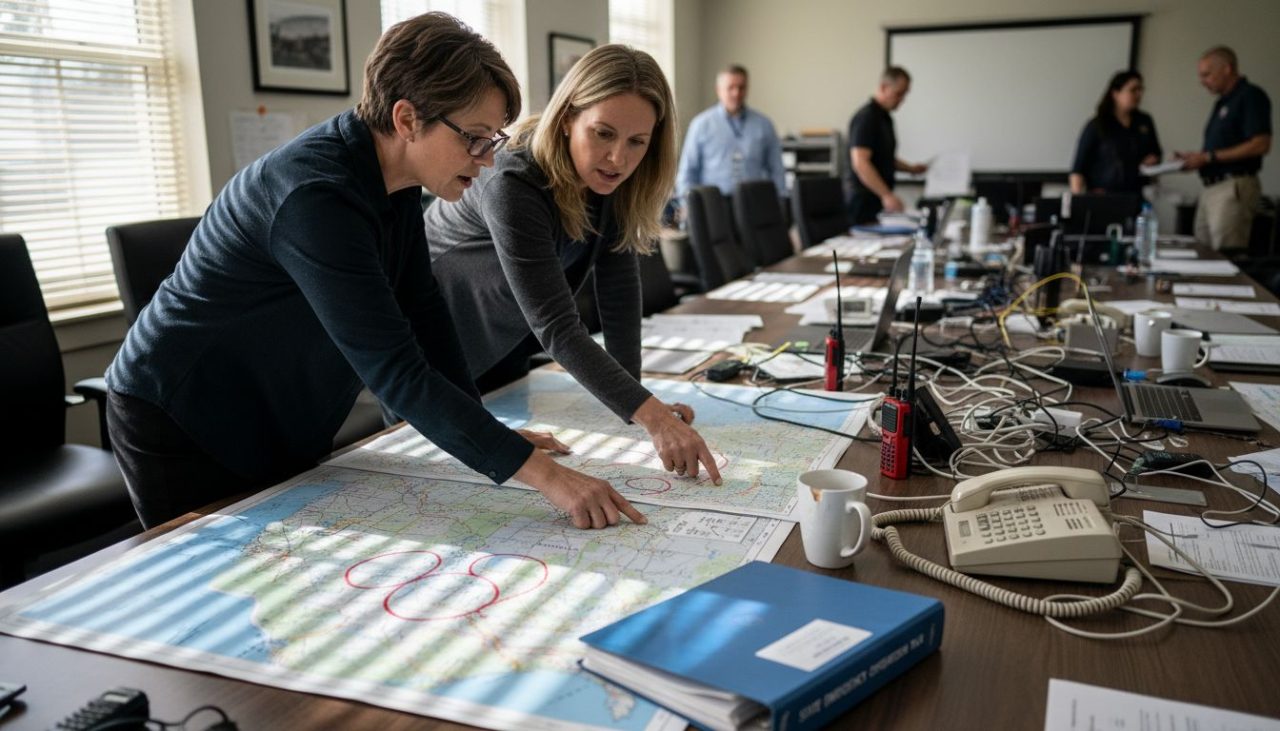
Every year, American communities face a growing threat from natural disasters that disrupt lives and strain local resources. With more than 90 percent of Americans living in areas at moderate or high risk, the importance of efficient support systems has never been clearer. Understanding how disaster response networks work nationwide can help individuals, families, and organizations prepare for emergencies and recover more quickly when crises hit.
Table of Contents
- Defining Nationwide Disaster Support Systems
- How Cross-Agency Disaster Response Works
- Emergency Housing and Rapid Relief Logistics
- Roles of Insurance and Government Agencies
- Risks of Gaps in Coordinated Support
Key Takeaways
| Point | Details |
|---|---|
| Comprehensive Disaster Response | Nationwide disaster support systems involve collaboration between federal, state, local agencies, and non-profits to quickly mobilize resources during emergencies. |
| Cross-Agency Coordination | Effective disaster management relies on defined protocols and real-time communication between various agencies to enhance quick response efforts. |
| Logistics and Housing | Emergency housing strategies and logistics are crucial for providing immediate support and require continuous planning and the use of advanced technologies. |
| Collaboration with Insurance | Government agencies and insurance providers must work together to ensure financial assistance and resource allocation for disaster recovery efforts. |
Defining Nationwide Disaster Support Systems
Disaster support systems represent complex, interconnected networks designed to provide comprehensive emergency assistance across multiple jurisdictions and agencies. At their core, these systems aim to rapidly mobilize resources, coordinate response efforts, and minimize human suffering during catastrophic events. The National Disaster Recovery Framework establishes critical guidelines for how different governmental and non-governmental organizations collaborate during emergencies.
Nationwide disaster support involves multiple key components that work seamlessly to address immediate and long-term community needs. These systems typically include federal agencies like the Federal Emergency Management Agency (FEMA), state emergency management offices, local first responders, nonprofit organizations, and community support networks. Each entity plays a specific role in creating a comprehensive response strategy that can adapt to various disaster scenarios.
The primary objective of these support systems is to provide rapid, efficient assistance that addresses both immediate survival needs and sustainable recovery pathways. Federal disaster response mechanisms enable government resources to be quickly deployed when presidential declarations activate emergency protocols. This allows for swift mobilization of financial aid, medical support, temporary housing, and critical infrastructure restoration.
Effective nationwide disaster support requires continuous planning, training, and interdepartmental communication. Emergency management professionals must anticipate potential scenarios, develop adaptive response protocols, and maintain robust communication channels across different organizational levels. By creating flexible, responsive frameworks, these systems can help communities navigate the complex challenges presented by natural disasters, pandemics, and other large-scale emergencies.
How Cross-Agency Disaster Response Works
Cross-agency disaster response represents a sophisticated, collaborative approach to emergency management that requires seamless coordination among multiple governmental and non-governmental organizations. The Emergency Management Assistance Compact exemplifies how states can strategically share resources and support during catastrophic events, creating a robust national response network.
Interagency coordination operates through carefully defined structures and protocols. The National Response Framework establishes clear guidelines for Emergency Support Functions (ESFs), which designate specific agencies responsible for different aspects of disaster management. For instance, FEMA and the American Red Cross serve as co-primary agencies for mass care services, ensuring comprehensive support across critical sectors.
Key components of cross-agency disaster response include real-time communication, resource allocation, and adaptive strategic planning. Federal disaster coordination mechanisms enable rapid deployment of specialized teams, equipment, and financial resources. These systems rely on predefined protocols that allow different agencies to quickly integrate their expertise, minimizing response times and maximizing effective intervention.
Successful cross-agency response demands continuous training, scenario planning, and technological infrastructure that supports rapid information sharing. Emergency management professionals must develop flexible frameworks that can quickly adapt to unpredictable disaster scenarios, bridging potential gaps between local, state, and federal response capabilities. By maintaining strong interdepartmental relationships and investing in collaborative technologies, these agencies can create a more resilient and responsive national disaster support system.
Emergency Housing and Rapid Relief Logistics
Emergency housing and rapid relief logistics represent critical lifelines for communities devastated by disasters, providing essential support during their most vulnerable moments. Local disaster response teams operate around the clock, responding to over 60,000 disasters annually and ensuring immediate shelter, food, and health services for displaced individuals and families.
Logistics infrastructure plays a pivotal role in emergency housing deployment, involving complex coordination between multiple agencies and resources. The Universal Logistics Standard provides a strategic framework that enables systematic management of relief efforts, helping emergency responders efficiently allocate temporary housing, medical supplies, and critical resources across affected regions.
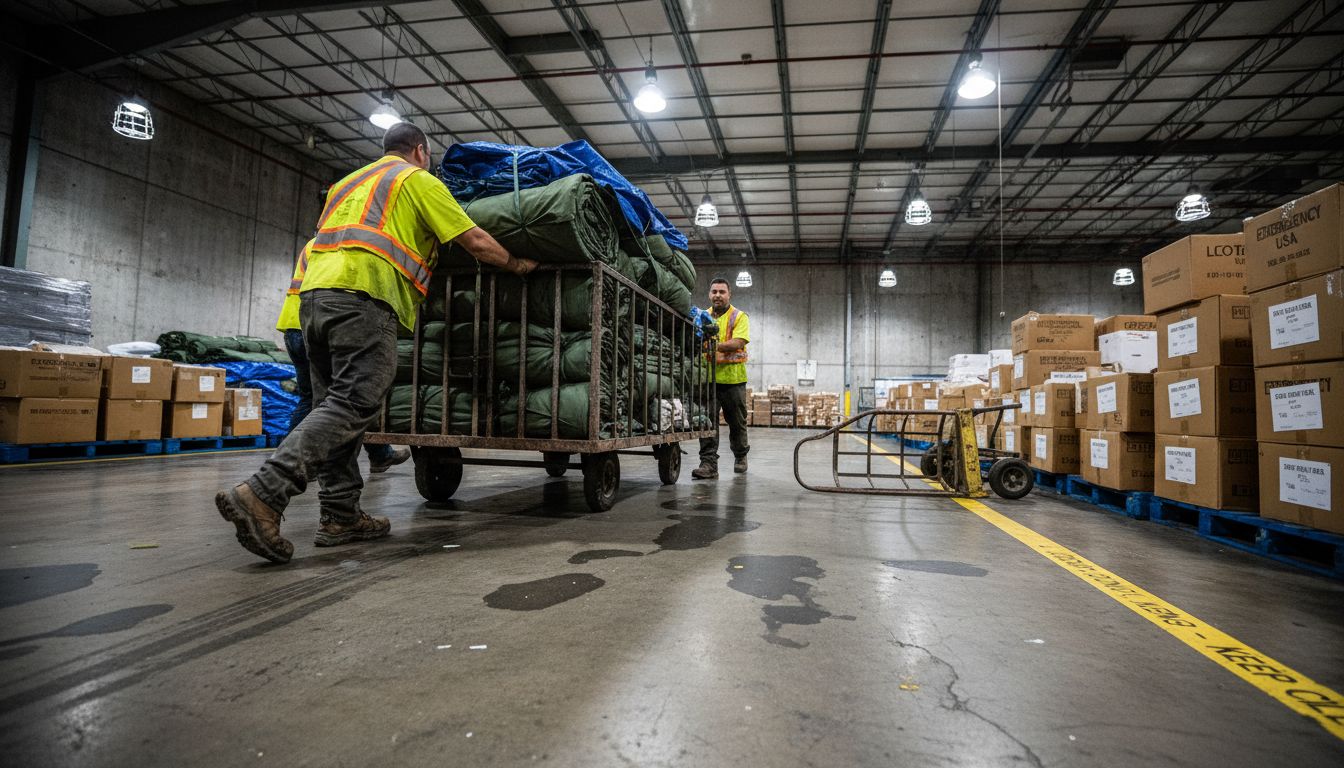
Successful emergency housing strategies require comprehensive planning that addresses multiple dimensions of human need. This includes identifying safe shelter locations, establishing communication networks, transporting essential supplies, and providing psychological support for traumatized individuals. Emergency management teams must develop flexible protocols that can rapidly adapt to diverse disaster scenarios, from hurricane devastation to wildfire displacement.
Technology and data-driven approaches are transforming emergency housing logistics, enabling more precise resource allocation and faster response times. Advanced mapping technologies, real-time communication platforms, and predictive analytics help emergency teams anticipate needs, track available resources, and create dynamic relief strategies that can quickly mobilize support where it is most critically needed.
Roles of Insurance and Government Agencies
Disaster response mechanisms require intricate collaboration between government agencies and private insurance carriers to ensure comprehensive support for affected communities. These entities work in tandem to provide financial assistance, resource allocation, and strategic recovery planning, creating a robust safety network for disaster victims.
Government intervention plays a critical role in large-scale emergency management. The National Disaster Medical System exemplifies this collaborative approach, integrating multiple federal departments including Health and Human Services, Homeland Security, Defense, and Veterans Affairs to supplement state and local medical response capabilities.
Insurance companies serve as essential financial backstops during disaster recovery, offering critical coverage that helps individuals and businesses rebuild. Their role extends beyond simple monetary compensation, involving complex damage assessments, risk evaluation, and coordinated claims processing. Government agencies like FEMA provide additional financial support, grants, and resources that complement private insurance coverage, ensuring a more comprehensive approach to disaster recovery.
Effective disaster response requires seamless communication and strategic coordination between government agencies and insurance providers. This involves developing adaptive protocols, sharing real-time information, and creating flexible frameworks that can quickly respond to diverse emergency scenarios. By maintaining strong interdepartmental relationships and leveraging advanced technologies, these organizations can create a more resilient and responsive nationwide disaster support system that prioritizes rapid, compassionate assistance for affected communities.
Risks of Gaps in Coordinated Support
Optimizing resource allocation represents a critical challenge in homeland security and emergency preparedness, with significant consequences for communities facing increasingly complex and severe disruptive events. Gaps in coordinated support can lead to catastrophic outcomes, including substantial economic losses, increased fatalities, and prolonged community recovery periods.
Collaborative disaster management requires seamless integration across multiple stakeholder groups. Comprehensive disaster relief strategies demand active participation from government organizations, non-governmental organizations, community leaders, and media outlets. When communication breaks down or responsibilities become fragmented, the entire emergency response ecosystem can experience critical failures that directly impact vulnerable populations.
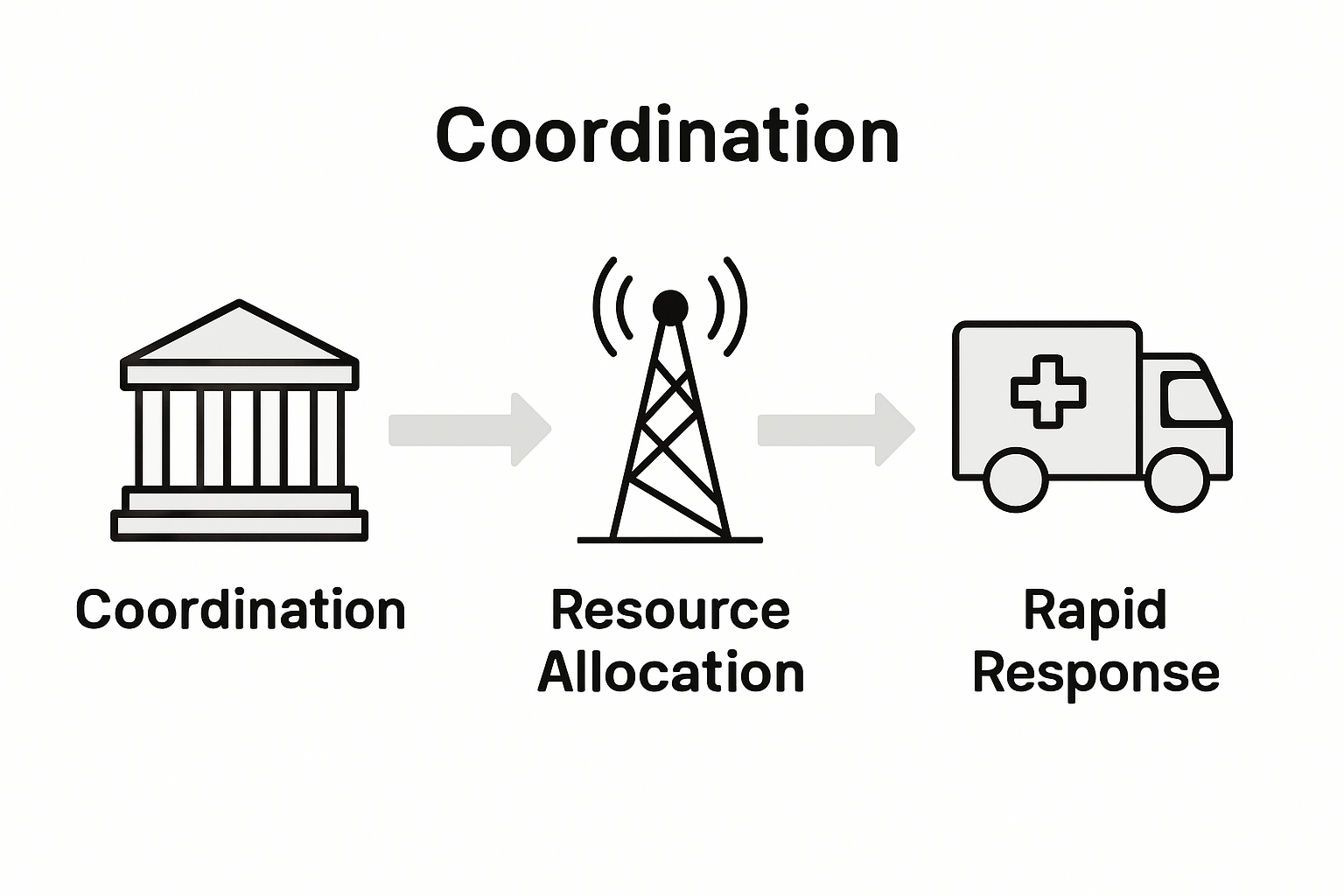
The most dangerous risks emerge when different agencies operate in isolation, creating information silos that prevent rapid, effective decision making. These coordination gaps can manifest in various ways, such as duplicated efforts, resource misallocation, delayed emergency communications, and inconsistent support strategies. Complex disasters require nuanced, adaptive responses that can only be achieved through transparent, real-time information sharing and collaborative planning.
Addressing these potential coordination risks requires developing robust, flexible frameworks that prioritize interdepartmental communication, shared technological platforms, and continuous training programs. Emergency management professionals must invest in advanced communication technologies, cross-agency training simulations, and standardized protocols that enable quick, coherent responses across different organizational boundaries. By proactively identifying and mitigating potential coordination gaps, communities can build more resilient disaster support systems that protect lives and minimize long-term economic and social disruption.
Strengthening Nationwide Disaster Support Through Expert Coordination
The article highlights the critical challenge of ensuring seamless coordination among federal agencies, state emergency offices, insurers, and local responders to provide rapid emergency assistance and recovery solutions. When disasters strike, the ability to swiftly mobilize resources such as emergency housing, financial aid, and medical support directly impacts the survival and rebuilding of affected communities. Key pain points include preventing gaps in interagency communication, optimizing resource allocation, and bridging complex logistics to deliver compassionate, efficient care.
At DisasterVictimServices.com, we understand these challenges and are committed to supporting every state’s disaster response system with our proven expertise in emergency housing and disaster recovery logistics. Our team works hand-in-hand with insurance carriers, government agencies, and first responders to close coordination gaps and fast-track assistance. Explore our insights on innovative disaster project designs to see how we help communities transition from immediate crisis to confident rebuilding here. For broader support resources, visit our Uncategorized disaster recovery resources.
Don’t let fragmented responses delay the help your community needs. Connect with DisasterVictimServices.com now to access 24/7 assistance and expert guidance designed to strengthen nationwide disaster support networks and accelerate recovery. Secure faster, more organized support by visiting us today at DisasterVictimServices.com.
Frequently Asked Questions
What is a nationwide disaster support system?
A nationwide disaster support system is a complex network designed to provide comprehensive emergency assistance during catastrophic events. It involves the coordinated efforts of federal, state, and local agencies as well as non-profit organizations to mobilize resources and minimize human suffering.
Why is interagency coordination important in disaster response?
Interagency coordination is crucial because it ensures seamless communication and collaboration among different organizations. This helps to rapidly deploy resources, make effective decisions, and provide comprehensive support to affected communities during emergencies.
How does emergency housing support communities during disasters?
Emergency housing provides immediate shelter and basic necessities to those displaced by disasters. It is a critical element of disaster relief logistics, ensuring that affected individuals and families have a safe place to stay while recovery efforts are underway.
What role do government agencies and insurance companies play in disaster recovery?
Government agencies and insurance companies collaborate to provide financial assistance and resources for disaster recovery. Government entities like FEMA offer grants and support, while insurance companies help cover losses and assess damages, working together to create a robust recovery network.
Recommended
- Home – Disaster Victim Services | Helping You Recover After Disaster
- Government Multi Agency – Disaster Victim Services | Helping You Recover After Disaster
- How to Access Aid in 2025: A Guide for Disaster Victims and Responders – Disaster Victim Services | Helping You Recover After Disaster
- How to Coordinate Response in Disasters: A Guide for 2025 – Disaster Victim Services | Helping You Recover After Disaster