
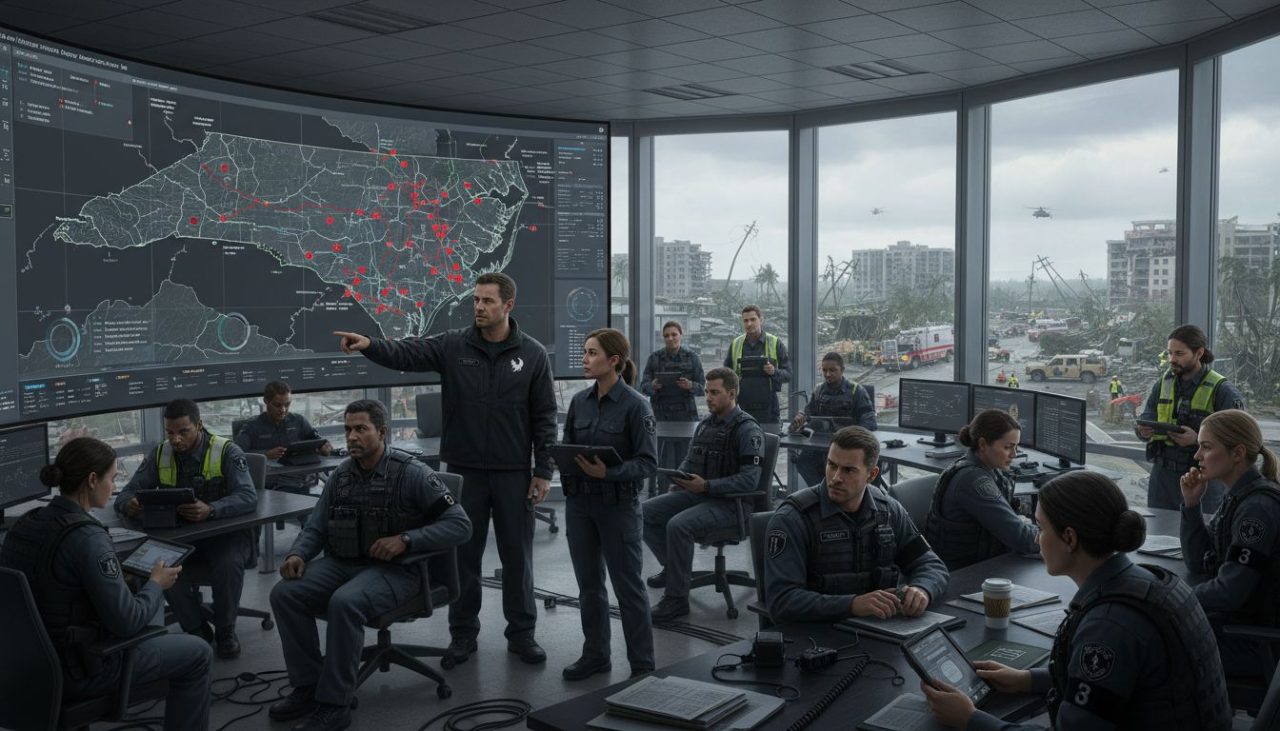
Over eighty percent of american communities experience at least one significant disaster event each year, yet coordinated recovery remains a major challenge. Effective collaboration after disasters matters because no single organization can address every urgent need or navigate complex recovery on its own. Understanding what makes teamwork between agencies, responders, and local groups truly work can make the difference between slow confusion and a unified, life-saving response.
Table of Contents
- Defining Collaboration After A Disaster Event
- Key Stakeholders In Disaster Response Efforts
- How Collaboration Streamlines Recovery Processes
- Legal And Regulatory Frameworks For Coordination
- Common Collaboration Challenges And Solutions
Key Takeaways
| Point | Details |
|---|---|
| Collaboration is Essential | Effective disaster response relies on coordinated efforts among diverse stakeholders, including government agencies, emergency responders, and communities. |
| Clear Communication is Crucial | Establishing transparent communication protocols and shared responsibilities among organizations enhances collaboration and streamlines recovery processes. |
| Structured Frameworks Enable Success | Legal and regulatory frameworks provide guidelines that allow agencies to work together efficiently, ensuring a coordinated approach to disaster response. |
| Adaptation to Challenges is Key | Addressing communication barriers and jurisdictional conflicts through innovative solutions is essential for effective disaster response and recovery. |
Defining Collaboration After a Disaster Event
Collaboration in disaster response represents a complex, multifaceted approach where diverse stakeholders unite to address immediate challenges and long-term recovery needs. At its core, collaborative disaster response involves coordinated efforts among government agencies, emergency responders, relief organizations, and affected communities to streamline recovery processes and maximize resource effectiveness.
Research demonstrates that successful collaboration hinges on establishing clear communication channels and shared responsibilities. The collaborative disaster management framework highlights how different organizations must work synchronously, breaking down traditional operational silos. By integrating public and private sector expertise, teams can develop more responsive and adaptive strategies for managing crisis situations.
Key elements of effective disaster collaboration include:
- Establishing transparent communication protocols
- Creating flexible, scalable response mechanisms
- Sharing real-time information across organizational boundaries
- Developing pre-established coordination structures
- Implementing joint training and simulation exercises
Understanding collaboration requires recognizing that no single entity can manage complex disaster scenarios alone. Disaster response workflows emphasize the importance of interconnected support systems that enable rapid, coordinated interventions. Successful collaboration transforms individual organizational capabilities into a comprehensive, unified response strategy that prioritizes human safety and efficient resource allocation.
Key Stakeholders in Disaster Response Efforts
Disaster response requires a comprehensive network of interconnected stakeholders, each playing a critical role in managing and mitigating crisis situations. Effective disaster management demands strategic coordination among multiple organizations and sectors, ensuring rapid and comprehensive support for affected communities.
The systematic engagement of stakeholders represents a foundational approach to disaster response. This framework encompasses diverse entities including government agencies, emergency services, nonprofit organizations, private sector partners, and local community groups. First responder roles are particularly crucial in the initial stages of disaster intervention.
Key stakeholders in disaster response typically include:
- Government emergency management agencies
- Local and state law enforcement
- Fire and rescue departments
- Medical and healthcare providers
- Humanitarian and relief organizations
- Military and national guard units
- Search and rescue teams
- Community-based volunteer networks
Successful disaster response hinges on the ability of these stakeholders to communicate effectively, share resources, and coordinate their efforts seamlessly. Each organization brings unique capabilities and expertise, creating a comprehensive support system that can adapt to complex and rapidly changing emergency scenarios. The interconnected nature of these stakeholders ensures a more resilient and responsive approach to disaster management, ultimately minimizing potential human suffering and accelerating community recovery.
How Collaboration Streamlines Recovery Processes
Disaster recovery is fundamentally a collaborative process that requires synchronized efforts across multiple organizations and sectors. Strategic collaboration transforms fragmented response attempts into comprehensive, efficient recovery initiatives that address complex community needs more effectively than any single entity could achieve alone.
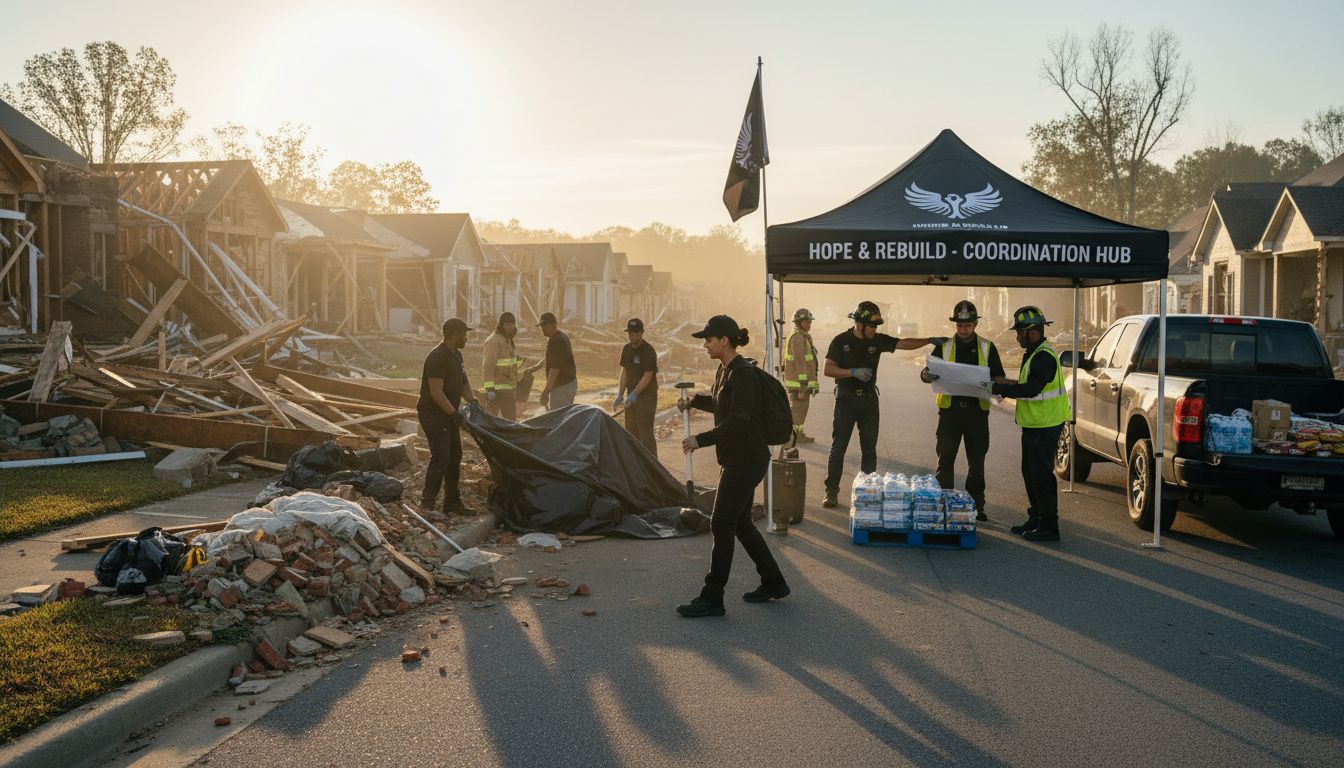
Research highlights the critical importance of private-public sector collaboration in enhancing community resilience. By integrating diverse resources, expertise, and perspectives, organizations can develop more adaptive and responsive recovery strategies. Disaster recovery coordination steps play a crucial role in establishing clear communication channels and shared objectives.
Key mechanisms that streamline recovery through collaboration include:
- Establishing unified communication platforms
- Sharing real-time resource tracking
- Developing integrated response protocols
- Creating cross-organizational training programs
- Implementing flexible resource allocation systems
The most successful recovery efforts emerge from comprehensive collaborative frameworks that prioritize rapid information exchange, coordinated decision making, and seamless resource deployment. By breaking down traditional organizational barriers, stakeholders can create more resilient response systems that adapt quickly to evolving disaster scenarios, ultimately reducing recovery time and minimizing community disruption.
Legal and Regulatory Frameworks for Coordination
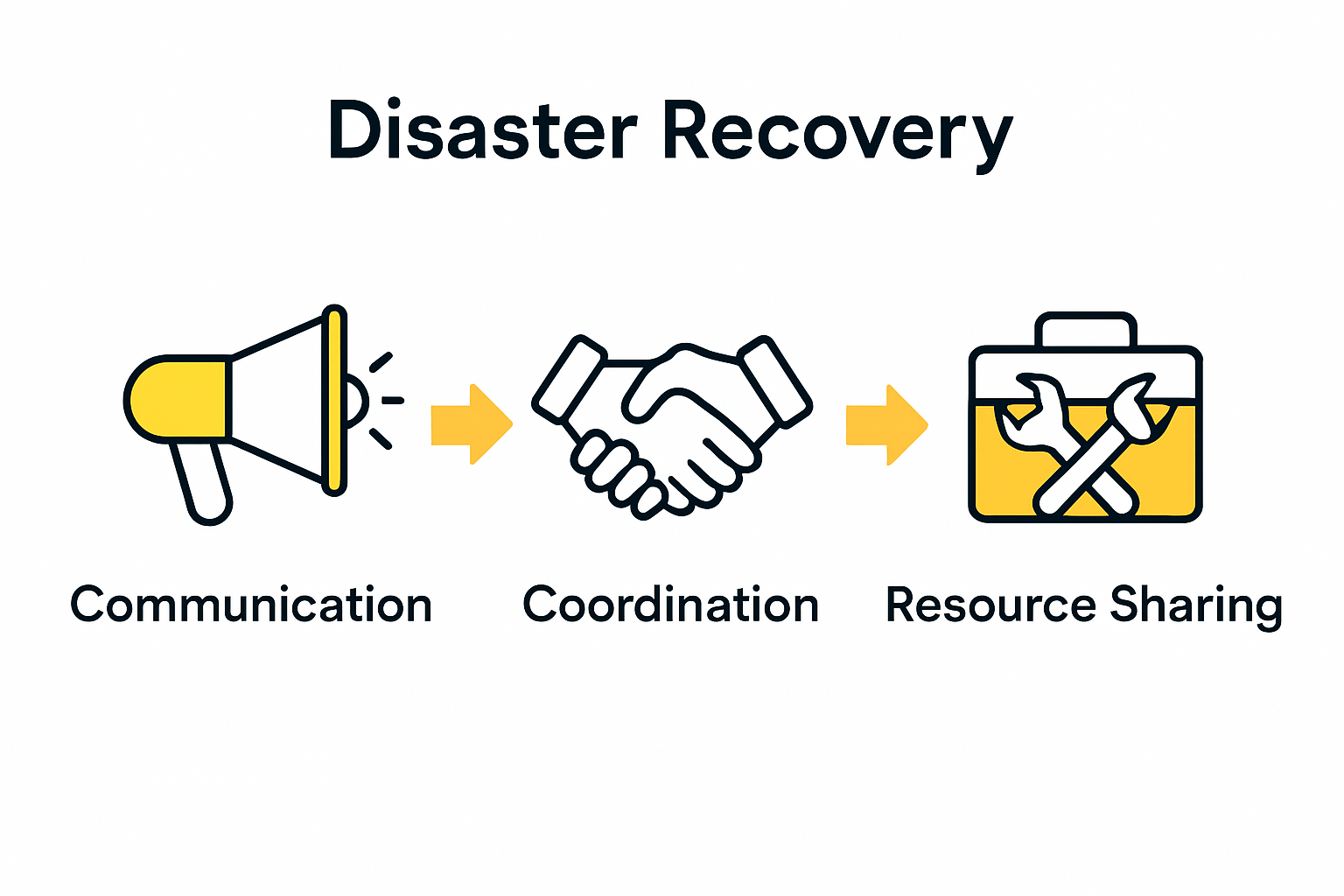
Legal and regulatory frameworks form the critical backbone of disaster response coordination, establishing clear guidelines that enable multiple agencies to work together effectively. Disaster management regulations provide the structural foundation that defines roles, responsibilities, and operational protocols across different organizational and governmental levels.
The International Recovery Platform supports comprehensive implementation strategies for disaster risk reduction, emphasizing the importance of standardized legal frameworks. These frameworks ensure that recovery efforts are not just reactive, but proactively designed to build community resilience. Disaster recovery process steps rely heavily on these established legal guidelines to maintain consistency and effectiveness.
Key components of effective legal and regulatory frameworks include:
- Clear liability definitions
- Interagency communication protocols
- Standardized emergency response procedures
- Defined resource allocation mechanisms
- Comprehensive insurance and compensation guidelines
- Cross-jurisdictional cooperation provisions
Successful regulatory coordination requires ongoing adaptation, recognizing that disaster response environments are dynamic and complex. By creating flexible legal frameworks that can rapidly adjust to emerging challenges, stakeholders can ensure a more responsive and efficient approach to community recovery. These frameworks ultimately serve as a critical mechanism for transforming potential chaos into organized, systematic support for affected populations.
Common Collaboration Challenges and Solutions
Disaster response collaboration presents complex challenges that can significantly impede effective emergency management. Organizational communication barriers often emerge as the primary obstacle, creating critical gaps in resource allocation, information sharing, and coordinated decision making across different agencies and sectors.
Research demonstrates innovative approaches to addressing these challenges. Resource management optimization models provide strategic frameworks for proactively determining optimal resource deployment during crisis scenarios. First responder coordination tips become essential in navigating these intricate collaborative environments.
Key collaboration challenges and corresponding solutions include:
- Communication silos
- Solution: Implement unified communication platforms
- Inconsistent information sharing
- Solution: Develop standardized reporting protocols
- Jurisdictional boundaries
- Solution: Create cross-agency memorandums of understanding
- Technology integration difficulties
- Solution: Adopt interoperable communication systems
- Resource allocation conflicts
- Solution: Establish clear prioritization frameworks
Successful collaboration requires continuous adaptation and a commitment to breaking down traditional organizational barriers. By embracing flexible communication strategies, leveraging technology, and maintaining a shared mission of community support, stakeholders can transform potential challenges into opportunities for more effective disaster response and recovery.
Strengthen Your Recovery Through True Collaboration
The article underscores the critical need for coordinated communication, clear roles, and shared resources after a disaster strikes. When multiple agencies and stakeholders struggle to work together, victims experience delays and uncertainty in their road to recovery. If you are seeking reliable ways to bridge these challenges and ensure a seamless transition from crisis to rebuilding, DisasterVictimServices.com offers the compassionate expertise you need. We specialize in connecting disaster victims to immediate housing solutions while facilitating collaboration among insurance carriers, first responders, and government agencies.
Discover how strategic partnerships and streamlined processes can reduce the chaos following a disaster. Visit our Uncategorized Resource Hub to explore insights on collaboration and recovery. Learn more about our approach to emergency coordination in Project Design. Don’t wait until disaster magnifies confusion and distance. Act now to access trusted support that keeps you connected and moving forward. Start your journey with us at DisasterVictimServices.com.
Frequently Asked Questions
What is the role of collaboration in disaster response?
Collaboration in disaster response involves multiple stakeholders working together—government agencies, emergency responders, and community organizations—to efficiently address immediate challenges and facilitate long-term recovery.
What are the key stakeholders involved in disaster response efforts?
Key stakeholders in disaster response typically include government emergency management agencies, law enforcement, fire and rescue departments, medical providers, humanitarian organizations, and community volunteer networks.
How does collaboration improve recovery processes after a disaster?
Collaboration streamlines recovery processes by integrating diverse resources, enhancing communication, and creating coordinated protocols that better meet community needs than isolated efforts could achieve.
What challenges are faced in collaborative disaster response?
Common challenges in collaborative disaster response include communication barriers, inconsistent information sharing, and resource allocation conflicts, which can be addressed by implementing unified communication platforms and developing standardized protocols.
Recommended
- Collaborative Disaster Recovery Guide for Seamless Recovery – Disaster Victim Services | Helping You Recover After Disaster
- How to Coordinate Response in Disasters: A Guide for 2025 – Disaster Victim Services | Helping You Recover After Disaster
- First Aid Disaster Basics: Essential Steps for 2025 Recovery – Disaster Victim Services | Helping You Recover After Disaster
- Disaster Preparedness Checklist 2025: Essential Guide for All Responders – Disaster Victim Services | Helping You Recover After Disaster