

Did you know that over 20 million people worldwide lose their homes to disasters each year? Facing sudden displacement, families must find safe places to live while rebuilding their lives from scratch. Understanding how shelter transition works can make all the difference, guiding survivors through every stage from emergency aid to secure long-term housing. Clear knowledge of this process helps communities recover stronger and safeguards the dignity of those most affected.
Table of Contents
- Defining Shelter Transition After Disasters
- Stages of Shelter Transition and Housing Types
- Essential Roles: Agencies, Professionals, and Victims
- Legal Rights and Insurance During Transition
- Common Challenges and How to Overcome Them
Key Takeaways
| Point | Details |
|---|---|
| Phased Shelter Transition | The shelter transition process is divided into four key stages: spontaneous shelter, emergency shelter, interim housing, and permanent housing, each addressing specific needs. |
| Collaborative Approach | Effective shelter transition requires coordination among government agencies, humanitarian organizations, and community members to ensure successful recovery. |
| Legal and Financial Considerations | Understanding legal rights and insurance options is crucial for disaster victims to navigate their recovery and access essential support. |
| Challenges and Strategies | Common challenges include coordination gaps, resource limitations, and emotional trauma, necessitating a strategic, human-centered approach to overcome these barriers. |
Defining Shelter Transition After Disasters
Shelter transition is a critical process that helps disaster victims move from immediate emergency situations to stable, safe housing. According to International Federation of Red Cross and Red Crescent Societies (IFRC), this process involves a phased approach that systematically addresses the evolving housing needs of individuals and communities impacted by disasters.
The shelter transition journey typically progresses through three primary stages. First, emergency shelter assistance provides immediate relief through temporary solutions like distributed shelter items and collective housing spaces. Next, interim housing options help stabilize displaced families, offering more structured living environments. Finally, the process culminates in permanent housing solutions that restore a sense of normalcy and security.
As Disaster Philanthropy explains, effective shelter transition is more than just providing physical space. It’s about rebuilding lives, restoring dignity, and creating pathways for community recovery. Key components of this process include:
- Rapid emergency shelter deployment
- Assessment of individual and community housing needs
- Coordinated support from multiple agencies
- Financial assistance for housing restoration
- Psychological and social support during transition
Navigating shelter transition requires a collaborative approach involving government agencies, relief organizations, insurance providers, and community support networks. Each stakeholder plays a crucial role in ensuring disaster victims can successfully move from crisis to recovery. For more detailed insights, check out our guide on understanding disaster shelter selection.
Stages of Shelter Transition and Housing Types
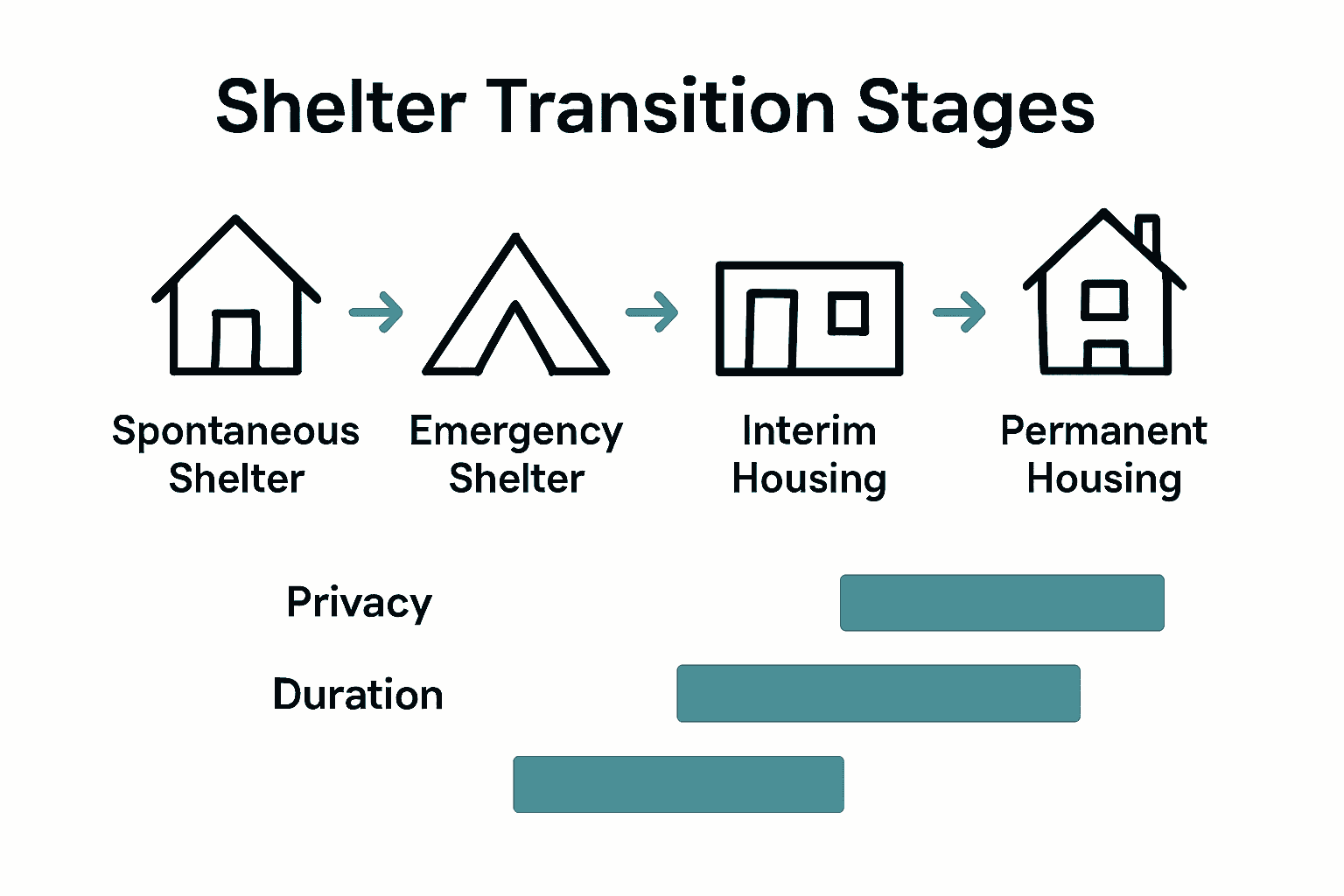
Disaster recovery is a complex journey with multiple housing stages, each designed to address the evolving needs of displaced individuals and communities. According to United Nations Disaster Risk Reduction (UNISDR), the shelter transition process unfolds through four critical stages, providing a systematic approach to rebuilding lives after a disaster.
The first stage is Spontaneous Shelter, which covers the initial 72 hours following a disaster. During this critical period, individuals seek immediate safe spaces, often with family, friends, or in makeshift locations. The second stage, Emergency Shelter, extends up to 60 days and involves providing temporary accommodations like community centers, school gymnasiums, or donated temporary housing units. These spaces offer basic protection and essential services to help survivors stabilize after the initial shock.
As Emergency Humanitarian Response explains, Interim Housing represents the third stage, lasting up to one year. This phase focuses on more structured temporary housing that provides greater autonomy and privacy for displaced families. Key characteristics of interim housing include:
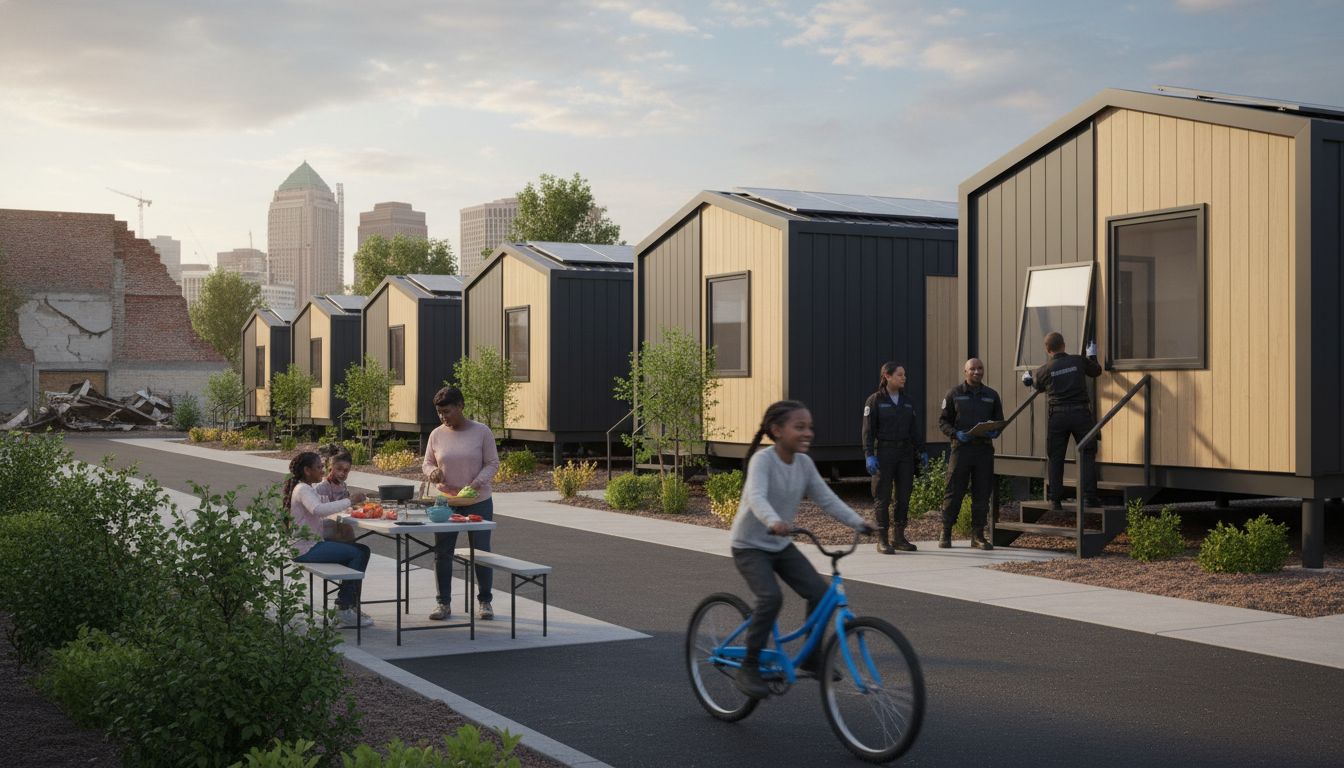
- More stable and private living environments
- Access to essential services
- Proximity to original community or work locations
- Flexibility for long-term reconstruction planning
The final stage is Permanent Housing, where long-term reconstruction efforts transform temporary solutions into sustainable living spaces. This stage involves rebuilding homes, restoring infrastructure, and helping communities recover fully. If you want to explore more about emergency shelter options, check out our guide on types of emergency shelter.
Here’s a summary of the four main shelter transition stages and their key characteristics:
| Stage | Time Frame | Typical Housing Types | Key Features |
|---|---|---|---|
| Spontaneous Shelter | First 72 hours | Family/friends homes Makeshift locations |
Immediate safety Non-structured Self-organized |
| Emergency Shelter | Up to 60 days | Community centers School gyms Tents |
Basic protection Essential services Temporary setup |
| Interim Housing | Up to 1 year | Temporary housing units Rental apartments |
Greater privacy Access to services Stabilization period |
| Permanent Housing | Long-term | Reconstructed homes Restored infrastructure |
Sustainable living Community rebuilding Return to normalcy |
 |
|
Essential Roles: Agencies, Professionals, and Victims
Disaster shelter transition is a complex ecosystem requiring seamless collaboration between multiple stakeholders. According to Shelter Cluster, this process involves a coordinated approach where humanitarian organizations work together to support populations affected by disasters, ensuring safe and appropriate shelter solutions.
The key stakeholders in shelter transition include government agencies, emergency response teams, humanitarian organizations, insurance providers, and most critically, the disaster victims themselves. Each group plays a unique and interconnected role in the recovery process. Government agencies provide regulatory frameworks and funding, emergency response teams conduct immediate rescue and assessment, humanitarian organizations offer specialized support, and insurance providers help with financial recovery.
Disaster victims are not passive recipients but active participants in their recovery journey.
Shelter Centre emphasizes the importance of building local capacity and involving affected communities in decision-making processes. Their roles include:
- Providing critical local knowledge about community needs
- Participating in shelter design and reconstruction
- Sharing insights about cultural and social requirements
- Helping prioritize immediate and long-term housing needs
- Contributing to community resilience and recovery strategies
For a deeper understanding of how professionals support disaster recovery, check out our guide on first responder roles, which highlights the critical contributions of emergency personnel in shelter transition.
Legal Rights and Insurance During Transition
The journey of shelter transition involves complex legal and financial considerations that can significantly impact disaster victims’ recovery process. According to UK Government Publishing Service, transitional shelter is not just about physical reconstruction, but also about re-engaging disaster-affected households with the housing development process through targeted support like materials, construction assistance, and technical guidance.
Insurance plays a critical role in shelter transition, providing financial lifelines for displaced individuals. Homeowners insurance, renters insurance, and disaster-specific coverage form the primary financial safety nets during this challenging period. These policies typically cover temporary living expenses, property damage, and essential rebuilding costs. However, understanding the nuanced details of insurance claims requires careful navigation of policy language, documentation requirements, and potential claim limitations.
Legal rights during shelter transition are multifaceted and designed to protect vulnerable populations. End Violence Against Women International highlights that transitional housing facilities often provide more than just accommodation, offering critical support services that help individuals rebuild their lives. Disaster victims have legal protections that include:
- Right to fair housing assistance
- Protection against discriminatory housing practices
- Access to emergency funds and support services
- Ability to challenge insurance claim denials
- Legal recourse for inadequate shelter provisions
For comprehensive guidance on recovering after home loss, check out our guide on essential steps after home loss, which provides detailed insights into navigating this challenging transition.
Common Challenges and How to Overcome Them
Shelter transition after disasters is a complex process fraught with multiple interconnected challenges that can significantly impede recovery efforts. According to SciDev.net, coordinating among various agencies and ensuring timely delivery of appropriate shelter solutions represent critical hurdles in the disaster response landscape.
The primary challenges in shelter transition emerge from multiple systemic and logistical barriers. Communication breakdowns between different responding organizations can lead to duplicated efforts or critical service gaps. Limited resources, overwhelming demand, and the diverse needs of affected populations create additional complications. Disaster victims often face challenges such as limited housing options, financial constraints, emotional trauma, and navigating complex bureaucratic processes required for recovery and rebuilding.
Refugee Shelter Research highlights critical issues that can emerge during shelter transitions, particularly related to accommodation quality and capacity. Key challenges include:
- Overcrowding in temporary shelters
- Insufficient sanitation and hygiene facilities
- Prolonged stays in interim housing
- Limited privacy and personal space
- Complex psychological and emotional recovery needs
Overcoming these challenges requires a strategic, multi-agency approach that prioritizes collaboration, flexibility, and human-centered support. Effective strategies include establishing clear communication protocols, developing adaptive response plans, providing comprehensive support services, and maintaining a victim-focused perspective throughout the transition process. For more insights into navigating these complex transitions, explore our guide on essential steps after home loss.
Seamless Shelter Transition Support When You Need It Most
Navigating shelter transition after a disaster can be overwhelming. The challenges of moving from emergency shelters to stable, permanent housing create uncertainty and pressure. You may face urgent questions about temporary housing options, insurance claims, and coordinating with agencies. At DisasterVictimServices.com, we understand these critical pain points and are here to help you every step of the way. Our team works closely with first responders, insurance carriers, and government agencies to ensure you access emergency housing solutions quickly and effectively.
Don’t let the complexity of shelter transitions slow your recovery. Gain peace of mind knowing you have a trusted partner who prioritizes your safety and dignity. Explore our support services in the Developing category to learn how we assist with temporary and long-term housing needs. For additional helpful resources, visit our Uncategorized section to find guides and insights designed to empower you during your recovery journey. When disaster strikes, act now and connect with us at DisasterVictimServices.com for compassionate, efficient help that bridges the gap from crisis to rebuilding.
Frequently Asked Questions
What is shelter transition after disasters?
Shelter transition is the process that assists disaster victims in moving from immediate emergency situations to stable, safe housing through a phased approach addressing evolving housing needs.
What are the stages of shelter transition?
The stages of shelter transition include Spontaneous Shelter (first 72 hours), Emergency Shelter (up to 60 days), Interim Housing (up to 1 year), and Permanent Housing (long-term solutions).
How do insurance and legal rights impact shelter transition?
Insurance provides financial support for displaced individuals during shelter transition, covering costs for temporary living and rebuilding. Legal rights protect individuals’ access to fair housing, emergency funds, and the ability to challenge insurance claims.
What challenges do disaster victims face during shelter transition?
Disaster victims may encounter challenges such as limited housing options, overcrowding in temporary shelters, emotional trauma, and navigating complex bureaucratic processes necessary for recovery and rebuilding.
Recommended
- 7 Types of Emergency Shelter You Need to Know – Disaster Victim Services | Helping You Recover After Disaster
- Understanding Disaster Shelter Selection Guide: Key Insights – Disaster Victim Services | Helping You Recover After Disaster
- Safe Housing Placement Steps for Disaster Response 2025 – Disaster Victim Services | Helping You Recover After Disaster
- Rehousing Process Steps: A Complete Guide for 2025 – Disaster Victim Services | Helping You Recover After Disaster