
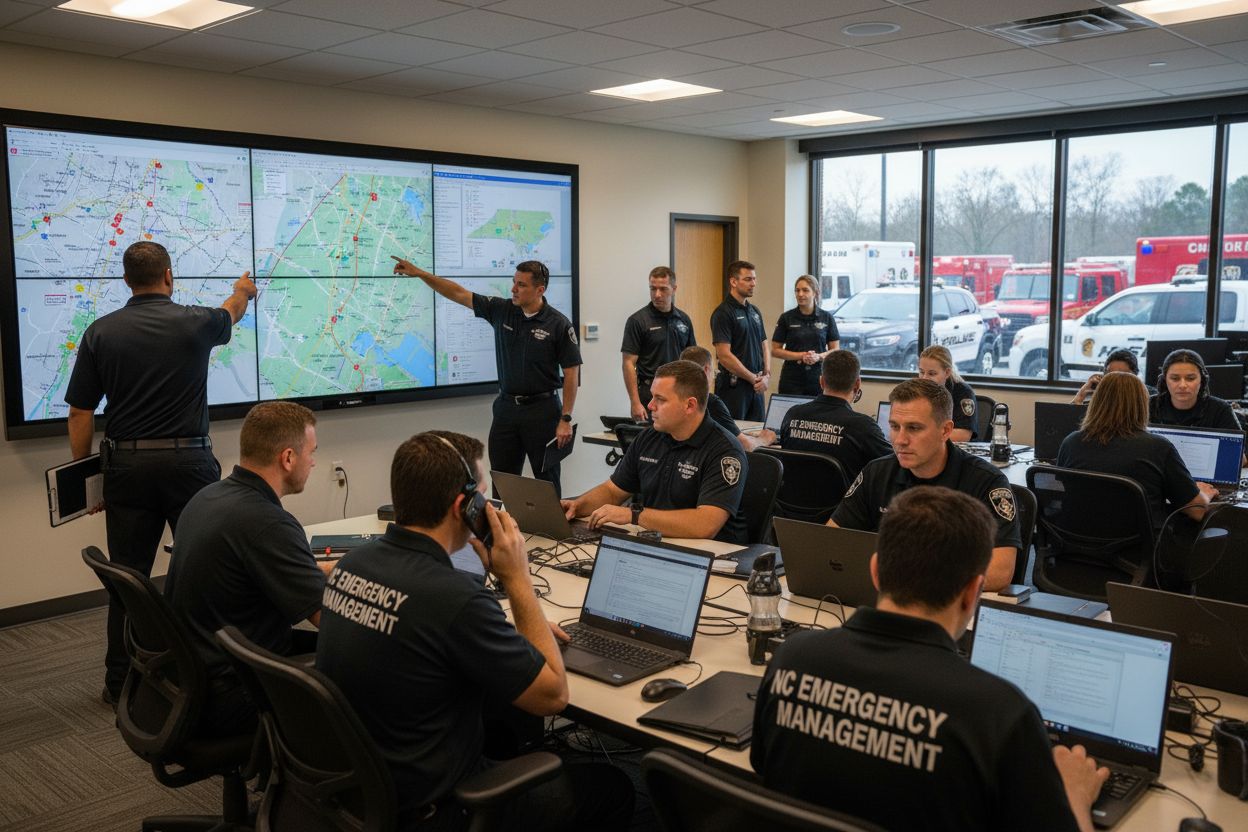
Did you know that over 40 percent of small businesses never reopen after a natural disaster? Preparing for emergencies is not just about surviving the initial event but also about recovering swiftly and effectively. Clear steps can help you protect yourself, secure help fast, and rebuild with less stress. With the right approach, you can safeguard your safety, valuables, and future even in the toughest situations.
Quick Summary
| Key Point | Explanation |
|---|---|
| 1. Assess Your Safety First | Quickly inspect your surroundings for hazards like gas leaks and structural damage. Your safety is the top priority. |
| 2. Communicate Your Status Clearly | Use multiple communication methods to report your location and urgent needs. Precise details help responders assist you effectively. |
| 3. Activate Emergency Response Networks | Contact local authorities and voluntary organizations for assistance. Document your communication efforts for better support coordination. |
| 4. Secure Immediate Shelter | Find safe shelter that meets your needs. Prioritize shelters with specific accommodations for families or medical requirements. |
| 5. Organize Your Recovery Documentation | Gather and organize all insurance and relief documents. This preparation streamlines claims and access to support after a disaster. |
Table of Contents
- Step 1: Assess Safety And Communicate Status
- Step 2: Activate Emergency Response Networks
- Step 3: Coordinate Immediate Shelter And Resources
- Step 4: Streamline Insurance And Relief Coordination
- Step 5: Verify Recovery Progress And Plan Long-Term Support
Step 1: Assess Safety and Communicate Status
In the immediate aftermath of a disaster, your primary goal is understanding and communicating your safety status. According to the guide on how to conduct safety assessments, this crucial first step determines your next actions and helps emergency responders prioritize support.
Begin by quickly surveying your immediate environment for potential hazards. Look for structural damage electrical risks water contamination or gas leaks. Your safety takes precedence over everything else. If you detect any immediate dangers move away carefully and find a secure location.
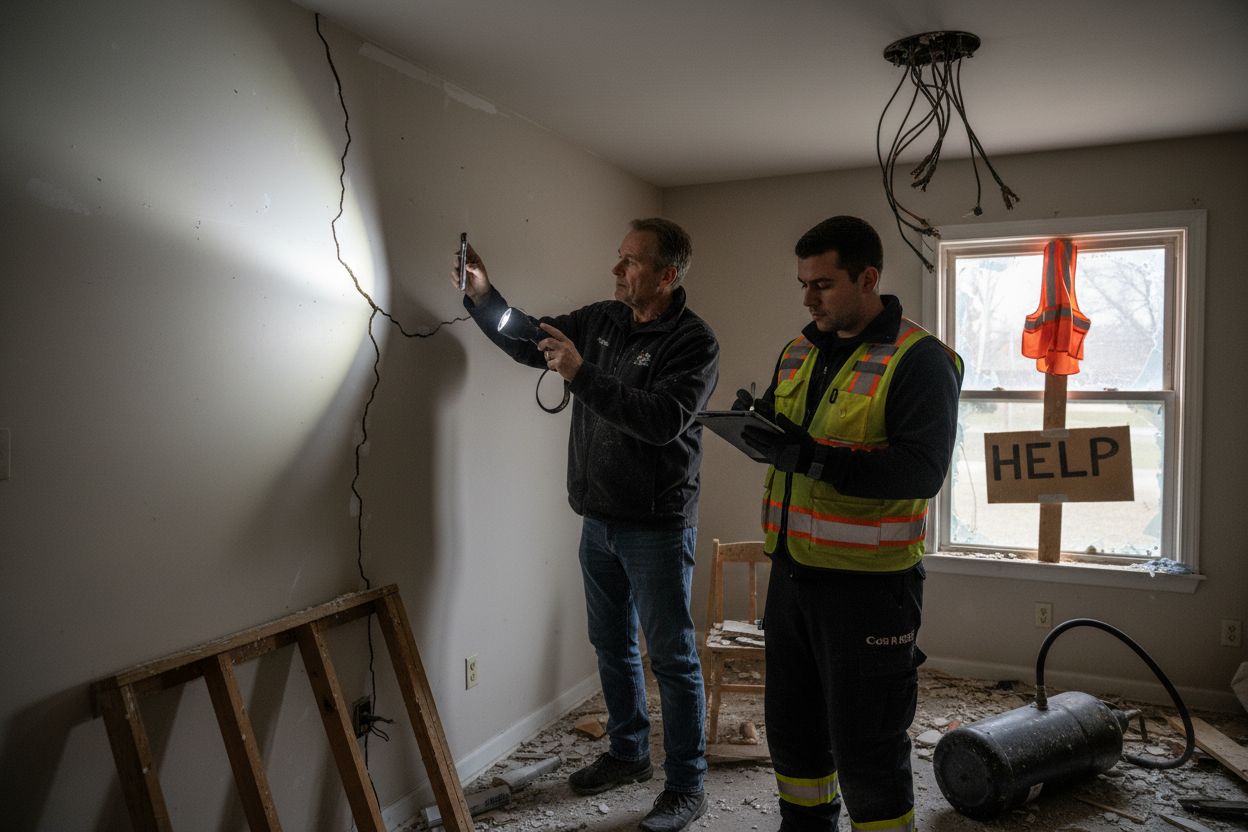
Communicate your status rapidly and accurately. Use multiple communication channels if possible cell phone text messages emergency radio social media or local emergency hotlines. According to the National Response Framework Emergency Support Function #2 clear communication helps responders coordinate rescue and support efforts efficiently.
Pro Tip: Keep emergency contact information preloaded in your phone and have a physical backup in your emergency kit.
Provide essential details when reporting your status including your exact location physical condition number of people with you and any urgent medical needs. Be concise but specific. Emergency services need precise information to mount an effective response.
If traditional communication methods fail use alternative approaches like writing a large visible sign placing bright clothing or reflective materials in open areas or using sound signals to attract attention. Your goal is ensuring someone can locate and assist you.
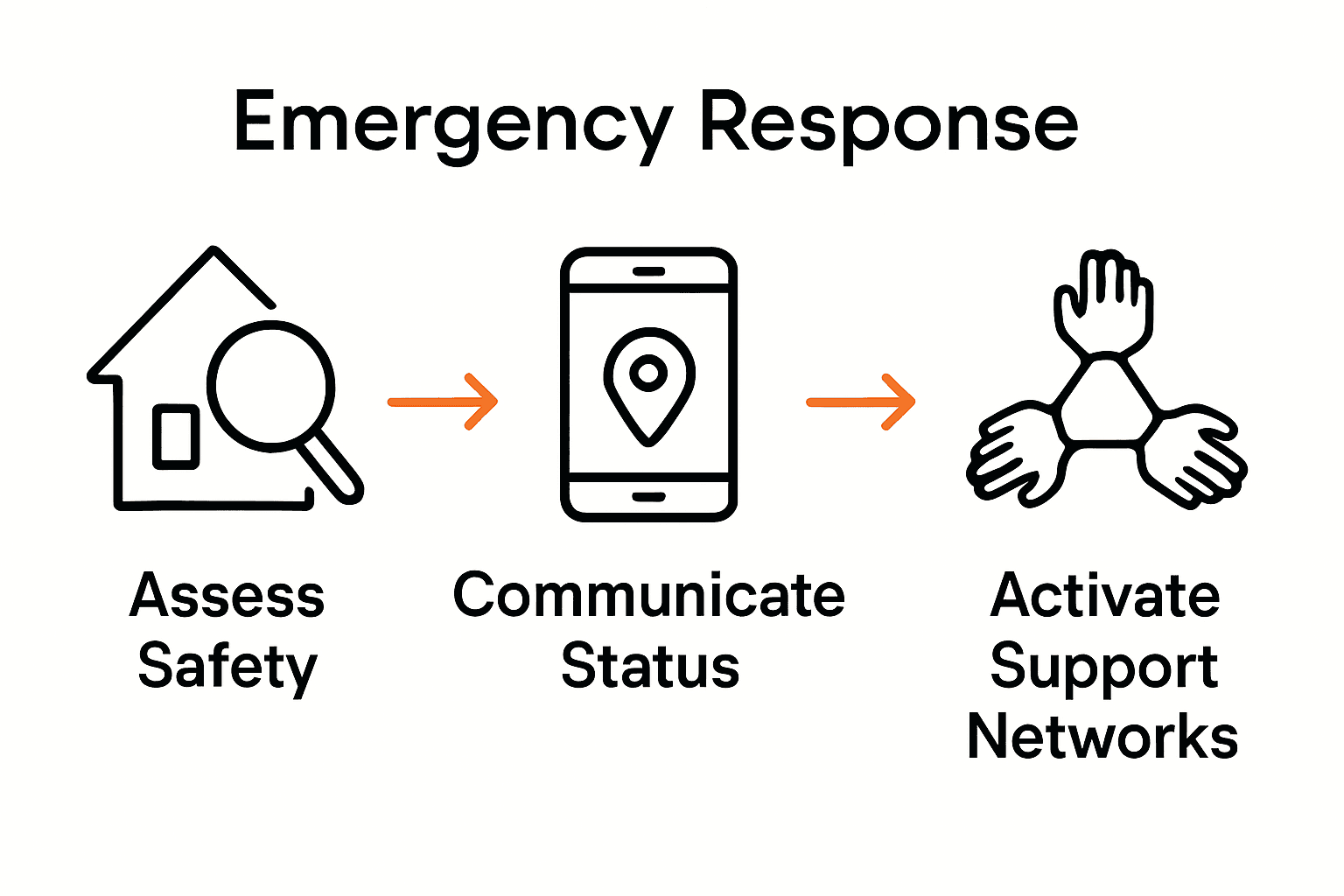
Here is a summary of key actions and recommended communication methods for assessing and sharing your status after a disaster:
| Action | Recommended Methods | Key Details to Include |
|---|---|---|
| Assess Safety | Visual inspection Check for hazards |
Structural damage Gas leaks Electrical risks |
| Communicate Status | Cell phone Text message Emergency radio Social media Hotline |
Exact location Physical condition Number of people Urgent medical needs |
| Alternative Communication | Visible sign Bright clothing Sound signals |
Clear message Location Request for help |
The next step involves preparing for potential evacuation or sheltering in place based on the safety assessment you just completed. Stay alert stay calm and remain ready to act quickly as circumstances change.
Step 2: Activate Emergency Response Networks
With your immediate safety assessed, the next critical action is rapidly activating emergency response networks to secure support and resources. According to emergency response protocols for fast action, this step connects you with essential assistance during challenging times.
Begin by contacting local emergency management authorities. These professionals coordinate federal state and local response capabilities. According to the National Response Framework, specific Emergency Support Functions like ESF #6 Mass Care and ESF #15 External Affairs are designed to mobilize resources when local systems become overwhelmed.
Reach out through multiple communication channels. Call local emergency management offices 911 or designated disaster hotlines. Use text messages social media or emergency communication platforms. If traditional methods fail use alternative communication like ham radio or community emergency networks.
Pro Tip: Keep a physical list of emergency contact numbers in your emergency kit in case digital devices are unavailable.
As recommended by FEMA mass care guidance engage Voluntary Organizations Active in Disaster (VOADs) and nonprofit networks. These groups specialize in providing immediate shelter food and human services during emergencies. They often have established protocols for rapid response and can quickly coordinate support across different regions.
Document all communication attempts and responses. Record the time date and method of each contact. This documentation helps emergency responders track your status and ensures you receive appropriate assistance.
Stay patient but persistent. Emergency response networks might be handling multiple simultaneous crises. Your clear concise communication helps responders prioritize and address your specific needs effectively. The next step involves preparing for potential evacuation or receiving onsite emergency support based on the networks you have now activated.
Step 3: Coordinate Immediate Shelter and Resources
Now that emergency networks are activated its time to secure critical shelter and essential resources for your immediate survival. Understanding disaster shelter selection becomes your primary focus as you navigate this challenging moment.
According to FEMA Emergency Support Function 6 mass care services encompass multiple critical support areas. Your immediate goal is finding safe sheltering options that provide protection food emergency first aid and potential reunification services. Contact local emergency management centers or designated shelters to determine your closest available safe location.
Prioritize shelters that can accommodate your specific needs. Some facilities offer special support for families pets or individuals with medical requirements. FEMA recommends checking multiple shelter options to ensure you find the most suitable environment for your circumstances.
Pro Tip: Bring important documents identification medication and essential personal items when moving to a shelter.
For those unable to reach formal shelters explore alternative options like community centers churches or designated emergency housing locations. According to the FEMA Community Recovery Management Toolkit communities often have pre established protocols for managing emergency accommodations during crisis situations.
When coordinating resources be prepared to provide detailed information about your group size any medical needs and specific requirements. Emergency responders use this information to match you with appropriate support services and ensure efficient resource allocation.
Remember that shelter availability can change rapidly. Stay flexible communicate clearly with emergency coordinators and be ready to adjust your plan as new information becomes available. The next step involves stabilizing your immediate situation and preparing for potential longer term recovery strategies.
Step 4: Streamline Insurance and Relief Coordination
With shelter secured its time to navigate the complex landscape of insurance claims and government relief. Understanding housing reimbursement process steps will help you efficiently manage this critical phase of recovery.
According to FEMA guidelines insurance coordination requires careful documentation. While FEMA cannot duplicate insurance benefits they can assist with costs not covered by your existing policy. Start by gathering all insurance documentation including policy numbers contact information and initial damage assessments.
Contact your insurance provider immediately to initiate the claims process. Be prepared to provide detailed documentation of property damage photographs and itemized loss inventories. FEMA notes that if insurance benefits are delayed beyond 30 days interim assistance may be available to support your immediate recovery needs.
Pro Tip: Create a dedicated folder both digital and physical to organize all insurance and relief documentation.
For those without comprehensive insurance FEMA offers additional support mechanisms. Their Resilience mission includes managing recovery programs that help communities rebuild and reduce future potential losses. This means exploring multiple relief options beyond traditional insurance claims.
Be proactive in communication. Follow up regularly with both your insurance provider and FEMA representatives. Document every interaction including dates names and key discussion points. This systematic approach ensures you dont miss critical deadlines or potential support opportunities.
Remember that relief coordination is a collaborative process. Stay patient persistent and organized. The next step involves developing a comprehensive recovery strategy that integrates insurance claims government assistance and your personal recovery plan.
Step 5: Verify Recovery Progress and Plan Long-Term Support
With immediate emergency needs addressed its time to systematically track your recovery journey and develop a comprehensive long term strategy. Disaster recovery process steps guide will help you navigate this critical transition phase.
Begin by conducting a comprehensive assessment of your current situation. Document your progress across multiple dimensions including housing insurance claims personal property restoration and emotional well being. Create a detailed tracking system that allows you to monitor advancements and identify areas requiring additional support.
Schedule regular check ins with key support providers including insurance adjusters relief coordinators and case management professionals. These meetings help you understand ongoing support options and ensure youre not missing potential resources. Maintain open communication channels and be proactive in seeking updates and clarifications.
Pro Tip: Use a dedicated notebook or digital spreadsheet to track all recovery related communications contacts and progress milestones.
Develop a forward looking recovery plan that addresses both immediate needs and potential future challenges. Consider factors like temporary housing permanent housing reconstruction financial recovery mental health support and potential preventative measures to mitigate future risks.
Stay flexible and adaptable. Recovery is rarely a linear process and unexpected challenges may emerge. Maintain a positive mindset while remaining realistic about the time and resources required to fully rebuild. Your resilience and systematic approach will be your greatest assets during this challenging journey.
Remember that recovery is a collaborative process. Lean on your support network family friends community resources and professional assistance. The road ahead may seem long but with careful planning and persistent effort you will gradually rebuild and restore your life.
Accelerate Your Recovery When Every Moment Counts
If you found real value in this step-by-step emergency response guide, then you already understand how overwhelming and urgent disaster situations can feel. After a crisis, every second matters and clear coordination is critical. Whether you are struggling to secure immediate housing, navigate complex insurance claims, or simply manage the emotional strain, you should not have to handle it all alone. Our team at Disaster Victim Services specializes in connecting you with rapid, compassionate support and reliable resources when you need them most.
Don’t wait for the confusion to grow. Start moving toward stability and peace of mind by exploring our latest insights and actionable strategies on the Uncategorized – Disaster Victim Services page. Ready to speak with a recovery expert who can guide you through every stage of your emergency journey? Visit our main site Disaster Victim Services now and let us show you how fast and confident recovery is possible for you and your family.
Frequently Asked Questions
What are the first steps to take in an emergency response following a disaster?
To initiate an emergency response, first assess your safety by checking for hazards in your environment. Immediately communicate your status to emergency responders, providing clear details about your location and any urgent needs.
How can I effectively communicate my status during a disaster?
Use multiple communication channels such as cell phones, text messages, and social media to share your status. Be specific in your message about your exact location, physical condition, and the number of people with you to ensure you receive timely assistance.
What should I consider when looking for shelter after a disaster?
Prioritize shelters that meet your specific needs, such as those accommodating families or individuals with medical requirements. Contact local emergency management centers to find the closest safe shelter and bring essential items like identification and medication.
How do I navigate the insurance claims process after a disaster?
To begin the insurance claims process, gather all relevant documentation, including policy numbers and damage assessments. Contact your insurance provider promptly and keep detailed records of all communications to expedite your claims.
What should I include in my long-term recovery plan after a disaster?
A comprehensive long-term recovery plan should address housing, financial recovery, emotional support, and mitigation measures for future risks. Continuously assess your progress and adapt your plan as new challenges arise, maintaining a positive and flexible mindset.
How can I track my recovery progress effectively?
Establish a tracking system to document your progress across housing, insurance claims, and emotional well-being. Schedule regular check-ins with support providers and use a dedicated notebook or digital spreadsheet to monitor all communications and milestones.
Recommended
- How to Handle Disaster: A Step-by-Step Recovery Guide – Disaster Victim Services | Helping You Recover After Disaster
- Emergency Response Basics for 2025: A Practical Guide – Disaster Victim Services | Helping You Recover After Disaster
- Disaster Recovery Process Steps: A Complete Guide 2025 – Disaster Victim Services | Helping You Recover After Disaster
- First Aid Disaster Basics: Essential Steps for 2025 Recovery – Disaster Victim Services | Helping You Recover After Disaster