
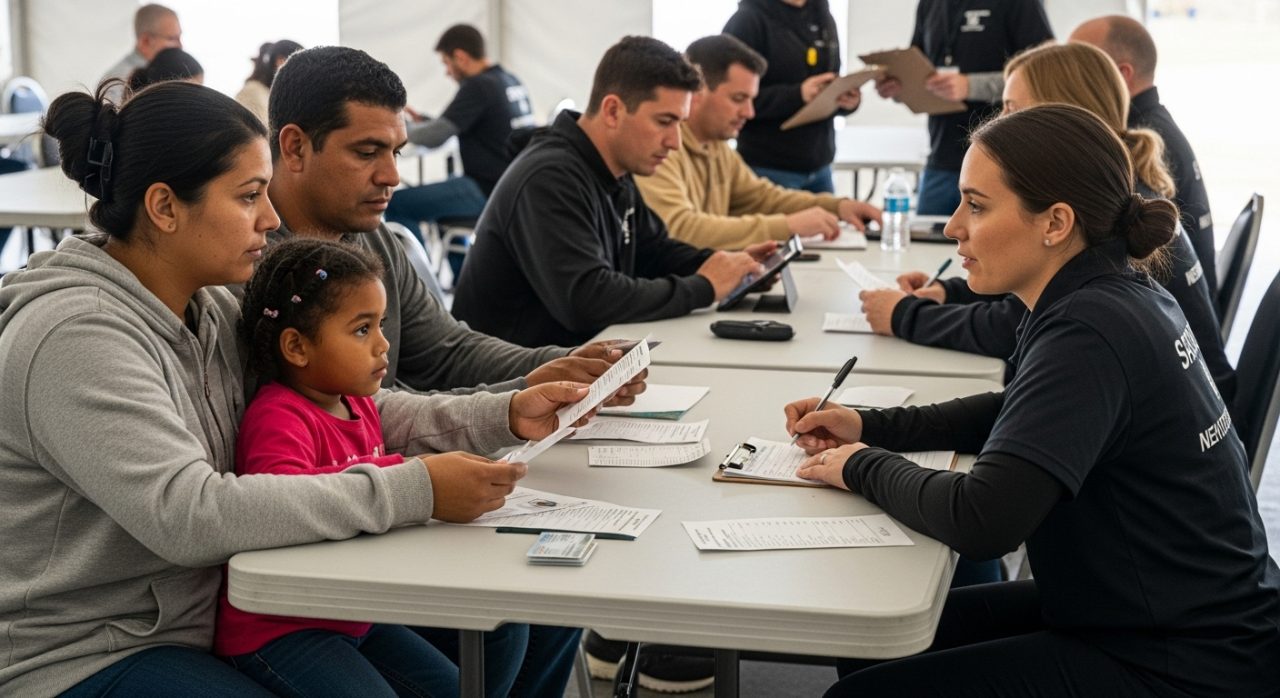
Tracking who gets displaced during disasters is never as simple as ticking names off a list and moving on. Some agencies sift through thousands of records to verify just one person’s status and eligibility for help. It sounds unimaginably tedious, right? Yet the real surprise is that all this painstaking detail can actually be the difference between families getting critical support or being left behind—and that single check of the facts sets the entire path for recovery in motion.
Table of Contents
- What Is The Displacement Verification Process?
- Why Is Displacement Verification Important In Disaster Response?
- How Does The Displacement Verification Process Function?
- Key Concepts In The Displacement Verification Process
- Real-World Applications And Challenges In Displacement Verification
Quick Summary
| Takeaway | Explanation |
|---|---|
| Comprehensive tracking is essential | Proper documentation of displacement helps agencies support displaced individuals accurately. |
| Verification prevents misallocation | Rigorous data checks help ensure resources reach those in need effectively. |
| Focus on vulnerable populations | Assessment strategies identify and prioritize the most at-risk groups during crises. |
| Holistic support addresses multiple needs | Support strategies must consider psychological, social, and economic aspects of displacement. |
| Adaptation to real-world challenges is crucial | Agencies must navigate technological, communication, and institutional hurdles for effective verification. |
What is the Displacement Verification Process?
The displacement verification process represents a critical systematic approach for documenting, validating, and managing population movements resulting from disasters, emergencies, or significant environmental changes. At its core, this process ensures comprehensive tracking and support for individuals and families who have been forced from their primary residences.
Understanding the Core Mechanism
The displacement verification process involves a structured method of confirming the status, needs, and circumstances of displaced individuals. According to federal regulations on displacement assistance, agencies must take all reasonable steps to minimize displacement and provide appropriate support.
Key components of this verification process include:
- Documenting the original living situation of displaced individuals
- Confirming the reason and context of displacement
- Assessing immediate and long-term housing needs
- Validating eligibility for support services
Importance of Comprehensive Verification
Verification goes beyond simple record-keeping. It serves multiple critical functions in disaster response and recovery. By carefully documenting displacement circumstances, agencies can:
- Develop targeted assistance strategies
- Allocate resources more effectively
- Prevent potential fraud or misallocation of support
- Create accurate population movement records
The process requires meticulous documentation, cross-referencing multiple data sources, and applying standardized assessment protocols to ensure accuracy and fairness in support allocation. For disaster victims, this verification process represents a crucial first step toward rebuilding their lives and accessing necessary resources.
Why is Displacement Verification Important in Disaster Response?
Displacement verification serves as a critical lifeline in disaster response, transforming raw population movement data into actionable insights that guide emergency support strategies. This process goes far beyond simple record-keeping, acting as a strategic framework for understanding and addressing the complex humanitarian challenges triggered by large-scale displacements.
Strategic Resource Allocation
In disaster scenarios, resources are inherently limited and must be distributed with surgical precision. According to federal disaster management guidelines, comprehensive displacement verification enables agencies to:
- Identify the most vulnerable populations
- Prioritize immediate intervention needs
- Map geographical concentration of displaced individuals
- Estimate required emergency housing and support services
Risk Mitigation and Prevention
Displacement verification plays a crucial role in understanding and mitigating long-term risks associated with population movements. By systematically tracking displacement patterns, emergency response teams can develop more resilient strategies that address both immediate and future challenges.
Key risk mitigation aspects include:
- Preventing secondary displacement
- Reducing potential social and economic disruptions
- Developing targeted reintegration programs
- Creating early warning systems for future displacement scenarios
Ultimately, displacement verification transforms raw data into a powerful tool for humanitarian response, ensuring that support reaches those who need it most efficiently and effectively. By providing a comprehensive understanding of population movements, agencies can develop more nuanced, compassionate, and strategic approaches to disaster recovery.
How Does the Displacement Verification Process Function?
The displacement verification process operates as a sophisticated, multi-layered system designed to systematically document, validate, and support individuals experiencing involuntary relocation due to disasters or emergencies. This intricate mechanism transforms complex human experiences into structured, actionable information that guides humanitarian response.
Initial Assessment and Documentation
The first critical phase involves comprehensive data collection and initial assessment. According to federal displacement assistance guidelines, verification begins with gathering essential information about displaced individuals.
Key documentation requirements include:
- Personal identification details
- Original residence information
- Specific circumstances of displacement
- Current living arrangements
- Immediate support needs
Validation and Cross-Referencing
After initial data collection, agencies engage in rigorous validation processes. Systematic tracking of displacement patterns involves cross-referencing information through multiple authoritative sources to ensure accuracy and prevent potential misrepresentation.
Validation steps typically encompass:
- Reviewing government records
- Confirming disaster impact reports
- Verifying individual statements
- Assessing supporting documentation
- Conducting potential follow-up interviews
Eligibility Determination and Support Allocation
The final stage involves translating verified information into targeted support mechanisms. Agencies use the comprehensive data collected to determine individual eligibility for various assistance programs, ensuring that resources are distributed efficiently and equitably.
This process requires meticulous attention to detail, balancing bureaucratic requirements with genuine human compassion. By transforming raw displacement data into structured support strategies, verification processes play a crucial role in helping individuals and communities navigate the challenging transition from crisis to recovery.
The following table summarizes the core stages of the displacement verification process and the main characteristics of each stage to provide a clear overview of how the process functions.
| Stage | Description | Key Activities |
|---|---|---|
| Initial Assessment and Documentation | Collection of essential information about displaced individuals | Gather IDs, original residence, displacement circumstances, current location, immediate needs |
| Validation and Cross-Referencing | Ensuring accuracy by comparing gathered data with authoritative sources | Review records, verify disaster impact, assess documents, conduct interviews |
| Eligibility Determination and Support Allocation | Deciding who qualifies for support services based on validated information and allocating resources | Determine eligibility, match needs with programs, distribute support |
Key Concepts in the Displacement Verification Process
The displacement verification process encompasses a complex framework of interconnected principles and methodological approaches designed to comprehensively understand and address population movements during crisis situations. These key concepts form the foundational infrastructure that enables effective humanitarian response and support.
Vulnerability Assessment
Vulnerability assessment represents a critical concept in displacement verification. Analyzing displacement trends helps agencies identify and prioritize the most at-risk populations during emergency scenarios.
Key vulnerability assessment criteria include:
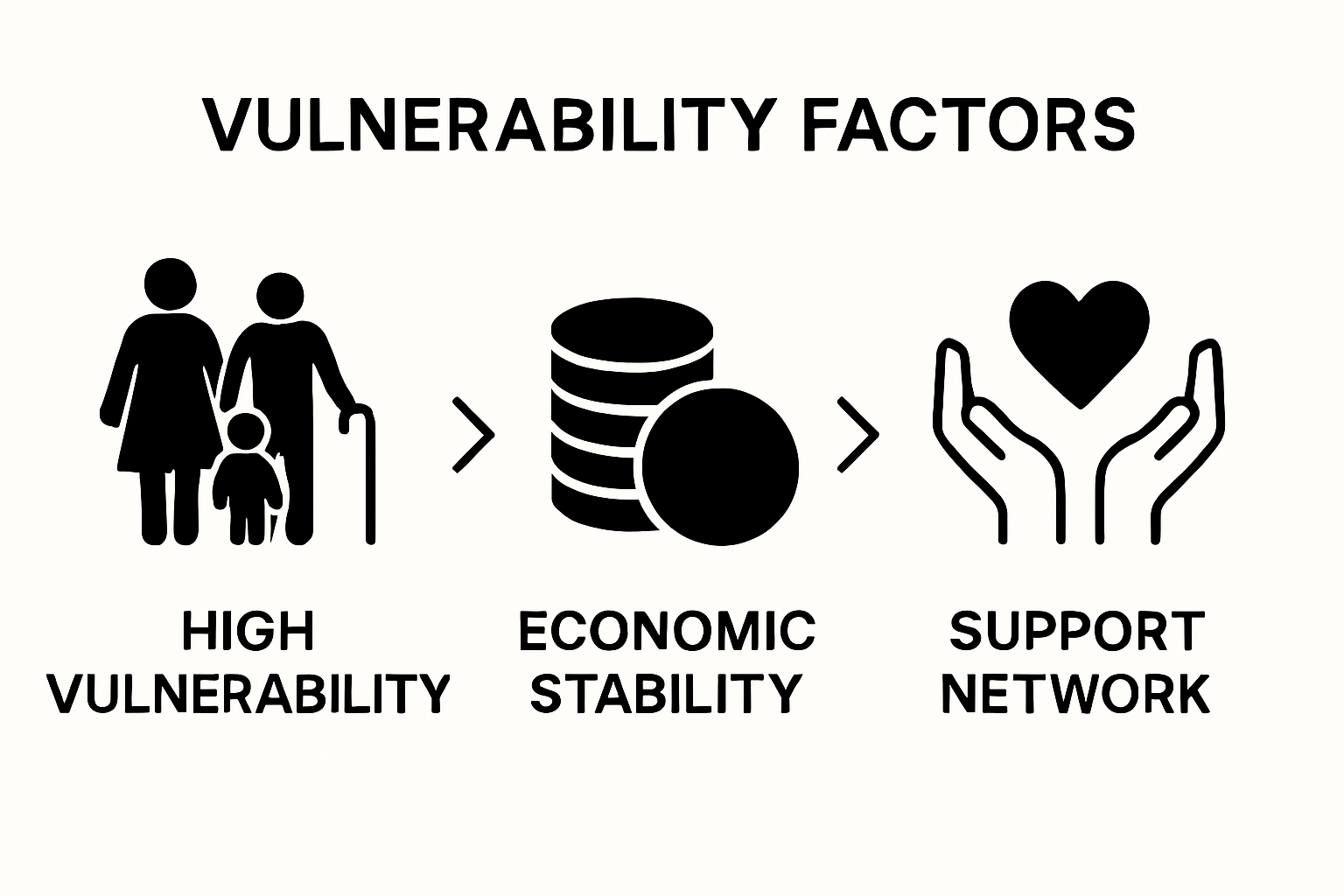
- Age and health status
- Economic stability
- Family composition
- Pre-existing social conditions
- Access to support networks
Data Integrity and Confidentiality
Maintaining rigorous standards of data integrity and confidentiality is paramount in the displacement verification process. Agencies must balance comprehensive information gathering with stringent protections for individual privacy and personal information.
Critical principles of data management involve:
- Securing personal identification information
- Implementing robust data protection protocols
- Ensuring transparent data usage policies
- Protecting vulnerable individuals from potential exploitation
- Maintaining accurate and verifiable records
Holistic Support Framework
The displacement verification process extends beyond mere documentation, embracing a holistic approach that recognizes the multifaceted challenges faced by displaced individuals. This comprehensive perspective ensures that support strategies address not just immediate physical needs, but also psychological, social, and economic dimensions of displacement.
By integrating these key concepts, displacement verification transforms from a bureaucratic exercise into a compassionate, strategic mechanism for supporting individuals and communities during their most vulnerable moments. The process acknowledges that each displacement scenario is unique, requiring nuanced, individualized approaches to effective humanitarian assistance.
Real-World Applications and Challenges in Displacement Verification
Displacement verification operates across diverse scenarios, presenting complex challenges that demand adaptive strategies and innovative technological solutions. While essential for humanitarian response, the process encounters significant real-world complexities that test the boundaries of current methodological approaches.
Emergency Response Scenarios
In immediate disaster contexts, displacement verification becomes a critical lifeline for identifying and supporting vulnerable populations. Analyzing current displacement strategies reveals the intricate challenges faced by emergency response teams.
Key challenges in emergency scenarios include:
- Rapidly changing geographical conditions
- Communication infrastructure disruptions
- Limited access to reliable documentation
- Psychological stress experienced by displaced individuals
- Potential language and cultural barriers
Technological Limitations and Innovations
Technological infrastructure plays a pivotal role in effective displacement verification. According to technical displacement monitoring research, agencies must navigate significant technological constraints while developing innovative verification methods.
Critical technological challenges encompass:
- Inconsistent data collection protocols
- Limited digital infrastructure in remote areas
- Cybersecurity and data protection concerns
- Integration of multiple technological platforms
- Accuracy of remote verification techniques
Institutional and Coordination Challenges
Successful displacement verification requires seamless coordination between multiple agencies, each with unique operational protocols and institutional constraints. This complexity demands sophisticated communication strategies and standardized verification frameworks.
The most effective approaches recognize that displacement verification is not a linear process but a dynamic, multifaceted endeavor requiring continuous adaptation, technological innovation, and human-centered methodologies. By understanding and addressing these real-world challenges, agencies can develop more responsive, compassionate, and effective displacement support systems.
This table compares the main challenges faced in real-world displacement verification scenarios, offering a clear side-by-side view of the types of issues and their key characteristics.
| Challenge Category | Example Issues | Impact on Verification Process |
|---|---|---|
| Emergency Response | Changing geography, disrupted communication, limited documentation, psychological stress | Hinders rapid assessment and accurate support |
| Technological Limitations | Inconsistent data, limited digital infrastructure, cybersecurity concerns | Reduces accuracy and slows verification |
| Institutional/Coordination | Conflicting protocols, lack of standardization, coordination difficulties | Causes delays and miscommunication |
Turn Displacement Verification into a Clear Path Forward
Trying to navigate the displacement verification process after a disaster can feel overwhelming. The need to quickly document your situation, prove eligibility, and secure safe housing is urgent. Complex requirements, lack of guidance, or the fear of being left without support create even more stress. If you are struggling with questions about documentation, eligibility, or connecting with the right assistance, you are not alone. Our team at DisasterVictimServices.com understands these challenges and has the experience to help you move beyond the confusion.
Let us streamline your recovery by guiding you step-by-step through the displacement verification process and connecting you with the services you need fast. We offer compassionate, around-the-clock help and collaborate directly with agencies, insurers, and support teams to secure emergency housing and vital resources. Visit our main site now for immediate support or learn more about how we handle displacement cases nationwide. Get the clarity, advocacy, and care you deserve today.
Frequently Asked Questions
What is the displacement verification process?
The displacement verification process is a systematic approach for documenting and validating the circumstances of individuals who have been forced from their homes due to disasters or emergencies. It ensures comprehensive tracking and support for displaced individuals and families.
Why is displacement verification important in disaster response?
Displacement verification is crucial because it transforms population movement data into actionable insights. It helps agencies allocate resources effectively, identify vulnerable populations, and mitigate long-term risks associated with displacement.
How does the displacement verification process function?
The process involves three phases: initial data collection and assessment, rigorous validation of collected information, and the determination of eligibility for support services based on the verified data, ensuring efficient resource distribution.
What are the key concepts involved in the displacement verification process?
Key concepts include vulnerability assessment to identify at-risk populations, maintaining data integrity and confidentiality to protect personal information, and adopting a holistic support framework that addresses the diverse needs of displaced individuals.
Recommended
- Displacement Identification Methods: Essential Guide for 2025 – Disaster Victim Services | Helping You Recover After Disaster
- How to Handle Displacement: Key Steps for Recovery in 2025 – Disaster Victim Services | Helping You Recover After Disaster
- Displacement Trends 2025: What Families and Responders Need to Know – Disaster Victim Services | Helping You Recover After Disaster
- How to Manage Displacement: Practical Steps for Disaster Recovery 2025 – Disaster Victim Services | Helping You Recover After Disaster