

Disaster response might sound like chaos—hundreds of decisions, countless lives at stake, and everything changing by the minute. Yet, coordinated workflows have been shown to reduce emergency response times by up to 30 percent. Most people focus on the scramble and urgency, but the real power lies in these behind the scenes systems that quietly turn disaster into a path for recovery.
Table of Contents
- What Is Disaster Response Workflow And Its Importance?
- The Key Components Of A Disaster Response Workflow
- How Disaster Response Workflow Facilitates Effective Recovery
- Real-World Applications Of Disaster Response Workflow
Quick Summary
| Takeaway | Explanation |
|---|---|
| Structured workflows enhance emergency response | A systematic approach minimizes chaos and improves coordination among agencies during disasters. |
| Core components drive effective recovery | Preparedness, response, recovery, and mitigation phases ensure comprehensive management of emergencies. |
| Rapid assessment is crucial for recovery | Quickly evaluating needs allows for efficient resource allocation and community restoration strategies. |
| Psychological support is key in recovery | Addressing emotional well-being alongside physical infrastructure rebuilds strengthens community resilience post-disaster. |
| Technology enhances disaster response workflows | Leveraging data analytics and real-time communication improves decision-making and operational efficiency during emergencies. |
What is Disaster Response Workflow and Its Importance?
A disaster response workflow represents a systematic, coordinated approach for managing emergency situations and facilitating rapid, effective recovery efforts. This comprehensive process involves multiple agencies, professionals, and resources working together to address the complex challenges presented during and after a disaster.
Understanding the Core Components
At its fundamental level, a disaster response workflow encompasses a strategic sequence of actions designed to minimize damage, save lives, and restore normalcy. Learn more about emergency response strategies to understand how different organizations collaborate during critical moments.
The workflow typically includes several critical stages:
- Initial damage assessment
- Resource mobilization
- Emergency medical response
- Temporary shelter coordination
- Long term recovery planning
The Critical Importance of Structured Response
According to the U.S. Department of Homeland Security, effective disaster response requires coordinated efforts among federal, state, and local authorities. Without a well defined workflow, emergency situations can quickly become chaotic, leading to:
- Inefficient resource allocation
- Delayed emergency assistance
- Increased human suffering
- Prolonged community recovery times
Precision and Speed are Paramount
A well executed disaster response workflow transforms potential chaos into a structured, methodical approach. By establishing clear communication channels, predefined roles, and systematic protocols, emergency responders can significantly reduce response times and improve overall outcomes for affected communities. The workflow serves as a blueprint that enables rapid decision making, efficient resource deployment, and comprehensive support for disaster victims.
The Key Components of a Disaster Response Workflow
A disaster response workflow is not a singular action but a complex, interconnected system with multiple critical components working simultaneously to address emergency situations. Explore our comprehensive disaster response chain to understand the intricate dynamics of emergency management.
Foundational Elements of Workflow Management
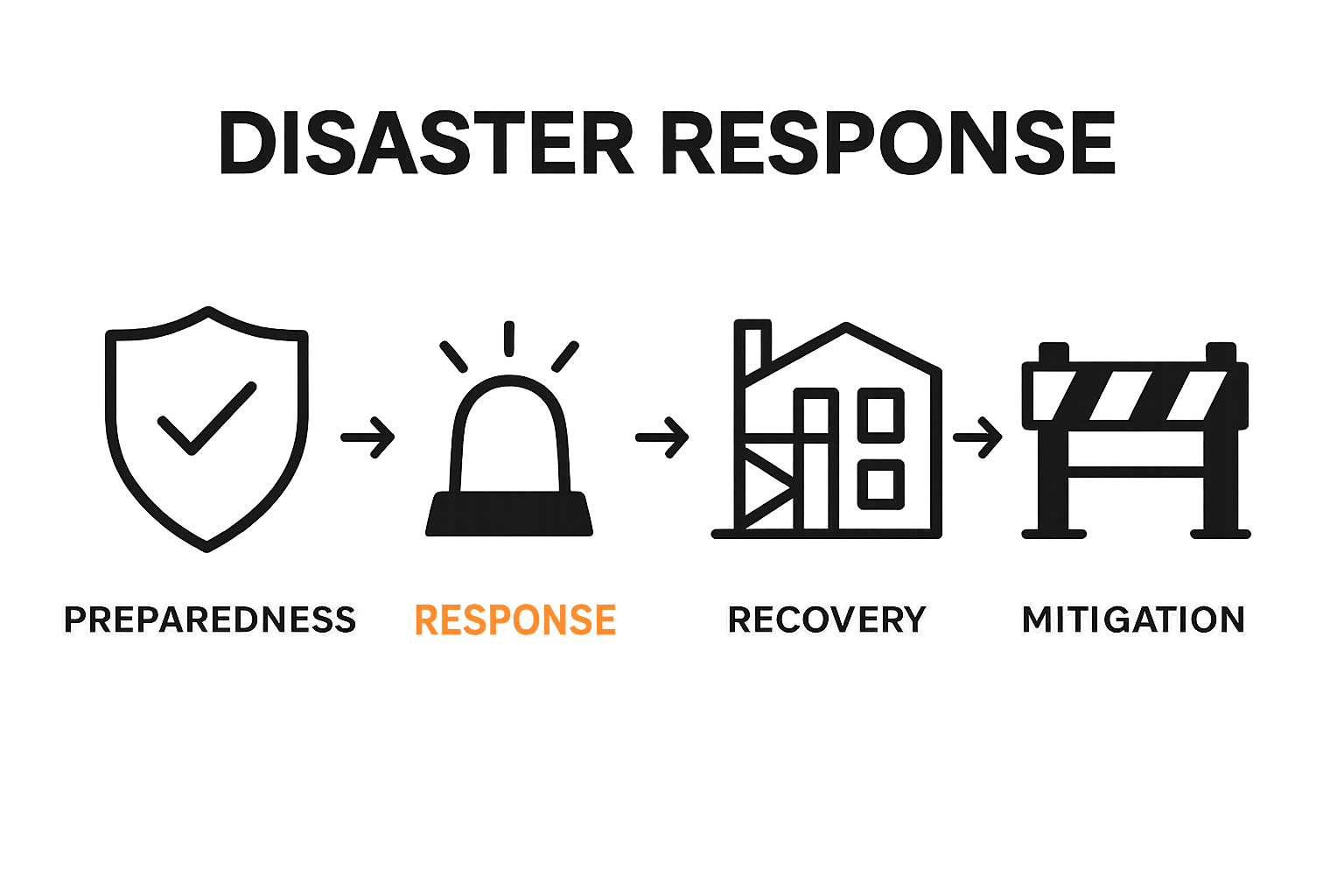
The core components of a disaster response workflow are designed to create a structured, systematic approach to managing emergencies. According to the University of Missouri System, these components typically encompass four primary phases
 :
:
- Preparedness: Proactive planning and resource allocation
- Response: Immediate actions during the emergency
- Recovery: Restoration and rehabilitation efforts
- Mitigation: Preventative measures to reduce future risks
Critical Operational Dynamics
Each component of the disaster response workflow plays a unique and essential role in ensuring comprehensive emergency management. Preparedness involves developing emergency protocols, training personnel, and establishing communication networks. Response requires rapid deployment of resources, medical assistance, and immediate rescue operations.
Recovery is a complex phase focusing on restoring infrastructure, providing long term support to affected communities, and rebuilding critical systems. Mitigation represents a forward looking approach, analyzing potential risks and implementing strategies to prevent or minimize future disaster impacts.
The interconnectedness of these components ensures that disaster response is not a linear process, but a dynamic, adaptive system capable of addressing unexpected challenges and supporting affected populations through their most vulnerable moments.
Below is a table organizing the four primary components of a disaster response workflow, summarizing each phase and its main purpose for easier comparison and reference.
| Component | Main Focus | Description |
|---|---|---|
| Preparedness | Proactive planning | Planning protocols, training personnel, and allocating resources before a disaster occurs |
| Response | Immediate action | Deploying resources, emergency medical care, and rescue operations during the emergency |
| Recovery | Restoration and long-term support | Rebuilding infrastructure, supporting affected communities, and rehabilitating systems |
| Mitigation | Reducing future risks | Implementing strategies and upgrades to prevent or lessen impact of future disasters |
How Disaster Response Workflow Facilitates Effective Recovery
Disaster response workflows are strategic frameworks designed to transform chaotic emergency situations into structured, methodical recovery processes. Learn more about our comprehensive disaster recovery approach to understand the nuanced strategies that support communities during challenging times.
Coordinated Recovery Mechanisms
According to the National Disaster Recovery Framework, effective recovery requires a unified, inclusive approach that leverages resources from multiple sectors. The workflow serves as a critical bridge between immediate emergency response and long term community restoration.
Key Recovery Facilitation Strategies Include:
- Rapid needs assessment
- Resource coordination
- Streamlined communication channels
- Psychological and emotional support services
- Infrastructure rehabilitation planning
Supporting Community Resilience
The disaster response workflow goes beyond immediate relief by establishing comprehensive support systems that address both physical and psychological recovery dimensions. Psychological support becomes as crucial as physical infrastructure rebuilding, recognizing that true recovery encompasses emotional healing and community reconstruction.
By creating structured pathways for assistance, the workflow enables systematic resource allocation, ensures transparent communication among various agencies, and provides a clear roadmap for victims navigating complex recovery processes.
This table summarizes how disaster response workflows support effective recovery by highlighting key coordinated mechanisms and their purposes.
| Recovery Mechanism | Purpose |
|---|---|
| Rapid needs assessment | Quickly identify immediate and long-term requirements |
| Resource coordination | Allocate supplies and personnel efficiently |
| Streamlined communication channels | Ensure accurate and timely information sharing |
| Psychological and emotional support | Address emotional well-being of affected individuals |
| Infrastructure rehabilitation | Plan and execute restoration of essential services |
Real-World Applications of Disaster Response Workflow
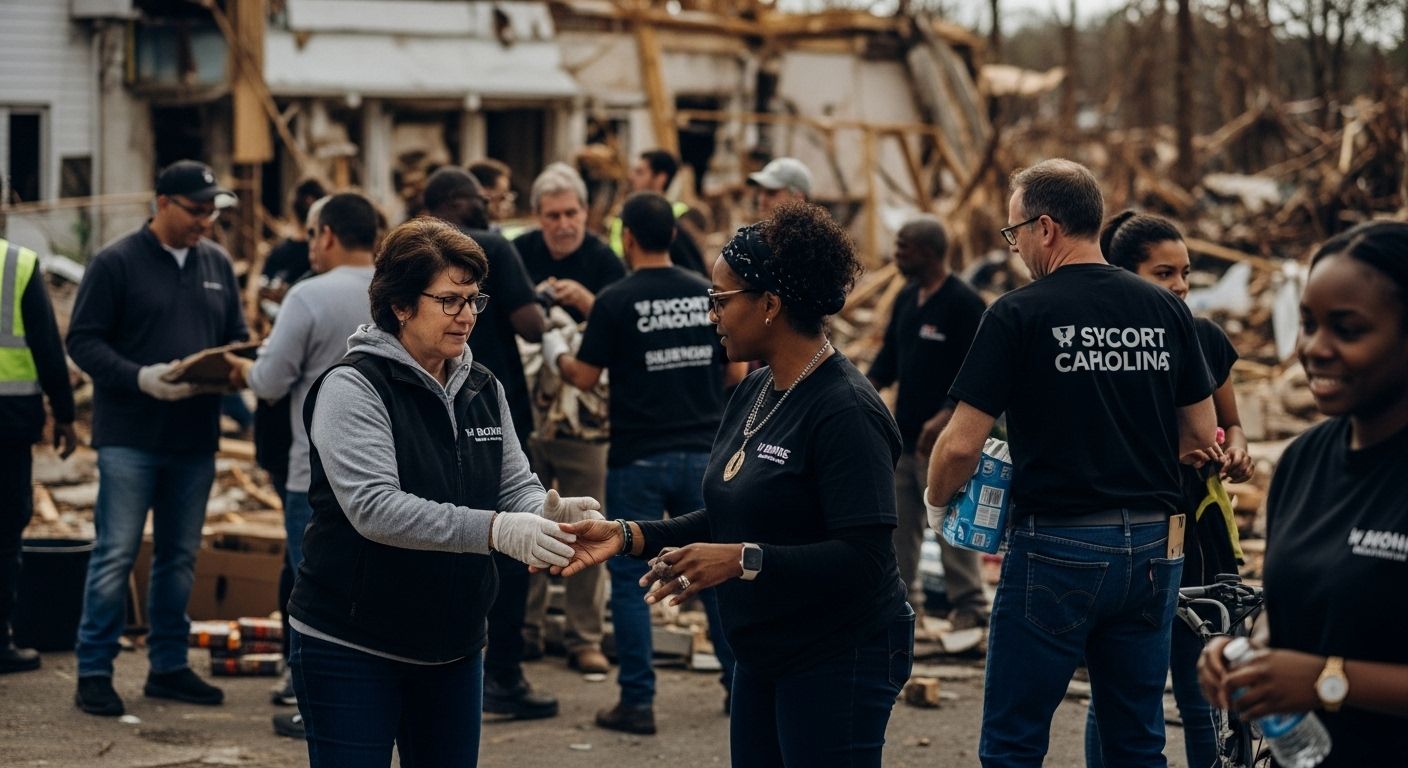
Disaster response workflows transform theoretical frameworks into practical, life saving strategies across diverse emergency scenarios. Explore our emergency response workflow guide to understand how structured approaches make critical differences during crises.
Emergency Scenario Deployment
According to MIT Lincoln Laboratory, advanced technological platforms like the Next-Generation Incident Command System demonstrate how disaster response workflows operate in complex real-world environments. These systems enable seamless coordination across different jurisdictions and agencies during various emergency scenarios.
Key Real-World Application Areas:
- Natural disaster management
- Pandemic response coordination
- Search and rescue operations
- Public safety event management
- Large scale infrastructure protection
Technological Integration in Crisis Management
Practical implementation of disaster response workflows involves sophisticated technological integration. Modern emergency management leverages advanced data analytics, real time communication platforms, and artificial intelligence to enhance response capabilities.
Technological tools enable rapid damage assessment, resource allocation, and strategic planning. By transforming raw data into actionable insights, these workflows help emergency responders make informed decisions quickly. The workflow becomes a dynamic, adaptive system that can adjust strategies in real time based on emerging information, ultimately saving lives and minimizing potential damage during critical moments.
Move Beyond Chaos: Begin Your Recovery Journey with Expert Support
Managing disaster response workflows is never easy. As outlined in this guide, the urgent need for swift coordination and reliable temporary shelter during a crisis can feel overwhelming, especially when every minute counts. The challenge often lies in connecting multiple agencies and resources while dealing with high stress and uncertainty. At Disaster Victim Services, we address these pain points head-on by providing immediate emergency housing and guiding you through the complexities of disaster recovery from start to finish. Whether you need help with resource mobilization, communication between agencies, or securing safe accommodations, our specialized team bridges the gaps identified in disaster response workflows.
Do not let disorganization slow your recovery. Visit our Uncategorized insights for practical case studies and support resources, or explore personalized project design solutions tailored to your situation. Ready to take command of your recovery? Contact us at Disaster Victim Services today for expert assistance and a rapid transition from disaster to hope.
Frequently Asked Questions
What is a disaster response workflow?
A disaster response workflow is a systematic approach that coordinates multiple agencies and resources to effectively manage emergency situations and facilitate recovery efforts following a disaster.
Why is a structured disaster response workflow important?
A structured workflow is crucial as it minimizes chaos during emergencies, ensures efficient resource allocation, reduces response times, and improves overall outcomes for affected communities, ultimately saving lives and facilitating faster recovery.
What are the key components of a disaster response workflow?
The main components include preparedness, response, recovery, and mitigation. These phases work together to ensure a comprehensive approach to managing emergencies and supporting communities through crises.
How does disaster response workflow support community recovery?
Disaster response workflows provide a coordinated framework for assessing needs, allocating resources, and delivering psychological support, which helps communities rebuild and recover both physically and emotionally after a disaster.