

Evacuee identification during disasters sounds straightforward enough. Just check some documents and you know who you are helping, right? But in real emergencies, critical documents are often lost and nearly 45 percent of evacuees lack reliable IDs when it matters most. That single missing detail can unravel rescue efforts faster than any headline suggests and leaves responders scrambling to support people they can barely identify.
Table of Contents
- What Are Evacuee Identification Challenges?
- Why Are Evacuee Identification Challenges Important?
- How Evacuee Identification Challenges Affect Disaster Response
- Key Concepts In Evacuee Identification Processes
- Real-World Examples Of Evacuee Identification Challenges
Quick Summary
| Takeaway | Explanation |
|---|---|
| Documentation loss complicates identification | Critical personal documents often get lost during evacuations, hindering verification. |
| Real-time tracking is essential | Emergency response relies on technological systems to maintain accurate identification during crises. |
| Accurate identification enhances safety | Proper evacuee tracking reduces risks, ensuring vulnerable populations receive timely assistance. |
| Resource allocation depends on identification | Understanding evacuee needs allows for efficient distribution of limited emergency resources. |
| Communication barriers hinder coordination | Poor identification creates obstacles among agencies, complicating effective rescue and support efforts. |
What Are Evacuee Identification Challenges?
Evacuee identification challenges represent complex systematic barriers that emerge during disaster response scenarios, significantly impacting the ability of emergency management teams to effectively track, support, and assist displaced individuals. These challenges extend far beyond simple record keeping, touching on critical intersections of human mobility, documentation, and emergency preparedness.
To clarify the main differences between documentation gaps and technological limitations, the following table compares their characteristics and impact within evacuee identification challenges.
| Challenge Type | Key Characteristics | Impact on Emergency Response |
|---|---|---|
| Documentation Gaps | Loss or destruction of IDs, fragmented records, lack of backups, incomplete government systems | Difficult to verify identity; delays aid and support |
| Technological Limitations | Inadequate real-time tracking, system outages, verification protocol inefficiency, logistics complications | Slows down tracking, introduces errors, affects resource allocation |
| Communication Barriers | Language issues, poor data sharing, lack of multilingual or accessible systems | Reduces coordination, increases risk of errors |
Documentation and Personal Information Gaps
One fundamental challenge in evacuee identification stems from documentation breakdown during crisis situations. When disasters strike, traditional identification systems often collapse, creating significant gaps in personal information tracking. Research from UC Berkeley reveals that displaced individuals frequently lose critical personal documents like passports, driver’s licenses, and birth certificates during emergency evacuations, which dramatically complicates verification processes.
Key documentation challenges include:
- Damaged or destroyed personal identification records
- Limited access to backup digital or physical copies
- Incomplete or fragmented government record systems
- Communication barriers preventing rapid information verification
Technological and Systemic Verification Limitations
Technological infrastructure plays a crucial role in evacuee identification, yet current systems often struggle to maintain real-time tracking during dynamic emergency scenarios. Emergency response teams frequently encounter significant obstacles in creating rapid, accurate identification protocols. These limitations can result in delayed support, increased vulnerability, and potential safety risks for displaced populations.
The complexity of evacuee identification is further compounded by intricate logistical challenges that emerge during large-scale displacement events. Government agencies, humanitarian organizations, and emergency responders must navigate sophisticated verification processes while maintaining efficiency and compassion.
For more comprehensive guidance on managing these challenges, learn about our displacement verification strategies.
Why Are Evacuee Identification Challenges Important?
Evacuee identification challenges represent far more than administrative hurdles. They are critical lifelines that determine the safety, support, and recovery potential for individuals experiencing sudden displacement during emergencies. Understanding these challenges is essential for creating robust emergency response systems that can effectively manage human mobility during crisis scenarios.
Safety and Immediate Support Coordination
The importance of accurate evacuee identification cannot be overstated when considering human safety and immediate support requirements. Emergency management teams rely on precise identification to coordinate critical rescue and relief efforts. Research from the U.S. Government Accountability Office underscores that without accurate identification, vulnerable populations face significantly increased risks of being overlooked during emergency interventions.
Key safety considerations include:
- Rapid medical assistance deployment
- Locating and reuniting separated family members
- Prioritizing support for vulnerable populations
- Preventing potential human trafficking risks
Resource Allocation and Humanitarian Response
Effective evacuee identification directly impacts the strategic allocation of limited emergency resources. Government agencies, humanitarian organizations, and relief teams must understand precisely who needs assistance, where they are located, and what specific support they require. This data-driven approach ensures that medical supplies, temporary housing, food, and other critical resources reach those most in need with maximum efficiency.
The downstream implications of poor identification extend beyond immediate emergency response. Inaccurate or incomplete evacuee tracking can lead to prolonged displacement, increased psychological trauma, and significant challenges in long-term recovery efforts. Humanitarian responders must view identification not just as a logistical task, but as a fundamental component of comprehensive disaster management.
Learn more about our comprehensive evacuation support strategies
How Evacuee Identification Challenges Affect Disaster Response
Evacuee identification challenges create cascading complications that fundamentally disrupt emergency response frameworks. These challenges transform disaster management from a streamlined process into a complex navigation of information gaps, technological limitations, and human vulnerability.
This table summarizes the main effects of evacuee identification challenges on disaster response operations, highlighting disrupted areas and the consequences described in the article.
| Disrupted Area | Description | Consequences |
|---|---|---|
| Medical Assistance Deployment | Delays in verifying evacuees’ identities and needs | Slower or missed treatments |
| Search and Rescue | Uncertainty about who needs help and their locations | Risk of missing vulnerable individuals |
| Resource Distribution | Inefficient or inaccurate allocation of limited supplies | Wasted resources; unmet critical needs |
| Family Reunification | Difficulty confirming individuals and family members | Prolonged family separation |
| Long-Term Recovery | Poor tracking of displaced populations over time | Obstacles to rehabilitation and support |
Operational Response Disruptions
Disaster response teams encounter significant obstacles when identification systems fail. Incomplete or inaccurate evacuee data directly compromises emergency intervention strategies. Research from emergency management studies reveals that fragmented identification processes can delay critical support by hours or even days, potentially putting lives at substantial risk.
Key operational disruption areas include:
- Delayed emergency medical treatments
- Compromised search and rescue missions
- Inefficient resource allocation
- Increased psychological trauma for displaced individuals
Communication and Coordination Breakdown
Evacuee identification challenges create significant communication barriers between different response agencies. Government organizations, humanitarian groups, and local emergency teams rely on accurate population tracking to coordinate complex rescue and support missions. When identification systems fail, these groups struggle to communicate effectively, leading to potential duplicated efforts or critical support gaps.
The ripple effect of poor identification extends beyond immediate response. Long-term recovery efforts become substantially more complicated when displaced populations cannot be accurately tracked, registered, or supported through comprehensive rehabilitation programs.
Explore our comprehensive displacement verification techniques
Key Concepts in Evacuee Identification Processes
Evacuee identification processes represent sophisticated systems designed to track, verify, and support individuals displaced during emergency scenarios. These intricate frameworks integrate multiple technological, administrative, and human-centered approaches to create comprehensive population management strategies.
Documentation and Verification Protocols
Robust identification processes rely on multifaceted verification mechanisms that go beyond traditional documentation methods. Research from transportation studies demonstrates that effective identification requires adaptive strategies capable of managing complex human mobility patterns during crisis situations.
Key verification components include:
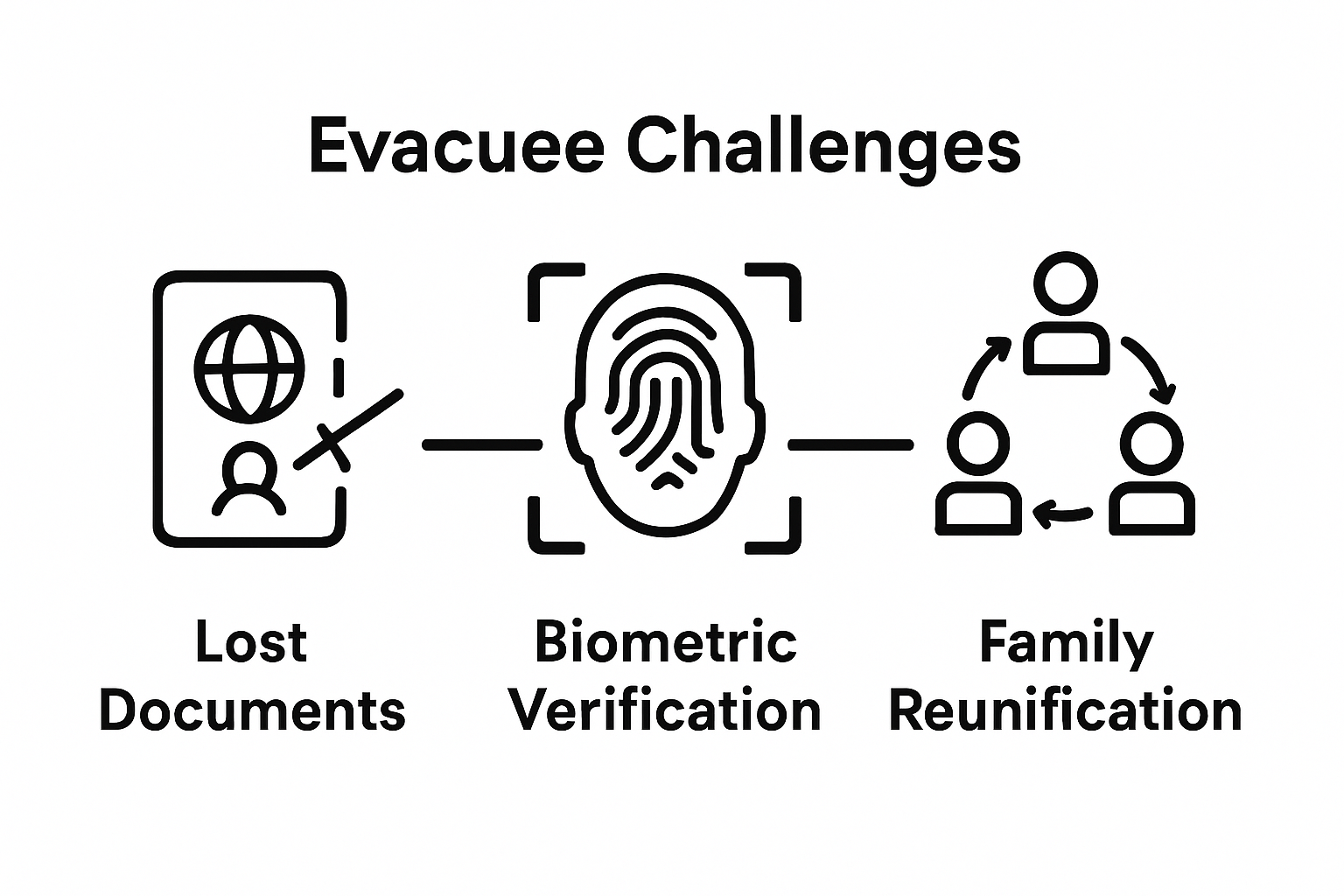
- Biometric tracking systems
- Digital and physical document cross-referencing
- Real-time registration platforms
- Multilingual support interfaces
Technological and Human-Centered Approaches
Successful evacuee identification integrates advanced technological solutions with compassionate human-centered practices. Emergency management teams must balance technical efficiency with understanding individual human experiences and psychological needs during displacement events. This holistic approach ensures that identification is not merely an administrative task but a critical support mechanism for vulnerable populations.
The intersection of technology and human experience creates dynamic identification strategies that can rapidly adapt to changing emergency conditions. These strategies must remain flexible, considering the diverse backgrounds, communication needs, and unique circumstances of displaced individuals.
Discover our advanced displacement tracking methods
Real-World Examples of Evacuee Identification Challenges
Real-world disaster scenarios reveal profound complexities in evacuee identification, demonstrating how theoretical challenges transform into critical humanitarian obstacles during emergency responses. These examples highlight the intricate human dimensions underlying identification processes.
Hurricane Katrina: A Landmark Case Study
Hurricane Katrina exposed significant systemic failures in population tracking and support mechanisms. Research from national public health studies revealed extraordinary challenges in identifying and assisting displaced populations, particularly among vulnerable communities with limited documentation or legal status.
Key identification challenges during Hurricane Katrina included:
- Massive population displacement across multiple states
- Communication infrastructure collapse
- Loss of personal identification documents
- Limited multilingual support systems
- Fragmented government agency coordination
Pandemic Evacuation Scenarios
The COVID-19 pandemic introduced unprecedented complications in evacuee identification processes. Emergency management teams confronted unique challenges involving quarantine protocols, digital verification systems, and tracking individuals across complex, rapidly changing geographical boundaries. These scenarios demanded innovative approaches that balanced public health safety with individual privacy and support needs.
Emergency responders had to develop flexible identification strategies that could accommodate rapidly shifting population movements, health status verification, and comprehensive support mechanisms. The pandemic underscored the critical importance of adaptable, technology-enabled identification processes that can respond to unexpected and dynamic emergency conditions.

Learn about our comprehensive displacement verification techniques
Ready to Overcome Evacuee Identification Challenges?
Understanding the critical barriers in evacuee identification is the first step toward a safer and smoother disaster recovery process. If you are struggling with missing documentation, technology obstacles, or gaps in critical support, you are not alone. These pain points can delay help and put families at greater risk, as highlighted in our recent article. When clarity and coordination matter most, every second counts.
Do not let documentation and tracking failures stand in the way of support and safety. Our team at DisasterVictimServices.com is dedicated to bridging these gaps with rapid emergency response and compassionate, personalized assistance. Explore more of our solutions on our Uncategorized support resources or browse our latest innovations for ensuring you and your loved ones receive the immediate help you deserve. Act now to secure the expert guidance and emergency housing you need. Visit our main site to connect with the support team that puts your recovery first.
Frequently Asked Questions
What are the primary challenges in evacuee identification during disasters?
Evacuee identification challenges include documentation breakdown, technological limitations, and communication barriers that hinder effective tracking and support for displaced individuals during emergencies.
How does documentation loss affect evacuee identification?
When disasters occur, individuals often lose crucial identification documents such as passports and birth certificates, which complicates the verification and tracking process for emergency management teams.
Why is accurate evacuee identification important for emergency response?
Accurate identification is vital for coordinating rescue and relief efforts, ensuring that medical assistance, resources, and support reach those in need quickly and efficiently.
What technological solutions can improve evacuee identification processes?
Technological solutions that can enhance evacuee identification include biometric tracking systems, real-time registration platforms, and digital document verification that adapt to complex emergency scenarios.