
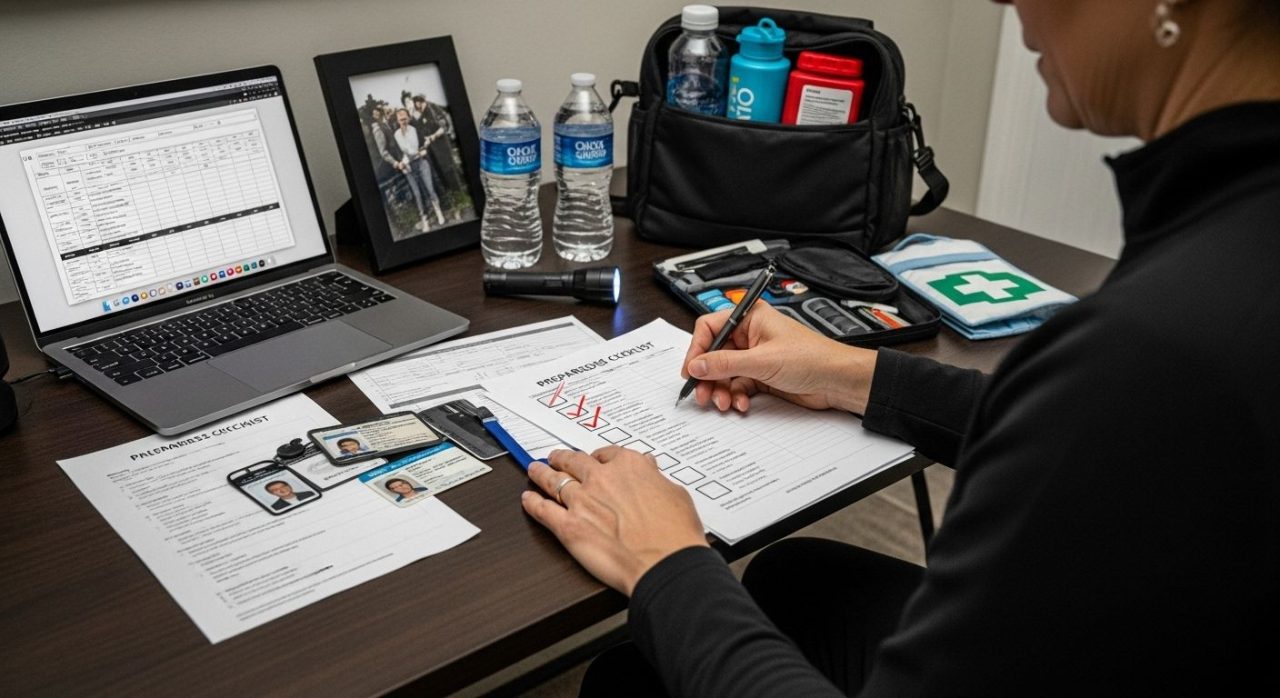
Surge events can turn a normal day upside down and leave even the best prepared feeling vulnerable. Even detailed plans and training are sometimes not enough when the unexpected hits. Yet FEMA research reveals that only 39 percent of Americans have taken steps to assess their personal vulnerabilities and response capacity before disaster strikes. This number is shockingly low. What if the most overlooked part of surge event readiness is not the gear or the checklist, but the way you map your strengths and weaknesses before anything happens?
Table of Contents
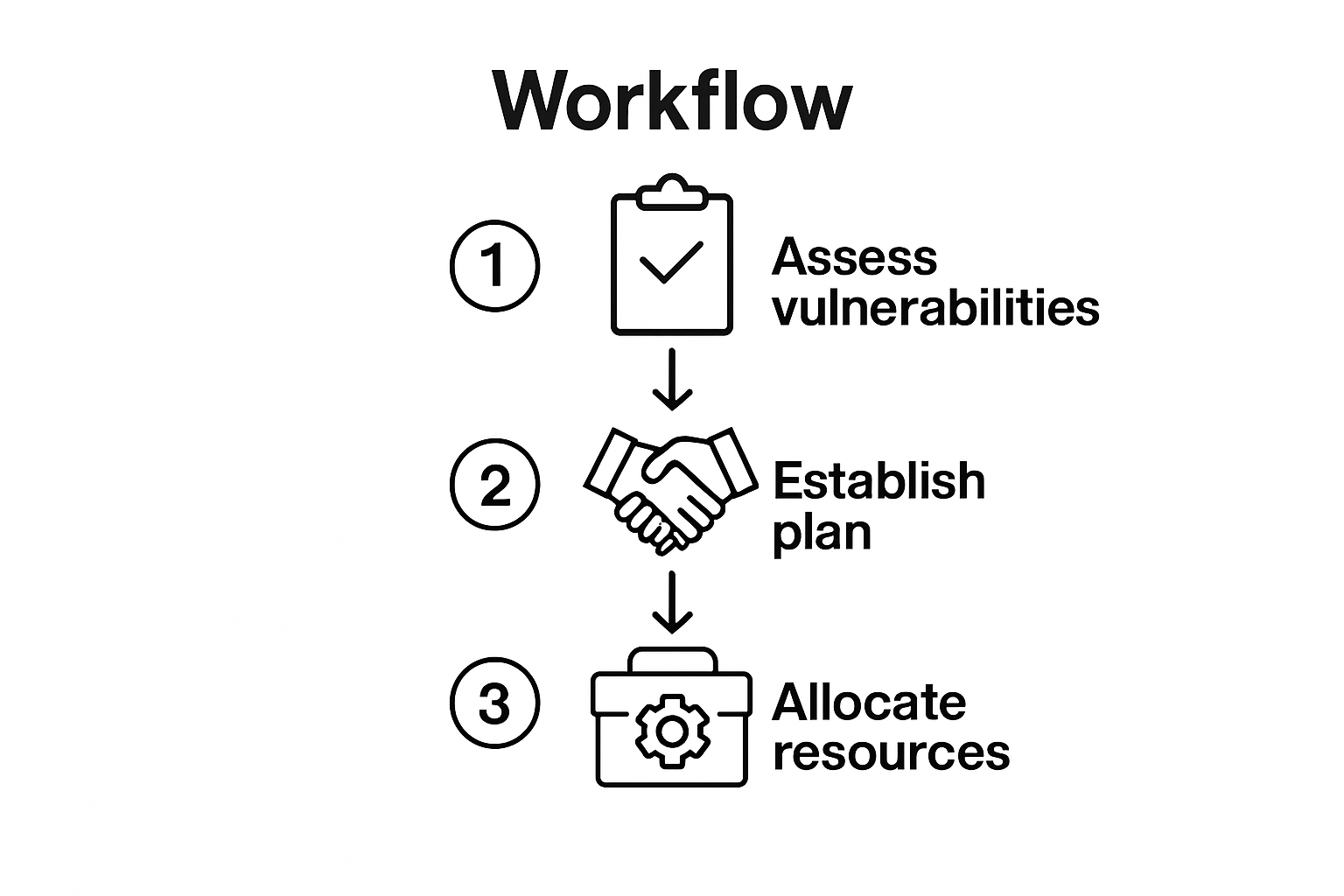
- Step 1: Assess Your Vulnerabilities And Needs
- Step 2: Establish A Coordinated Response Plan
- Step 3: Allocate Resources And Personnel Efficiently
- Step 4: Implement Response Actions Methodically
- Step 5: Monitor And Evaluate Response Effectiveness
- Step 6: Document And Review Lessons Learned
Quick Summary
| Key Point | Explanation |
|---|---|
| 1. Conduct a thorough vulnerability assessment | Evaluate personal health, finances, and resources for effective emergency preparedness. |
| 2. Develop a coordinated response plan | Create a clear plan defining roles, communication, and strategies for managing surge events. |
| 3. Allocate resources effectively | Inventory available resources and match skills with response needs for optimal efficiency. |
| 4. Implement actions with discipline | Execute plans methodically, monitoring effectiveness and adjusting strategies as needed. |
| 5. Document and review lessons learned | Capture detailed insights from experiences to improve future responses and strengthen resilience. |
Step 1: Assess Your Vulnerabilities and Needs
Handling surge events begins with a comprehensive understanding of your unique vulnerabilities and specific needs. This critical first step determines how effectively you will respond when unexpected challenges emerge, transforming potential chaos into a structured, strategic approach.
A thorough vulnerability assessment requires more than surface-level examination. You must conduct a detailed risk analysis that encompasses physical infrastructure, personnel capabilities, resource availability, and potential emergency scenarios. Think of this process as creating a personal disaster blueprint that identifies potential weak points before they become critical problems.
Start by documenting your current situation, including your living conditions, available resources, and potential support networks. Gather essential documents like identification, insurance papers, medical records, and contact information for key professionals. Learn more about comprehensive risk assessment strategies to ensure you leave no critical detail unexamined.
According to FEMA’s community preparedness guidelines, effective vulnerability assessment involves systematically evaluating potential threats and your capacity to respond. This means understanding not just what could go wrong, but precisely how you would manage each potential scenario.
This table organizes major categories to evaluate during a surge event vulnerability assessment, outlining what to review and why it matters.
| Category | What to Review | Why It Matters |
|---|---|---|
| Personal Health | Medical requirements, medications, physical limitations | Ensures health needs are met during emergencies |
| Financial Resources | Emergency funds, access to cash, insurance coverage | Provides ability to recover and secure basic needs |
| Transportation | Vehicle availability, mobility constraints | Supports safe evacuation or resource transport |
| Communication | Phone and internet access, backup options | Maintains contact with support networks |
| Supplies Access | Water, food, medications, critical items | Guarantees survival essentials are readily available |
| Support Networks | Contact info for family, neighbors, professionals | Enables coordinated response and rapid assistance |
Key aspects to evaluate include:
- Personal health and medical requirements
- Financial resources and emergency funds
- Transportation and mobility capabilities
- Communication infrastructure and backup communication methods
- Access to critical supplies like water, food, and medication
Remember that vulnerability assessment is not a one-time task but an ongoing process. Regularly update your analysis as your circumstances change, ensuring your preparedness strategy remains current and relevant. By thoroughly understanding your unique vulnerabilities, you transform uncertainty into a structured, proactive approach to managing surge events.
Successful completion of this step means having a clear, comprehensive document that outlines your current situation, potential risks, and initial response strategies. Your assessment should feel like a personalized roadmap, giving you confidence and clarity in navigating potential challenges.
The table below provides a concise overview of key steps for handling surge events, summarizing each step, its main goal, and the key outcome for effectiveness.
| Step | Main Goal | Key Outcome |
|---|---|---|
| Assess Vulnerabilities and Needs | Identify specific risks and requirements | Comprehensive vulnerability assessment document |
| Establish a Coordinated Response Plan | Organize roles and clarify communication | Actionable, well-understood response plan |
| Allocate Resources and Personnel Efficiently | Strategically use resources and skills | Dynamic, responsive allocation system |
| Implement Response Actions Methodically | Execute planned actions systematically | Disciplined, adaptive intervention |
| Monitor and Evaluate Response Effectiveness | Measure and review actions | After-action report with actionable insights |
| Document and Review Lessons Learned | Capture and apply experience | Blueprint for improved future response |
Step 2: Establish a Coordinated Response Plan
A coordinated response plan transforms individual efforts into a powerful, synchronized strategy for managing surge events. This critical step bridges the gap between vulnerability assessment and effective action, creating a comprehensive framework that enables swift, organized intervention when challenges arise.
Developing a robust response plan requires systematic collaboration and clear communication channels. Begin by identifying key stakeholders who will play essential roles during the surge event. This includes family members, local emergency services, healthcare providers, insurance contacts, and potentially neighboring support networks. Each participant must understand their specific responsibilities and have clear protocols for communication and coordination.
Explore our detailed emergency response protocols to ensure you design a comprehensive and actionable plan. According to FEMA’s National Incident Management System, effective coordination relies on establishing a clear command structure and predefined communication mechanisms.
Create a detailed document that outlines specific response strategies for various scenarios. This plan should include:
- Emergency contact information for all key stakeholders
- Designated communication methods and backup communication channels
- Specific roles and responsibilities for each team member
- Evacuation routes and alternative shelter locations
- Critical resource allocation strategies
Your response plan must be flexible yet structured, allowing for dynamic adjustments while maintaining a clear operational framework. Practice and review the plan regularly, conducting simulation exercises that test communication protocols and identify potential gaps in your strategy.
Successful completion of this step means having a comprehensive, well-documented response plan that all stakeholders understand and can implement quickly. The plan should feel like a living document—adaptable, clear, and designed to provide confidence and direction during unpredictable surge events. By investing time in thorough planning, you transform potential chaos into a coordinated, strategic approach to managing emergencies.
Step 3: Allocate Resources and Personnel Efficiently
Allocating resources and personnel efficiently transforms your response strategy from theoretical planning into practical, actionable intervention. This crucial step determines how effectively your team can manage surge events, requiring precision, flexibility, and strategic thinking that goes beyond simple resource distribution.
Effective resource allocation begins with understanding your total available resources and their specific capabilities. Create a comprehensive inventory that details not just quantities, but the specific skills, limitations, and potential of each resource and team member. This means mapping out individual strengths, specialized training, physical capabilities, and potential cross-functional roles.
Discover advanced logistical support strategies to enhance your resource management approach. According to FEMA’s National Incident Management System, successful resource allocation requires continuous assessment and dynamic reallocation based on evolving event conditions.
Prioritize resources by establishing clear triage protocols that help you make quick, informed decisions. This involves creating a hierarchical system that identifies critical needs versus secondary requirements. Your allocation strategy should remain flexible, allowing for rapid redeployment of personnel and materials as situations change.
Key considerations for efficient resource allocation include:
- Matching individual skills with specific response needs
- Creating redundant communication and support systems
- Establishing clear chains of command and decision making
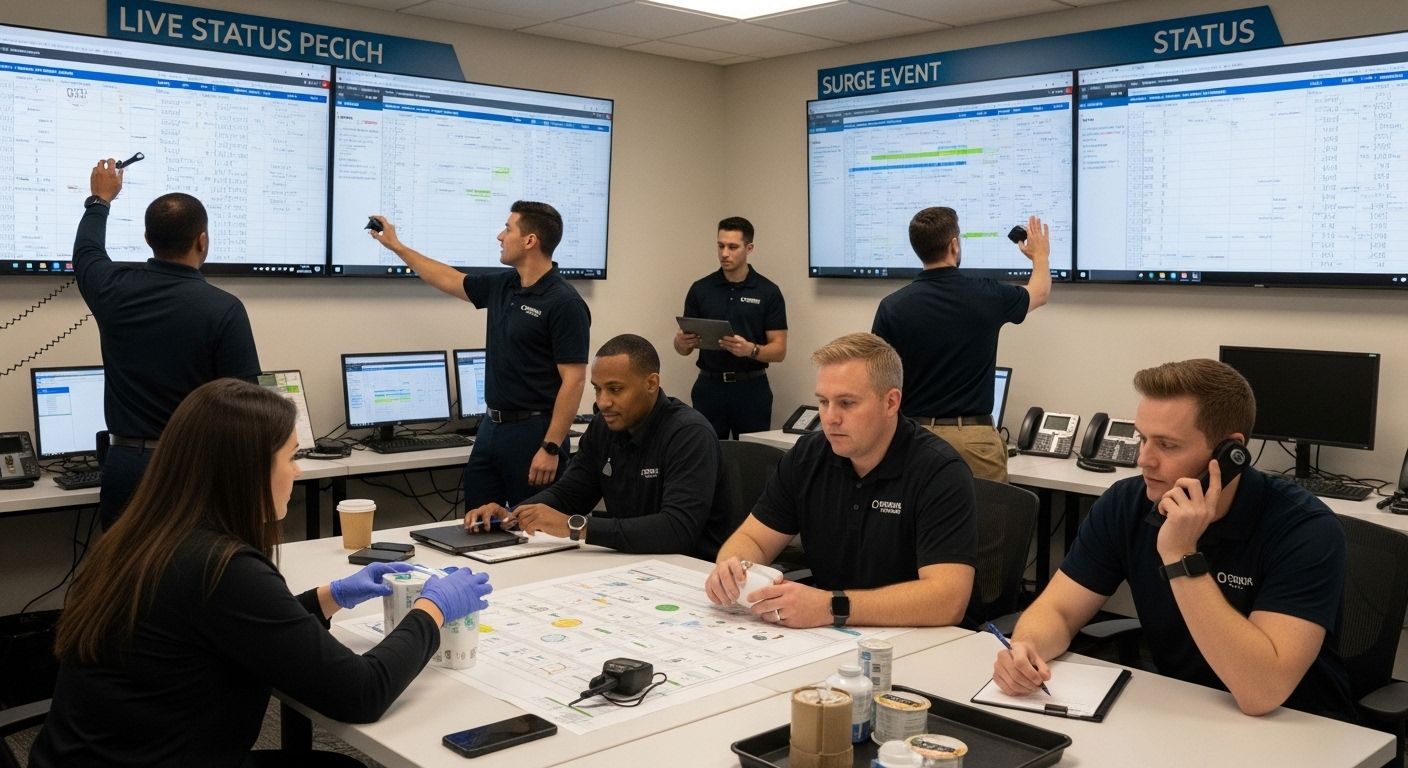
- Maintaining real-time tracking of resource utilization
- Developing rapid redeployment strategies
Critical to this process is maintaining constant communication channels that allow for immediate information sharing and resource redistribution. Regular check-ins and status updates prevent bottlenecks and ensure that every team member understands their current role and potential alternative assignments.
Successful completion of this step means having a dynamic, responsive resource allocation system that can adapt quickly to changing circumstances. Your approach should feel like a living, breathing mechanism that seamlessly shifts and adjusts, ensuring maximum efficiency and minimal wasted effort during surge events.
Step 4: Implement Response Actions Methodically
Implementing response actions methodically transforms your strategic plan into deliberate, calculated intervention. This step requires precision, discipline, and an unwavering commitment to systematic execution that minimizes chaos and maximizes efficient problem solving during surge events.
Methodical implementation begins with a structured approach that breaks complex challenges into manageable, sequential actions. Each intervention should be carefully planned, executed, and immediately evaluated for effectiveness. Think of this process like a carefully choreographed dance, where every movement is intentional and connected to the broader objective.
Explore our comprehensive emergency response protocols to enhance your systematic approach. According to FEMA’s Incident Action Planning guidelines, successful implementation requires continuous assessment and adaptive strategies.
Start by creating a detailed, step-by-step execution framework that outlines specific actions, responsible personnel, expected outcomes, and immediate verification methods. This framework should include precise triggers that indicate when to initiate each action, and clear criteria for determining whether an intervention has been successful.
Key implementation principles include:
- Maintaining real-time communication across all response teams
- Establishing immediate feedback loops
- Creating redundant backup systems for critical actions
- Documenting each intervention and its immediate outcomes
- Preparing to rapidly adjust strategies based on emerging information
Critical to this process is developing a mindset of flexible rigidity—being both disciplined in your approach and nimble enough to make instantaneous adjustments. Your team must be prepared to execute planned actions while simultaneously monitoring their effectiveness and being ready to pivot quickly if initial strategies prove ineffective.
Successful completion of this step means having implemented response actions with surgical precision, maintaining constant situational awareness, and demonstrating the ability to make rapid, informed decisions. Your approach should feel like a well-oiled machine—systematic, responsive, and consistently moving toward resolving the surge event with minimal disruption.
Step 5: Monitor and Evaluate Response Effectiveness
Monitoring and evaluating response effectiveness transforms raw action into strategic learning, turning each surge event into an opportunity for continuous improvement. This critical step goes beyond simply tracking what happened, focusing instead on understanding why actions succeeded or failed and how future responses can be enhanced.
Effective evaluation requires a systematic approach that captures both quantitative metrics and qualitative insights. Begin by establishing clear, measurable performance indicators before the response begins. These indicators should reflect your initial objectives and provide a comprehensive view of your team’s performance across multiple dimensions.
Explore our comprehensive response assessment techniques to refine your monitoring strategies. According to FEMA’s Continuous Improvement guidance, successful evaluation involves discovering, validating, and resolving performance gaps.
Create a robust documentation system that captures real-time data throughout the response. This means developing detailed logs, collecting immediate feedback from team members, and recording both successful interventions and challenges encountered. Your documentation should be comprehensive yet concise, focusing on actionable insights rather than administrative details.
Key evaluation considerations include:
- Tracking specific performance metrics against predefined objectives
- Gathering input from all stakeholders involved in the response
- Analyzing both quantitative data and qualitative experiences
- Identifying systemic strengths and potential improvement areas
- Developing actionable recommendations for future responses
Critical to this process is maintaining an objective, non-punitive approach to evaluation. The goal is not to assign blame but to understand how your team can become more effective in future surge events. Encourage open, honest communication that allows team members to share insights without fear of criticism.
Successful completion of this step means producing a comprehensive after-action report that provides clear, actionable insights. Your evaluation should feel like a roadmap—highlighting what worked well, identifying areas for improvement, and providing specific, implementable recommendations that will strengthen your response capabilities for future challenges.
Step 6: Document and Review Lessons Learned
Documenting and reviewing lessons learned transforms challenging surge events from isolated incidents into opportunities for organizational growth and resilience. This crucial step bridges the gap between experience and improvement, ensuring that every challenge becomes a valuable learning opportunity for future responses.
Effective documentation requires a comprehensive and honest approach that captures both successes and challenges with equal importance. Begin by collecting detailed accounts from all team members, creating a comprehensive narrative that reflects multiple perspectives and experiences. This means going beyond surface-level observations and diving deep into the nuanced realities of your response.
Explore our comprehensive approach to capturing organizational insights to enhance your documentation process. According to FEMA’s Continuous Improvement guidance, successful lesson learning involves systematic discovery, validation, and resolution of performance gaps.
Create a structured documentation framework that encourages open, transparent communication. This means developing a safe environment where team members can share insights without fear of criticism, focusing on constructive feedback and collective learning. Your documentation should be detailed yet digestible, capturing complex experiences in clear, actionable language.
Key documentation principles include:
- Capturing both quantitative performance metrics and qualitative experiences
- Interviewing team members at all levels of the response
- Identifying specific actions that worked well and those that need improvement
- Creating a clear, actionable roadmap for future responses
- Developing strategies to implement learned insights
Critical to this process is maintaining an forward-looking perspective. The goal is not to assign blame but to build a more resilient, adaptive response system. Encourage a culture of continuous learning where challenges are viewed as opportunities for growth and improvement.
Successful completion of this step means producing a comprehensive, actionable report that transforms raw experience into strategic insights. Your documentation should feel like a blueprint for future success—providing clear, implementable recommendations that will strengthen your team’s ability to handle future surge events with greater efficiency and effectiveness.
Turn Your Surge Event Plan Into Immediate Action With Trusted Support
You have just learned how crucial it is to systematically assess vulnerabilities, coordinate response plans, and allocate resources when facing surge events. Understanding these steps is empowering, but putting them into action during real-life emergencies can feel overwhelming and isolating. The pain of facing a chaotic event alone and the stress of quickly finding reliable housing and critical support can be a heavy burden. When every decision counts, what you need most is a partner who understands both the urgency and complexity of disaster recovery.
DisasterVictimServices.com transforms the guidance from this article into real-world relief by providing direct access to emergency housing, logistical assistance, and compassionate care. If you want expert help with both immediate response and long-term rebuilding, explore our Developing solutions, designed especially for those navigating new and escalating disasters. Do not wait until the next surge event catches you off guard. Start your path to recovery and secure your peace of mind by contacting Disaster Victim Services today.
Frequently Asked Questions
How can I assess my vulnerabilities before a surge event?
Begin by conducting a thorough risk analysis that encompasses physical infrastructure, personnel capabilities, resource availability, and potential emergency scenarios. Document your current situation, including living conditions, resources, and support networks, and gather essential documents such as identification and medical records.
What should I include in my coordinated response plan?
Your response plan should outline emergency contact information, communication methods, roles and responsibilities of team members, evacuation routes, and critical resource allocation strategies. Regular practice and review of the plan are also essential.
How can I efficiently allocate resources during a surge event?
Start by creating a comprehensive inventory of available resources and their specific capabilities. Establish clear triage protocols to prioritize resource allocation based on critical needs, and ensure constant communication for real-time updates and adjustments.
What steps can I take to improve my response after a surge event?
After the event, enter a phase of monitoring and evaluation. Establish measurable performance indicators to evaluate the effectiveness of your response. Collect input from all stakeholders and develop a comprehensive after-action report that includes actionable recommendations for future improvements.
Recommended
- Emergency Response Protocols: Key Steps for Fast Action – Disaster Victim Services | Helping You Recover After Disaster
- Storm Preparedness Checklist 2025: Essential Guide for Disaster Relief – Disaster Victim Services | Helping You Recover After Disaster
- Emergency Response Basics for 2025: A Practical Guide – Disaster Victim Services | Helping You Recover After Disaster
- Disaster Recovery Process Steps: A Complete Guide 2025 – Disaster Victim Services | Helping You Recover After Disaster